How Gas-Shielded Metal Arc Welding Protects Your Pipe Projects
Industrial pipework does not get many second chances. A bad weld can mean leaks, product loss, safety incidents, or a shutdown that throws off the whole production schedule. When lines are carrying high-pressure gas or chemicals, every joint has to hold up under stress, heat, and real-world abuse.
Gas-shielded metal arc welding, often called GMAW or MIG, gives facilities a clean and efficient way to build and repair pipe systems that have to perform day after day. It is especially helpful in busy Texas plants and commercial sites where uptime and safety are non-negotiable and the heat is already pushing people and equipment hard.
As a certified mobile welding and fabrication contractor, we bring code-focused GMAW work straight to industrial and commercial sites. In this article, we will walk through what gas-shielded metal arc welding is, why it fits industrial pipework, how it supports code and inspection needs, and what to look for when you choose a welding partner for upcoming projects and outages.
What Gas-Shielded Metal Arc Welding Really Is
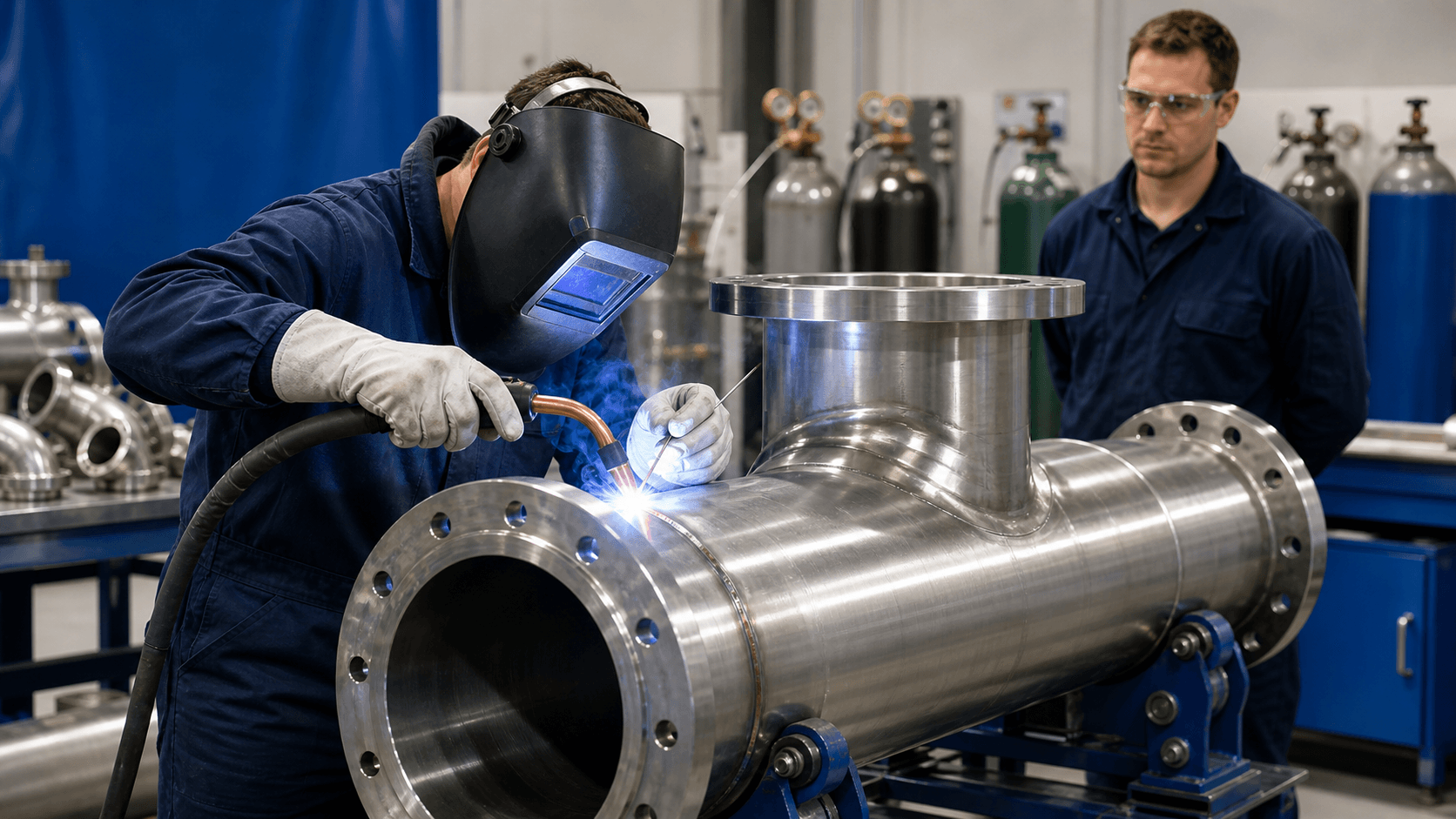
Gas-shielded metal arc welding is a process where a wire and a shielding gas work together to create a strong weld. The wire melts and becomes the filler metal, while the gas forms a protective cloud around the weld pool so air and moisture do not contaminate the joint. The goal is simple: a clean, controlled weld that ties two pieces of metal together as if they were always one.
The basic parts of a GMAW setup include:
- Power source, provides steady voltage and current so the arc stays stable
- Wire feeder, pushes the consumable wire through the cable at a set speed
- Welding gun or torch, where the wire, electricity, and gas come together in the operator's hand
- Shielding gas, often argon, CO2, or a blend, protects the molten metal from the air
Each part plays a role in pipe work. The power source and feeder help keep penetration consistent around the pipe. The gun and gas choice affect bead shape, spatter, and how much cleanup is needed before inspection.
Compared with stick welding, GMAW usually offers:
- Higher travel speed on many joints
- Less spatter and slag to chip
- Better visibility of the weld puddle
Compared with flux-cored welding, GMAW often provides a smoother bead and less smoke, which is a big help in tight pipe racks and congested work zones. While every process has its place, gas-shielded metal arc welding is especially useful for shop-fabricated pipe spools, skids, and structural connections that must fit up tight, pass inspection, and go into service without drama.
Why Industrial Pipe Work Demands GMAW Precision
Process piping does not just need to look good on the outside. The weld has to fuse properly through the wall of the pipe. GMAW helps welders hold a steady arc, control heat input, and keep a consistent bead profile around the full circumference of a joint.
That level of control matters when you are dealing with:
- High-pressure lines
- Elevated-temperature service
- Corrosive or flammable products
Clean welds with low porosity and minimal inclusions reduce the risk of leaks that can lead to unplanned downtime. Refineries, chemical plants, gas facilities, and manufacturing operations rely on every joint to do its job so operators are not chasing drips, smells, or pressure drops.
Gas-shielded metal arc welding is also helpful on thin-wall pipe and mixed alloys that can be more sensitive to heat. The ability to tune parameters and wire speed lets welders control distortion and reduce the chance of burn-through, which is especially important when facilities are upgrading systems ahead of heavy production periods later in the year.
In tight pipe racks and busy units, speed and repeatability are just as important as raw weld strength. GMAW can help crews make more acceptable welds in the same outage window, which supports turnaround schedules and keeps downstream teams from waiting on one or two slow tie-ins.
Meeting Code and Inspection Demands with Every Weld
Industrial pipe systems are built to codes and standards that help protect people, equipment, and product. Depending on the scope, work may fall under ASME piping rules, API requirements, and AWS structural and pipe welding codes. For many facilities, those are not just suggestions, they are project requirements.
Gas-shielded metal arc welding fits into that world through qualified procedures and welder testing. Code work often involves:
- Written Welding Procedure Specifications (WPSs)
- Procedure Qualification Records (PQR)
- Welder Performance Qualifications
Because GMAW allows for consistent machine settings and detailed parameter control, it supports repeatable procedures that can be documented and followed from spool fab to field tie-in. This helps welds pass visual checks and more advanced testing such as ultrasonic testing and radiographic testing on critical lines and supports.
When welds pass inspection the first time, owners and contractors see real benefits:
- Fewer rejected welds and cut-outs
- Lower rework and schedule delays
- Faster sign-off from quality and inspection teams
- More confidence during high-load operating periods
Our own work is built around certified welders, qualified procedures, and traceable documentation so engineering teams, owners, and third-party inspectors have the information they need at every step.
Mobile GMAW Support for Texas Plants and Facilities
Industrial and large commercial sites rarely have the luxury of pausing everything so repairs and tie-ins can happen in a shop. That is where mobile gas-shielded metal arc welding support comes in. Instead of moving the pipe to the welders, we bring the welders, equipment, and consumables to the pipe.
A typical mobile GMAW setup can support:
- Emergency or short-notice pipe repairs
- On-site tie-ins during outages
- Modifications to existing systems
- Structural and skid connections in place
We mobilize GMAW-ready rigs to refineries, terminals, manufacturing facilities, and major commercial sites across key Texas markets. With power sources, wire feeders, gas, and fit-up tools on board, crews can work in units, pipe racks, or equipment areas without waiting on shop schedules.
Because we handle pipe, structural, and skid fabrication, clients can keep more of their scope under one contractor. That means field-welded pipe tie-ins, new or modified supports, and skid or platform work can move forward in a coordinated way that respects production needs.
Late summer is often when facilities start lining up work for upcoming busy seasons. Building in mobile welding support early helps teams get pipe lines, skids, and structural pieces ready before outage windows tighten and the calendar fills with other maintenance work.
Choose a GMAW Partner That Protects Your Bottom Line
Gas-shielded metal arc welding is more than a welding method. For industrial pipe work, it is a strategic choice that supports cleaner welds, higher productivity, and predictable quality through the whole life of the system. When every weld affects safety, reliability, and throughput, the process and the people behind it really matter.
A simple checklist when selecting a GMAW contractor for pipe work includes:
- Relevant certifications for welders and procedures
- Proven GMAW procedures qualified to common industrial codes
- Direct experience with industrial and commercial piping
- True mobile capability for field tie-ins and repairs
- A track record working with Texas plants and facilities
At Weldit, we focus on bringing certified mobile welding and fabrication services together with code-driven GMAW work for pipe, structural, and skid projects. As you look ahead to future outages, upgrades, or new builds, planning early around welding scope, inspections, and fabrication timelines helps keep critical pipe systems ready for the next peak operating season.
Get Started With Your Project Today
If your next build calls for precision and reliability, we are ready to support you with expert gas-shielded metal arc welding tailored to commercial and industrial piping systems. At Weldit, we work closely with your team to align our welding processes with your project specifications, schedule, and performance goals. Share your project details so we can provide a clear scope, timeline, and budget. To start the conversation, simply contact us and we will follow up promptly.