Keep Critical Pipe Spools Online Longer and Safer
Keeping pipe spools online during late summer peak production is a constant tug-of-war. You are trying to protect uptime, protect people, and protect equipment, all at the same time. Taking a line down for full replacement can ripple through your whole plant schedule, especially in Texas industries like petrochem, power generation, and food processing that are pushing hard to hit year-end goals.
Smart facilities are leaning on onsite mobile welding to break that pattern. With the right planning, many worn or damaged pipe spools can be repaired or modified in place, safely and in line with code. That means more life out of the steel you already own, less disruption to production, and fewer emergency outages.
At Weldit, we focus on certified mobile welding and fabrication for industrial and commercial piping across major Texas markets. Our procedures follow AWS and ASME codes so repairs and modifications are done to industry standards. In this article, we will walk through how onsite mobile welding works on pipe spools, the common repair and retrofit options, how it fits into late-summer planning ahead of fall work, and what to look for in a qualified mobile welding contractor.
How Pipe Spools Fail and What That Costs You
Pipe spools rarely fail all at once. Most of the time, small issues grow quietly until something forces your hand. Common problems we see on industrial spools include:
- Corrosion under insulation that stays hidden until the jacket comes off
- Erosion at high-flow elbows and reducers where media changes direction
- Thermal cycling and fatigue near equipment nozzles where temperatures swing often
- Vibration cracks at supports and hangers, especially on long runs
- Damage around flanges, branch connections, and socket welds from years of use
Each of these issues can lead to leaks, thinning, or cracking. If they are ignored, they turn into unplanned downtime or even an emergency shutdown. That is painful any time of year, but it hits especially hard during the late Q3 push, when plants are trying to keep production steady and crews are already stretched.
The direct hit is lost output. The indirect hits stack up fast:
- Safety risk for crews working near leaking or weakened lines
- Environmental exposure if product reaches soil, air, or drainage
- Extra attention from regulators when there is a visible incident
- Longer outages when full spool replacement becomes the only safe choice
By the time a spool is too far gone, your options shrink. You are cutting out long sections, rushing fabrication, and juggling cranes, scaffolds, and permits around the clock. That level of disruption is exactly what onsite repair is meant to avoid.
Why Onsite Mobile Welding Changes the Repair Equation
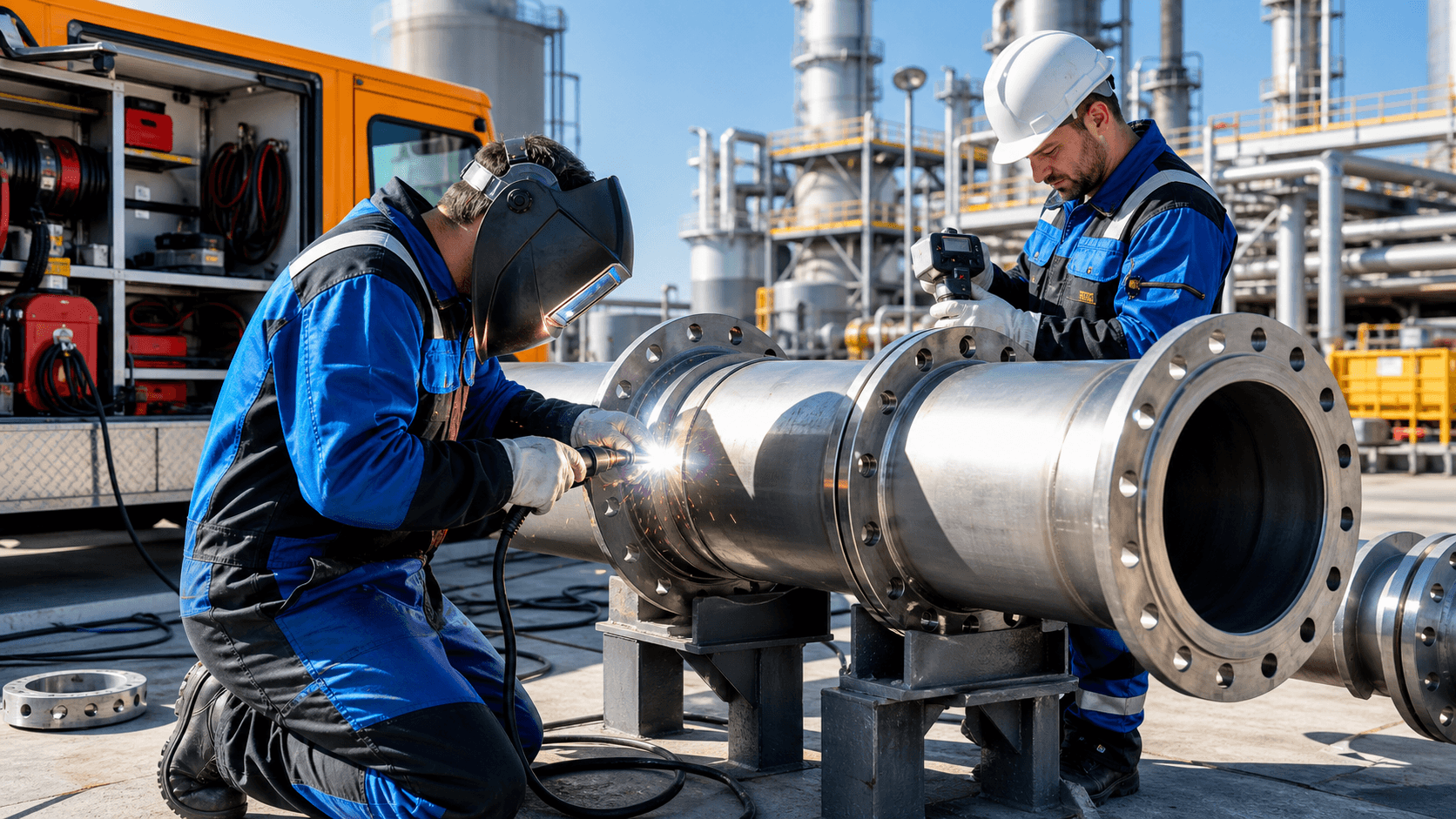
Onsite mobile welding brings the shop to your plant gate. Instead of pulling spools and hauling them somewhere else, certified welders come in with fully equipped rigs, power, tools, and fit-up gear. Work happens right where the pipe lives.
Compared to a shop-only approach, onsite work can:
- Reduce or avoid cutting out full spools
- Cut down on rigging, crane time, and big lifts in tight spaces
- Limit how much surrounding piping and equipment you have to disturb
- Fit targeted repairs into short windows or partial outages
The key is doing it in a way that keeps you in line with AWS and ASME code expectations for welded piping. With proper procedures and qualified welders, onsite mobile welding can support:
- Code-compliant repairs on worn or damaged sections
- Tie-ins for new branches or reroutes
- Modifications that improve stress, drainage, or corrosion resistance
Instead of starting from scratch with brand new spools, you restore integrity and reset the clock on the steel you already have. That can delay big capital projects and keep your maintenance budget under better control, while still respecting safety and compliance.
Strategies to Extend Pipe Spool Life with Onsite Repair
When we look at extending the life of pipe spools, we think in two buckets: repair what is hurt, and tweak what is causing the hurt. Onsite mobile welding gives you tools for both.
Typical repair work on installed spools can include:
- Weld buildup or overlay at worn internal surfaces
- Adding pads or sleeves over localized thinning or pitting
- Swapping out damaged elbows, tees, or small sections in place
- Reinforcing or adjusting support points to calm vibration and fatigue
Retrofits can stretch spool life even further. Common examples are:
- Adding drains or vents so fluids do not sit trapped in low spots
- Modifying supports, guides, and anchors to reduce stress concentration
- Installing corrosion-resistant alloys or cladding in high-risk segments
- Reworking small sections for smoother flow and fewer erosion hot spots
None of this works well without good information. That is where inspection and NDE come in. When you combine onsite mobile welding with tools like UT, RT, PT, and MT, you can:
- Pinpoint the worst damage before cutting or grinding
- Verify that repairs meet acceptance criteria
- Build a clearer picture of remaining life across the whole line
The goal is not just fixing one bad elbow. It is protecting the entire spool system so you get more safe years out of it.
Planning Summer and Fall Turnarounds Around Mobile Welding
Late August in Texas is planning season. Fall outages and turnarounds are on the calendar, but there is still time to tune the scope. Onsite mobile welding fits well into that planning cycle.
When you bake mobile welding into your turnaround plan, you can:
- Group many small repairs and tie-ins into one tightly managed window
- Limit full spool replacements to cases where they are truly needed
- Keep outage durations shorter and reduce schedule creep
A practical planning path often looks like this:
- Flag lines and spools with a history of leaks or corrosion
- Review recent inspection reports and list likely repair spots
- Work with welding teams to define repair methods and needed procedures
- Pre-stage materials, fittings, and access so welders are never waiting
- Coordinate with operations and safety so permits, isolations, and clearances are ready
By the time the outage starts, you want every weld, every sleeve, and every small modification already thought through. That is how you squeeze the most value from each hour of downtime and step back into production with more confidence.
Choosing a Mobile Welding Partner You Can Trust
Not every welding truck is ready for industrial pipe spool work in a live plant. When you are choosing a mobile welding partner, it helps to ask focused questions.
Key things to look for include:
- AWS and ASME code awareness and use of qualified WPS and PQR
- Pipe welders with experience on similar line sizes and services
- A safety record and work habits that match your plant expectations
- Comfort working under permit systems, with spotters and confined-space rules
It also pays to ask about specific piping experience, such as:
- High-pressure or high-temperature services
- Specialty alloys and different filler metals
- Working around operating units where other lines stay live
As a Texas-based contractor, Weldit understands the way local plants run, the seasonal work cycles, and the pace that late-summer and fall turnarounds demand. That local knowledge helps us mobilize quickly to major markets and plug into your processes with less friction.
Extending the Life of Your Piping Before the Next Outage
Minor issues on pipe spools rarely stay minor. As plants roll from the busy summer push into fall maintenance and then back into high demand, those small problems have plenty of chances to grow into forced shutdowns.
A smarter move is to act while you still have options. Walking the lines, reviewing inspection reports, and talking through onsite mobile welding options can uncover high-value repairs that keep your current spools in safe service longer. With the right partner and plan, you can protect uptime, manage maintenance budgets, and keep your piping systems in line with code and safety expectations without replacing more steel than you have to.
Get Started With Your Project Today
If you are ready to keep your hydronic systems operating safely and efficiently, our team at Weldit can bring certified expertise directly to your location with dedicated onsite mobile welding services. We coordinate closely with your schedule and facility requirements so work is completed with minimal disruption. To discuss scope, timing, and pricing, reach out through our contact page and we will respond promptly with a clear plan.