Make Piping Decisions That Will Not Derail Your Project
Choosing between pipe spool prefabrication and field welding is one of those early calls that can quietly make or break a project in Houston. Before the long days, heavy humidity, and storm season stack pressure on your team, it helps to know which work should live in the shop and which belongs in the field. That choice drives ROI, schedule risk, safety, and even how many permits you will be chasing.
In simple terms, pipe spool prefabrication means building sections of pipe in a shop, under controlled conditions, then shipping those spools to the site for final fit-up. Field welding means cutting, fitting, and welding most or all of the pipe right where it will live, often around other trades and live systems. Each path changes how you spend time and money, how clean your welds are, and how much exposure you have to weather and hot-work rules.
We work every day at the point where shop precision meets real-world job sites across Houston and other Texas metros. Owners, general contractors, and plant managers bring us in to help balance these choices under AWS and ASME code requirements so projects stay on track and safe.
ROI Fundamentals for Pipe Spool Prefabrication in Houston
To get ROI right, you have to look beyond the first quote and ask where the work is happening and under what conditions.
Direct cost drivers often include:
- Shop labor versus field labor
- Material handling and scrap
- Rework and repair weld rates
- Equipment mobilization and standby time
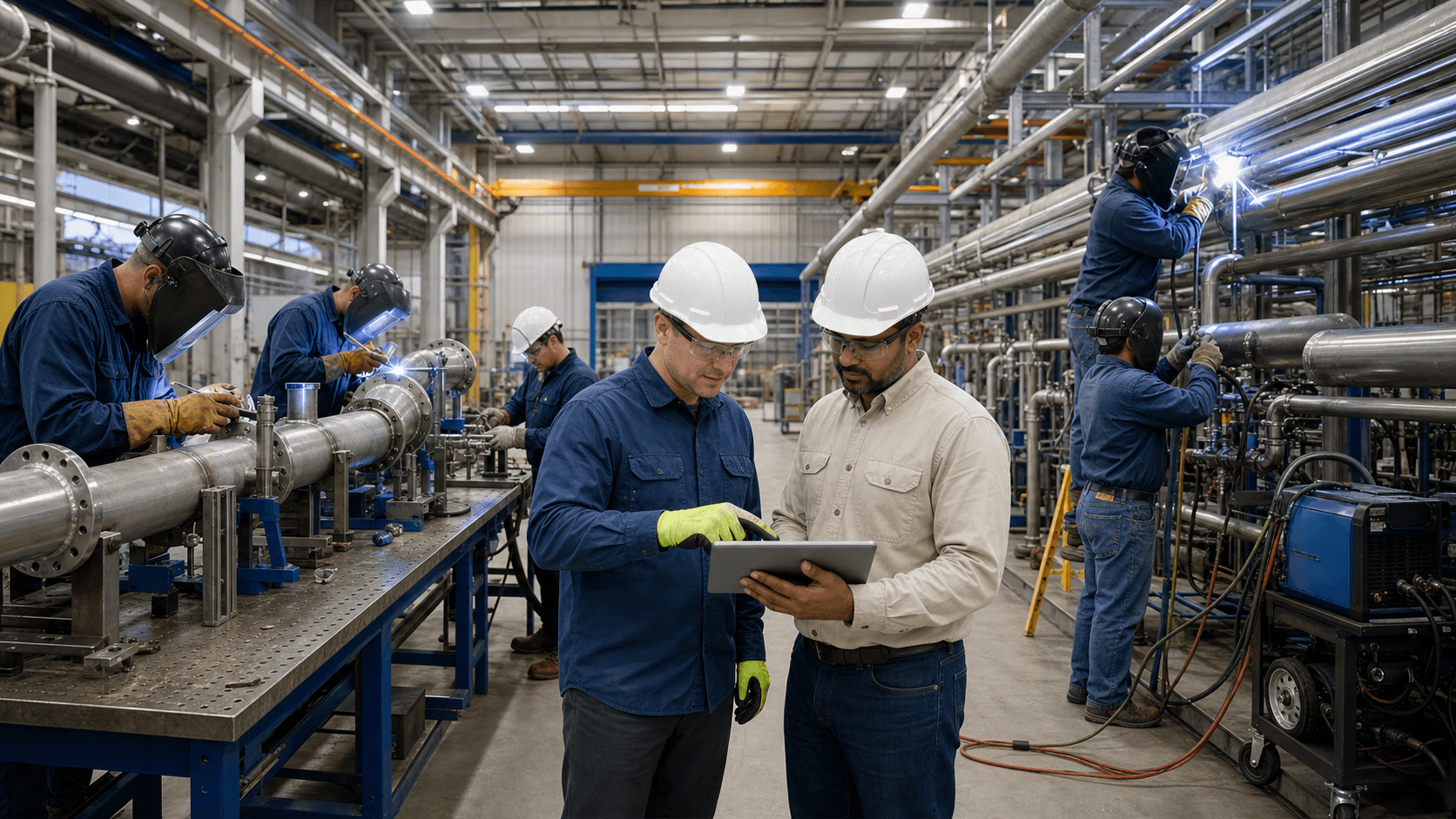
In a shop, welding crews work with jigs, consistent lighting, and steady positions. That usually cuts fit-up time, helps hold tight tolerances, and can reduce how many times you have to rework joints. Non-destructive examination, like radiography or UT, is easier to plan when the pipe is on stands instead of jammed in a ceiling.
In Houston, indirect drivers matter just as much:
- Traffic and access delays getting people and gear into refineries, plants, and downtown sites
- Tight outage and shutdown windows that limit how much hot-work you can do each day
- Heat and humidity that slow field crews, increase breaks, and raise the odds of safety incidents
Field welding big runs during the hottest part of the year can drain productivity and push overtime. Every extra day onsite also means more coordination with security, safety teams, and operations.
For many projects, a hybrid strategy hits the sweet spot. That usually means:
- Prefab as many straight runs and standard spools as possible in the shop
- Keep field welding for final tie-ins, odd transitions, and spots with tricky access
- Shift heavy NDE and pressure testing toward the shop when codes and clients allow
On a typical Houston plant project, long utility runs and repeatable spools are good prefab candidates, while last-connection work around existing equipment stays field-based. On commercial jobs, risers and corridor mains may be prefabricated, with field welds at equipment drops and offsets that depend on real measurements.
Schedule Risk, Weather Windows, and Turnaround Timing
Schedule risk grows fast when most of your weld inches live on a slab exposed to rain, lightning, and changing priorities. Prefabrication moves a big portion of that risk into a dry, controlled space.
With pipe spool prefabrication in Houston, you can:
- Pull critical-path welding forward into the shop before shutdowns
- Build spools while civil and structural work is still catching up
- Reduce weather holds from rain and storm systems
Compare that to a full field weld plan for a plant turnaround. Every storm cell, every lightning hold, and every permit delay chips away at your work window. Crews may be ready, but if access or lockout/tagout is not, your schedule slips.
A prefab plus field tie-in approach often means:
- Shop builds and tests spools early
- Crews rough-set spools quickly at outage start
- Field welders focus on tie-ins, offsets, and final alignment
For mechanical room upgrades and long rooftop runs, prefabricated spools paired with just-in-time delivery can help you:
- Keep float in the schedule by resequencing work if other trades slip
- Avoid stacking too many trades in the same space
- Hit milestones even when site conditions shift late in the game
The key is planning your spool map and delivery plan early so the shop work lines up with your critical dates.
Access Constraints, Lifts, and Site Logistics
Houston projects often live in tight or sensitive spaces, like active petrochemical units, hospitals with 24/7 operations, and crowded downtown high-rises. Those realities drive whether big prefabricated spools are a blessing or a headache.
Large spools can:
- Cut the number of field welds
- Improve quality by keeping more welds in the shop
- Require cranes, rigging plans, and sometimes street or unit shutdowns
Stick-building in place with smaller pieces may:
- Reduce crane time and rigging risk
- Add more field welds in less comfortable positions
- Fit better through doors, stairwells, and around live systems
A simple checklist helps you pick a path:
- Ceiling height and overhead obstructions
- Crane and forklift access, including street closures or flight path limits
- Floor loading limits for heavy spools and equipment
- Clear travel routes from laydown to final location
- Nearby sensitive operations, like labs, patient areas, or control rooms
- Limits on noise, vibration, and tenant or neighbor disruption
Often the answer is mixed: prefab what you can realistically lift and route, then field-weld where size, weight, or live systems block larger assemblies.
QC, NDE, and Code Compliance in Shop vs. Field
Quality control and code compliance are easier to hold in a space built for welding. In a shop, you get:
- Stable temperatures and lighting
- Jigs and fixtures that keep alignment true
- Better weld positions and access for the welder
- Easier oversight of AWS and ASME procedures
NDE is also smoother when inspectors are not fighting ladders, scaffolds, and tight corridors. Radiography, UT, MT, and PT can often be bundled in the shop, which helps with both planning and consistency.
Onsite, those same tasks have to line up with:
- Plant or facility operations
- Access badges and escorts
- Confined space rules and clearances
Documentation and traceability are another piece of the puzzle. Shop fabrication usually supports:
- Clear WPS and PQR use
- Welder continuity records
- Material test report tracking
- Integrated shop and field weld maps for turnover
When one qualified team handles both the spools and the field tie-ins, it is much easier to keep a clean, unified package for the owner, engineer, or inspector.
Hot-Work, Permitting, and Safety in Houston Jurisdictions
Every weld in the field brings paperwork and safety controls. Local codes, fire marshals, and site-specific policies shape where and how much hot-work you can actually perform.
Typical permit and safety pieces include:
- Hot-work permits and fire watch coverage
- Gas detection where needed
- Isolation and lockout/tagout for nearby lines and equipment
- Special rules around flammables and occupied spaces
Welding near process units, fuel systems, or inside busy occupied buildings can raise the bar even higher. Each extra field weld can mean more coordination with safety and operations teams and more downtime for the area around the work.
Strategic prefabrication helps by:
- Moving a chunk of weld inches into a controlled shop with no hot-work permit limits
- Cutting the number of open flames and sparks inside the facility
- Shortening the time that operations or tenants are affected during installation
As summer operations and storm plans ramp up, many owners want less onsite hot-work, not more. Good prefab planning supports that goal while still meeting code and performance needs.
Build Your Project-Specific Pipe Spool Strategy
The right mix of prefab and field welding is never one-size-fits-all. A simple framework can guide the conversation:
- Project type, from industrial units and utility lines to commercial mechanical rooms
- Pipe size, wall thickness, and metallurgy
- Schedule constraints, outage windows, and milestones
- Access conditions, lifts, and routing limits
- QA and NDE expectations from owners and regulators
- Hot-work rules, permit limits, and safety considerations
When we work with owners, engineers, and contractors in Houston and across Texas, we like to get involved early enough to help with constructability reviews and spool maps. That timing lets us plan how shop and field work will share the load so ROI, schedule risk, and code compliance all line up without surprises.
Get Started With Your Project Today
If you are ready to cut field delays and keep your schedule on track, our team is here to help you plan and execute efficient pipe spool prefabrication in Houston. At Weldit, we work with your specifications, timelines, and budget to deliver reliable results that fit your workflow. Share your project details with us so we can recommend the best approach and provide a clear quote. If you are ready to move forward or have specific questions, simply contact us today.