
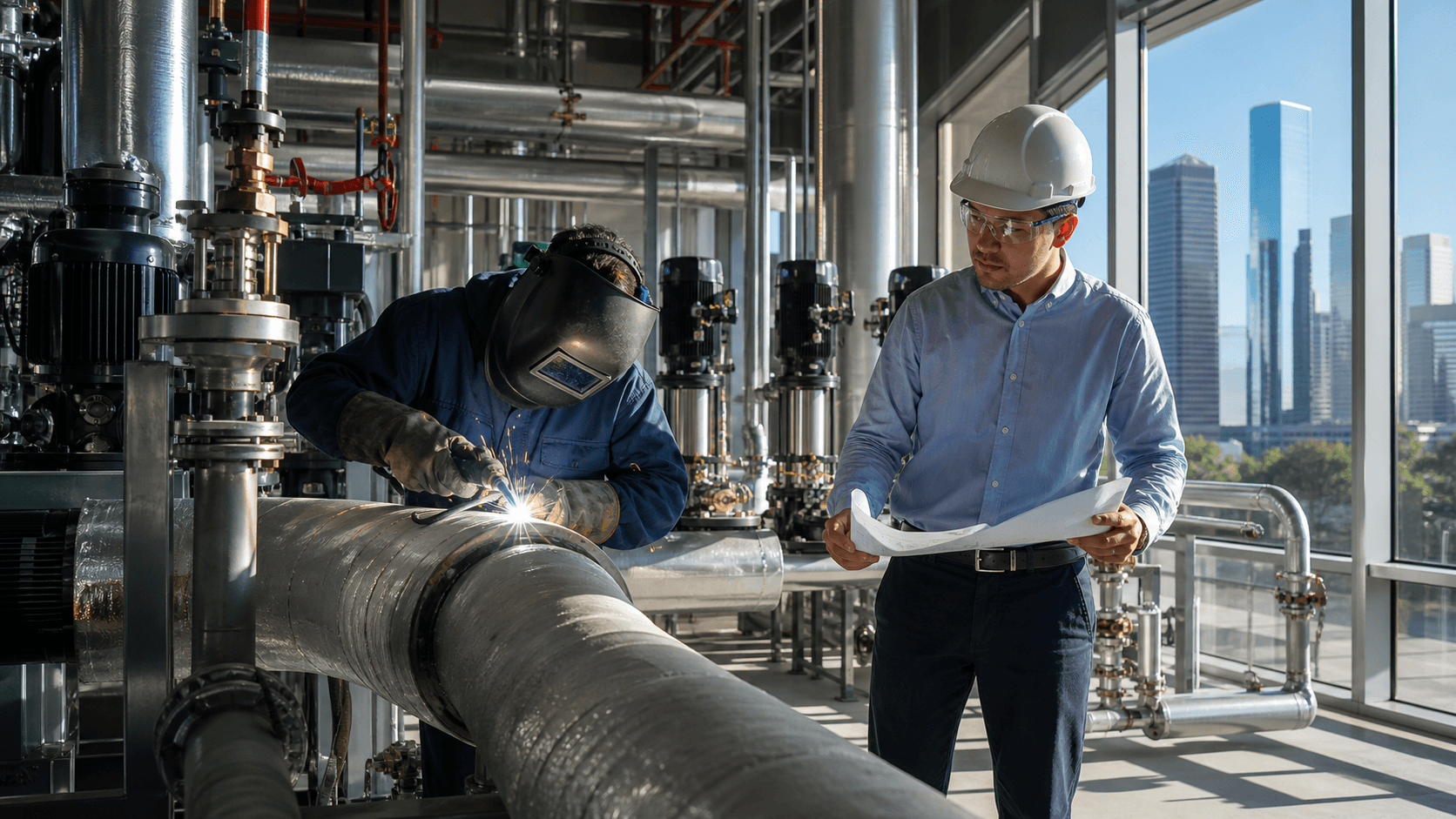
Hydronic piping welding services keep a lot of Houston buildings cool, steady, and open for business. If you manage a property, handle facilities, or run projects for a contractor, these hidden systems affect comfort, energy use, and your stress level when the heat and humidity kick in. This guide breaks down what hydronic piping is, why welding quality matters, and how good work in the mechanical room protects your building long term.
We will walk through how these water loops work, what goes into welding them, and the special stresses they see in our Texas climate. By the end, you will have a clear picture of what to look for when planning upgrades, repairs, or system expansions.
Why Hydronic Piping Welding Matters in Houston Heat
Hydronic piping systems move cooled or heated water through a building. Instead of pushing only air, they send water through pipes to equipment that handles the air. You see these systems in:
- Mid and high-rise offices
- Hospitals and medical centers
- Schools and campuses
- Multifamily buildings
- Industrial plants and process areas
When the heat drags on late into summer, these loops are what keep indoor spaces steady and comfortable. If hydronic piping is leaking, restricted, or poorly welded, you feel it quickly, in higher operating costs, uneven comfort, and more urgent service issues. Common impacts include:
- Higher energy bills as pumps and chillers work harder
- Hot and cold spots across floors and tenant spaces
- More downtime and emergency calls when equipment trips
Professional hydronic piping welding services keep these loops sealed, aligned, and code compliant. That means steady comfort, better control of costs, and less risk of damage to finishes and equipment.
How Hydronic Piping Systems Keep Houston Buildings Stable
A typical hydronic system is a team effort, with several major components working together:
- Boilers for hot water, where needed
- Chillers for chilled water
- Pumps that move the water loops
- Heat exchangers for special loads or process needs
- Terminal units like fan coils and air handlers
- Welded steel piping connecting it all
Hydronic systems are different from simple forced-air-only systems. Instead of relying on long runs of ductwork to move air everywhere, they move water, which carries heat more efficiently than air. That usually means better temperature control from zone to zone, quieter operation in offices and tenant spaces, and more stable indoor conditions on long, hot days.
Heading into late summer and early fall, many buildings are full for back-to-school, peak office hours, and heavy production. If a hydronic loop fails then, you can face unscheduled shutdowns, broken schedules, and a lot of unhappy people. Strong piping and reliable welds lower that risk.
What Hydronic Piping Welding Services Actually Include
Hydronic piping welding services cover much more than just making a weld bead. For new builds and retrofits, the work often includes:
- Layout and routing of the piping runs
- Pipe cutting, fit-up, and preparation of joints
- Field welding with proper procedures
- Supports and anchors so lines stay where they belong
- Tie-in to existing lines, equipment, and risers
Typical project scopes might involve:
- Boiler and chiller primary piping
- Pump connections, headers, and manifolds
- Vertical risers and horizontal branches to floors
- Plant expansions to add capacity or redundancy
- Emergency leak repairs in mechanical rooms or ceilings
A lot of work can be prefabricated in a shop setting. Prefab spools are built to AWS and ASME standards in a controlled environment, then delivered to the site. Mobile welders then make the final field welds, alignment checks, and tie-ins. This split helps keep installs cleaner and faster, with less disruption to building operations.
Why Code-Compliant Welding Protects Your Building Assets
Hydronic piping often runs under pressure and at different temperatures, so welding is not just about getting pipes to stick together. AWS and ASME code compliance helps make sure the piping can handle the load for years. Proper welding supports:
- Structural integrity under temperature and pressure swings
- Lower risk of ruptures or sudden failures
- Longer life for connected equipment and valves
To get there, we focus on quality controls such as:
- Qualified welding procedures that match the service
- Certified welders with the right process training
- Compatible materials and filler metals for each system
- Inspections like visual checks and pressure testing, with nondestructive testing when required
When welding is rushed or not compliant, real problems show up. These can include chronic leaks dripping into tenant spaces, damage to slabs or ceilings, mold risk from hidden moisture, and pumps that work harder because of misaligned lines or trapped air. In peak cooling months, those issues can turn into unplanned outages at the worst time.
Benefits of Professional Hydronic Piping Welding Services
Good hydronic piping work pays off every day the system runs. On the efficiency side, professional welding services support:
- Correct pipe sizing to match flow needs
- Smooth weld transitions that reduce turbulence
- Proper support spacing to avoid sagging and air pockets
- Lower overall pressure drop in long loops
This also cuts risk throughout the building. With clean, aligned piping, you are less likely to deal with repeated service calls for the same leak location, stress on chillers, boilers, and pumps from strain or vibration, or damaged finishes from small but ongoing drips.
Over the life of the building, a well-planned piping system makes life easier. It can give you:
- Safer, more organized mechanical rooms
- Clearer access for valves, strainers, and equipment service
- Space and connections ready for future build-outs or plant expansions
Houston-Specific Challenges Hydronic Piping Must Withstand
Hydronic piping in Houston has to live with more than just pressure and flow. Our climate and conditions put extra stress on systems:
- High heat and long cooling seasons that keep loops running
- Heavy humidity that drives condensation on chilled lines
- Storm exposure and wind-driven rain at roof and exterior runs
- Large temperature differences between cold water and warm ambient air
Experienced welders and fabricators plan for these realities in the way they design, fabricate, and install piping. They select suitable pipe materials and wall thickness for the duty, shape weld profiles that work well with insulation and jackets, use corrosion-conscious fabrication methods and supports, and set support spacing that handles thermal movement and load.
There is also a timing challenge in major Texas markets. Work often has to happen:
- Around peak AC demand with minimal downtime
- In sensitive spaces like healthcare and industrial plants
- On fast-track schedules, off-hours, or weekends to keep operations going
Plan Your Next Hydronic Piping Upgrade with Confidence
As late summer projects line up and fall capital work gets planned, it is a smart time to look closely at your hydronic piping. Signs like known leaks, long-standing hot and cold spots, noisy pumps, or an aging mechanical room often signal that piping and welds deserve attention.
A practical way forward is to walk the site, review the current piping layout, and mark problem areas. From there, you can build a phased welding and fabrication plan that covers repairs, key upgrades, and long-term changes while keeping downtime low. When you need a partner that understands AWS and ASME code work, mobile response, and shop-quality fabrication brought to the job site in Houston and across Texas, we are ready to help.
Get Started With Your Project Today
If you are planning a new build or upgrading an existing system, our specialized hydronic piping welding services can help you deliver reliable performance and long-term efficiency. At Weldit, we work closely with your team to align our work with your schedule, budget, and technical requirements. Share a few details about your project and we will provide clear next steps and timing. If you are ready to move forward, simply contact us and we will get your hydronic piping scope underway.