When Pipe Spooling Beats Stick-Built for Houston Tie-Ins
Pipe spooling and stick-built piping both get product from point A to point B, but they do it in very different ways. On a tight Houston tie-in, that choice can decide if you finish during the outage window or chase problems into startup. So the real question is simple: when does prefabricated pipe spooling actually beat traditional field-built piping on schedule, risk, and stress for your team?
In plain terms, pipe spooling means welding and fitting most of the line in a controlled shop, then shipping ready-to-set spools to the site. Stick-built means cutting, fitting, and welding piece by piece in the field. Around the Houston area, that choice sits inside a very real world: long hot days that wear crews down, strict safety cultures in plants, hurricane and storm season hanging over the calendar, and permit lines that can slow hot work to a crawl.
This article sorts out four practical decision points owners, EPCs, and contractors across the Gulf Coast deal with on tie-ins:
- When spooling actually shortens your timeline
- How hot-work permits and safety zones change the math
- What happens to outage plans when you shift work offsite
- How spooling plays into rework, punch lists, and startup risk
How Fast Do You Really Need This Houston Tie-in Done?
Houston plants and terminals often run hard with very high utilization. Outage windows are short, and turnarounds stack up along the ship channel and industrial corridors. You are fighting for the same contractors, cranes, and inspectors as everyone else, usually right as the calendar fills with year-end work and holidays.
With stick-built piping, your timeline typically follows a predictable sequence:
- Material shows up at site, then gets staged
- Fitters and welders build the line in place
- NDE, hydro or pneumatic tests, and coatings pile into the same space
- Crews trip over each other in racks and units as everyone races the outage clock
With pipe spooling in Houston, TX, you shift a lot of that work earlier so the outage window is used more for setting and tying in than for full fabrication:
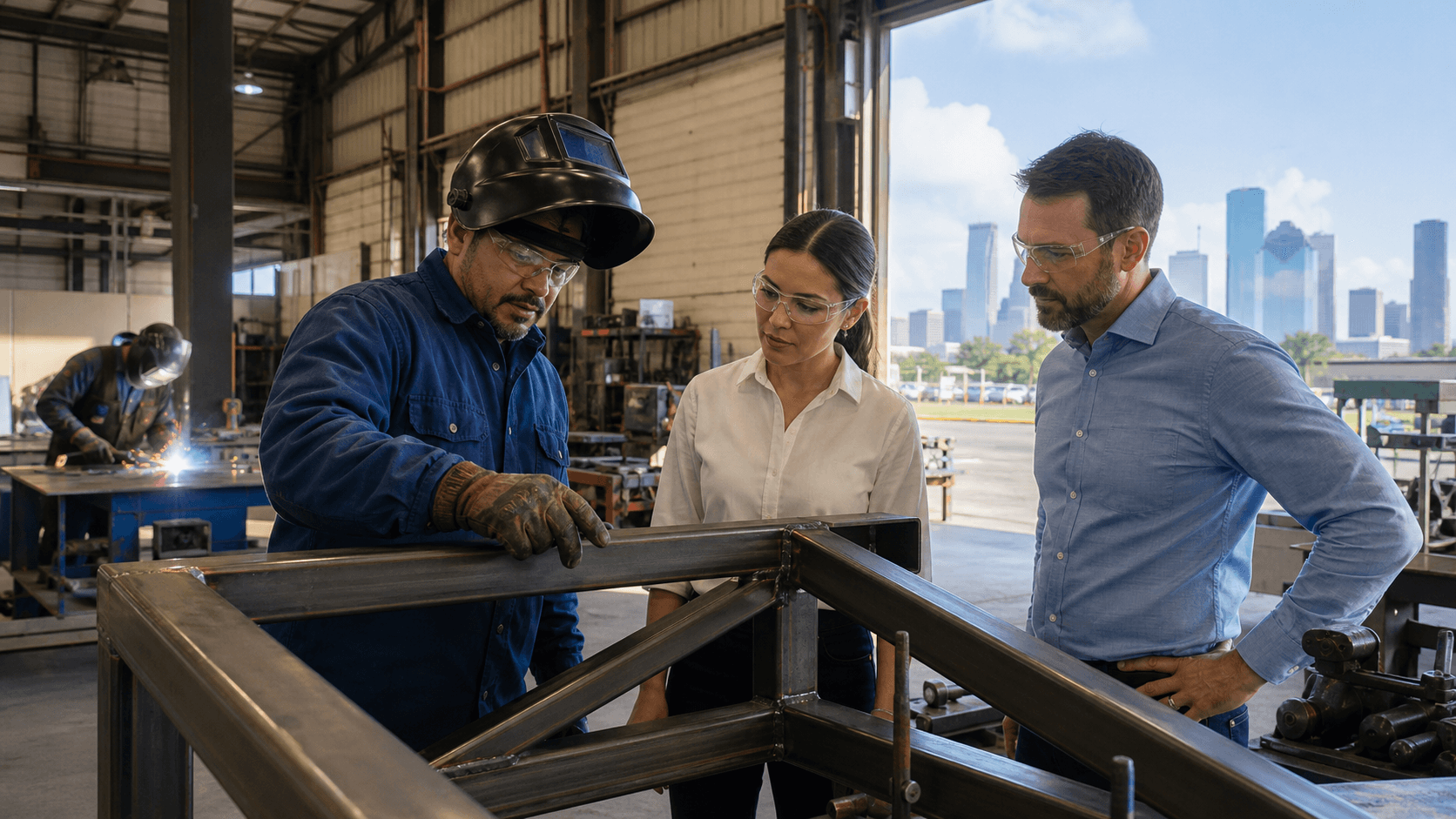
- Shop teams cut, fit, and weld spools in a controlled space
- NDE and pressure tests can be handled before the outage
- In the field, crews mainly set spools, make fewer closure welds, and tie into equipment
Spooling clearly helps when you can define the work up front and repeat it reliably:
- You have repeatable spools or mirrored lines
- Tie-in points are well known and well documented
- Long-lead materials land early enough for shop work to start
- Site access is limited, but you are allowed to start shop welding ahead of the outage
Field-built piping can still be faster when uncertainty is the real constraint and you need maximum flexibility at the tie-in:
- Tie-in locations are not fully known
- You are tying into old, heavily corroded systems that may not match drawings
- The model is rough and you expect a lot of clashes that need real-time field adjustments
When Hot-Work Permits Make Field Piping Crawl
Across Houston refineries, chemical plants, and storage sites, hot work is not casual. It often means multiple signatures, gas tests, time limits, and tight rules around running equipment. On some units, welders barely get settled before a window closes or another job bumps the permit.
With stick-built piping, most steps in the line need hot-work approval, and that requirement repeats over and over as the line gets built and adjusted:
- Cut-outs and demo
- Fit-up tack welds
- Root passes and fill passes
- Small field tweaks as you fight for fit
Every delay on a permit hits the schedule. Welders wait. Inspectors wait. Your outage clock does not.
Pipe spooling cuts that exposure by moving the bulk of welding offsite and leaving fewer field welds to plan, permit, and execute:
- Most welds happen in the shop under a controlled safety program
- Field crews make fewer, more strategic welds that are easier to plan and permit
- Less time is lost to surprise permit holds or air-quality alarms
Spooling starts to look like the smart move when the work area is high-consequence and permit windows are limited:
- Your tie-ins are in very tight production units
- The site is already on heightened safety alert
- The tie-in is near high-hazard equipment, where welding windows are short and can close without warning
Outage Windows Versus Shop Time Where Spooling Wins
Turnarounds around late October can feel like a traffic jam. Cooler mornings help crews, but outages still fight for labor, cranes, and QA resources, all while storm season can still twist schedules.
The trick is to move as much work as you can earlier in the calendar. With pipe spooling in Houston, TX, you can do that by fabricating, verifying, and planning before the plant is down:
- Fabricate and test spools weeks or even months before the outage
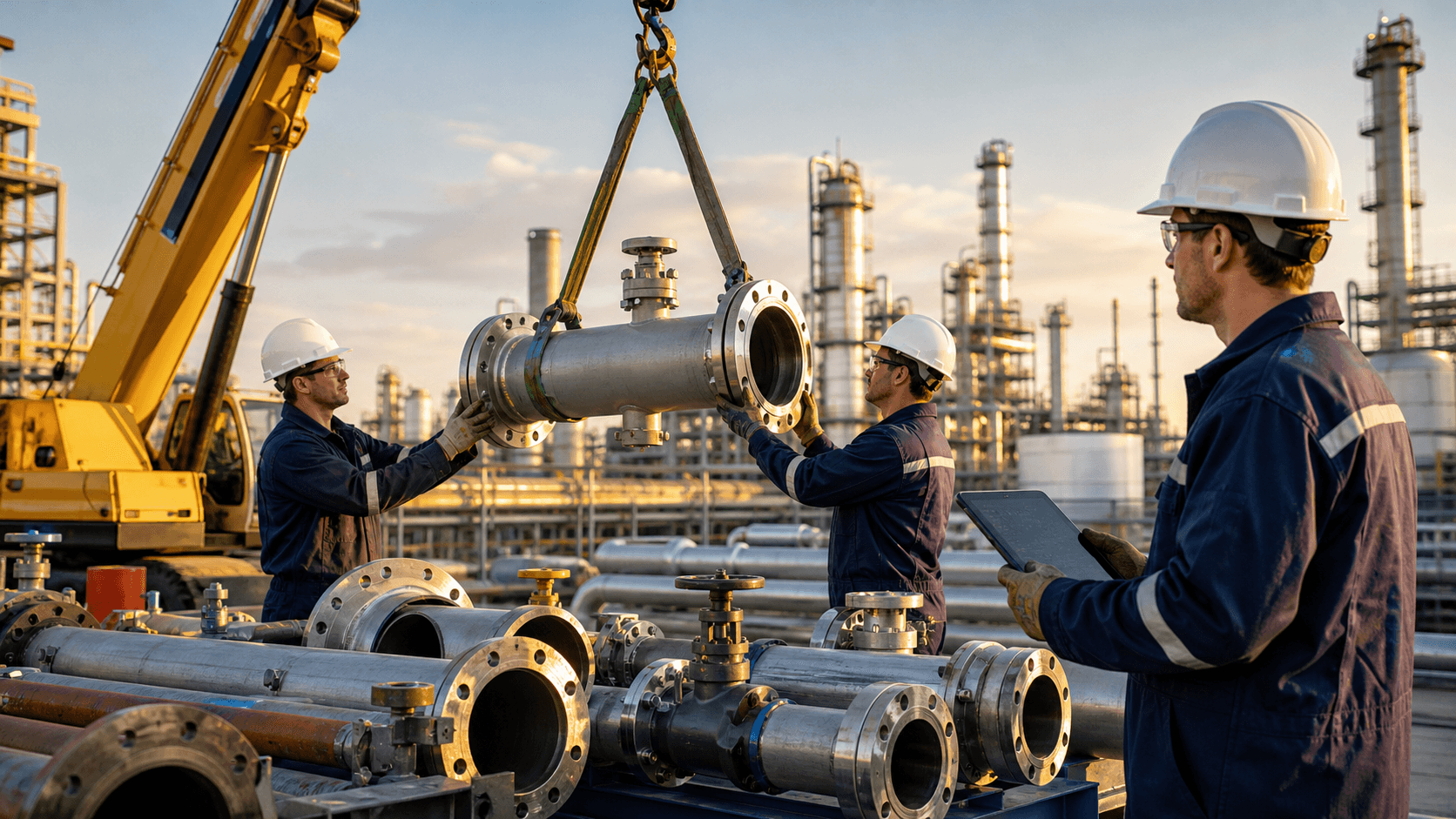
- Pre-plan crane picks and rigging paths
- Come into the outage with ready-to-set pieces that drop into place quickly
The labor picture looks very different too. Stick-built piping generally requires a larger, steady onsite welding crew for much of the outage, while spooling lets you keep a smaller, focused field crew that handles picks, alignment, and final welds while the heavy welding is already finished in the shop.
That shift cuts risk from factors that tend to spike exactly when outages are most compressed and plants are most exposed:
- Weather delays and rain showers dragging out field welding
- Trade stacking, where scaffold, insulation, electrical, and piping all crowd the same space
- Overtime pressure on supervisors, inspectors, and planners at the exact moment the plant is most exposed
How Much Field Rework Can Your Startup Tolerate?
Rework is where quality and schedule collide. When you build stick in the field, your welders are dealing with tight access, variable conditions, and constant interruptions that make precision harder to maintain over long shifts:
- Tight access around equipment and structures
- Variable light and weather
- Noise, vibration, and constant movement around them
That is a hard place to get perfect alignment on every branch and every flange face. Fit-up can drift. End preps can be off. A small clash with existing steel can burn hours when the clock is already ticking.
Shop-fabricated spools change that picture by putting fit-up and welding in a stable environment designed for consistency and repeatability:
- Fit-up happens on stands and positioners, not on a scaffold
- Lighting, tools, and material handling are consistent
- QA processes are easier to keep steady and clean
Higher spool quality tends to cut down on common late-stage pain points that show up during punch list and pre-startup verification:
- Misaligned branches that do not land where the model says
- Field fit-up fights around pipe racks and platforms
- Last-minute routing changes to dodge other lines and cable trays
Good spooling also pairs with clean documentation. Certified shops are set up to track materials, weld procedures, and NDE so turnover packages go smoother for industrial owners and EPCs. That said, there are jobs where field work still makes more sense, especially when existing conditions cannot be trusted or design is still moving:
- Brownfield tie-ins with poor or outdated as-builts
- Heavily congested racks where you do not trust the model
- Projects that are still changing design details right up to outage day
A Practical Checklist for Your Next Houston Tie-In
When you plan your next tie-in around the Houston area, it helps to ask a few straight questions. For each line, think about:
- Operating temperature and pressure
- Exact plant location and how tight that unit is
- Outage length and how much float you really have
- Hot-work rules and how strict the permit culture is
- Reliability of as-built drawings and models
- Routing complexity and how many trades share that space
From there, owners, EPCs, and contractors can sort lines into groups like:
- Good spool candidates with clear tie-in points and repeatable geometry
- Better stick-built lines where field conditions are just too unknown
- Hybrid lines where you spool main runs but keep final fit and some branches field-built
As Q4 and Q1 outage plans stack up, that kind of early filter can protect your schedule and startup. The more welding you can shift into a controlled shop, the less you are gambling on permits, weather, and field clashes once the plant is down. For teams across Houston and the Gulf Coast, that balance between pipe spooling and stick-built work is one of the biggest levers you have to keep tie-ins safe, clean, and on time.
Get Started With Your Project Today
If you are ready to streamline your next industrial build, Weldit is here to deliver reliable, high-precision pipe spooling in Houston, TX tailored to your specifications and schedule. Our team works closely with you from design through delivery so your system installs smoothly and performs as planned. Tell us about your project and we will provide clear recommendations, transparent pricing, and realistic timelines. To discuss details or request a quote, simply contact us today.