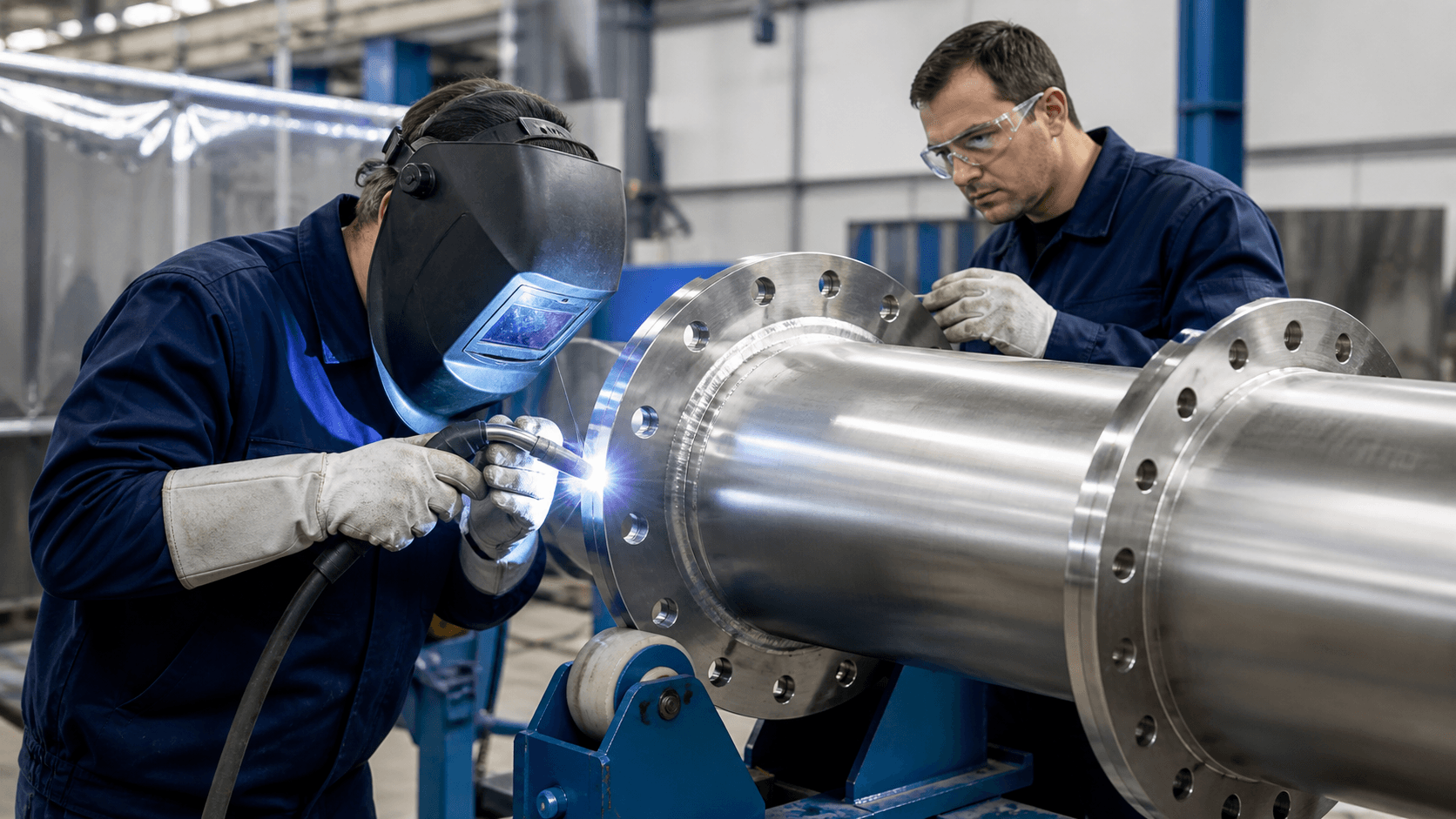
Industrial welding repairs are not just another line item on a shutdown checklist. The way you assess and plan those repairs before you lock in outage dates can decide whether your plant keeps running smoothly or scrambles through expensive surprises. When welds fail without warning, production, safety, and budgets feel it fast.
In heavy industrial sites around Houston and across Texas, welds work hard every day. Heat, humidity, heavy loads, and long run times all push your equipment. We want to walk through how to assess your welding repair needs before you schedule a shutdown so you can protect uptime, control risk, and line up the right team and scope at the right time.
Protecting Uptime Before You Plan a Shutdown
Unplanned weld failures often hit at the worst possible moment. A line leaks, a support cracks, or a skid joint lets go, and suddenly you are dealing with:
- Lost production while the unit is isolated
- Emergency safety measures and extra oversight
- Rush repair work, expedited materials, and schedule chaos
All of that usually costs far more than a well-planned outage where you already know what needs attention. A pre-shutdown welding assessment is really a reliability tool. It helps you see where welds are likely to fail, instead of waiting for them to break during a busy period.
In late summer and fall around Houston, equipment is often running hard to meet demand. Combined with heat, humidity, and heavy cycles, small weld issues can grow fast. Getting ahead of them before you lock in your outage window keeps your team in control instead of reacting.
Mapping Critical Assets Before the First Arc Strikes
Not every weld in a plant needs the same level of attention before a shutdown. The first step is mapping the assets where weld failure would hurt you most. Common high priority areas include:
- Pressure piping and headers
- Process vessels and tanks
- Structural supports and platforms
- Skids and modular packages
- High-cycle weld joints around pumps, compressors, and rotating equipment
A simple way to build a risk-based list is to ask a few questions for each system:
- How old is this asset and how many hours has it seen?
- What are the service conditions like temperature, pressure, vibration, corrosion?
- Has this area needed repairs before?
- Are there OSHA, API, or insurance requirements that apply here?
We also suggest pulling together operations, maintenance, and safety when you define what counts as "critical." Operations will flag what shuts production down. Maintenance will know what tends to fail. Safety will highlight welds that protect people and the environment. When all three agree on priorities, your outage scope is much easier to defend.
Inspecting Welds the Right Way Before Outage Season
Once you know your critical assets, good inspection work is the next step. Visual inspection sounds simple, but it takes planning. Before anyone starts looking at welds, make sure you have:
- Safe and clear access, including scaffolds or lifts where needed
- Clean surfaces, with coatings and dirt removed as required
- Proper lighting so you can see root, toes, and heat-affected zones
During visual checks, common warning signs include:
- Surface cracking or star-shaped cracks near weld toes
- Undercut, overlap, or obvious weld profile defects
- General corrosion, pitting, or thinning around welds
- Distortion, misalignment, or loose supports
When visual inspection raises questions, that is the time to involve certified inspectors and non-destructive examination. Methods like VT, MT, PT, UT, and RT can help confirm what is going on under the surface, especially in pressure-retaining or high-stress areas.
A mobile welding and fabrication provider that works to AWS and ASME codes can help by pre-staging inspection resources across large sites. In a spread-out Houston facility, having people and equipment come to the problem areas instead of dragging components to a shop keeps your assessment efficient.
Turning Findings Into a Repair Scope and Budget
Inspection results are only useful if they turn into a clear plan. Start by building a prioritized repair list that groups work in a way your crews can actually execute. Many plants like to organize by:
- System or unit
- Physical area or elevation
- Required welding procedure and process
From there, you can estimate the pieces that drive outage planning: labor hours, materials, access gear, permits, and any specialty services. It is smart to add some contingency for discoveries, especially in older units where opening equipment often reveals more than expected.
A detailed scope, supported by inspection reports and code references, does more than guide welders. It helps streamline approvals with management, insurers, and regulators. When everyone can see what will be done, where, and under which procedures, scope creep during the outage is less likely and your schedule is easier to protect.
Choosing the Right Welding Partner for High-Stakes Repairs
When the work touches pressure systems, structural steel, or critical skids, the welding contractor you bring in matters. For industrial welding repairs in Houston, it helps to look for:
- Proven AWS and ASME code experience
- A strong safety record and site-ready crews
- Familiarity with on-site work in active plants
- The ability to support both welding and fabrication needs
Mobile welding and fabrication gives you flexibility. On-site pipe spooling, structural steel work, skid package repairs, and emergency fixes can all be handled without pulling equipment off-site. That reduces handling risks and keeps your shutdown more focused.
Before the outage, many plants set up walkdowns with their welding provider. During those walks, you can align on access routes, weld sequencing, heat input controls, and QA/QC documentation. That shared understanding up front helps everyone move faster when the clock is ticking.
Scheduling Repairs Around Houston's Seasonal Demands
Shutdown planning also has to respect the calendar. Around the fall in Houston, plants often balance maintenance with steady production needs and upcoming holiday periods. Outdoor welding during long, sunny days can mean crew fatigue if you do not plan for rest, shade, and hydration.
When picking a shutdown window, think about:
- Your production cycles and customer demand
- Supplier lead times for fittings, plate, and specialty materials
- Rental equipment availability for lifts, welding machines, and access gear
Lining up a mobile welding team early helps you lock in skilled crews and fabrication slots before everyone else hits their fall maintenance work. That lead time adds stability to your plan, instead of scrambling when the calendar is already full.
Next Steps to Plan Reliable Industrial Welding Repairs
A simple way to move forward is to break the work into clear steps:
- Build an asset list focused on critical welds
- Set an inspection plan with access and NDE needs
- Rank risks based on production and safety impact
- Turn findings into a scoped repair list and timeline
- Select a welding partner with the right code experience
- Finalize your shutdown schedule with contingencies
Pre-outage welding assessments are one of the strongest tools you have to protect uptime and safety at the same time. When industrial welding repairs in Houston are planned with clear data, realistic scopes, and the right partners, shutdowns become controlled projects instead of stressful emergencies. Weldit is based in this region, and our team focuses on code-compliant mobile welding and fabrication that fits these kinds of planned outages and repair programs.
Get Started With Your Project Today
If you need reliable industrial welding repairs in Houston, Weldit is ready to help you keep your equipment and structures operating safely. We work closely with you to understand your timelines, on-site needs, and technical requirements so the repair fits your operation. Reach out today to discuss your project and schedule service, or contact us with any questions.