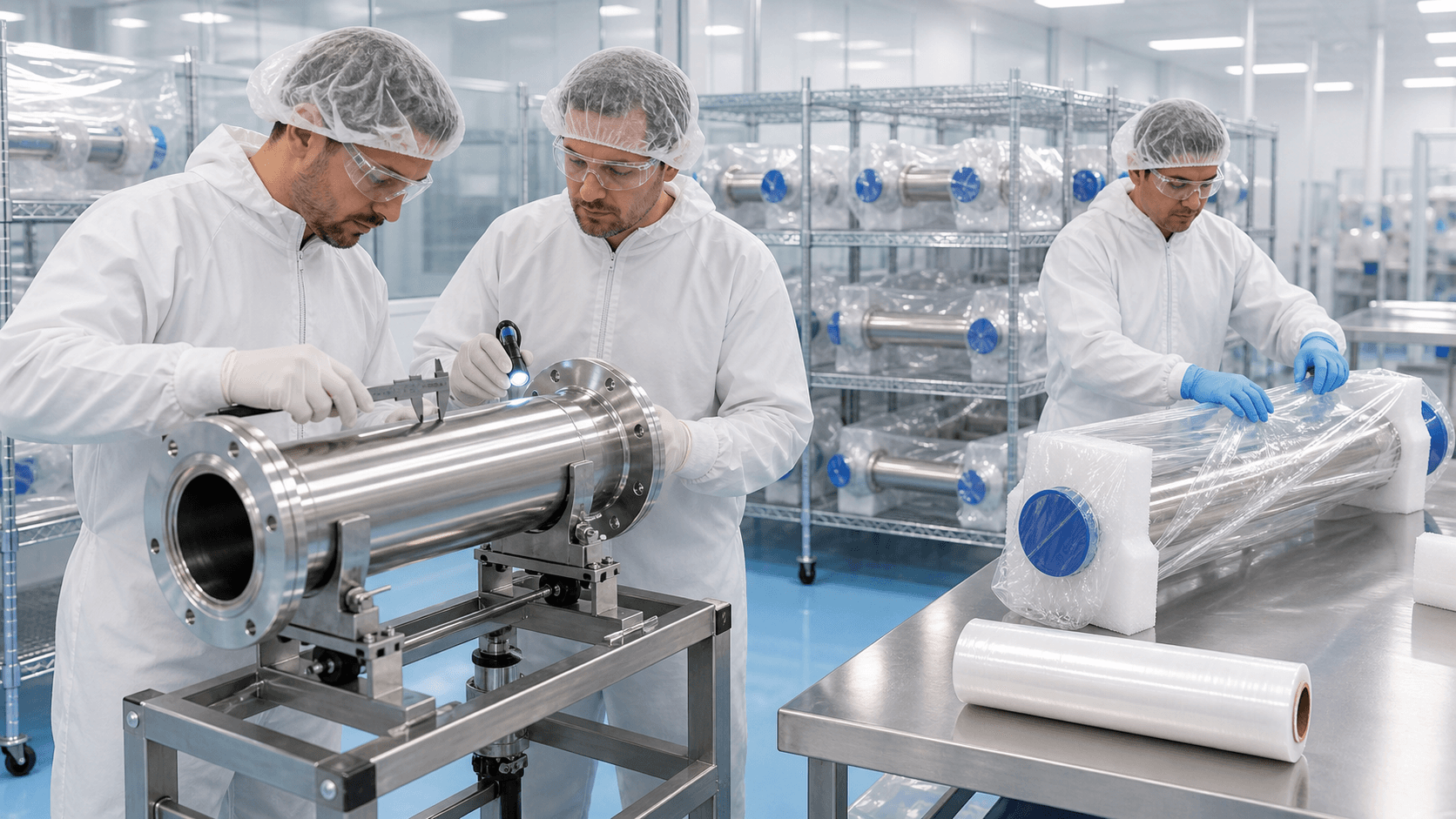
Clean-room stainless steel pipe spooling lives or dies on QA and QC. When you are trying to hit tight commissioning dates in the middle of Houston's summer shutdown season, you do not get many second chances. If pipe spools show up with bad paperwork, dirty welds, or contamination inside the line, validation teams notice, and schedules slip fast.
In this article, we will walk through what it takes to get stainless steel pipe spooling truly audit-ready for clean-room and high-purity work. We will focus on three big areas that trip up projects in our area: material traceability, surface finish and passivation, and packaging controls that can survive Houston's heat and humidity.
Clean-room Pipe Spools That Pass Audits the First Time
Summer construction and shutdown windows tend to be compressed. Crews are stacked, trades overlap, and every correction hurts the schedule. That is why first-pass QA and QC on stainless steel pipe spooling is so important. It is not just about making a good weld. It is about proving that every inch of pipe meets the spec.
The risk is often invisible to the eye. Small issues can cause big trouble, such as:
- Microscopic contamination inside lines
- Missing or mismatched heat numbers on fittings
- Surface finish that does not match the spec sheet
- Incomplete weld or inspection documentation
Any one of these can stop a validation, trigger rework, or even stall a clean-room build. Our focus as a mobile welding and fabrication partner is to build stainless steel pipe spooling that lines up with code requirements, clean-room needs, and documentation that actually satisfies auditors.
By the end, you will know what to look for when you review a spool package so you can trust the traceability, the stainless surface, and the packaging long before the first hanger goes up.
Why Houston Clean-Room Projects Need Tight QA and QC
Houston is a great place to build, but it is not kind to stainless if controls are weak. High humidity, salty air in some areas, and constant industrial activity can all affect clean work if you do not plan for them.
For life sciences, semiconductor, medical device, and food and beverage plants, expectations keep going up. FDA rules, ISO standards, and stricter client audits all push for cleaner systems for things like:
- WFI and purified water
- Clean steam systems
- High-purity process gases
- CIP and SIP lines
Common failure points we see on high-purity projects include:
- Wrong or missing heat numbers on pipe and fittings
- Welds not mapped to a welder ID or WPS
- Rouging and discoloration from poor or skipped passivation
- Packaging that lets moisture or dust in during summer transport
Each problem has a cost. It can mean cutting out spools, re-passivating whole runs, repeating inspections, or holding up qualification steps. Strong QA and QC are what keep those risks low.
Material Traceability From Mill Certs to Welds
Good stainless work starts on paper. A clean-room line should have traceability from the mill all the way to the last field weld. That means every spool, fitting, and weld can be tied back to verified material.
A solid traceability flow usually includes:
- Mill test reports linked to heat numbers on every piece
- Alloy verification where needed for high-risk services
- Clear tags that match project isos and P&IDs
- Digital records that stay synced with revisions
Welder qualifications also matter. For clean-room piping, owners and inspectors expect to see:
- Welder IDs and current qualifications
- WPS and PQR references for each weld type
- Weld maps that show exact locations per line number
- Inspection results, including any repairs and re-tests
At the end, a complete QA and QC package for stainless steel pipe spooling should include:
- Material certs and any PMI reports
- Weld logs and weld maps
- NDT records where required
- Turnover binders that match the project documentation
When this is done right, FAT, SAT, and qualification walkdowns move faster, with fewer surprises in front of auditors.
Getting Stainless Steel Surfaces Audit-Ready
For clean-room and high-purity lines, the inside surface of the pipe matters as much as the alloy. Many pharma, semiconductor, and food-grade specs call for low Ra values, such as 20 to 30 Ra or better, to support cleanability and reduce corrosion risk.
To hold that finish from shop to startup, fabrication work needs controls like:
- Clean cutting and careful deburring
- Orbital or well-controlled GTAW welding
- No carbon steel tools or grinders that can leave iron on the surface
- Abrasives and work areas kept just for stainless
Passivation is another key step. A good passivation process typically includes:
- Chemical cleaning to remove free iron and contaminants
- Controlled contact time with the passivating solution
- Thorough rinse and neutralization
- Verification tests, such as water break or iron detection
For higher-risk systems, some projects also use third-party or lab checks to confirm that the stainless surface is rich in chromium and ready for service before anything ships out.
Packaging and Transport That Protect Clean-Room Integrity
Even perfect spools can be ruined by poor packaging. By the time stainless steel pipe spooling moves across the Houston area in summer, it may go through hot trailers, dusty yards, and tight laydown areas.
Good contamination-control packaging should include:
- Poly-bagging to keep dust and debris off
- End caps on every open nozzle and branch
- Double-bagging for higher classification areas
- Clear labels to separate clean and non-clean parts
Heat and humidity are constant concerns. If packaging is weak, you can get:
- Surface corrosion under trapped moisture
- Damaged or unreadable labels
- Staining on freshly passivated areas
Careful loading and handling are just as important. That might mean:
- Soft slings and padded supports to avoid dents and scratches
- Dedicated spots on the truck for clean spools only
- Chain-of-custody steps that track who handled what and when
When packaging and logistics line up, spools can arrive truly installation-ready instead of needing on-site cleaning and rework.
Turning high-purity Specs Into Reliable Systems
High-purity pipe specs only help if they show up in the finished work. Traceable materials, controlled welding, clean surfaces, and smart packaging all work together to support faster approvals and smoother validations.
For owners, EPCs, and mechanical contractors in the Houston area, this is especially important during late-summer shutdowns when every hour on the schedule counts. Reviewing how stainless steel pipe spooling is tracked, finished, and packaged before orders go out can prevent a lot of last-minute pain.
As a mobile welding and fabrication team focused on stainless work and code-compliant pipe spooling across Texas, we build our processes around these QA and QC needs so clean-room and high-purity projects can move from drawings to commissioned systems with fewer surprises.
Get Started With Your Project Today
If you are ready to move your project from planning to production, our stainless steel pipe spooling capabilities are built to help you hit your schedule and quality targets. At Weldit, we work with you to clarify requirements, coordinate timelines, and deliver spools that fit right the first time. Tell us about your scope and constraints, and we will provide practical recommendations and a clear path forward. To discuss specifications or request a quote, simply contact us today.