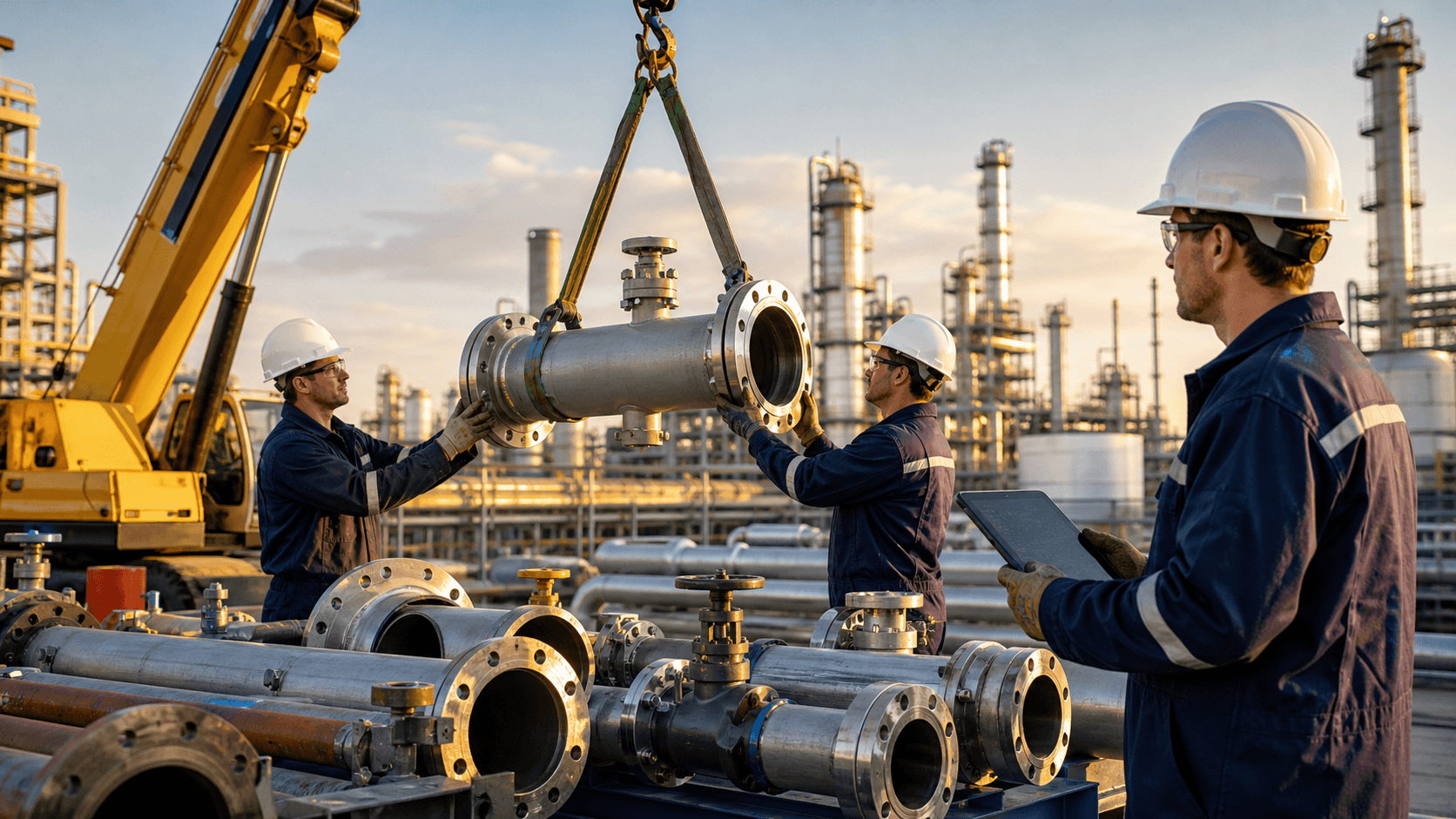
Stainless steel pipe spools do a lot of hard work in Gulf Coast plants. When they fail during the peak summer demand, everything around them feels it: production, safety, and everyone on the maintenance and reliability teams. This is especially true as plants push throughput and face storm season at the same time.
In this article, we walk through why stainless steel pipe spools fail so often along the Gulf, what warning signs to look for, and how to get ahead of problems before the heat, humidity, and hurricane season stress your systems even more.
Stop Stainless Spool Failures Before Peak Summer Demand
Gulf Coast plants run hard in summer. Higher production rates, long runs between outages, and sticky, salty air all add stress to stainless steel pipe spools. When a spool lets go during a busy run, you are not just dealing with a leak; you are dealing with lost capacity when you can least afford it.
Common hidden costs of stainless steel spool failures include:
- Unplanned downtime right when demand is high
- Safety incidents from leaks in flammable or toxic service
- Product contamination that can spread through a line
- Emergency repair work that disrupts already full schedules
Our team at Weldit works on stainless steel spools in industrial, commercial, and residential settings across Greater Houston and Texas. We see the same patterns again and again in plants along the coast. The good news is that many failures can be prevented with the right design choices, welding quality, and seasonal inspection plans.
Why Stainless Steel Pipe Spools Fail in Gulf Coast Plants
Stainless steel sounds tough, and it is, but Gulf Coast conditions push it to the limit. The mix of salt in the air, humidity that never really lets up, and process chemicals inside the line creates a harsh environment for every exposed surface and weld.
Key environmental stressors include:
- Salt-laden air blowing in from the coast
- High humidity that keeps surfaces damp
- Temperature swings between hot days and cooler nights
- Aggressive process chemistries inside the pipe
On top of that, the way many plants run makes things harder on the spools. Frequent startups and shutdowns cause thermal cycling. Pumps, compressors, and blowers shake the lines. Cleaning or CIP steps can be rough on welds and heat-affected zones if the chemistry is harsh.
Material and design choices also play a big role. Some common problems we see are:
- Using the wrong stainless grade for the service, like 304 where 316L is a better fit
- Wall thickness that is too light for pressure, corrosion, or mechanical loads
- Poor support layouts that push extra stress into elbows, tees, and spool welds
All of these factors stack together. Over time they turn a good-looking new spool into a weak link.
Corrosion and Pitting That Eat Stainless From the Inside Out
Stainless steel does not usually fail in a smooth, even way. It tends to suffer from localized corrosion, where a small area breaks down much faster than the surrounding metal. In pipe spool assemblies, this often shows up as pitting or crevice corrosion.
Common trouble spots include:
- Weld beads and heat-affected zones
- Under clamps, saddles, and supports
- Dead legs and low points where fluid sits
- Tight crevices where gaskets or dirt trap moisture
Around the Gulf, salt and chlorides are everywhere. Add in plant conditions like poorly drained low spots, insulation that holds moisture, or splash zones near chemical transfers, and those small areas can attack the metal quickly. If welds or repair areas were not properly cleaned, pickled, and allowed to repassivate, they are even more at risk.
When this kind of corrosion is ignored, it tends to show up suddenly as:
- Pinhole leaks in what looked like solid pipe
- Product quality issues from small but steady contamination
- Safety hazards in flammable or toxic lines
- Full spool replacements instead of simple weld touch-ups
Catching pitting and crevice corrosion early is far cheaper and safer than waiting for a leak to force an outage.
Weld Defects and Fabrication Errors That Shorten Spool Life
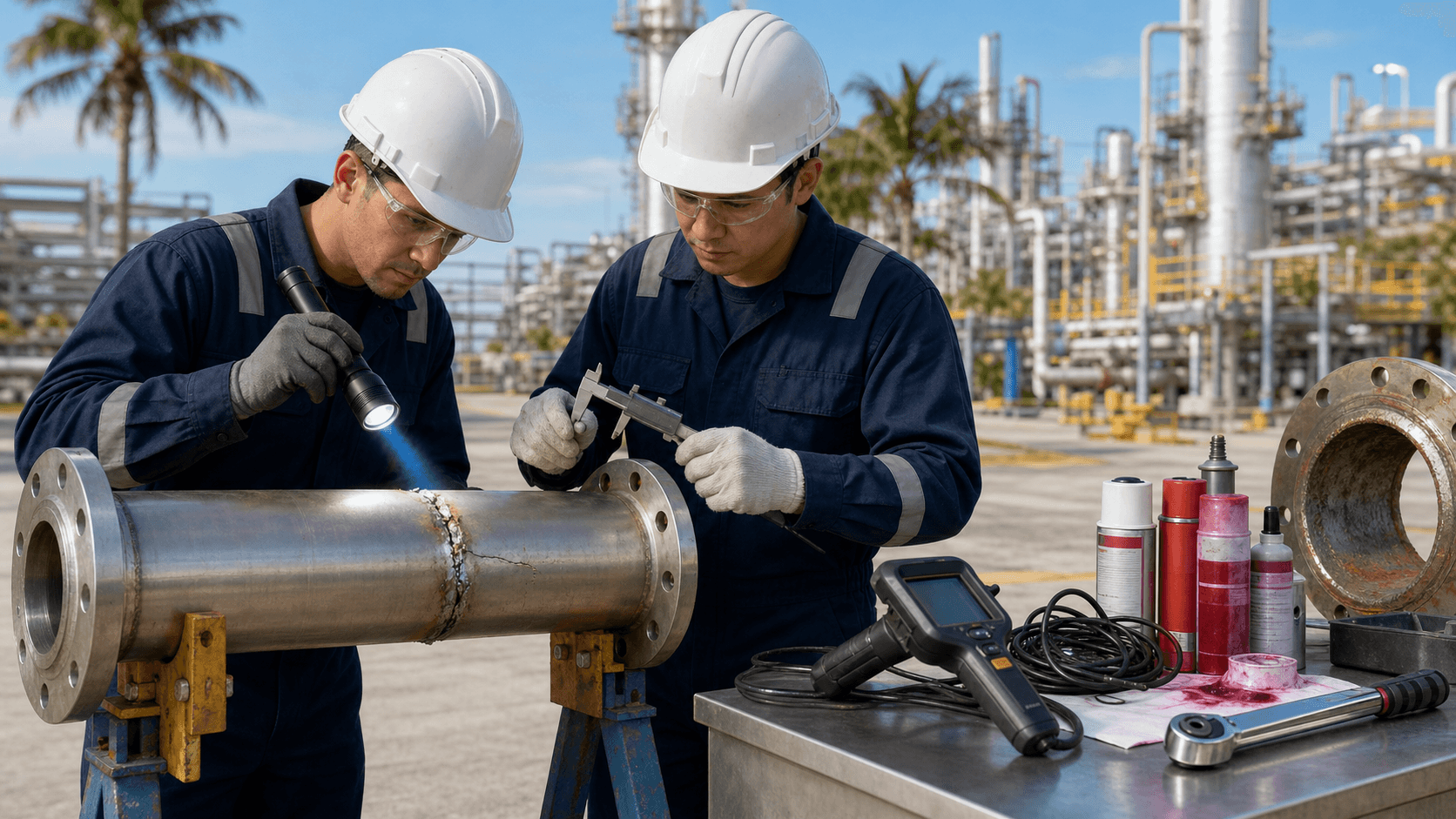
Even the best material will not last long if the welds are weak. Stainless welds need the right prep, the right heat, and the right technique. When that does not happen, the defects become perfect starting points for cracks and corrosion.
Common weld-related problems on stainless steel pipe spools include:
- Lack of fusion, where the weld does not fully tie into the base metal
- Undercut along the weld toe, leaving a sharp groove for corrosion to start
- Porosity trapped in the weld metal
- Incomplete penetration on butt welds
Fabrication and fit-up also matter a lot. Misalignment, bad bevels, too much gap, or rushed field work can build residual stress into every joint. Once that stressed spool is exposed to vibration and heat cycles, small flaws can grow into full cracks.
When projects move fast, quality control can slip. We often see:
- Weld procedures that are not clearly defined or followed
- Welders working on stainless without proper qualification for that process
- Missing records for materials and filler metals
- Limited inspection before spools are put into service
These shortcuts may save a few hours at the start of a project but can cost far more once the line is hot and under load.
Thermal Cycling, Vibration, and Support Failures You Cannot Ignore
Stainless steel pipe spools are constantly moving, even if you cannot see it. As the line heats up, it expands. As it cools, it shrinks. If supports and anchors do not allow for this movement, the stress goes straight into the welds and fittings.
Thermal problems often come from:
- Rigid anchors that lock a spool in place
- Missing or undersized expansion loops and joints
- Guides that are in the wrong spot or out of alignment
Vibration is another big issue in Gulf Coast plants, especially around rotating equipment. Pump skids, compressors, and blowers can send high-cycle vibration straight into nearby spools. Cracks tend to start at:
- Elbows and tees
- Branch connections and stub-ins
- Long, under-supported runs
Support systems age too. Shoes, hangers, and clamps can loosen or corrode. Storm-related upsets and rapid shutdowns can yank on spools in ways they were not built to handle, especially if supports are already weak.
Proactive Inspections and Upgrades to Protect Summer Throughput
The best time to fix stainless steel pipe spool problems is before summer production and storm season are in full swing. A focused inspection and upgrade plan can turn hidden risks into planned work.
A practical pre-summer strategy might include:
- Prioritizing stainless circuits in corrosive or high-temperature service
- Walking down high-vibration areas around pumps and compressors
- Checking low points, dead legs, and splash zones for corrosion
- Using NDE and thickness checks on critical welds and spools
From there, targeted upgrades can make a big difference without tearing out entire systems. These upgrades often look like:
- Replacing vulnerable spools with better alloys or thicker wall
- Improving supports, guides, and anchors to let the pipe move as designed
- Adding expansion loops or joints where thermal growth is high
- Reworking substandard welds using qualified procedures and proper inspection
At Weldit, we bring certified mobile welding and fabrication services directly to plants in Greater Houston and across Texas. Our team handles stainless steel spool repairs, new fabrication, and on-site fit-up with documentation that aligns with plant and code expectations. By planning this work ahead of peak demand, reliability teams can protect throughput, reduce emergency work, and keep people safer when the pressure is on.
Get Started With Your Project Today
If you are planning or troubleshooting a stainless steel pipe spool project, our team at Weldit is ready to help you move from concept to completion. We will work with your specifications, schedule, and quality requirements so every spool fits seamlessly into your system. Reach out to our team today through our contact page to discuss your needs and get a clear path forward.