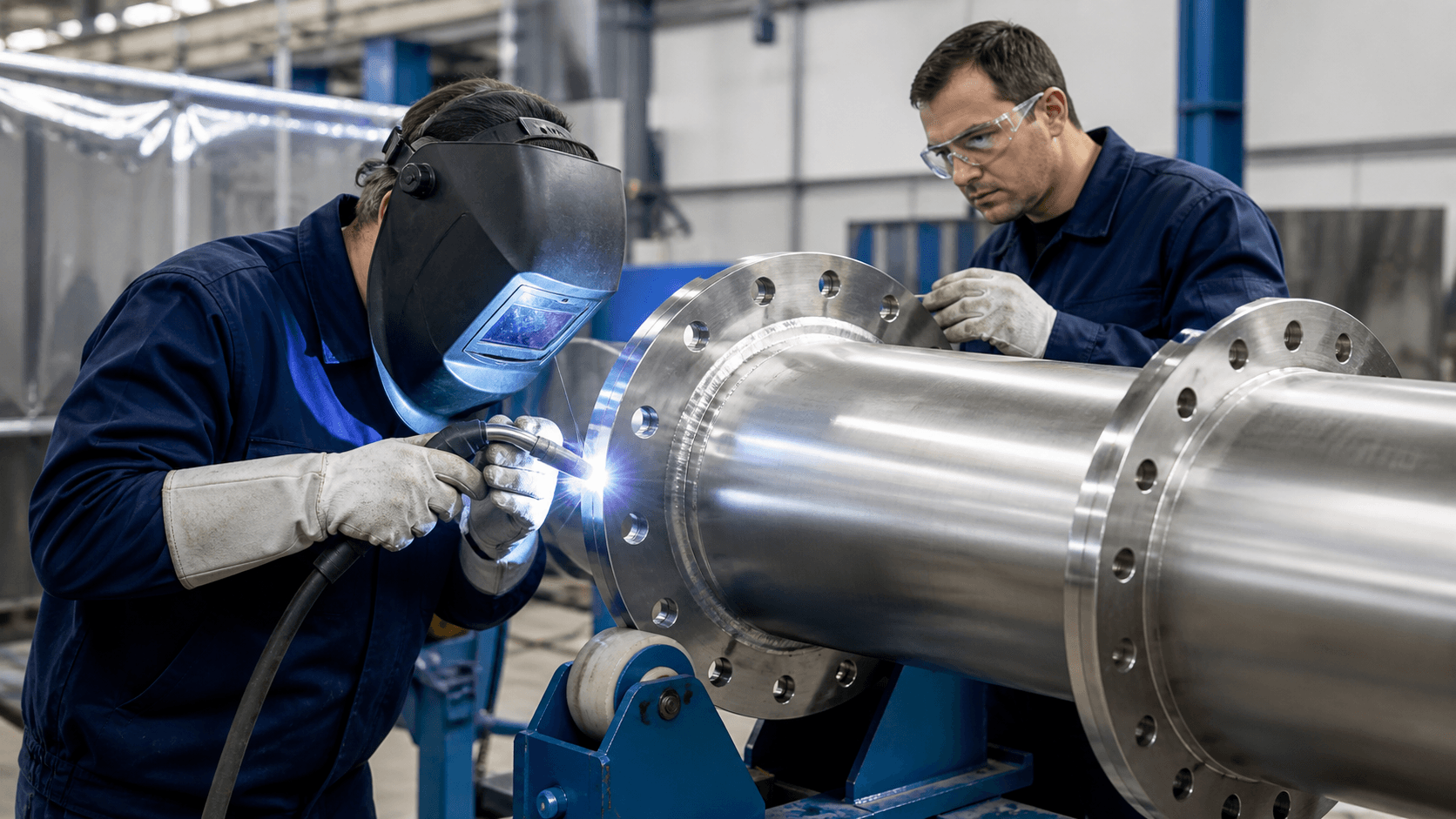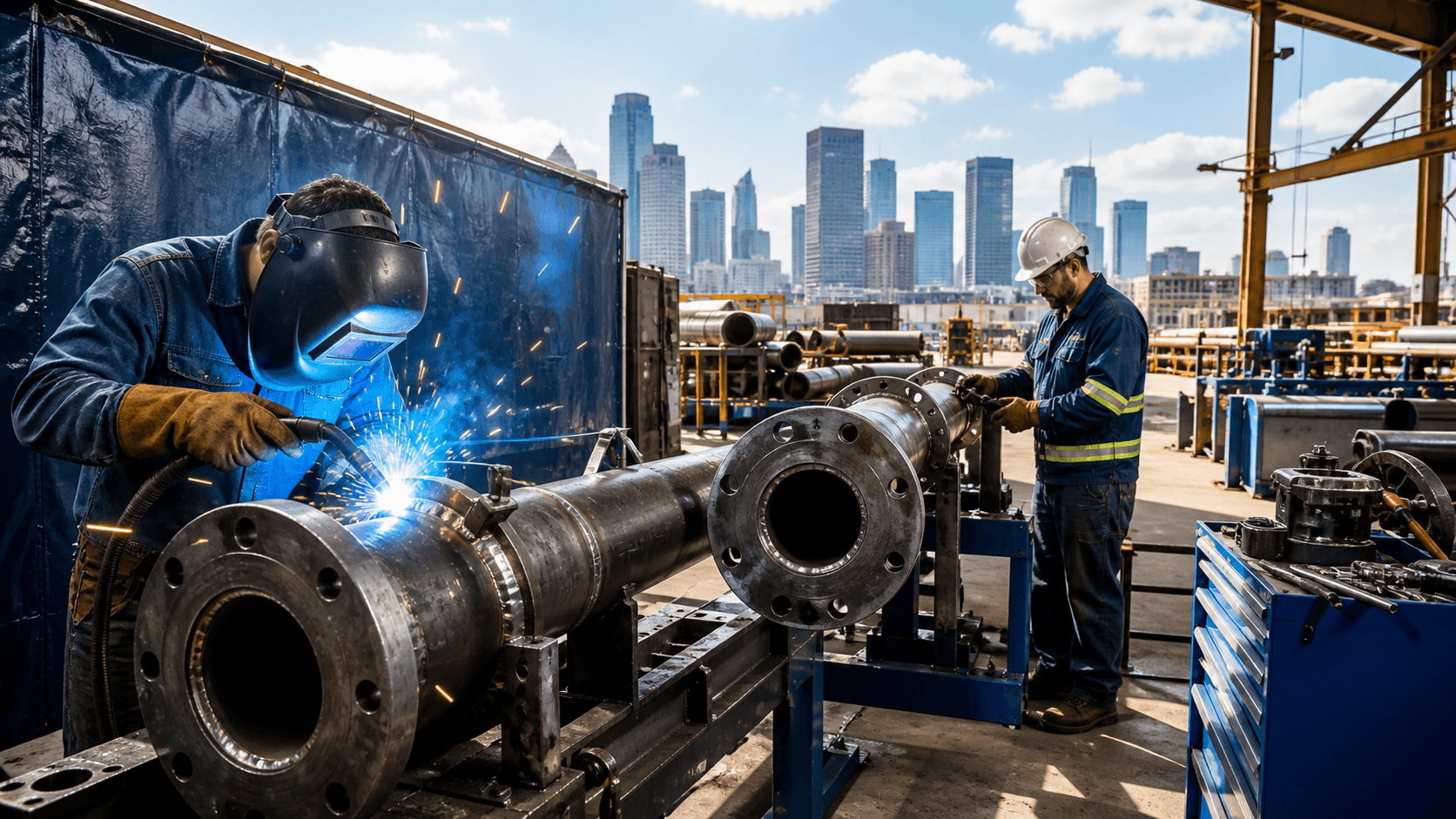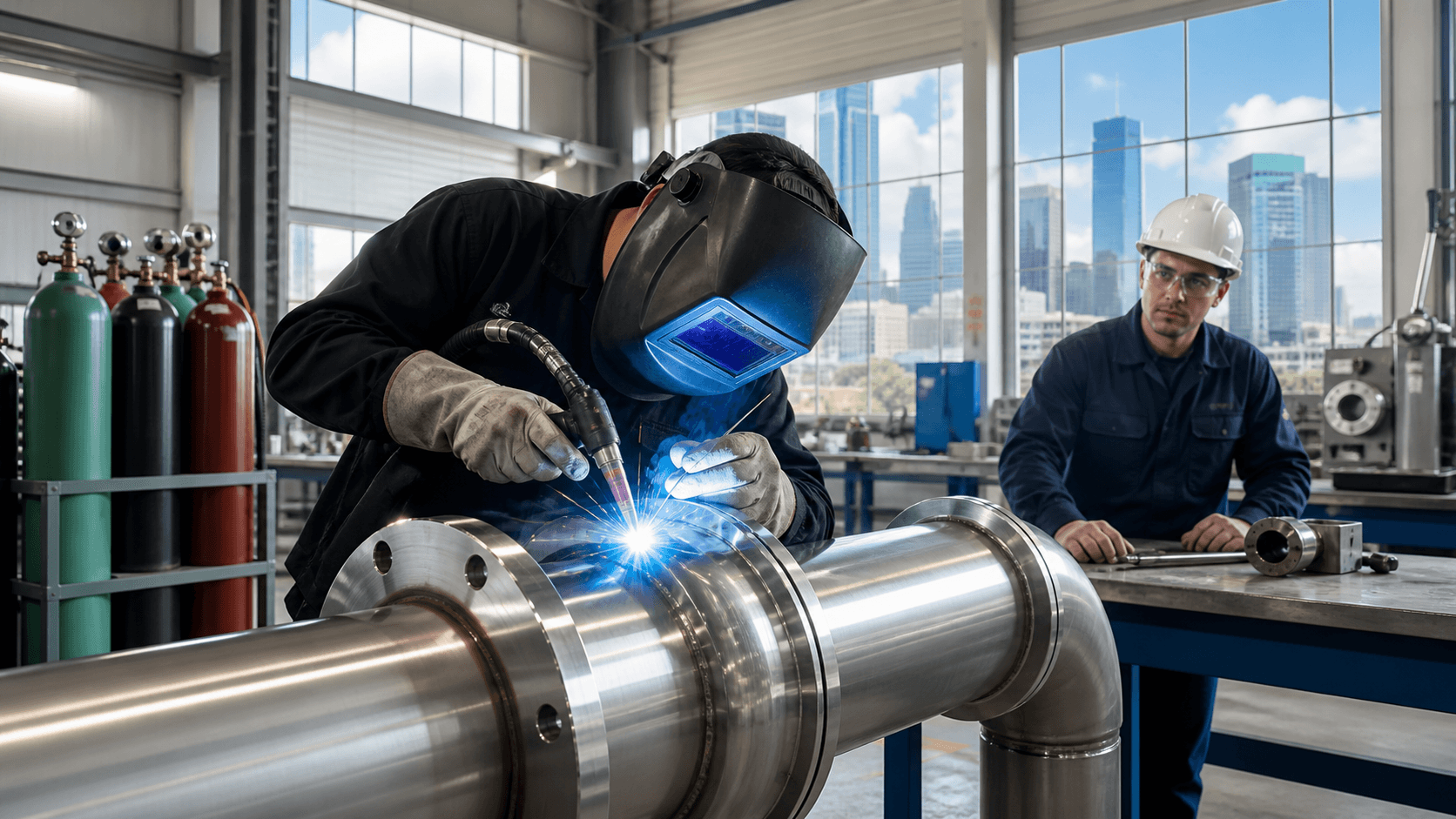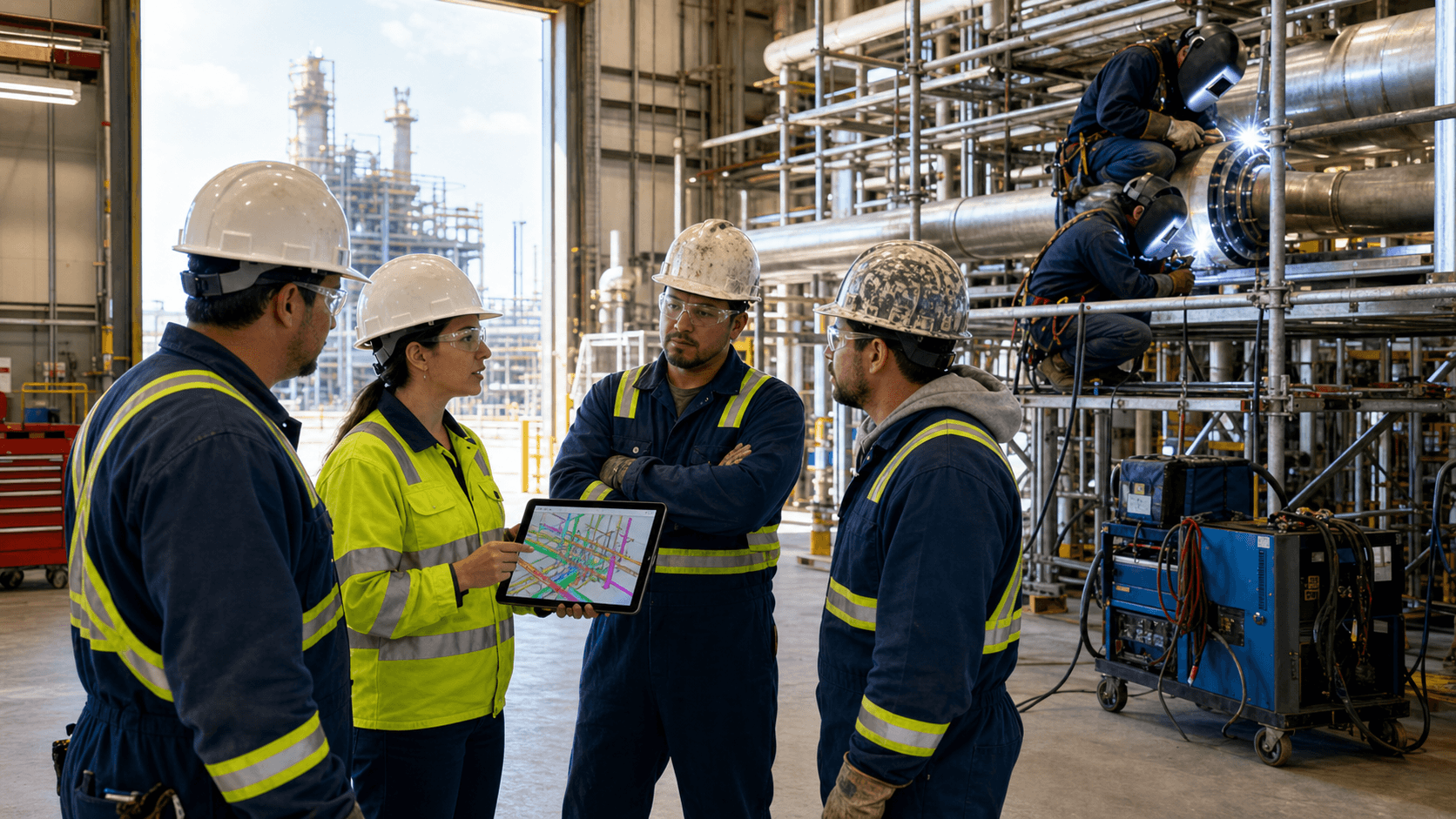
Turnarounds at Texas refineries, terminals, and process plants live and die on schedule discipline. Every extra day offline means lost production, contractor stacking, and growing safety exposure. Spring outages add another twist, with storm systems, humidity, and long days that can throw even a solid plan off track if crews are waiting on each other.
When pipeline welder support is not lined up with operations, inspection, and hydrotest work, everything slows down. Welders stand by with no permit, NDE waits on weld maps, hydrotests slip because one tie-in is late, and people rush to catch up. In this article, we share how planners, maintenance managers, and project engineers can pull mobile welding and fabrication into the center of the turnaround schedule so work flows instead of stalls.
Keeping Turnarounds on Track With Aligned Welding Support
A plant turnaround is a planned outage where units are taken offline so you can inspect, repair, upgrade, and tie in new piping. The clock starts the moment feeds are cut. Every delay on a line tie-in or repair weld shows up not just on a Gantt chart, but in real production and logistics headaches.
When welding is not aligned with the rest of the work, you see problems like:
- Weld crews on-site before lines are gas-free or isolated
- Welds completed with no NDE crew ready to test them
- Hydrotests held up by a few late or rejected welds
All of this leads to idle time, rework, and rushed work fronts that raise risk. The goal is simple: bring welding, operations, inspection, and hydrotest planning together early, so a pipeline welder is exactly where they need to be, with the right information, at the right time.
Clarifying Scope and Priorities Before Welders Mobilize
A smooth turnaround starts with a clear weld scope. That means creating a weld-centered picture of the job instead of a pile of scattered work orders. Each weld or modification should tie back to:
- Line list and service
- P&ID and isometric drawing
- Work order or project number
- Code or spec requirements
When your pipeline welder crews can see exactly what they are touching and why, they can plan joint prep, consumables, and sequencing with confidence. Nothing slows work like unclear line IDs or missing drawings in the field.
Next, rank the welding work by how much it affects startup. In most plants, this includes:
- Crude and main product lines that feed or empty key units
- High-pressure or high-temperature circuits
- Tie-ins that block commissioning of a whole system
Ahead of busy spring and summer outages, this kind of ranking helps protect your schedule when surprises pop up. If extra repair welds are found, you already know what work must go first.
A joint pre-planning meeting with operations, inspection, and your welding contractor pulls all of this together. During that session, you can:
- Review metallurgy and pressure classes
- Flag code stamps and quality expectations
- Talk through access limits, scaffolding, and clearances
- Agree on how emergent welding work will be added to the plan
Building a Field-Ready Welding Plan Around Operations
Even the best weld plan fails if it ignores how operations will actually hand over the plant. Welding support should be staged around how and when lines will be de-inventoried, isolated, and gas-free.
That means thinking through:
- Where to park and stage mobile welding rigs for fast access
- How to lay out rods, wire, gas, and tools by unit and system
- Which spools and small-bore assemblies can be prefabricated before the outage
If you know that one unit will be handed over first, you can have prefabricated spools and a dedicated pipeline welder team ready to jump in, while another crew waits on the next permit window.
Hot work permits, LOTO timing, and confined space rules control when and where welding can start. By mapping those permit windows into a daily welding plan, you avoid welders sitting around while permits are sorted out. Hours matter.
The reality is that once systems are opened, new defects show up. Flexible, certified welder crews who can shift between planned scope and emergent repairs help keep the critical path moving while still dealing with surprises.
Coordinating Welds with NDE and QA Hold Points
Plant piping and pipelines often need NDE such as:
- Radiographic testing
- Ultrasonic testing or phased array
- Magnetic particle or liquid penetrant testing
These requirements should be tied to weld numbers, weld maps, and clear hold points. Every joint should have a simple path: fit-up, root pass, fill and cap, NDE, repair if needed, then final acceptance.
To keep work flowing, build a sequence like:
- Group welds by system and NDE method
- Share daily weld completion forecasts with inspection
- Schedule NDE techs to follow the welders by a planned lag time
A shared weld and NDE dashboard across the owner, inspector, and welding contractor can help everyone see joint status at a glance. When you know which welds are ready, rejected, or accepted, you cut down on missed exams, repeated visits, and confusion in the field.
Aligning Weld Completion with Hydrotest and Startup
Hydrotests often sit on the edge of the schedule, squeezed between mechanical completion and startup. Spring conditions in Texas, with changing skies and storm chances, can make that window feel tight. That pressure gets worse when welds that feed a test package are not done or accepted.
The goal is to have every test-bound weld completed, NDE cleared, and documented before filling the line. A good welding and fabrication partner can support this by:
- Prefabricating spools and jumpers in the shop
- Building test heads and temporary tie-ins ahead of time
- Helping review test packages for missing weld references
A simple step-by-step handoff helps:
- Welds completed and logged to weld maps
- NDE performed and results signed off
- Punch list items cleared or tracked
- Test package walkdowns with operations and inspection,
- Hydrotest execution and depressurization
- Turnover of clean, documented systems to operations for startup
Partnering with the Right Welding Team Before the Next Outage
Once the turnaround is over, it pays to look back with a clear eye. Where did welding, NDE, and hydrotest handoffs go wrong? Did welders stand by waiting on permits or drawings? Did NDE crews get called late? Did any hydrotests slip because a few welds were not ready? Each of these gaps has a cost in time and stress.
Choosing the right mobile welding partner helps close those gaps:
- Pipeline welder qualifications suited to plant and pipeline work
- Experience with common plant codes and standards
- Strong documentation habits around weld maps and NDE records
- The ability to cover several Texas metros on short notice with field-ready rigs
At Weldit, we focus on bringing shop-quality fabrication and certified mobile welding together for plants, contractors, and property owners across Texas. When welding support is pulled into planning early, and lined up with operations, inspection, and hydrotest work, turnarounds run smoother, safer, and closer to the dates you promised your team.
Align Your Turnaround Welding Support Before The Next Outage Window
Keep your next Texas plant turnaround on schedule by locking in certified pipeline and structural support before the outage clock starts. Our pipeline welder teams coordinate closely with operations, NDE, and hydrotest crews so welds are ready when inspections and pressure tests are. If you are planning spring or summer work and need code-compliant pipe or structural welding that fits your turnaround milestones, Weldit can help you build a clear, realistic welding plan. Reach out through our contact us page to discuss scope, schedules, and manpower requirements.