Stop Hidden Failures in Skid Package Welds Before Startup
One bad weld on a skid package can shut a whole unit down at the worst possible time. A tiny crack or undercut in the wrong spot can turn into leaks, lost product, or a sudden shutdown when your plant is trying to push hard through summer demand. That is why weld quality on skid packages is not just a box to check, it is a big part of keeping production steady and people safe.
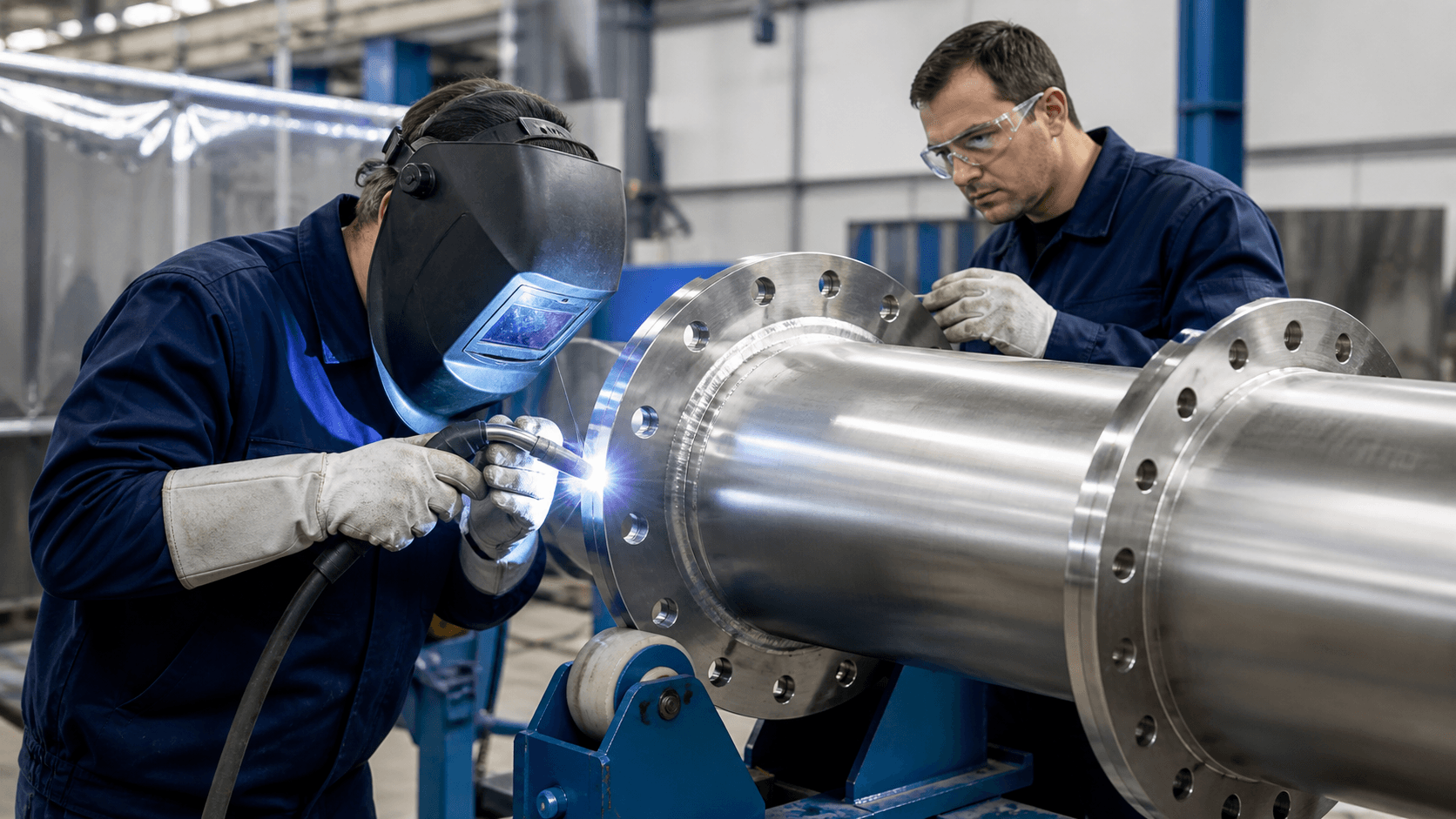
Skid package fabrication pulls a lot of pieces into one tight footprint. You have modular process units, high-pressure piping, structural frames, supports, platforms, and all the welded connections that tie into equipment nozzles and plant systems. When those skids are built, modified, or repaired in the field instead of inside a controlled shop, mobile, on-site QA is what keeps risk from slipping into the gaps. Mobile weld teams can see problems in real time, not after the skid is already in service.
In this article, we are going to walk through where the most critical welds live on skid packages, which QA checks matter most in the field, and how a strong mobile welding approach can help protect your budget, schedule, and safety record as the heat and demand pick up.
Where Critical Welds Hide on Skid Packages
On a typical skid, you have a lot going on in a small space. Common zones include:
- Process piping and headers
- Structural frames and base plates
- Equipment nozzles and flanges
- Pipe supports and shoes
- Platforms, handrails, and ladders
- Tie-in points to plant or facility systems
Not all welds carry the same risk, and some locations are much more likely to cause problems if the weld is not right the first time. High-risk spots often include high-pressure or high-temperature process lines, cyclic loading points where lines see start and stop or vibration, lifting lugs and padeyes used to move or set the skid, anchor points where frames tie into foundations or sleepers, and areas around pumps, compressors, and rotating equipment.
Then there are the "invisible" critical welds that tend to get rushed near the end of the job. These often show up as field-fit connections that did not match the drawings, small-bore branch connections and sockolets, and last-minute reroutes to clear other trades or existing steel.
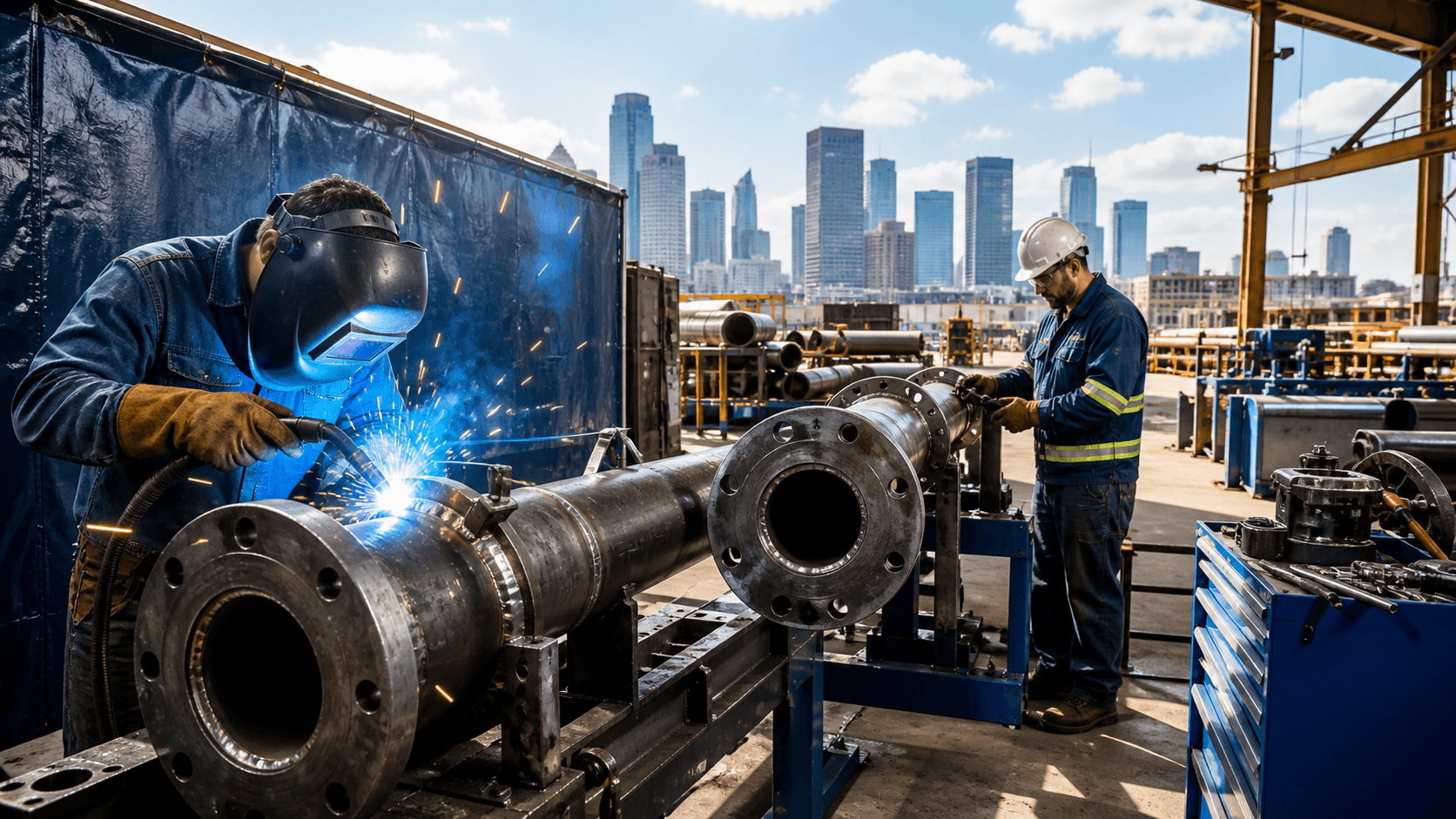
Out in the field, the risk goes up. Tight access, overhead welding, hot work during night shifts, and crowded summer turnaround work all make it harder to keep weld quality consistent. If QA is not mobile and right there during fit-up and welding, small defects can get buried under cover passes and insulation. When we flag these critical areas early and plan for them, mobile weld crews can put extra attention and inspection time where it really counts.
Why Code-Driven QA Matters in Texas Heat
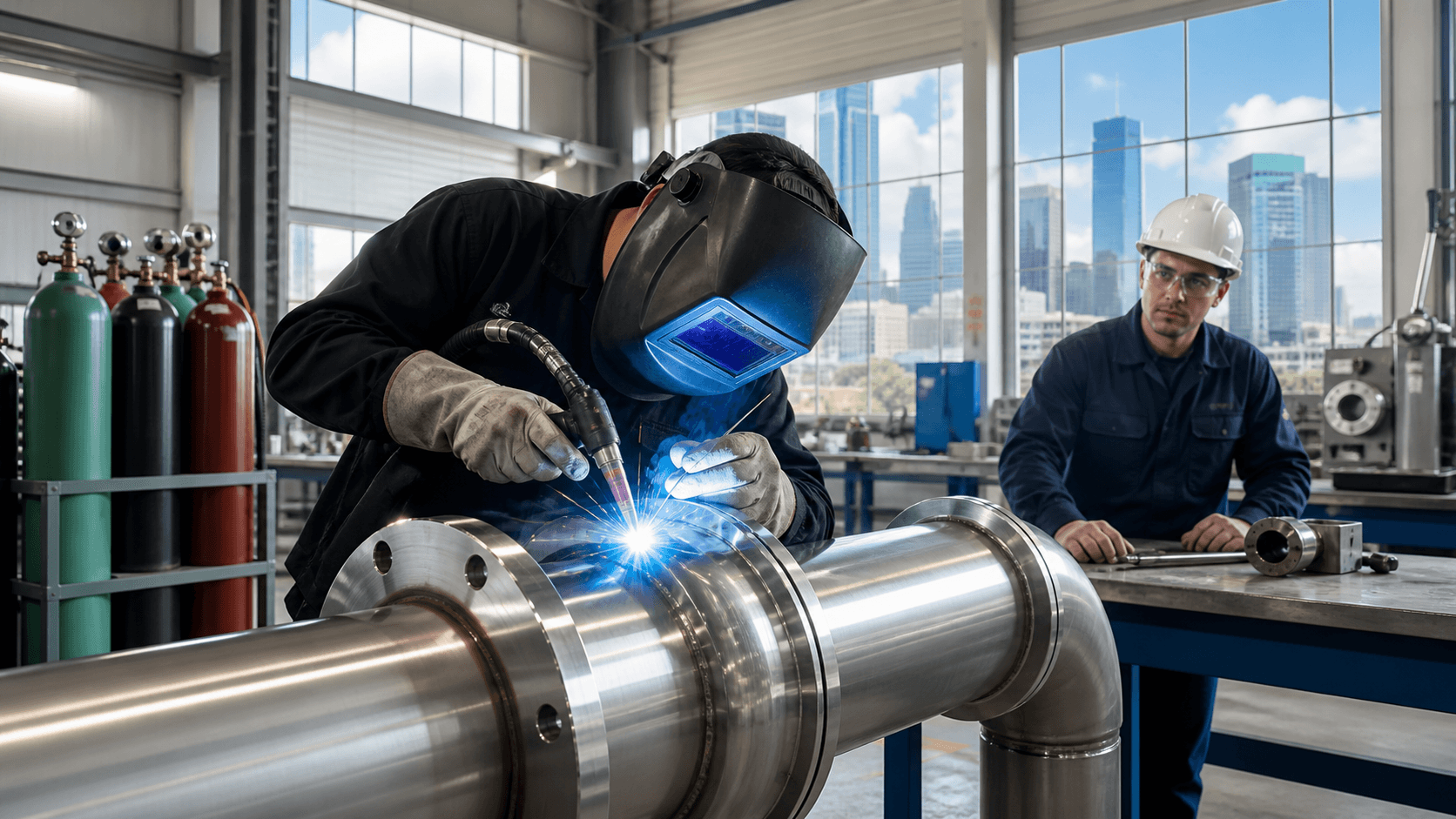
Skid package fabrication often sits under AWS and ASME code rules, especially for pressure-retaining components and structural members. That means QA is not a "nice to have." It is required to keep your skids safe and compliant.
Key parts of code-driven QA usually include:
- Qualified welding procedure specifications (WPS)
- Certified welders working within their ranges
- Material identification and traceability
- Proper preheat and interpass temperature control
- Post-weld heat treatment when the code or service calls for it
Summer operations in Texas stack more stress on every weld. Higher ambient heat, long hours, and heavier production rates can show you very fast which welds were only "good enough." Thermal expansion, higher operating pressures, and vibration can turn marginal welds into leaks or cracks.
Mobile QA helps stop shortcuts during tight pre-startup windows. With the right people on-site, you can get:
- Real-time checks that the correct WPS is being used
- Parameter checks on amps, volts, and travel speed
- Fit-up inspections before joints are closed out
- Hold points for visual or NDT before insulation or paint
Bringing that level of quality control out to refineries, chemical plants, terminals, and midstream sites helps keep skid package fabrication at true shop-level quality, even when the work is all in the field.
Field Tests That Protect Mission-Critical Skids
Good QA on skid packages always starts with strong visual work. Before any fancy tools come out, basic checks should cover:
- Weld size, contour, and tie-in
- Cracks, undercut, porosity, and overlap
- Alignment and dimensional checks on pipe and frames
- Clearances and support locations
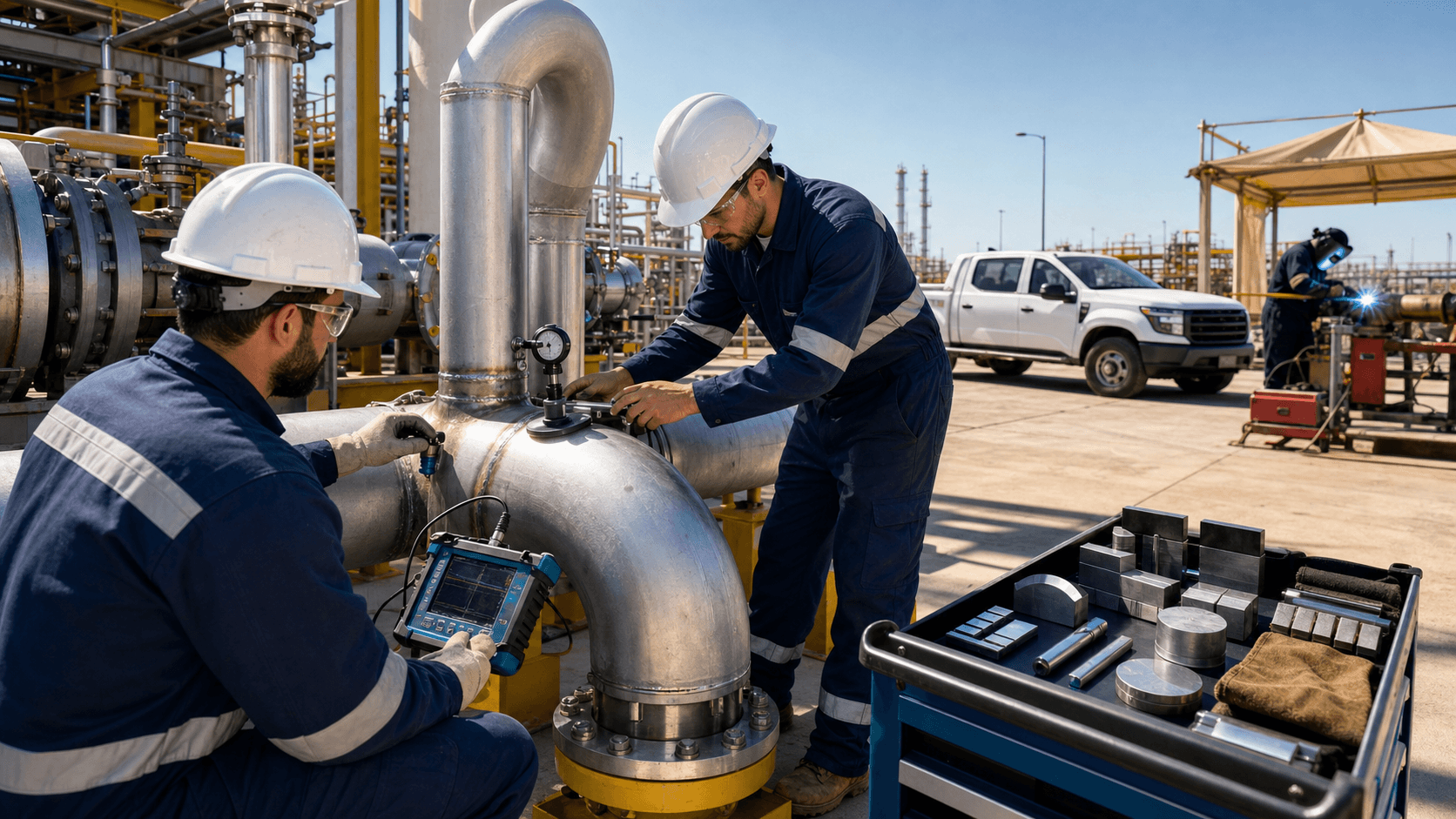
From there, welds may need non-destructive testing. Common methods on skids include visual testing (VT), liquid penetrant (PT), magnetic particle (MT), ultrasonic (UT), and radiographic testing (RT). In practice, mobile welders and inspectors can work side by side during tie-ins and modifications to watch root passes on open butt welds, confirm penetration where access allows, and catch lack of fusion or inclusions early, before more weld metal goes on top.
Pressure testing is another key step for process and utility lines on skids. Hydrostatic tests use water, while pneumatic tests use air or gas. Both need clear test boundaries, safe pressures, and agreed documentation so operations know exactly what was tested.
Strong paperwork matters just as much as the weld itself. That usually includes:
- Weld maps and line lists
- Repair and rework records
- NDT and pressure test reports
- Turnover packages that operations can use for startup and later maintenance
When QA stays in the field and moves at the pace of the work, summer outage and turnaround schedules are easier to hold, without cutting corners on safety or compliance.
Mobile Welding Strategies That Keep Work Moving
The best time to plan mobile support for skid package fabrication is before the first weld is made. A solid plan might cover:
- Site walkdowns to see real clearances and access limits
- Review of drawings and isometrics for likely problem spots
- Early flagging of field-fit areas and tie-in locations
- Discussion of required code checks and NDT hold points
Even with great planning, things still happen. A small leak on a nozzle, a cracked support under vibration, or a lifting lug that fails a pre-lift check can all show up right before startup, when the heat and pressure are already high. With mobile crews ready, you can get:
- Quick response to repair leaking joints or cracked welds
- Support during night or weekend work on the critical path
- Extra hands during hot turnaround windows when every hour counts
Field welding on skids also brings its own safety needs. Good practice includes:
- Proper hot work permits and clear fire watch
- Extra care with sparks and slag in dry conditions
- Controls for work around live systems and process lines
- Safe methods for confined space welding inside or under skids
With the right fleet, equipment, and certified crews, a mobile welding team can act like an extension of your own maintenance and construction group, ready to go where shop support cannot reach.
Lock in Reliable Skid Performance Before the Heat Hits
Critical welds on skid packages are not always the big, obvious ones. Many times the trouble spots are the small, tight field welds that did not get enough attention while everyone raced the clock. When those welds support pressure, structure, or lifting, they deserve the same code-level QA you expect from shop-fabricated work, especially before high-demand summer operations.
A simple way for project and plant teams to stay ahead is to walk through a quick checklist:
- Identify critical weld locations on each skid
- Confirm which code rules apply to each system
- Plan mobile QA coverage for fabrication and tie-ins
- Make sure documentation and test records are clear and complete
- Set up a plan for emergency mobile support during startup or outages
Reviewing current skids and upcoming projects before the next busy window can lower the chance of surprise failures and unplanned downtime. Strong mobile welding and QA support helps keep your skid package fabrication reliable, your people safer, and your production running when it matters most.
Get Started With Your Project Today
If you are ready to streamline your operations with a reliable, custom-engineered solution, our team is here to help. Learn how our skid package fabrication services can support your schedule, budget, and performance goals. We will work closely with you to clarify requirements, align on deliverables, and keep your project moving smoothly from design to installation. Reach out to Weldit today through our contact page to discuss your next project.