How to Choose the Right Houston Fab Shop for Heavy-Duty Work
Choosing a metal fabrication shop in Houston for industrial work is not just another box to check. The wrong pick can mean blown outage schedules, safety risks, and equipment sitting idle while the clock keeps ticking. The right shop helps you keep product moving, crews working, and inspectors satisfied.
Houston has its own style of industrial work. Energy, petrochemical, storage terminals, port work, and big commercial builds all crowd the same calendar. That pressure calls for higher standards in fabrication, welding, and on-site support. In this article, we walk through a simple, practical way to size up a metal fabrication shop in Houston before you award serious work, especially with late summer turnarounds and Q4 projects on the horizon.
We focus on what really matters for industrial operators: clear scope, technical fit, safety, quality, capacity, and reliable mobile support in the field. Use this as a guide before you send out RFQs or lock in a shop for your next outage window.
Clarifying Your Project Scope Before You Call a Shop
A clear scope is one of the best tools you can bring to any fabricator. When you know what you need, you get better questions, tighter bids, and fewer surprises when steel starts moving.
Start by defining the type of work:
- Industrial process work, like pipe spools, skids, and plant tie-ins
- Commercial or structural work, like stairs, platforms, and supports
- New construction versus repair, retrofit, or modification
- Emergency work versus planned work around outages or upgrades
Then look at the technical side. Before you call a metal fabrication shop in Houston, try to have the following ready:
- Material types: carbon, stainless, or alloy
- Pipe sizes, schedules, and pressure ratings
- Required weld procedures and inspection levels
- Any needed certifications or code references
It also helps to gather drawings, isometrics, P&IDs, and any vendor prints. If you are planning late summer outages or reliability projects before year-end, add realistic timelines and access limits. A shop that sees the full picture can flag fit-up risks early, plan manpower, and coordinate field work to match your shutdown window.
Critical Capabilities to Demand From a Houston Fab Shop
Not every shop is built for heavy industrial work. When you are dealing with refineries, plants, terminals, or large commercial sites, you want a fabricator with real depth in both process and structural work.
Core shop capabilities you should look for include:
- Plate and pipe cutting, with the accuracy your drawings need
- Forming and rolling for tanks, supports, and guards
- Machining support for flanges, brackets, and custom pieces
- Advanced welding processes like SMAW, GTAW, FCAW, and GMAW
Beyond basic tools, experience matters. For industrial projects, you want a shop that is comfortable with:
- Pipe fabrication for process lines and utility systems
- Skid packages with piping, supports, and equipment bases
- Structural steel assemblies such as platforms and access systems
- Modular units that can be shipped and set as complete packages
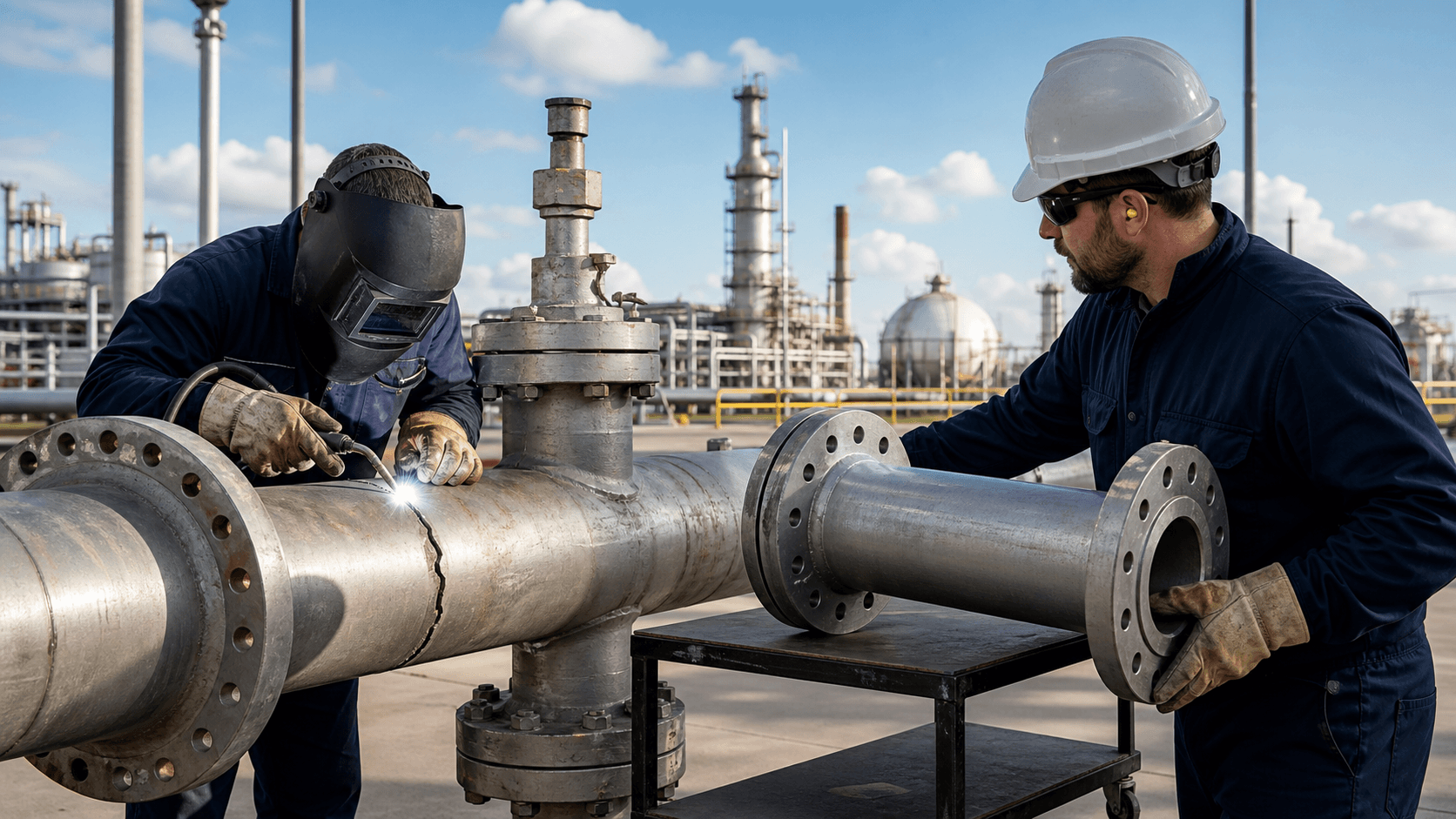
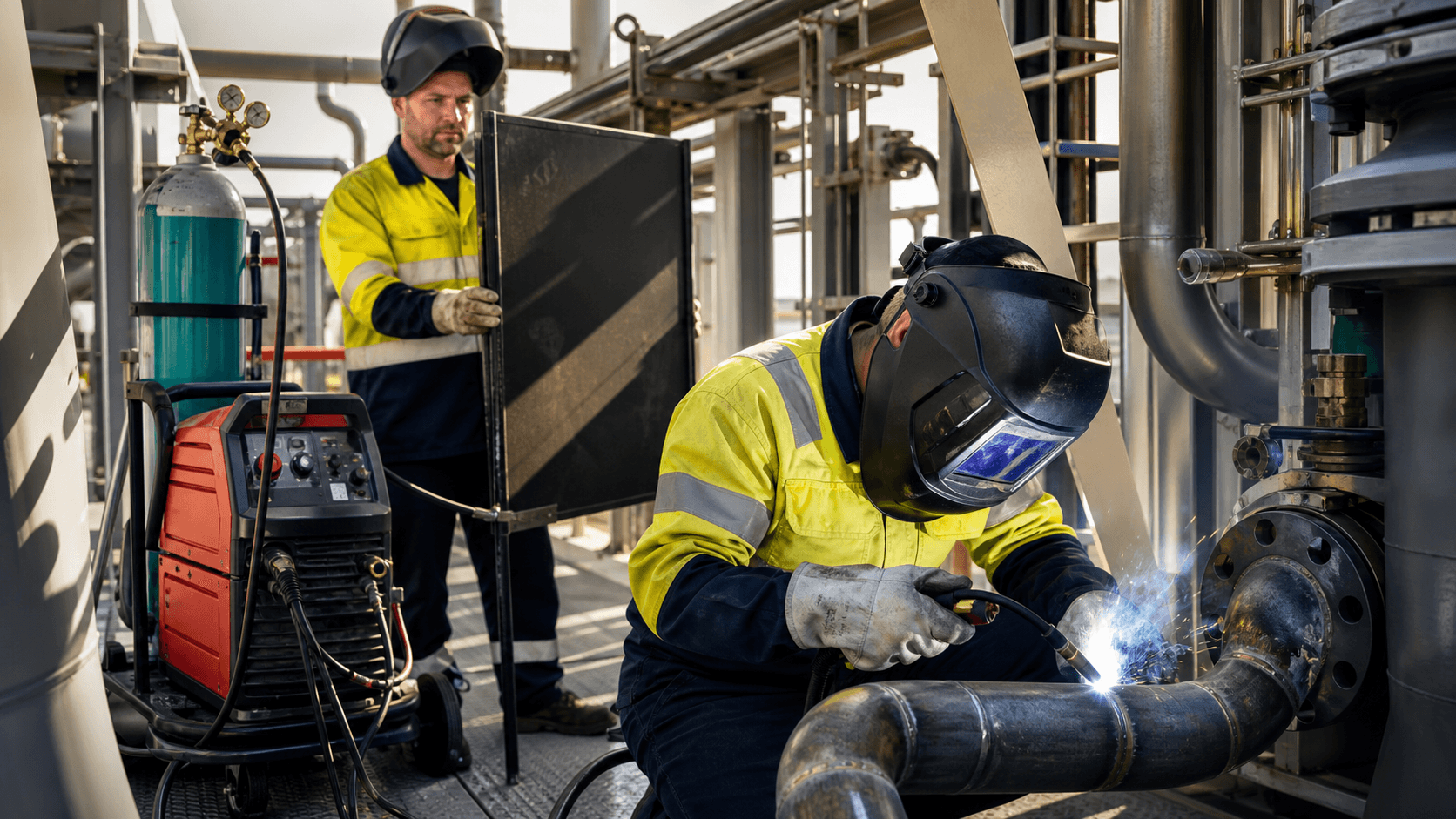
Do not overlook mobile welding and field support. A shop that can fabricate in-house and then send welders to your site for tie-ins, field fit-ups, and punch list items often saves time. This is especially important during tight seasonal windows, when you are trying to wrap up projects before end-of-year work ramps up again.
Safety, Certifications, and Quality Controls You Cannot Ignore
Industrial work brings real risk. Hot work inside operating facilities calls for strong safety habits, not just paperwork. When you visit or interview a shop, pay attention to how they talk about safety and how their people act in the yard and on site.
Key safety and quality elements to ask about:
- Certified welders working to qualified procedures
- Written WPS and PQRs in line with client and code requirements
- Non-destructive testing options such as VT, PT, MT, or RT
- Alignment with standards like ASME and AWS where your project requires them
Safety culture is just as important as the certificates on the wall:
- OSHA-compliant practices and clear PPE expectations
- Site-specific training for working inside plants and terminals
- Drug testing where your sites require it
- Job hazard analysis for hot work, especially under summer heat and long daylight hours
On the quality side, a good industrial shop should be able to walk you through:
- Documented inspection procedures at each stage of work
- Material traceability and mill test reports where required
- Weld mapping and clear documentation of repairs or rework
- Final turnover packages that line up with what owner-operators and auditors expect
If they can show sample packages from past industrial jobs, it makes it easier to see if their approach fits your standards.
Evaluating Capacity, Lead Times, and Cost Transparency
A metal fabrication shop in Houston can have all the right skills and still be a bad fit if they simply do not have the bandwidth when you need it. Capacity and scheduling are just as important as technical ability.
When you visit or review a shop, look at:
- Size of the facility and how material flows through it
- Crane coverage and tonnage for large modules or skids
- Yard space for staging, assembly, and loading
- Staffing levels and how they handle multiple large projects at once
Ask honest questions about scheduling. Many shops see a surge around late summer outages and year-end capital work. You want to know:
- How they prioritize emergency work versus planned projects
- How they handle change in scope after fabrication has started
- How they communicate if lead times shift
Cost transparency does not mean the lowest number on the bid sheet. It means:
- Clear scopes so you know what is included and what is not
- Defined change-order steps when drawings or field conditions change
- Straightforward descriptions of mobilization for on-site welding and field support
When you compare bids, look beyond totals. Pay attention to quality expectations, schedule commitments, inspection levels, and field support. The cheapest option on paper can become the most expensive if it leads to rework or lost production time.
What Sets a Reliable Mobile Fabrication Partner Apart
For many industrial operators in Texas, the best partner is not just a shop or just a field crew, it is a fabricator that does both and connects those pieces smoothly.
A combined shop and mobile welding setup can help you:
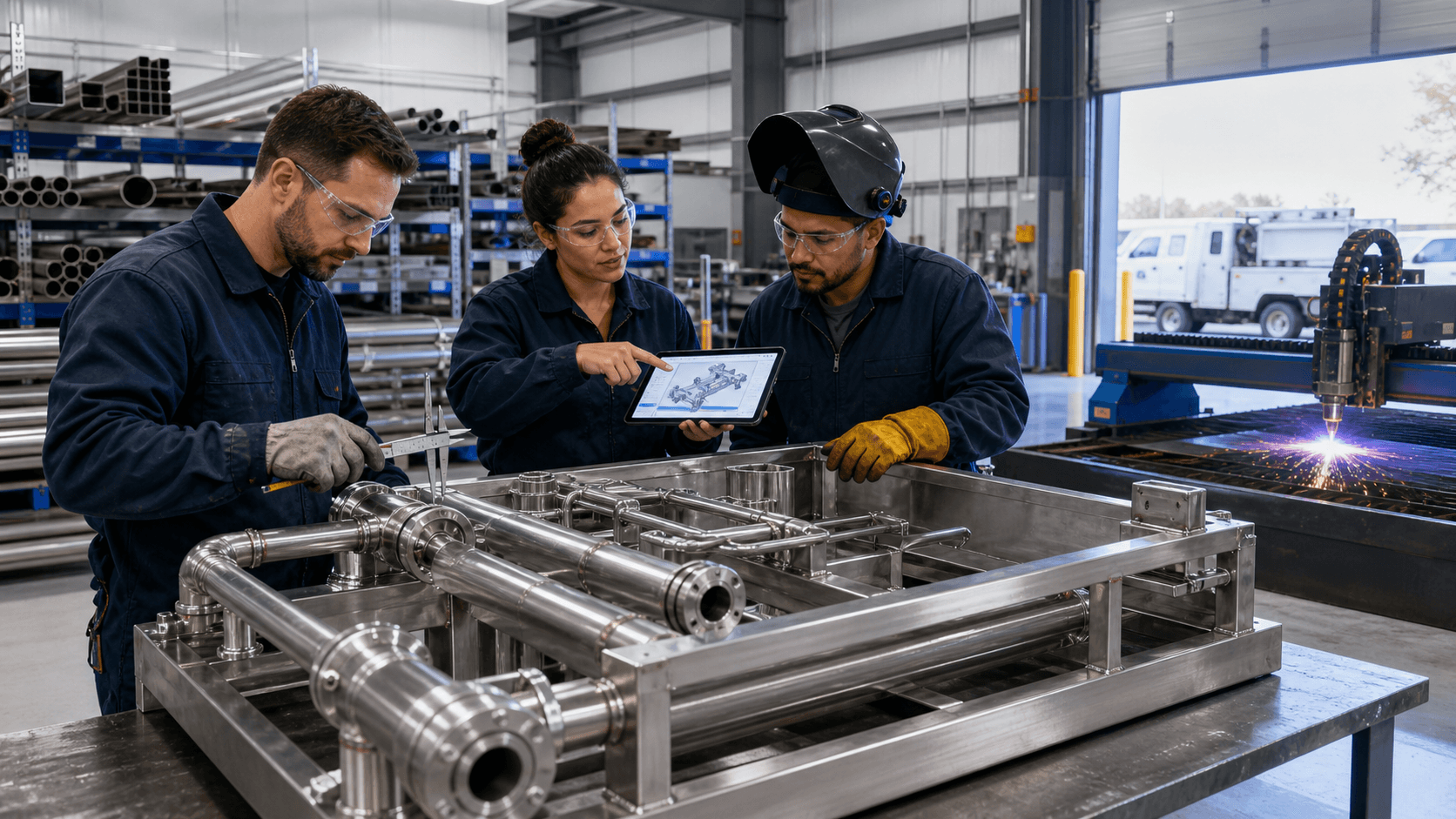
- Build skids, spools, and steel in a controlled environment
- Pre-fit as much as possible before it leaves the yard
- Install and tie in with the same team that built the work
Signs of a dependable mobile welding and field crew include:
- Fast, predictable response times when you have an outage or urgent need
- Fully outfitted rigs ready for plant, terminal, or structural work
- Experience working under plant rules, permits, and safety programs
- A record of supporting projects across different sites and conditions
At Weldit, we focus on industrial, commercial, and structural metal work across Texas, with a strong emphasis on pipe fabrication, skid packages, and on-site welding support. Our goal is to help operators reduce downtime, keep projects moving, and close out work during tight seasonal windows without sacrificing safety or quality.
Get Started With Your Project Today
If you are looking for a reliable metal fabrication shop in Houston, we are ready to step in and support your next project. At Weldit, we collaborate closely with you to understand your specifications, timeline, and budget so you get exactly what you need. Tell us about your requirements and we will provide a clear path from concept to completion. Have questions or need a quote fast? Simply contact us to get started.