Smarter Welding Decisions for Houston's Busy Fabricators
Gas-shielded metal arc welding can make or break your schedule on a busy job. The process you pick, and the gas behind it, affects how fast you can move, how clean the weld looks, and how often work has to be redone. When fall projects stack up before year-end shutdowns and outages, small choices at the torch can turn into big delays or smooth weeks.
Across Houston and the major Texas metros, fabricators are under pressure from all sides. Plants want code-quality welds that pass inspection the first time. Commercial contractors need structural and architectural work to stay in step with tight build schedules. Facility owners want repair crews that do clean, fast work without dragging out downtime.
That is where smarter gas-shielded decisions matter. The right mix of process, gas, and procedure lets you get near shop-quality results out in the field, even when the jobsite is humid, windy, and busy with other trades. Our team at Weldit focuses on helping crews line up those choices so mobile welding support feels as reliable as work done in a controlled shop.
What Gas-Shielded Metal Arc Welding Really Means for You
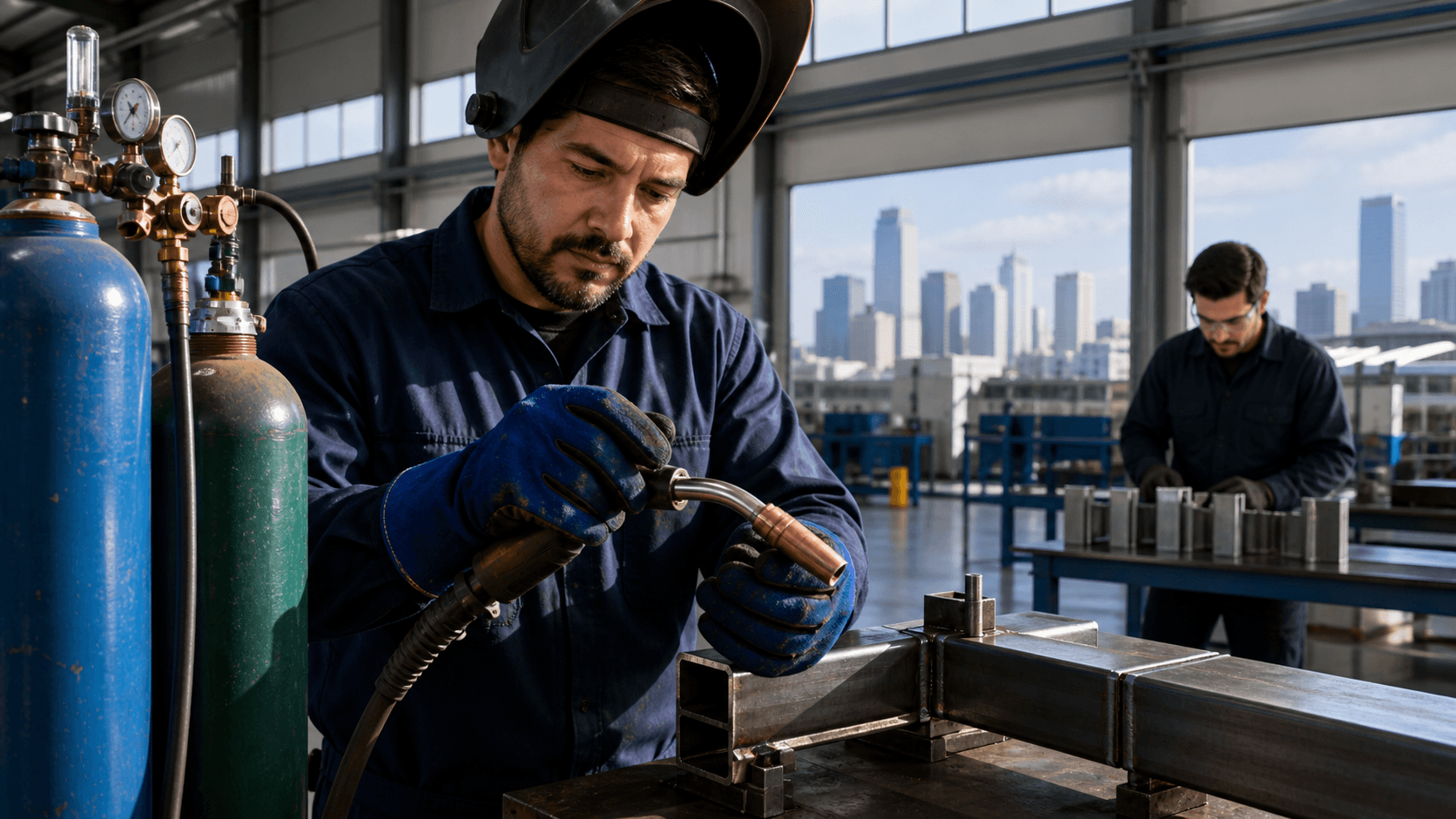
Gas-shielded metal arc welding is simple at its core. You have an electric arc making the weld, and you have a shielding gas flowing around that arc. The gas keeps oxygen, moisture, and other junk in the air away from the molten weld pool so it can cool the right way.
In a place like Houston, that protection matters a lot. Jobs are often:
- Hot and humid, which can feed moisture into the weld
- Breezy or windy on exposed steel, which can blow gas away
- Spread across large sites, which can create long gas line runs
Compared to self-shielded wire or stick welding, gas-shielded processes usually give:
- Cleaner weld beads with less spatter
- Less grinding and chipping after the weld
- Better control over bead shape and penetration
On real jobs, that plays out in clear ways:
- Structural steel on commercial builds, where appearance, speed, and inspections all matter
- Process piping in plants, where gas coverage supports consistent root passes and tie-ins
- Repair work at warehouses, ports, and logistics hubs, where downtime has to stay short
- Specialty metalwork on equipment frames, guards, platforms, and supports that live in tough environments
When the shielding gas is doing its job, you spend more time welding and less time chasing porosity, undercut, or ugly spatter.
Comparing GMAW, FCAW, and GTAW for Houston Job Sites
Most gas-shielded metal arc welding decisions in the field come down to three processes.
GMAW, often called MIG, uses a solid wire and continuous feed. It is fast, relatively easy to learn, and works well for production work and light to medium fabrication. You pull the trigger, wire feeds smoothly, and the gas shields the arc.
FCAW, in this context, means gas-shielded flux-cored wire. You still have a continuous wire feed, but the wire has flux in the center. With the added gas shield, you get high deposition rates and strong welds that work well on thicker structural steel and heavy sections.
GTAW, or TIG, is different. You have a non-consumable tungsten electrode, a separate filler rod, and your shielding gas, often argon-rich. The welder controls the filler by hand, which is slower but very precise, especially for stainless and specialty alloys.
Each has its place around Houston:
- FCAW for heavy structural steel, large frames, and thick members high above the ground
- GMAW for shop-style productivity on rails, brackets, guards, and light structural work
- GTAW for critical stainless piping, clean stainless components, and thin specialty materials
Late summer and fall conditions across Texas also matter. Higher ambient temperatures can change preheat needs and travel speeds. Wind on elevated or open sites can pull gas away from the arc. Moisture in the air can show up as porosity if gas flow, stickout, or technique are off. Process choice needs to match not just the drawing, but also the weather overhead and the floor under your boots.
Choosing the Right Shielding Gas Mix for Texas Conditions
Gas choice is where many projects quietly gain or lose time. Different blends affect penetration, bead shape, and cleanup.
Common options include:
- Straight CO2, strong penetration but more spatter and a rougher arc
- 75/25 argon CO2, a popular mix that balances arc stability and penetration
- Argon-rich blends with lower CO2, smoother arc, nicer bead appearance, and less spatter
On Houston jobs, there are extra details to think about:
- Wind on exposed beams can thin out the gas envelope, so flow rates and nozzle choice matter
- Long hose runs around refineries and plants can cause pressure drops if not planned right
- Humidity and condensation around the weld area can push you to use processes and gas mixes that are more forgiving and keep porosity down
For fabricators and contractors, good gas choices often come down to priorities like:
- If you want maximum productivity, a 75/25 style mix might work well with GMAW or FCAW for fast, repeatable welds
- If appearance and fine control matter, such as stainless or visible welds, argon-rich blends with GTAW or GMAW pulsed setups can help produce cleaner results
- For code work and critical joints, matching the gas to the qualified welding procedure and base materials is non-negotiable
Balancing Code Compliance, Quality, and Speed on Texas Projects
Industrial and commercial work around Texas often runs under AWS and ASME welding codes. That means:
- Welding procedure specifications must be written and followed
- Welders need to be qualified for the processes and positions used
- Inspectors expect documentation that lines up with the work in the field
Gas-shielded metal arc welding fits into this by tying the process and gas mix directly to qualified procedures. Change the gas too much, or swap processes without planning, and you may be outside your qualified range before the first pass is complete.
There is always tension between speed and quality. Higher deposition processes and productivity-focused gas mixes help you move faster on schedule-driven work, like structural steel or large facility repairs. But that only works if:
- Welds meet the required mechanical properties
- Joints pass visual and NDE inspections
- Rework and touchups stay low
Experienced mobile welding teams like ours at Weldit focus on that balance. By matching process, gas, and technique to the project specs and planned outage windows, we can help keep work moving while staying within code and inspection requirements.
Putting Gas-Shielded Welding to Work on Your Houston Project
As fall projects ramp up, it is a good time to look at how gas-shielded metal arc welding is being used across your sites. Many fabricators and facility managers find there are quick wins waiting in plain sight, such as:
- Standardizing gas mixes across crews to cut confusion
- Matching processes to job types so welders are not fighting the setup
- Adjusting procedures to local wind and humidity so shielding stays consistent
You might review your mix of GMAW, FCAW, and GTAW, check which gas blends are feeding which work, and see where welders are spending the most time grinding or reworking joints. Small changes in process or gas choice, backed by qualified procedures and skilled mobile support, can cut overtime, reduce downtime, and help your teams hit those end-of-year milestones with fewer surprises.
For fabricators, contractors, and facility owners across Houston and the major Texas metros, that is where Weldit fits in. We focus on bringing shop-level gas-shielded welding quality to the field, so your projects get clean, code-ready welds and dependable turnaround, whether the work is up on structural steel, inside a plant, or spread across a busy facility.
Get Started With Your Project Today
If your next project calls for precision, consistency, and code-compliant welds, we are ready to help. Our team at Weldit specializes in gas-shielded metal arc welding to keep your schedule and standards on track. Tell us about your timeline and specifications so we can recommend the right approach and provide a clear, detailed quote. To discuss your project directly with our team, please contact us.