Cut Retrofit Downtime with Smarter Pipe Spool Planning
Shutdown windows in Houston are getting tighter. Plants are trying to avoid long outages in peak summer heat, work around hurricane season risk, and still keep production numbers on track. That leaves very little room for field rework or surprises once a unit is down.
Pipe spools are one of the best tools you have to protect that schedule. When most of the work happens in the shop, there is less hot work in the unit, fewer fit-up problems, and less time spent waiting on last-minute fabrication. The more you can bolt or weld in prebuilt spools, the faster you can pressure test, restore systems, and hand the unit back to operations.
In this post, we will walk through how smart planning with laser scans, spool isometrics, and brownfield-aware fieldwork all fit together. The goal is simple: get your tie-ins done right the first time, keep your crews safe, and compress shutdown time as much as possible.
Mapping the Existing Maze with Laser Scans and Field Verification
Older Houston facilities almost never match their drawings. Over time you get undocumented tie-ins, small field fixes, and packed pipe racks where every inch of space is spoken for. When you walk those units, you can see where reality and original plans have drifted apart.
That is why starting with accurate field data is so important. 3D laser scanning captures the actual conditions in a congested area, including:
- Existing pipe runs and elevations
- Real clearances to steel, cable trays, and equipment
- Small bends or offsets that never made it into the model
- Possible clash points for new pipe spools
From those scans, designers can model the new lines against what is really there, not what an old print says is there. You see right away if a new spool will clip a brace, land on a handrail, or fight for space with another line.
But laser data alone is not enough. Field verification still matters. That means:
- Focused walkdowns of the tie-in area
- Checking critical dimensions with a tape or total station
- Confirming branch locations and sizes on live lines
- Verifying supports and shoes that will carry new loads
When scans and field checks agree, you can move into design and fabrication with confidence. When they do not, you catch the mismatch while the plant is running, not while the clock is ticking during a shutdown.
Designing Pipe Spools and Isometrics for Fast Tie-Ins
Once you trust your field data, the next step is clear spool isometrics. These are the drawings that shop crews and welders actually build and install from. Good spool isos turn all that scan and walkdown information into real, constructible parts.
A solid spool iso should clearly show:
- Exact center-to-center dimensions and cut lengths
- Weld locations and which welds are shop versus field
- Materials, wall thickness, and any special requirements
- Supports, shoes, and any specialty items on the line
For fast tie-ins, you want as many welds as possible done offsite, in a controlled setting. That lets you:
- Keep field weld counts down to the bare minimum
- Place field welds where you have safe access and room to work
- Allow realistic alignment tolerances without forcing rework
During planning, we like to sit with the iso and ask simple, practical questions. Can a welder actually reach this joint with a hood on? Is there a safe position for a ladder or scaffold? Does this field weld land inches from a hot line or a valve operator?
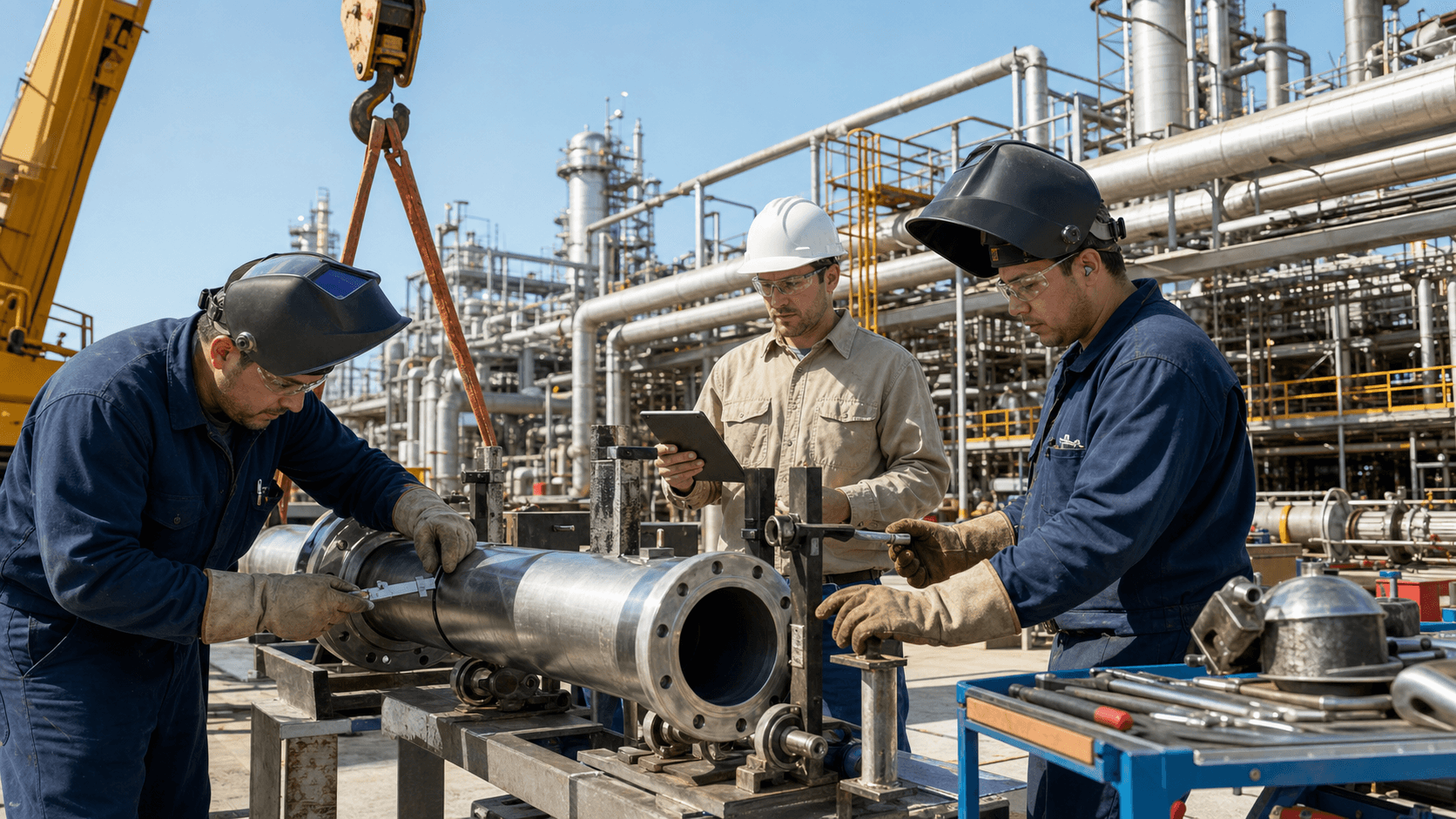
A mobile welding team depends on these details. With good spool drawings, we can show up with the right welding procedures, the right consumables, and welders qualified for that specific material and position. That cuts out scrambling, tool runs, and guesswork during the outage.
Tackling Brownfield Constraints in Crowded Houston Facilities
Brownfield work brings its own set of headaches. You are not installing pipe in an empty rack. You are threading new steel through a maze of live equipment, hot lines, and tight spots while summer sun beats down on open structures.
Typical constraints we plan around include:
- Live piping and hot systems that must stay online
- Tight access where big lifts are restricted or impossible
- Open structures where crews are exposed to sun and weather
- Limited spots for cranes, forklifts, or even basic rigging
To deal with that, constructability reviews are key. Before you build the spools, you plan how to get them into place. That might include:
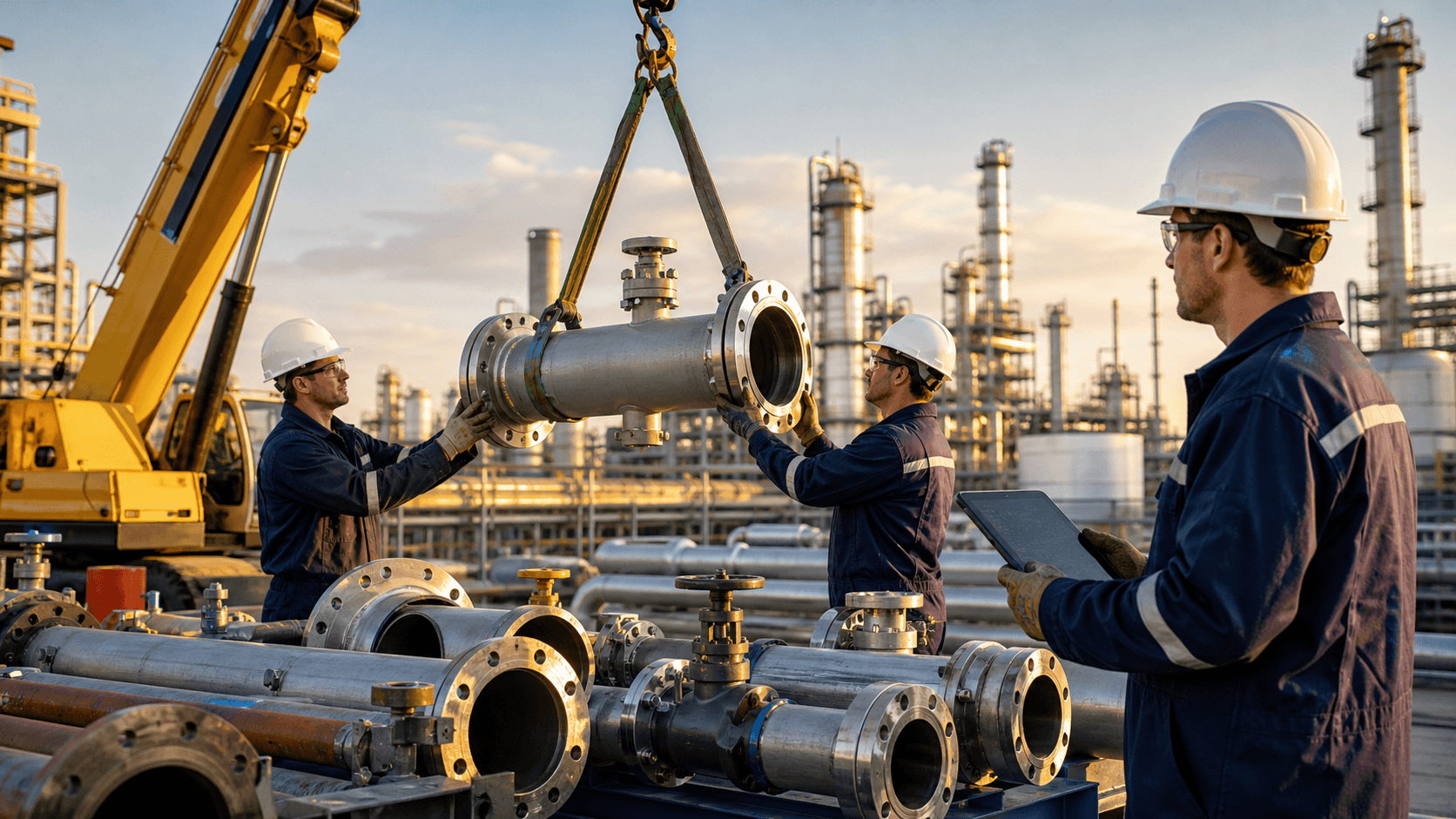
- Simulating the path to swing or slide a spool into position
- Planning pick points and rigging to avoid live lines
- Laying out temporary supports so spools do not sag or twist
- Pre-planning staging areas for spools, tools, and consumables
Safety and compliance sit on top of all this. Hot work permits, working around live units, and site-specific rules in refineries and chemical plants all affect the plan. In summer, you also have to think about heat stress, safe break areas, and pacing work so welders can keep quality up without pushing past safe limits.
Scheduling Tie-Ins to Minimize Shutdown and Weather Risk
Good engineering and good spools will not save a bad schedule. Tie-in work has to be timed around the plant's critical path, so key systems come back online when operations need them.
Some planning points we focus on are:
- Sequencing spools for install in the exact order they are needed
- Grouping work in zones to limit people stacking on top of each other
- Locking in test and inspection times so welds are not waiting on signoff
Reality is that late changes happen. A nozzle is not where you thought it was, a valve spec changes, or operations adjusts the scope mid-outage. Planning for that up front can save days. Options include:
- Having contingency or adjustable spools ready for common changes
- Keeping flexible welding procedures in place to handle small shifts
- Using mobile welding support for quick field modifications
In late July in Texas, you also have to respect the weather. Heat management is part of the schedule, not an afterthought. That might mean more work in early morning or evening, shorter hot shifts, and clear plans for sudden storms or lightning that stop lifts and high work. A little weather buffer helps protect weld quality and worker safety when the sky does not cooperate.
Putting Houston Pipe Spools to Work Before Your Next Turnaround
When you bring it all together, pipe spools are more than just pieces of pipe. With early laser scanning, solid field verification, and well-thought-out spool isometrics, you can turn a risky brownfield retrofit into a controlled, predictable job. That means less rework, less time with systems down, and fewer people exposed to hot, crowded work areas.
In our Houston-area work at Weldit, we see the payoff when we are involved early. When project and maintenance teams loop a certified mobile welding and fabrication crew into scope development, we can help review tie-ins, flag problem spots, and shape a spool plan that fits both the unit and the outage window. That kind of front-end effort makes a shutdown smoother, safer, and a lot less stressful for everyone involved.
Get Started With Your Project Today
If you are planning or updating a process system, we can help you move from concept to completed pipe spools with accuracy and predictable timelines. At Weldit, our team works closely with your engineers and site crews so fabrication, delivery, and installation fit your schedule and specifications. Share your project details and drawings with us to get a straightforward scope and schedule you can rely on. Have questions or need a quote right away? Just contact us and we will respond quickly.