Protecting Your Property with Strong Metal Posts
Metal posts do a lot of quiet work on your property. They guide cars, hold signs, support gates, and keep people and equipment where they should be. When those posts are bent, leaning, or rusted out, they stop doing their job and start becoming a problem.
In Houston parking lots and yards, damaged posts can mean trip hazards, scraped cars, blocked access, and headaches with liability. Late summer is especially busy around schools, sports fields, and event spaces, so weakness in your posts tends to show up right when more people are moving through. Metal post repair is about fixing the structure of those posts, not just cleaning them up with a coat of paint.
Real repair includes checking how the post is set, how it is welded, how it carries load, and how it ties into the concrete. It is very different from a patch or a quick brace. Our Houston heat, strong sun, surprise storms, and humid air speed up rust and wear, so August is a smart time to walk your property and plan repairs before the fall calendar fills up.
How Metal Posts Fail in Houston Weather
Most damaged posts do not fail in one day. They get weaker bit by bit until one more bump or storm finishes them off. Around Houston, we see a few common patterns.
Frequent problems include:
- Bollards that are bent or crushed from low-speed vehicle hits
- Posts sheared right at the concrete line after repeated impacts
- Gate posts that lean, twist, or crack around old welds
- Sign and fence posts with heavy rust where they meet the ground
- Guard posts that wobble when you push them
Houston weather and soil put even more stress on these posts. Clay soils can shift and settle, so concrete footings loosen over time. Heavy rain leaves standing water around base plates and post sleeves. In some facilities, cleaning chemicals or de-icers near loading zones speed up corrosion, especially at welds and cut edges.
The sneaky part is that much of the damage hides where you cannot see it. Light flaking paint or a small rust streak might not look serious, but they can point to:
- Thin, pitted metal at the base of the post
- Cracked welds under a layer of old paint
- Hollow spots in concrete around the post
- Internal rust inside hollow tubing
A post that moves even a little when you push it could have problems below the surface. A professional inspection can spot these warning signs before the post gives out during a busy weekend or school pick-up time.
What Really Happens During Metal Post Repair
Good metal post repair always starts with a careful look at the site. During a visit, we typically:
- Check alignment, plumb, and how the post is loaded
- Look for cracked concrete or loose footings
- Locate nearby utilities or buried lines
- Plan safe work areas so people and cars can move around us
Once we understand the damage, we decide if repair is safe or if replacement is the better move. Some posts can be straightened, sleeved, and re-welded. Others, especially ones that protect doors, gas lines, or heavy gates, may need full replacement to stay within code and good practice. For example, a light fence post with surface rust might be a repair job, while a main gate support that is rotted at the base often calls for a new post and footing.
The actual repair work can include several steps:
- Heating and straightening bent metal where it is still sound
- Cutting out cracked or crushed sections of tubing or pipe
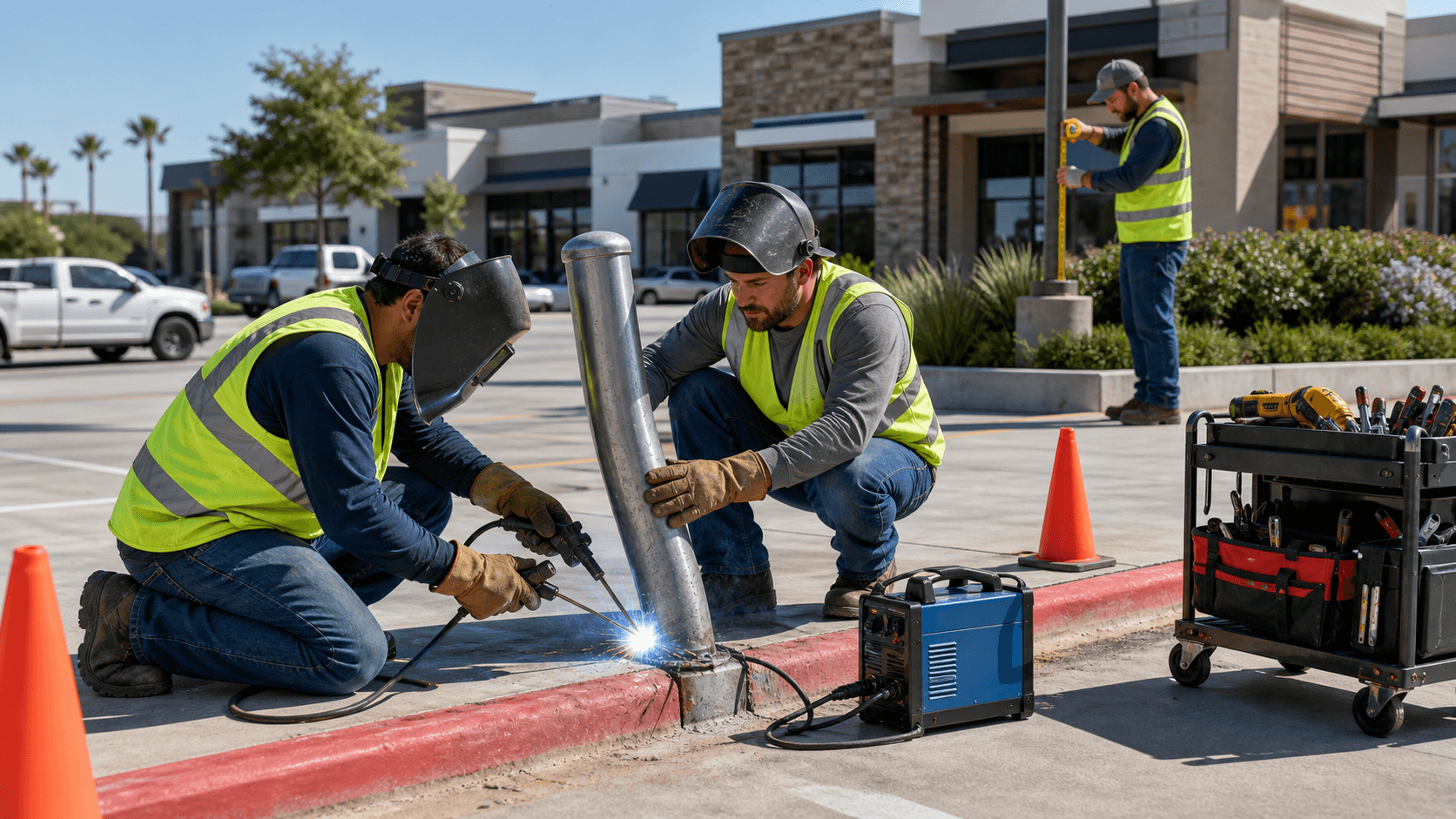
- Welding in new steel pieces or sleeves over the damaged area
- Adding base plates or gussets for extra strength at the ground line
- Re-setting posts in fresh concrete to lock them in place
Once the structure is solid again, the post is cleaned up and prepared for coatings so it can stand up to future use and weather.
Code-Compliant Repairs That Keep You Legal
Metal posts do more than just mark space; they often tie into building codes, safety rules, and access rules. In Houston, that can touch several areas at once, such as:
- Building codes for structural posts and supports
- ADA rules for clear walking paths and sign placement
- Fire lane rules for bollards that guard hydrants and access lanes
- Local rules for signage, fencing, and sight lines in parking lots
Quick fixes might look fine at first glance but fall short when it comes to these requirements. Bolting a light bracket around a broken post or slipping on a thin sleeve without welding can leave you exposed. Those shortcuts can lead to:
- Posts that fold on the next impact
- Failed inspections when codes are checked
- Insurance headaches after an incident
Certified mobile welding work focuses on proper joint prep, fit-up, and weld quality. That means grinding to clean metal, choosing fillers that match the base steel, and welding in a way that respects how the post is loaded. The goal is strength you can rely on, not just a nicer looking post.
Tailoring Repairs for Parking Lots and Yards
Parking lots and yards have different needs, even when the posts look similar. For parking lots at shopping centers, office parks, and industrial sites, common priorities include:
- Bollards that can handle repeated bumps from cars and carts
- Sign posts that are tall, visible, and firmly set
- Gate posts that stand up to frequent opening and closing
- Work done during off-peak hours so traffic keeps moving
Yard and perimeter posts play more of a security and access role. That can include fence line posts, driveway gates, equipment enclosures, pet areas, and livestock spaces. When those posts fail, you may deal with unwanted access, lost equipment, or animals getting out.
Late summer is a smart time for property owners to look ahead. Many people use this time between back-to-school and fall events to:
- Walk fence lines and yard edges
- Check gate movement and latch points
- Flag leaning or rusted posts for repair
- Group multiple repairs into one project
Bundling work like this can make planning easier and reduce disruption on busy properties.
How Weldit Delivers Fast, on-site Post Repairs
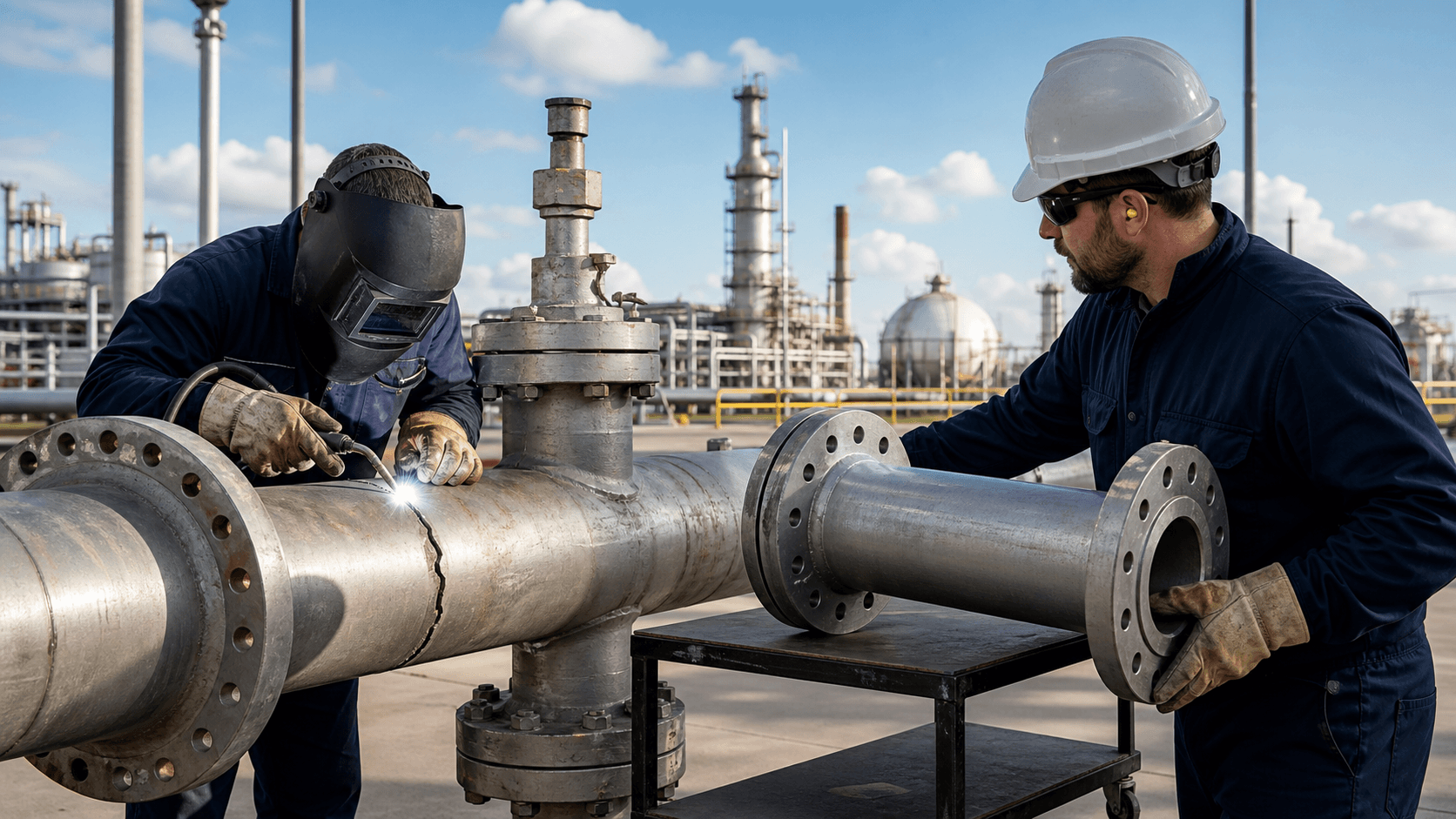
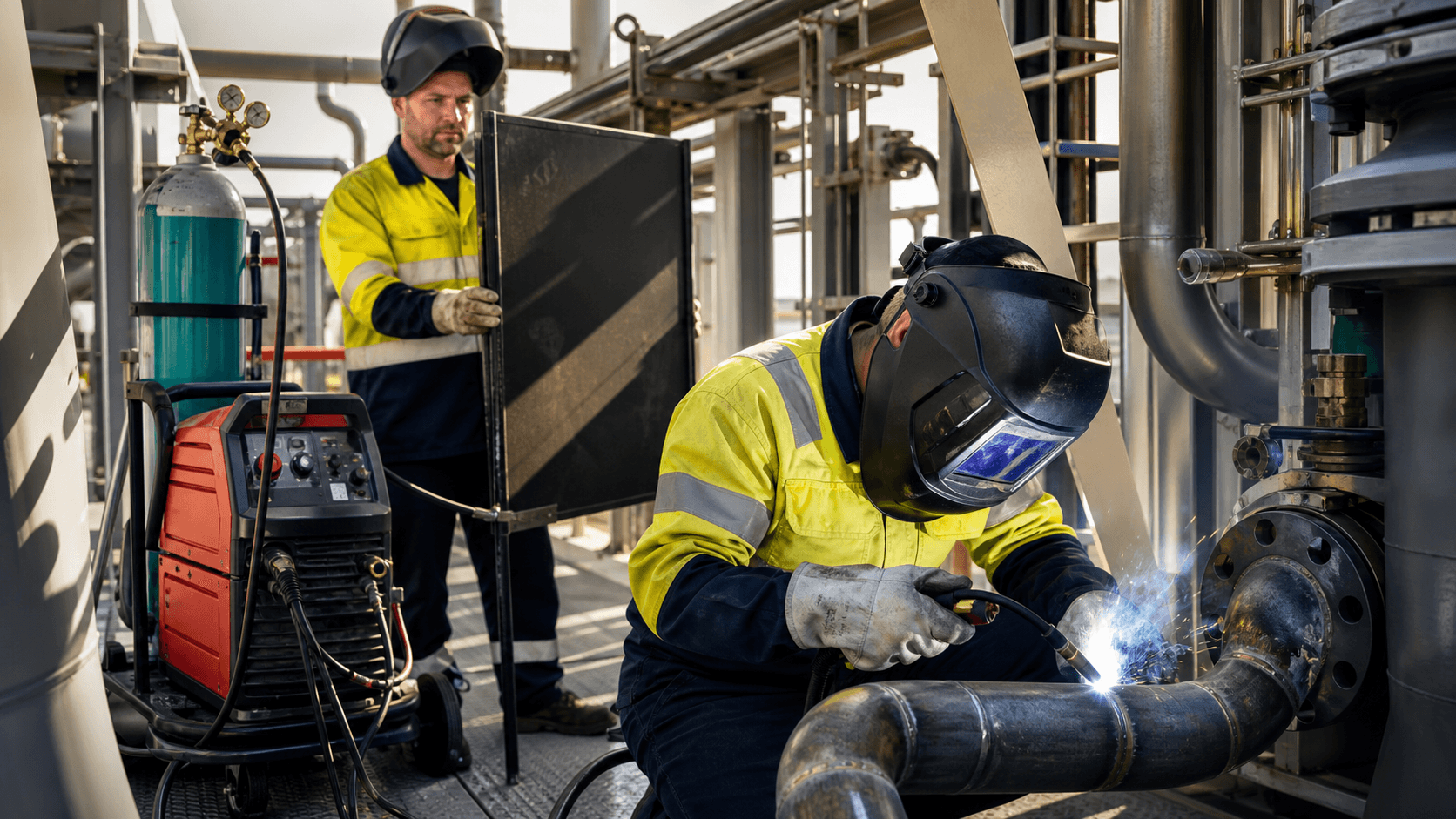
Metal post repair works best when the crew can bring the shop to you. Mobile welding rigs allow cutting, fitting, and welding right in your Houston area parking lot or yard. That helps avoid pulling posts out, hauling them away, and leaving big open holes or closed areas for long periods.
A typical repair flow looks something like this:
- You share photos or request a site visit so the damage can be reviewed
- A clear written estimate explains the repair or replacement approach
- Work is scheduled for lower traffic times whenever possible
- The crew sets up a safe zone, completes the repair, and cleans the area
- Final checks confirm post alignment, weld quality, and surface prep
For long-term durability, it often makes sense to think one step ahead. That can mean choosing thicker-wall tubing in high-impact zones, adding base plates or small guards around vulnerable posts, or upgrading coatings to handle Houston humidity and sun. In some cases, a small layout change, like shifting a post a few inches away from tight parking turns, can reduce future damage and keep your property safer over time.
Get Started With Your Project Today
If your fence or gate is leaning, loose, or showing signs of rust, Weldit is ready to help with expert metal post repair that restores strength and stability. We will assess the damage, walk you through your options, and complete the work with durable, long-lasting results. To discuss your project or request a quote, simply contact us and we will follow up promptly.