Raising Weld Quality on the Move
Gas-shielded metal arc welding can be a big upgrade for mobile work. Compared to self-shielded processes, it usually gives cleaner beads, less spatter, and stronger welds. That really matters when you are tying in critical structural steel, welding pipe, or finishing custom metal work that people will see up close.
Across Texas, more work is happening right where the steel sits: plants, refineries, commercial builds, and large residential projects. Crews are under pressure from tight shutdown windows, jobsite access limits, and shifting schedules. Weather, wind, and dust only add to the challenge.
In this guide, we walk through how we think about gas-shielded metal arc welding on mobile jobs: choosing gas mixes, dealing with outdoor conditions, setting up the rig, and keeping work in line with AWS and ASME codes.
Why Gas-Shielded Metal Arc Welding Excels on Site
When a job is on the clock and every weld counts, gas shielding brings real benefits.
For weld quality and appearance, gas shielding helps with:
- Lower spatter and less grinding
- Better fusion at the toes of the weld
- Smoother beads that blend into structural and architectural work
That means fewer repairs and faster signoff, which is a big deal on structural steel, pressure pipe, and visible custom metal jobs.
On industrial and commercial projects, gas-shielded metal arc welding can support:
- Higher deposition rates compared to many stick setups
- Faster travel speeds when parameters are dialed in
- More consistent welds across long runs and repeat joints
Those gains help keep shutdowns and tenant build-outs on schedule, especially when several trades are sharing the same space.
Code compliance is another big reason to lean on gas shielding. Cleaner weld profiles and better fusion help with:
- Passing visual inspections more reliably
- Reducing porosity and undercut that show up in NDT
- Staying aligned with AWS D1.1, ASME requirements, and owner specs for load-bearing and pressure work
When inspectors do not see spatter clouds or irregular beads, the whole project tends to move smoother.
Choosing the Right Shielding Gas for Mobile Work
Not every shielding gas mix behaves the same, and that matters when you are welding in the field.
For many carbon steel jobs, common mixes include:
- C25 (75% argon, 25% CO2) for a balance of control and penetration
- Higher argon blends when you want a smoother arc and less spatter
- Straight CO2 in some cases when deeper penetration is the priority
For stainless and other specialty alloys, higher argon blends and specialty mixes are often used to protect the metal and keep the bead clean. The main idea is to match the gas to:
- Base metal type
- Joint design and thickness
- Required weld appearance and mechanical needs
On mobile rigs, we also have to think about portability. Options can include:
- Single cylinders for short jobs and tight access
- Small manifolds on the truck to support several machines
- Larger storage when we expect long runs or multiple welders working at once
Whatever setup you choose, gas quality and uptime matter. Leaks, dirty regulators, or damaged hoses can cost a lot of weld time.
Outdoor conditions also play a big role:
- Hot days and long hose runs can affect pressure at the gun
- Regulators and flowmeters need to be set for real-world distance, not just what looks right at the truck
- Consistent coverage at the arc is more important than a specific number on the gauge
A quick flow check at the gun and a test bead on scrap can tell you more than a perfect chart setting.
Battling Wind, Heat, and Dust on Texas Jobsites
Wind is the enemy of gas shielding. On exposed or elevated work, we use simple tools to protect the arc:
- Portable wind screens or light welding tents
- Smart positioning, using the structure itself as a windbreak
- Adjusting gun angle and keeping stick-out consistent
The goal is to keep the gas cloud wrapped around the puddle. If you see porosity or hear the arc sputter in gusts, shielding is probably being blown away.
Heat is another big factor, especially in late summer when many plants schedule work. High temperatures can push:
- Welder fatigue and attention dropping
- Equipment running near its duty cycle limits
- Cables, hoses, and feeders to run warmer than usual
Good pacing, shade where possible, and watching equipment duty cycles help keep productivity steady and safe. It is better to control the workflow than to cook a machine or a crew.
Dust and dirty steel cause their own problems. Mill scale, rust, and oil can lead to:
- Porosity in the weld
- Lack of fusion at the toes or root
- Extra time grinding out defects later
Simple prep routines pay off, even on the truck:
- Quick grinding on joint areas
- Wire brushing after grinding
- Degreasing surfaces that look oily or contaminated
A few minutes of prep can save a lot of repair time once inspection starts.
Mobile Setup Essentials for Reliable Gas-Shielded Welds
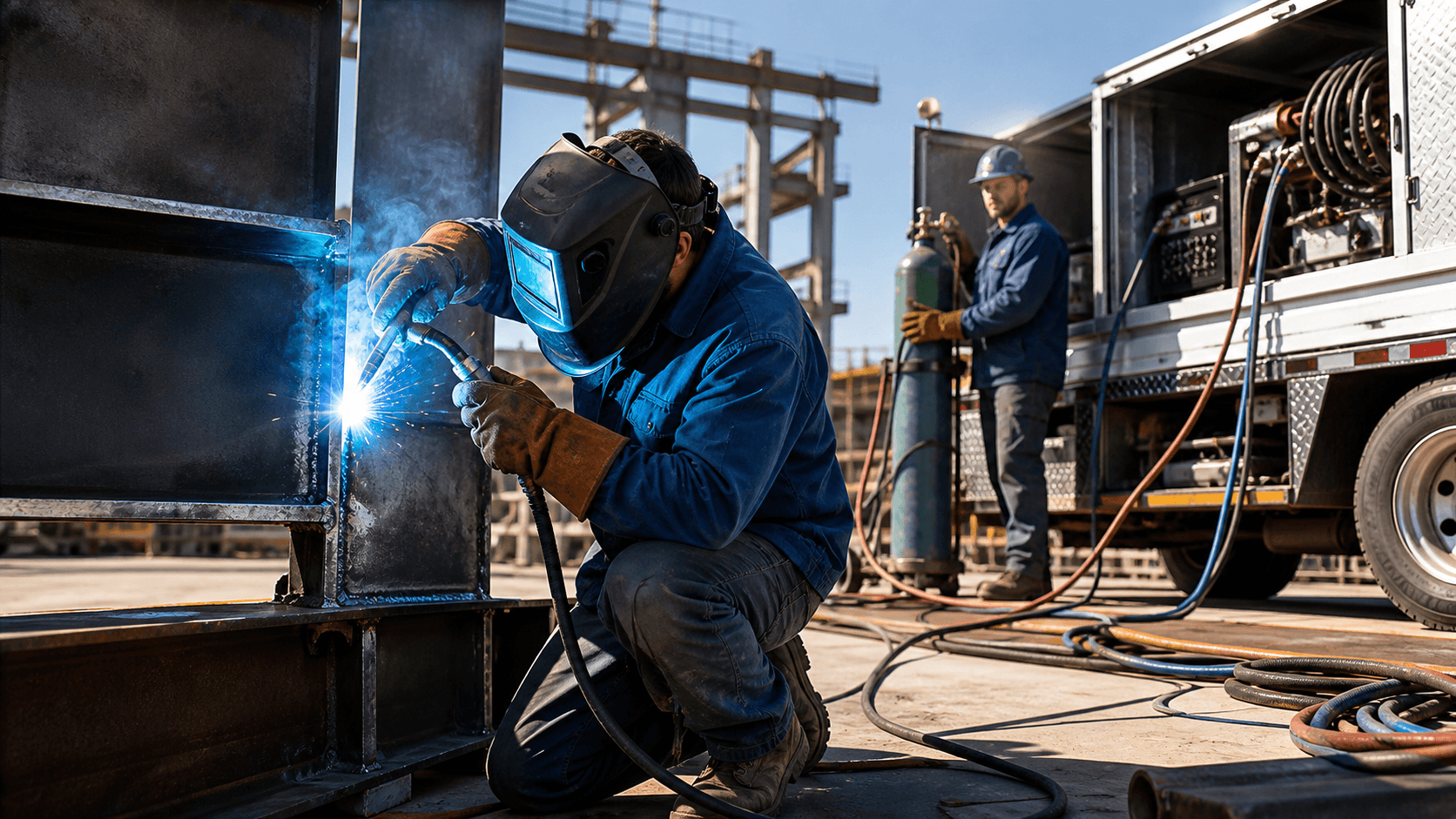
A solid mobile setup keeps gas-shielded work predictable, even on complex sites.
Core pieces on the rig usually include:
- Power source sized for expected material thickness
- Wire feeder that handles the wire-size and processes you need
- Cylinders or manifolded gas storage secured for travel
- Hoses and cables sized for the runs you actually use
- Storage that keeps consumables clean and easy to reach
On large jobs, cable and gas line management is key. We pay attention to:
- Routing leads away from sharp edges, hot surfaces, and traffic lanes
- Securing lines along scaffolding or racks so they do not sag or kink
- Keeping walkways clear to reduce trip hazards
Before we ever strike an arc, a quick quality check helps avoid surprises:
- Gas leak check at fittings and connections
- Confirm polarity matches the process and wire
- Verify wire type and size for the WPS
- Set and confirm gas flow at the gun, not just at the cylinder
- Run a short test weld to fine-tune parameters
That small routine supports more consistent welds all day.
Keeping Welds Code-Compliant in the Field
On structural steel and pressure piping, code is the roadmap. Following qualified Welding Procedure Specifications and Procedure Qualification Records for gas-shielded metal arc welding keeps work aligned with AWS and ASME expectations.
For mobile projects, good documentation habits include:
- Keeping copies of relevant procedures on hand
- Tracking which welders are qualified for which processes and positions
- Organizing inspection notes and repair records in a way that travels with the crew
Inspectors and engineers are partners in getting the job finished. Clear communication helps:
- Agree on joint prep before welding starts
- Confirm parameters and any allowed adjustments
- Document any repairs with cause and fix
When everyone sees that procedures are followed and records are in order, work tends to move forward with fewer delays.
Put Advanced Gas-Shielded Welding to Work on Your Jobsite
Mastering gas-shielded metal arc welding on mobile jobs means cleaner welds, fewer failures, and faster turnarounds for industrial, commercial, and residential projects. With the right gas mix, smart control of wind and heat, and a well-planned mobile setup, field welding can reach the same level of quality you expect from a shop.
As late summer rolls along and many Texas facilities plan fall projects, it is a good time to think about how gas-shielded welding fits into your next structural addition, plant turnaround, or custom metal build. With certified mobile crews focused on AWS and ASME code work, those welds can be made right where you need them, on your schedule.
Get Started With Your Project Today
If your next build demands precise, code-compliant piping, we can support you with specialized gas-shielded metal arc welding services tailored to commercial systems. At Weldit, we coordinate closely with your project team to minimize downtime and keep your schedule on track. Share your project requirements and drawings, and we will provide a clear plan, scope, and timeline. To discuss details or request a quote, simply contact us.