Is Your Gate Costing You More Than It Protects You?
A metal driveway gate should make life easier, not add stress every time it moves. When it starts sticking, sagging, or sounding rough, it is normal to wonder if you should keep fixing it or start over with something stronger.
Many Houston homeowners hit this point right before fall gatherings and the holiday rush. The gate acts up, the opener strains, the hinges squeal, and everyone holds their breath hoping it will open for family, friends, and delivery drivers. On top of that, the gate might not line up with a newer fence or driveway, so it never quite closes right.
Fall is a natural decision point. You have more visitors, more packages at the door, and more storm fronts that can push wind and debris against a weak gate. Instead of guessing, it helps to walk through a few clear questions about safety, structure, function, and budget so you can decide if reinforcement or replacement makes more sense for your metal driveway gate in Houston.
We work with these questions every day as welding contractors, and they can give you a simple way to see what your gate really needs before you spend more time and money on the wrong solution.
How Safe Is Your Existing Metal Driveway Gate in Houston?
The first thing to think about is safety. Not just for your family and visitors, but also for your property and neighbors.
Start with structure and movement:
- Does the gate lean to one side or drag on the ground?
- Do you see cracks at welds, loose or wobbly posts, or a twisted frame?
- Does it bind, jerk, or slam when the opener moves it?
Then look at how it behaves around people and vehicles:
- Has it ever come off track?
- Has it bumped a car or failed to stop when something was in the way?
- Are there sharp rusted edges or tight pinch points near the hinges?
Security counts as safety too. Ask yourself:
- Are there gaps large enough for kids, pets, or an intruder to squeeze through?
- Does the latch feel weak, loose, or like it could be pulled open with a hard tug?
- Does the gate stay closed in wind, or does it rattle and bounce?
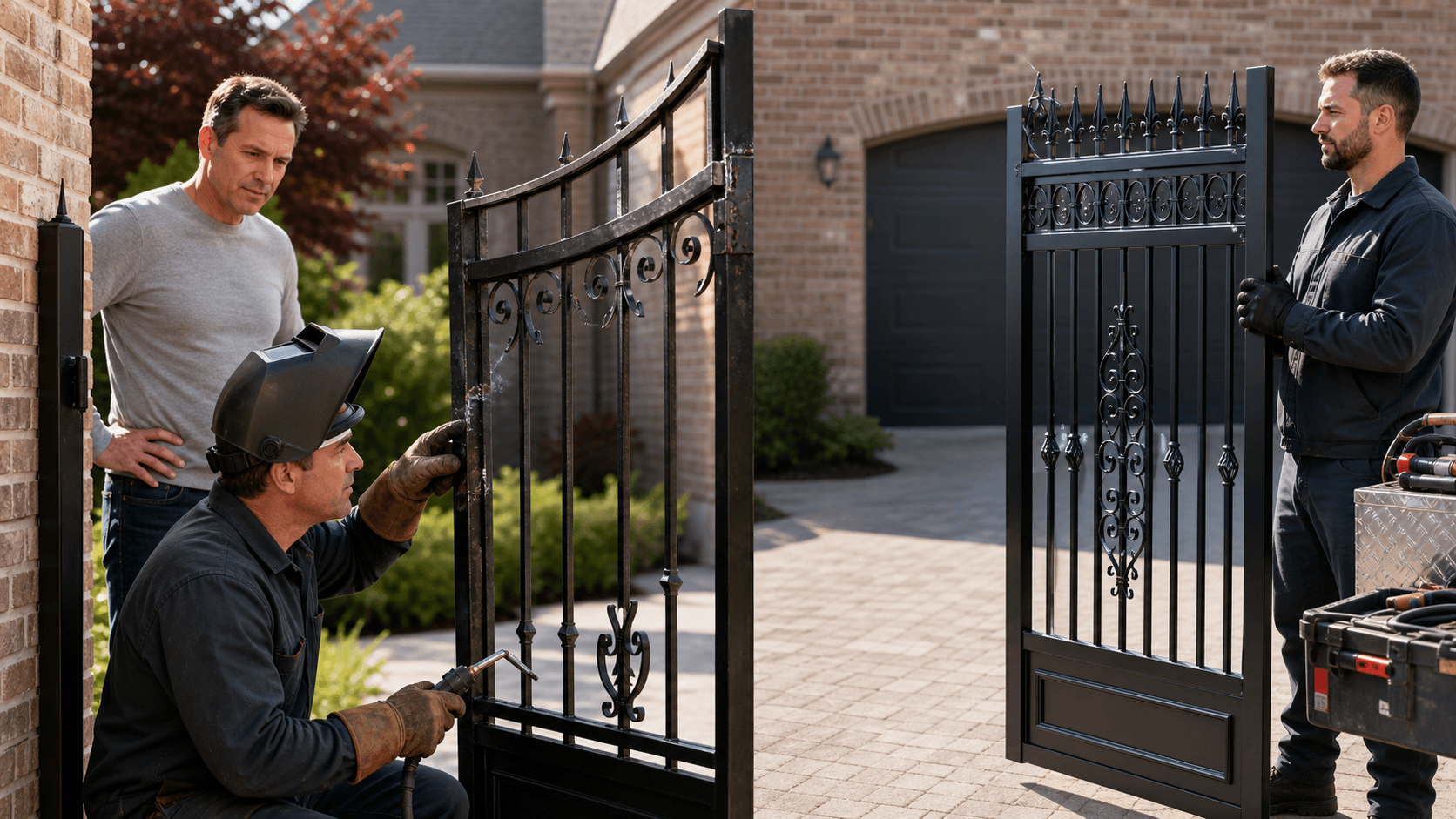
Sometimes, issues like mild sagging, noisy operation, or a sloppy latch can be handled with reinforcement. That might mean:
- New, heavier hinges
- Added bracing or gussets at weak corners
- Reworking certain welds to tighten the frame
But if the metal is badly corroded, the frame is warped all over, or the original design was never strong enough for the span, replacement usually becomes the safer choice. In Houston, constant humidity and coastal air speed up rust, especially in areas closer to the bay, so periodic safety checks are not just nice to have, they help you catch problems before something fails.
Can Reinforcement Fix the Damage You See?
Once you know the gate is safe to use for now, the next question is: can it be saved with smart repairs, or are you trying to patch something that is too far gone?
Look closely at the metal:
- Is the rust only on the surface, or is it flaking, pitted, or full of holes?
- Are the worst spots around hinges, the bottom rail, or the latch side?
- Do you see repairable damage in specific areas, or does the whole frame look tired?
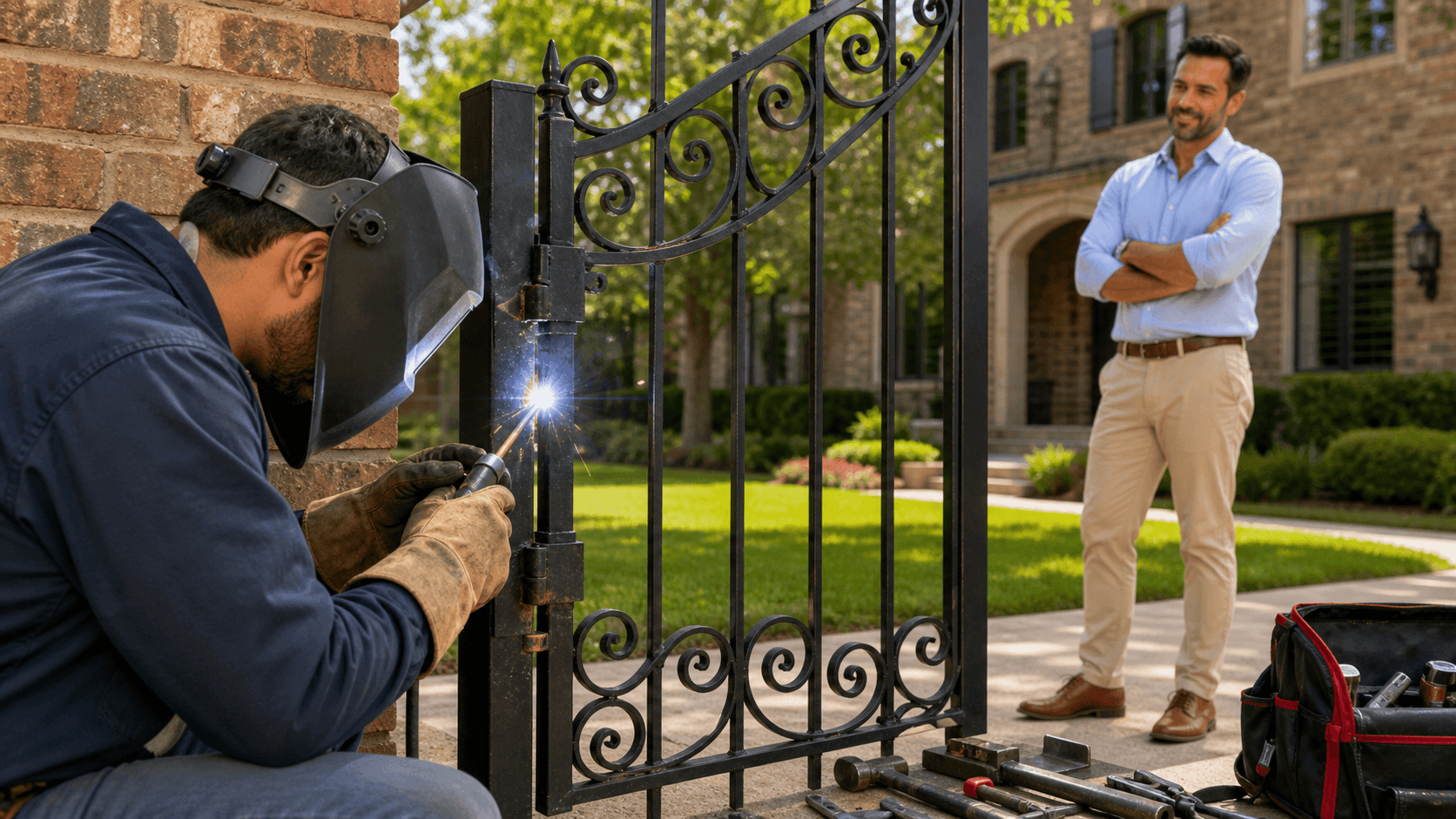
Certified welders can often:
- Cut out bad sections and weld in new steel
- Sleeve or plate weak spots to add strength
- Straighten and re-square the frame sections so the gate swings true
But no repair will last if the posts and foundation are failing. If the posts are loose, tilted, or set in cracked concrete, fixing the leaf alone is like changing tires on a car with a broken axle. In many cases, rebuilding or resetting posts in solid footings is the most important part of the job.
A simple rule of thumb helps:
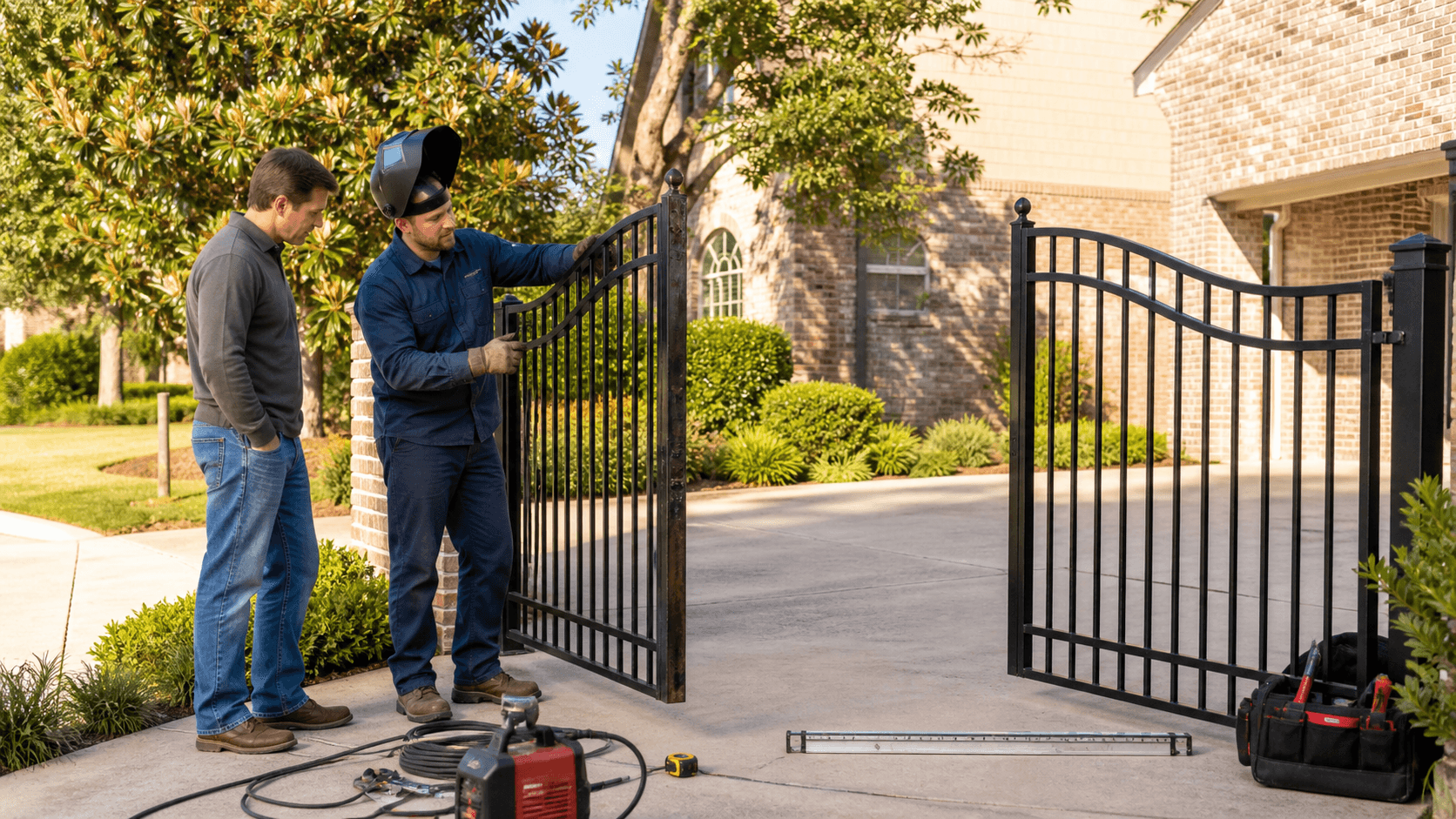
- Reinforce if most of the structure still feels solid and the basic design still fits the home.
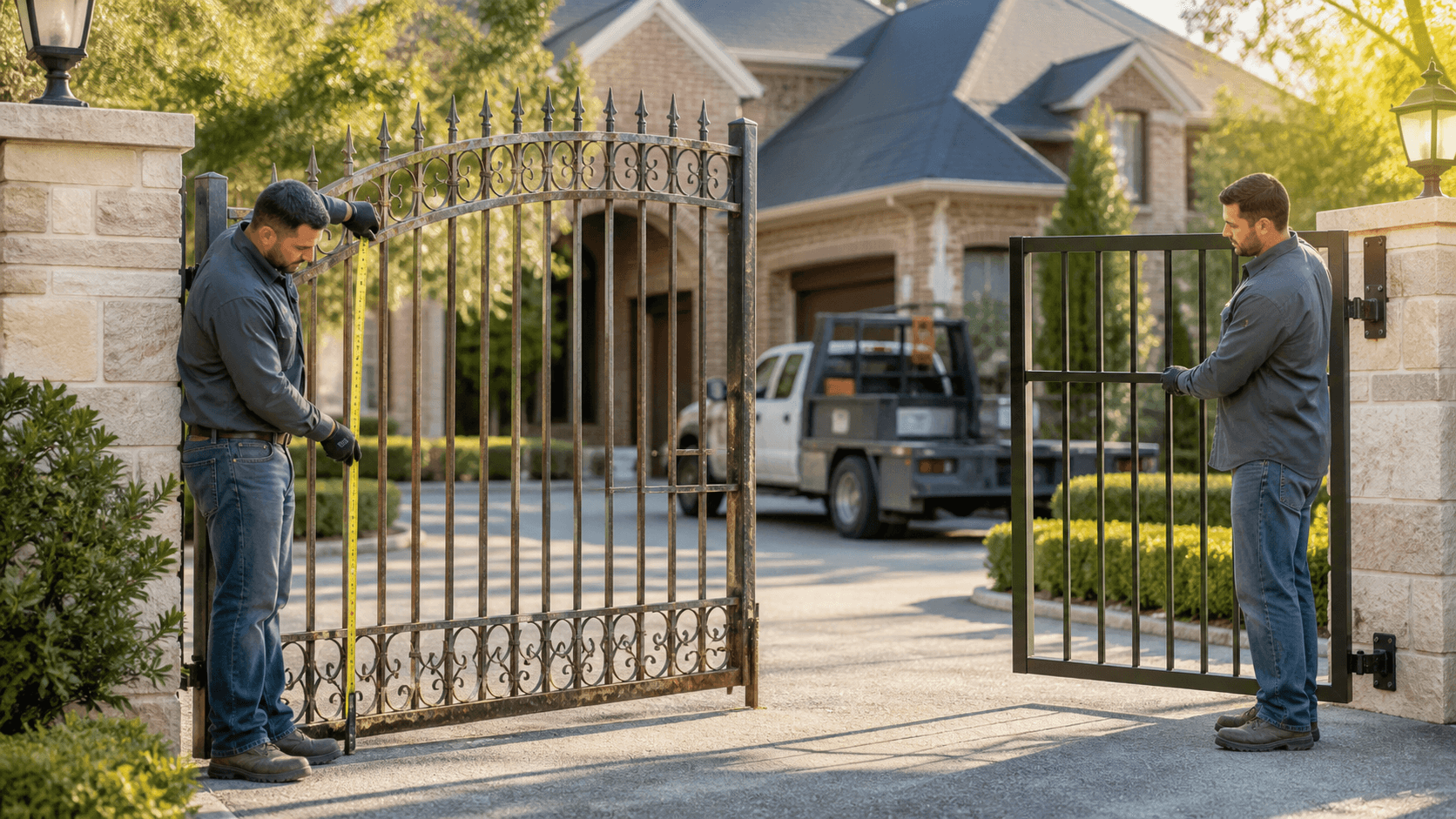
- Replace if rust, weak welds, or ongoing misalignment affect a large share of the frame.
The biggest advantage of working with a skilled welding crew is getting an honest, phased plan. That could mean handling urgent safety problems right away, then scheduling optional upgrades such as new infill panels or decorative work later in the season.
Does Your Gate Design Still Match Your Home and Needs?
Even if your gate can be repaired, it might not be the right gate for your life anymore. How you use your driveway may have changed over the years.
Ask yourself a few simple questions:
- Do you now park larger vehicles, trailers, or a work truck in the drive?
- Are you bringing in an RV or boat that needs a wider or taller opening?
- Are delivery drivers using the gate multiple times a day?
Lifestyle needs shift too. Maybe you now care more about:
- Keeping pets safely in the yard
- Having a secure barrier for young children
- Gaining privacy from the street or nearby neighbors
An open picket design that once felt airy may now feel too open, especially if you plan to host outdoor gatherings through fall and beyond. A more solid or taller gate can change how the whole front of the property feels.
Technology is another big factor. Many people want:
- Smart openers they can control from a phone
- Keypads or card access for guests and workers
- Built-in spots for cameras or intercoms
Older gates are often too light or too flexible for modern operators and hardware. In those cases, constant reinforcement is like bandaging an outdated frame that was never built for the job. A custom fabricated gate is often the better long-term move if you want to combine stronger security, better curb appeal, and new access tech in one clean design.
How Budget and Timing Shape Your Best Gate Strategy?
Your budget and your calendar both play a big part in the final decision. Reinforcement is usually faster, since you keep the main structure and focus on targeted welding, new hardware, and minor framing changes. When the gate is mostly sound, this can give you more life without as much disruption.
A new custom gate often takes more planning and time, especially if you are adjusting posts, power, and access controls. The payoff is usually in long-term value. A stronger design can reduce:
- Recurring repairs and emergency service calls
- Strain on the opener from a warped or dragging leaf
- Frequent touch-up work on joints that never really stayed aligned
Fall can be a good season for this type of work. Many people want their driveway gate ready before holiday visitors, package traffic, and end-of-year projects around the house. It also leaves some breathing room to phase work, for example:
- First, restore basic safety and function
- Second, add new pickets or panels for privacy
- Third, bring in automation and access control
As you plan, it helps to gather clear, written options that compare repair and replacement side by side, along with confirmation that you are working with certified, insured welders, who understand both structural work and gate systems in residential settings.
How Weldit Helps You Make the Right Gate Decision
When you line up the questions about safety, structure, use, looks, and budget, your gate usually tells you what it needs. The goal is not always a brand-new gate, and it is not always heavy reinforcement. The right choice is the one that keeps people safe, fits how you live, and holds up to Houston's humidity and long seasons of sun.
At Weldit, we focus on AWS and ASME code-compliant welding in both shop and field settings, and we bring that same mindset to residential and commercial gates. We can inspect your metal driveway gate in Houston on-site, look closely at the posts, welds, and frame, and share straight talk on what can be reinforced, what should be rebuilt, and when a new custom gate will serve you better in the long run.
Get Started With Your Project Today
If you are ready to upgrade your property with a durable, custom-designed metal driveway gate in Houston, our team at Weldit is here to help. We will walk you through design options, materials, and installation details so you know exactly what to expect. Share a few project details and we will provide a clear, straightforward estimate. Have questions or need guidance before you commit? Just contact us and we will respond promptly.