Keep Projects Moving With On-Call Aluminum Welding Support
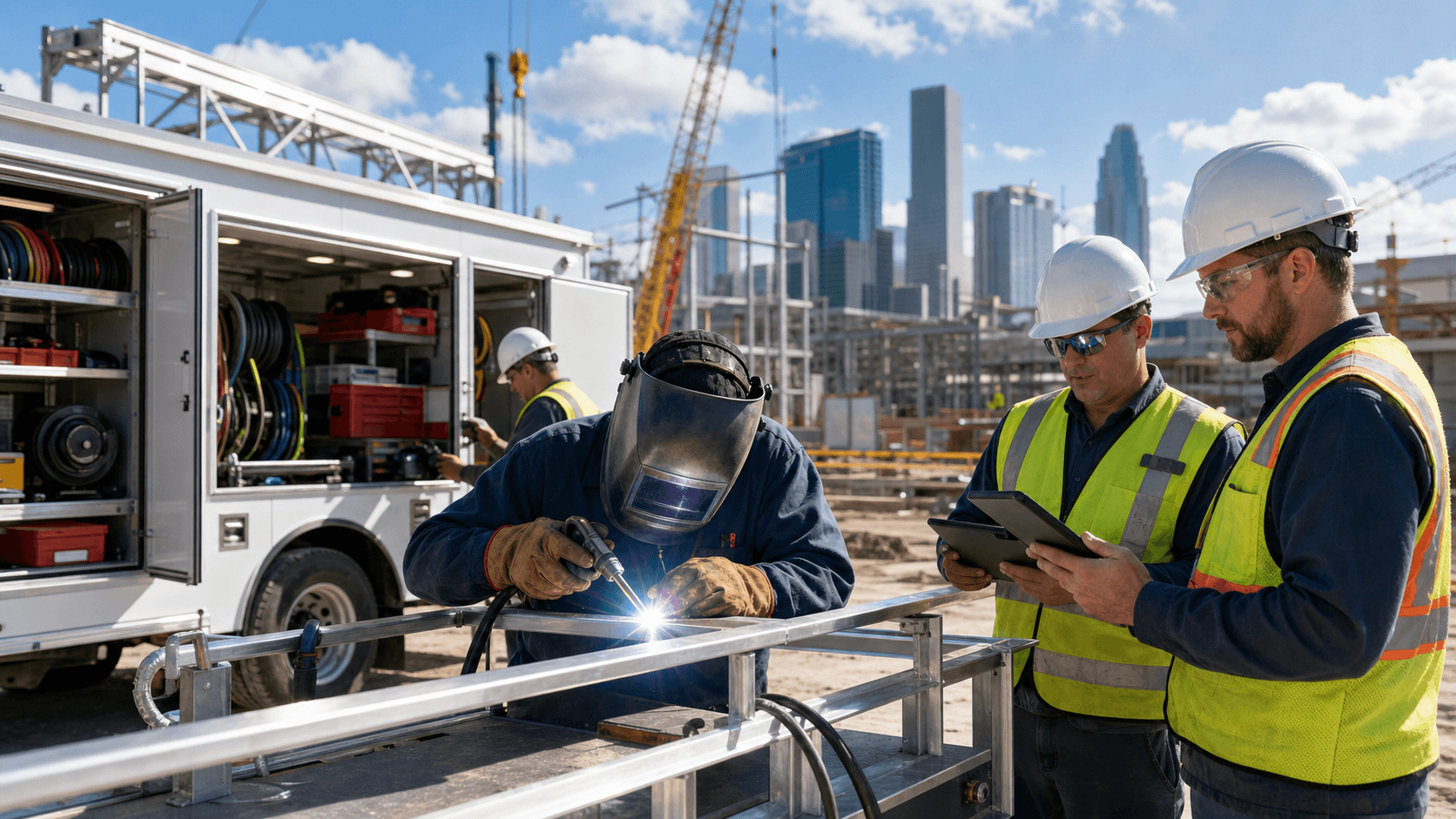
Mobile aluminum welder support keeps busy Houston sites working when the schedule is tight and the heat will not let up. When a guardrail gets clipped, a platform needs a change, or a skid does not line up in the field, stopping everything to ship parts to a shop is not an option. The work has to stay on track, people need safe access, and equipment has to stay online.
On active job sites, especially in the middle of summer, even a simple aluminum repair can turn into a major delay if it leaves the site. A mobile aluminum welder lets owners, general contractors, and plant managers keep the work where it is, so cranes, crews, and inspections do not have to wait. The shop comes to you instead of you losing days sending parts away.
Our team at Weldit provides mobile welding and fabrication support for industrial, commercial, and specialty metalwork across Houston and other major Texas markets. We bring shop-quality techniques to the field so aluminum work can be repaired, modified, or installed without breaking your schedule. In this article, we are sharing how to use mobile aluminum welder support in a smart way to cut delays, stay compliant, and protect tight budgets when projects are running at full speed.
Why Aluminum Demands Specialized Mobile Welding Expertise
Aluminum is not just light steel. It behaves very differently, and that shows up fast when the wrong person tries to weld it. Aluminum pulls heat quickly, which means the weld zone can get too hot while nearby metal still looks fine. This can lead to warping, sagging, and welds that look good at first, then crack later.
Aluminum also shows every mistake. On architectural rails, canopies, or clean process areas, ugly welds stand out. On ladders, platforms, and access systems, poor welds are more than an eyesore; they can turn into real safety problems.
Here is what often goes wrong when non-specialists work on aluminum on site:
- Wrong filler metal for the alloy
- Dirty prep that traps oil, paint, or oxide in the weld
- Overheating thin sections until they collapse
- Porosity and pinholes that weaken critical joints
A qualified mobile aluminum welder brings the right process for the job, usually TIG or MIG set up specifically for aluminum, along with power sources that can keep a stable arc in field conditions. Cleanliness is also a big deal. Proper prep, removal of oxide, and control of grinding dust and other contamination all affect the finished weld.
On busy Houston sites, you need someone who can:
- Identify the aluminum alloy or match it to what is already installed
- Read the joint design and understand the loads it must carry
- Adjust settings and techniques on the fly for different thicknesses
That level of field judgment helps avoid rework and keeps your systems safe and ready for inspection.
Strategic Uses of Mobile Aluminum Welders on Houston Sites
Aluminum shows up all over Houston projects, from plants and terminals to commercial rooftops. It is common on:
- Access platforms, stairs, and ladders
- Handrails, guards, and barrier systems
- Pipe racks, supports, and trays
- HVAC stands, rooftop frames, and light structural frames
- Skid packages and equipment bases
As projects move from drawings to reality, it is rare for everything to line up perfectly. Field-fit changes, last-minute tie-ins, and new openings are part of the work. A mobile aluminum welder can step in to cut, fit, and weld those adjustments on site, so you do not lose time waiting on a new shop run.
Houston's climate adds another layer. Humid, coastal air pushes corrosion concerns. Long, hot days create a lot of thermal expansion on exposed aluminum systems. Rooftop units, exterior stairs, and walkways need joints that can handle movement, vibration, and weather without failing.
Common time-sensitive needs where mobile aluminum support shines include:
- Modifying aluminum skids to match new anchor locations
- Repairing dock or loading equipment after impact or misalignment
- Reinforcing or straightening damaged guardrails and platforms
- Adding clips, tabs, or brackets to match real-world routing of piping or conduit
With the right mobile support, these changes become quick field tasks instead of multi-day delays.
Minimizing Downtime with Rapid Aluminum Repair and Retrofit
Not every problem is planned. A forklift clip, an overloaded cart, or a misstep on a ladder can turn into a bent rail or cracked weld in seconds. When that happens, operations slow down or stop until the area is safe again. That is where fast-response mobile aluminum repair makes a real difference.
A skilled mobile welder can help in two phases. First, they can triage the situation, secure the area, and put in temporary bracing or barriers so people stay safe. Then they can perform repairs or retrofits that respect code requirements and support later inspections.
Efficient workflow in the field matters just as much as weld quality. Good planning often includes:
- Staging tools, power, and materials before hot work starts
- Coordinating with operations so shutdowns are short and predictable
- Working during off-hours or cooler times of day when possible
- Keeping clear paths for other trades and regular traffic
Another smart move is grouping work items. Instead of calling a mobile aluminum welder for each small fix, many teams build a punch list that includes:
- Minor guardrail adjustments
- Platform or ladder repairs
- Small bracket additions
- Finish touch-ups at key access points
With careful planning, a single visit can clear many small issues at once, reduce repeat mobilizations, and keep the project or facility moving.
Code Compliance and Quality Control for On-Site Aluminum Work
On commercial and industrial sites, aluminum work is not just about looks. It ties directly into safety and compliance. Ladders, platforms, rails, and structural supports must meet codes, site standards, and the expectations of inspectors. If welds fail or do not meet specs, owners and general contractors carry the risk.
A professional mobile aluminum welder pays close attention to:
- Qualified welding procedures that match the job
- Certified welders working within their qualifications
- Clean, accurate joint prep and fit-up
- Repairs that can be documented when required
Matching existing drawings and specifications is just as important. When we repair or modify aluminum ladders, guards, or structural elements in plants, terminals, or processing facilities, we treat the original design as the baseline. The work in the field should support that design, not quietly change it.
Inspection readiness also matters. Clean, well-finished welds help projects clear punch lists and closeout with less friction. When needed, traceable documentation and photos of repair areas give owners and inspectors confidence that work was done in a careful, code-conscious way.
Partnering with Weldit for Reliable Mobile Aluminum Support
For busy project teams across Houston, the right mobile aluminum welder is a way to keep components safe, compliant, and in service when the schedule is packed. Our crew at Weldit blends shop precision with mobile responsiveness so aluminum work can be handled where it sits, from structural details to specialized packages.
Bringing a mobile aluminum welder in early often pays off. It can help when you are:
- Planning field changes that affect access systems or skids
- Seeing the first signs of cracking at welds or connections
- Scheduling outages, shutdowns, or turnarounds where aluminum repairs are likely
We have found that project teams do best when they treat mobile aluminum support as part of regular planning, not just an emergency fix. Building us into your maintenance routines, project scopes, and response plans means you already have a trusted resource ready when something bends, cracks, or needs a change in the field.
Get Started With Your Project Today
If you need a reliable mobile aluminum welder, Weldit is ready to come to you and handle the job efficiently. We bring professional equipment and trained technicians directly to your location so your project keeps moving without unnecessary downtime. Tell us about your repair or fabrication needs and we will provide a clear plan and schedule. For quick scheduling or questions, simply contact us today.