Food, beverage, and pharmaceutical plants in Houston run hard, especially in summer when production spikes. Stainless steel welding sits right at the center of staying sanitary, passing surprise audits, and keeping product safe. When welds are smooth and clean, they help protect public health. When they are not, small flaws can turn into big sanitation problems.
This article walks through why stainless steel welding in Houston matters so much for sanitary facilities, what makes a weld truly hygienic, where to focus your upgrades, and how to plan smart work during summer shutdown windows.
Protecting Sanitary Standards with Stainless Steel Welding
Sanitary facilities depend on stainless steel because it is tough, cleanable, and holds up under heavy use. In a hot, humid city like Houston, that choice matters even more. Equipment faces moisture, cleaning chemicals, and nonstop production cycles, so the metal has to stand up to those conditions.
Well done stainless welding supports:
- Compliance with FDA and USDA expectations
- Reliable sanitation routines and CIP systems
- Strong audit scores during both planned and surprise inspections
Poor welds do the opposite. Tiny pits, cracks, and rough spots can trap residue. That trapped material can feed bacteria, raise red flags during inspections, and increase the risk of product issues. Emergency repairs in the middle of busy summer production can mean rushed work, missed shipments, and headaches for your team.
Certified mobile welding and fabrication support helps bring shop-style quality right into the plant, which keeps shutdowns shorter and limits disruption when repairs or upgrades are needed.
Why Sanitary Facilities Rely on Stainless Steel in Houston
Processing plants in Houston live with a tough mix of conditions. Heat, humidity, airborne dust, and constant washdowns put real stress on your systems. Lesser materials can start to rust, stain, or break down under that load.
Stainless grades like 304 and 316 are common in:
- Food and dairy processing
- Beverage and brewery systems
- Pharmaceutical and specialty chemical production
These alloys help resist:
- Corrosion from caustic or acidic cleaners
- Wear from high-temperature CIP cycles
- Attack from frequent high-pressure washdowns
When the right alloy and surface finish are chosen, you get smoother cleaning, lower contamination risk, and longer equipment life. That means fewer surprises and less weekend or late-night work for maintenance crews. During summer, when demand for cold drinks, packaged foods, and health products ramps up, reliable stainless systems keep lines running instead of sitting idle with leaks or failures.
Essentials of Hygienic Stainless Steel Welding in Houston
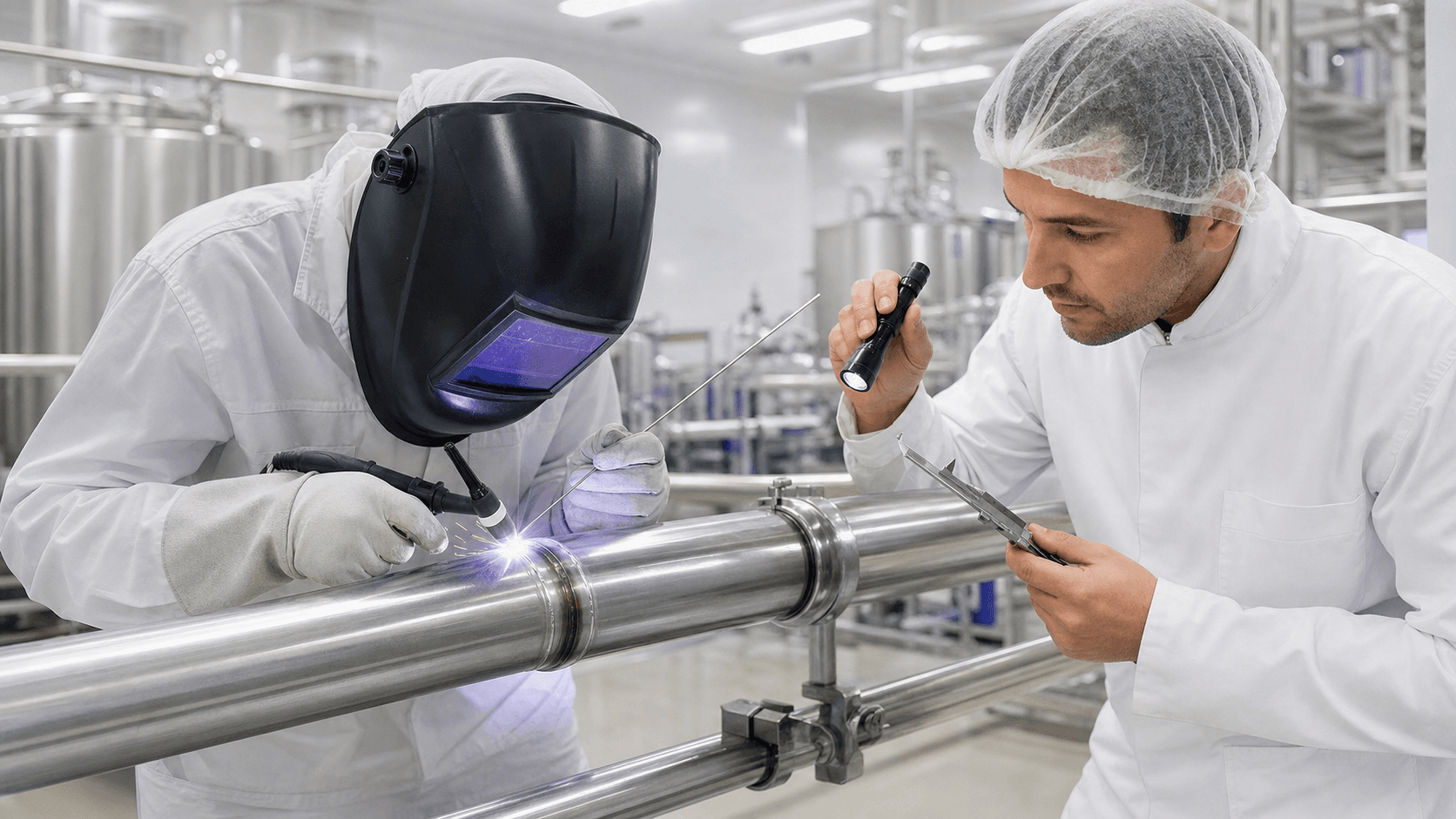
Sanitary welding is not just basic stainless work with nicer beads. It follows a stricter standard. A hygienic weld in a product contact area should be:
- Fully penetrated
- Smoothly blended into the base metal
- Free from pits, undercut, or sharp edges
Inside piping, there should be no spots where microbes can hide or where product can hang up. Heat tint or sugar on the inside of the pipe can weaken corrosion resistance, so it needs to be controlled and treated.
In Houston facilities, welding also has to handle:
- Thermal expansion from hot product to cold rinse water
- Vibration from pumps, motors, and nearby equipment
- High flow rates in process piping and manifolds
Good practice includes argon back purging for sanitary pipe welding, careful control of heat input, proper joint fit-up, and surface treatments like passivation after welding. Industry standards such as 3-A and ASME guidelines help set the bar for quality. A mobile welding team that understands these sanitary requirements can match or improve on original installs while working right inside active plants.
Key Areas That Demand Sanitary Stainless Steel Welds
Not every weld in a plant needs the same level of polish, but some areas must be held to a sanitary standard.
Product-contact piping and manifolds are at the top of the list. Inside these lines, welds need to be:
- Fully penetrated and consistent
- Properly purged to avoid oxidation
- Smooth enough to limit turbulence and residue buildup
Skids, frames, and supports also matter. Even when they are not directly in contact with product, their design and weld layout affect how well crews can clean them. Closed tubing with poor end welds or hidden joints can form pockets where water and debris collect.
Structural and utility components in washdown zones, like:
- Catwalks and platforms
- Equipment stands and rails
- Pipe supports in cleaning areas
need good stainless welds to avoid rust streaks, flaking, and long-term weakness. Houston also brings heavy moisture during hurricane season, lots of condensation on chilled lines, and outdoor stainless structures that must stand up to both sanitary expectations and Gulf Coast weather.
Summer Shutdown Strategies for Stainless Upgrades
Late summer can be a useful time for planned work. Many Houston plants can carve out short shutdowns before fall and holiday runs get busy. Using that window well can set up a smoother year ahead.
Good projects for this time include:
- Swapping out corroded carbon steel pieces in wet areas
- Upgrading to sanitary stainless tubing and fittings
- Repairing or relocating stainless skids for better cleanability
- Replacing quick fixes that were put in during an emergency
Before a shutdown, it helps to walk the lines and build a focused list:
- Discolored or burnt-looking welds
- Pits, cracks, or rough areas in product-contact zones
- Joints that are hard for sanitation teams to reach
- Connections that seem to leak or drip over and over
With that list in hand, plant teams can plan specific stainless welding and fabrication work for the shutdown window. Mobile welding support can prepare in advance, then come in during the scheduled downtime, work efficiently, and clear out so production can restart on time.
Choosing the Right Stainless Steel Welding Partner in Houston
Sanitary facilities depend on welding partners who understand both metal and hygiene. A strong fit usually includes:
- Certifications for stainless processes and positions
- Experience with sanitary piping, skids, and structures
- Familiarity with food, beverage, and pharma expectations
- Written welding procedures and welder qualifications
Mobile capability matters a lot for stainless steel welding in Houston, because bringing certified welders and the right purging and fabrication tools into your facility reduces the need to pull equipment off-site.
It also helps to ask about:
- Internal weld checks using mirrors or borescopes
- Surface inspection methods, like dye penetrant where needed
- Documentation for welds and materials
- Ability to work under hot work permits and strict safety rules
Weldit is focused on mobile welding and metal fabrication for industrial and commercial clients across Texas, with a strong focus on pipe fabrication, skids, and structural steel. By handling sanitary piping and stainless structural work together, we help maintenance teams reduce vendor juggling and keep projects more straightforward.
Get Started With Your Project Today
If you are ready to move forward with precision work on your next build, repair, or custom fabrication, Weldit is here to help. Explore our stainless steel welding in Houston to see how we can meet your specifications and timeline. Have questions or need a quote fast? Simply contact us and we will walk you through the best options for your project.