Stop Aluminum Downtime with Mobile Welding Pros
Aluminum keeps a lot of Houston running. It is in trailers that move freight, platforms and ladders in plants, food processing lines, truck bodies, and brackets that hold piping and conduit in place. When those parts crack or break, work slows down fast.
Letting damaged aluminum sit is risky. Cracks spread, loose handrails fail, and small leaks can turn into real safety problems. Waiting to pull parts out and haul them across town only adds more downtime and more chances for something to go wrong on the road.
Aluminum is not as simple to repair as steel. The oxide layer on the surface melts at a much higher temperature than the base metal. It pulls heat away fast, it is easy to warp, and it soaks up contamination if prep is not done right. A general repair crew with basic tools can make a weld that looks okay but fails in service. A mobile aluminum welder with the right gear and skills can come straight to your plant, yard, or job site, work in the middle of Houston summer heat, and keep your equipment where it belongs, on-site and in service.
Choosing MIG vs. TIG for Aluminum Repairs in Houston Heat
Out in the field, the first big decision is usually MIG or TIG. Both can give strong aluminum welds, but they fit different jobs.
A mobile aluminum welder looks at a few key points before picking a process:
- Material thickness and joint size
- How easy it is to reach the weld
- How clean and smooth the finished bead needs to be
- Any code or OEM standards that apply
For thicker sections like:
- Handrails and guardrails
- Platforms and frames
- Truck bodies and ramps
Spray-transfer MIG is often the better choice. It lays down metal fast, ties in well on heavy aluminum, and keeps repair time under control.
For thinner or more delicate parts such as:
- Thin-wall piping
- Food-grade equipment
- Architectural trim and canopies
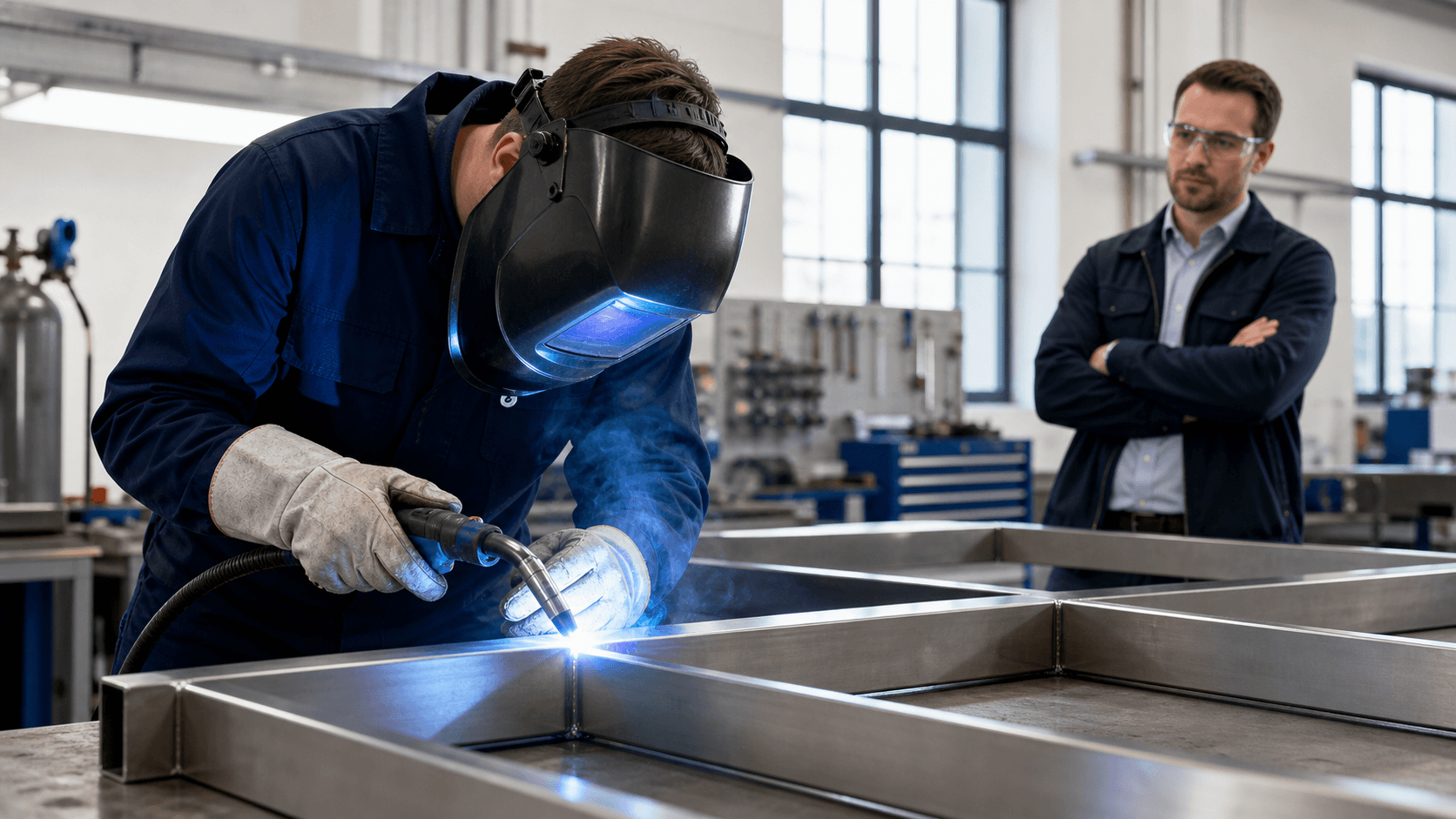
TIG is usually the smarter move. TIG gives better control of heat input, a cleaner bead profile, and less risk of burn-through or distortion.
Houston heat adds another layer. High ambient temperature and long sun exposure can:
- Push machines close to their duty cycle limits
- Affect preheat choices on thick sections
- Make arcs less stable if cables or gas lines are stretched and hot
A good mobile welder adjusts machine settings, keeps an eye on duty cycles, and plans breaks so power sources do not overheat. Shade, airflow, and cable routing all matter when you are working long days in the sun.
Critical Mobile Welding Gear for Strong Aluminum Joints
Strong aluminum welds start with the right field gear. For MIG and TIG, mobile welders bring inverter power sources that offer:
- Stable AC for TIG with balance and frequency control
- Pulsed options to help control heat input
- Enough output for both thin and thick sections
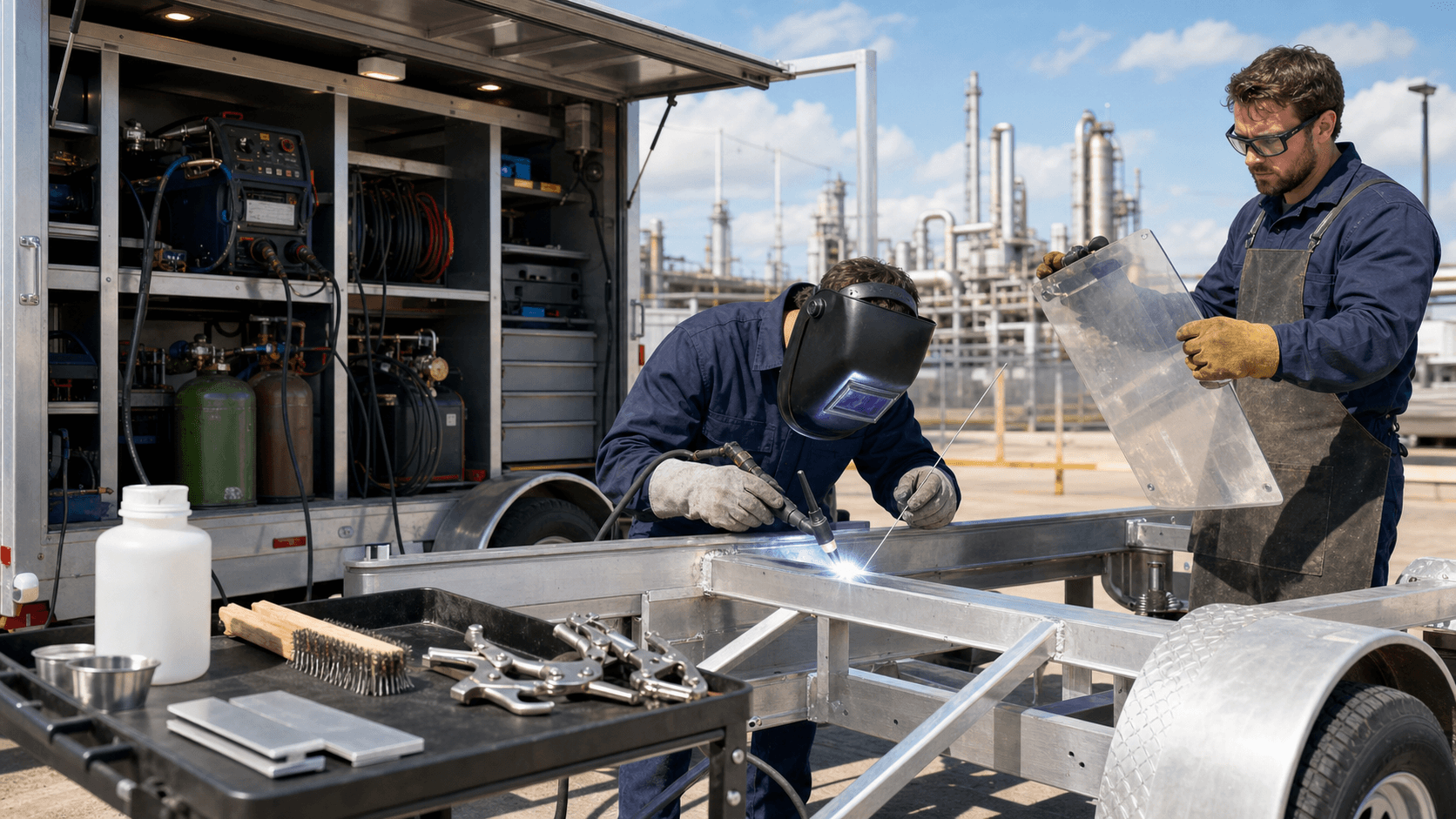
For MIG aluminum work, separate aluminum-only wire feeders and liners help prevent contamination. Push-pull or spool guns keep soft aluminum wire feeding smoothly, even when the welder is working far from the power source or in a tight corner.
On the TIG side, good torches, gas lenses, and the right cups are key. Gas lenses help keep shielding gas coverage tight around the puddle, which is very important with aluminum.
Field work also means having:
- Generator capacity sized for real-world loads
- Leads and gas hoses managed so they do not create trip hazards
- Portable fume extraction where the space calls for it
- Compact clamps, jigs, and fixtures to hold parts in place on ladders, mezzanines, or elevated platforms
Keeping all this organized in a mobile rig lets the crew set up fast on Houston job sites like refineries, warehouses, yards, and commercial buildings without a big delay.
Selecting the Right Filler Metals and Shielding Gas
Picking filler metal for aluminum is not one-size-fits-all. The choice needs to match the base material and how the part will be used.
Common aluminum fillers include ER4043 and ER5356. Each has its own balance of:
- Strength and ductility
- Cracking resistance
- Response to paint or anodizing
- Corrosion behavior
For platforms, stairs, and support frames, we look for fillers that stay strong under load and resist cracking. Near hot process lines, we think about how the weld will handle cycles of heat and cool down. Around the Ship Channel or other coastal areas, we pay special attention to corrosion, especially where aluminum meets other metals and galvanic action can start.
Shielding gas is just as important. Most mobile aluminum work uses pure argon for both MIG and TIG. For very thick sections, argon-helium mixes can help punch heat into the joint and keep travel speeds reasonable. Gas flow must be set to:
- Match cup size and joint shape
- Cover the puddle without turbulence
- Stay steady even when wind or fans are present
Wrong gas, low flow, or poor protection from wind can lead to porosity and weak welds that crack later.
On-Site Prep That Makes or Breaks Aluminum Repair
Good aluminum repair starts long before the arc strikes. The first step is oxide removal. Aluminum oxide is hard, it melts at a much higher temperature than the base metal, and it blocks fusion if it is left in place.
We use:
- Dedicated stainless steel wire brushes that never touch steel
- Clean abrasives kept only for aluminum
- Solvent cleaning to remove oils, dirt, and moisture
Prep should happen right before welding so oxide and contamination do not have time to build back up. This helps reduce porosity and lack of fusion.
Joint design also matters, even on repairs. For ladders, mezzanines, truck ramps, and process piping, we look at:
- Bevel angles and root openings for full penetration
- Whether backing bars or backing strips make sense
- Fit-up that leaves room for the torch or gun to reach the root
Tight, uneven joints can cause arc blowouts, undercut, or trapped lack of fusion.
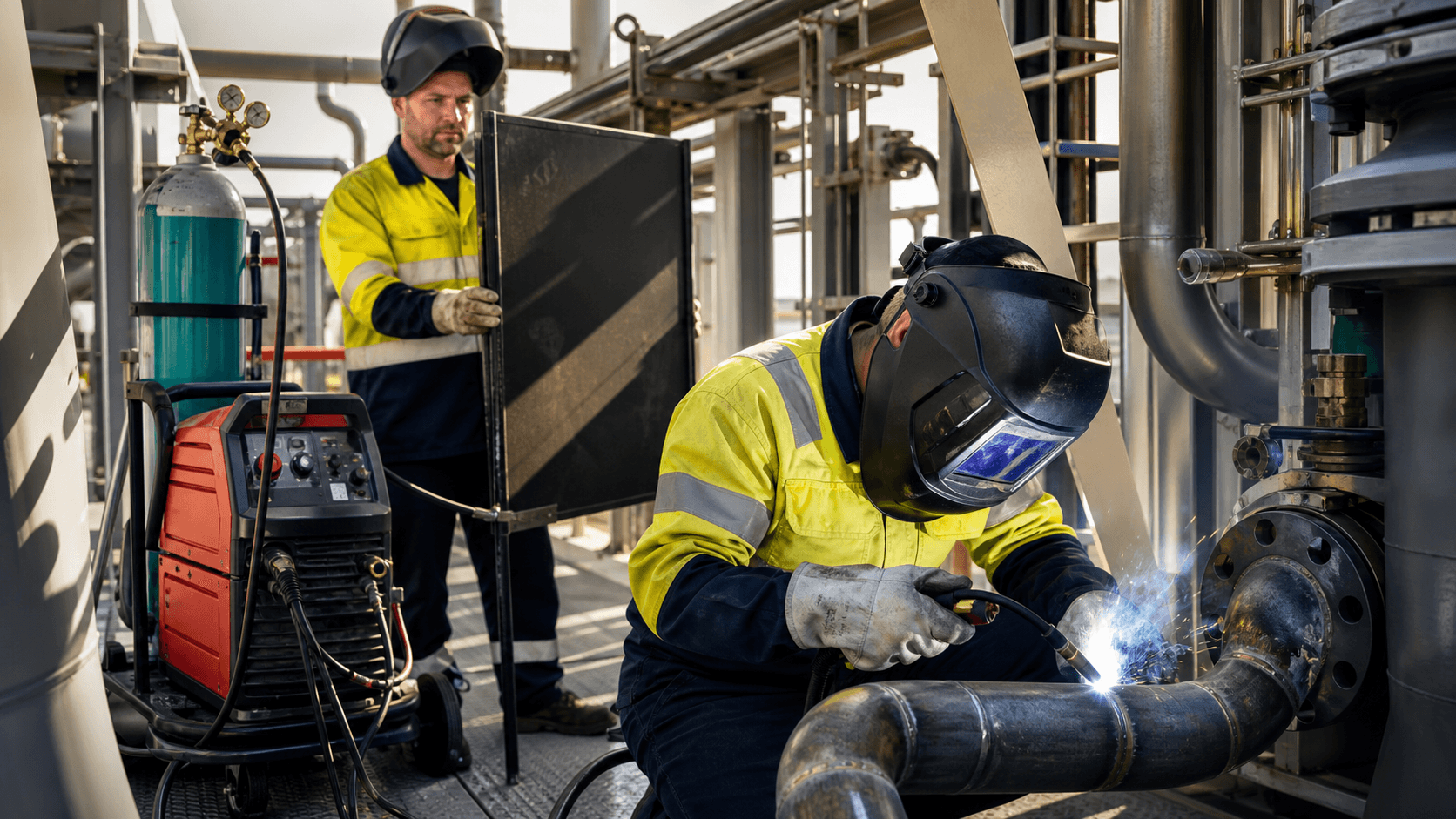
Outdoor or open-bay work adds wind and airflow to the mix. To keep welds clean, mobile welders may use:
- Welding screens to block direct gusts
- Temporary barriers or small enclosures
- Strategic positioning behind structures or equipment
- Adjusted gas flow to stay ahead of cross drafts
Fans inside plants can be just as tricky as outdoor wind. Planning where to work and how to shield the puddle keeps shielding gas where it belongs.
How Weldit Delivers Code-Quality On-Site Aluminum Repairs
Weldit brings the same mindset from industrial pipe fabrication and structural work to aluminum repair in the field. That means:
- Written weld procedures that match the job
- Welders qualified for the processes and positions needed
- Inspection practices such as visual checks and, when requested, dye penetrant or third-party tests
Mobile aluminum welding ties into the bigger project plan. We coordinate with:
- Plant outage schedules
- Hot work permits and fire watch
- Safety rules specific to refineries, chemical plants, logistics hubs, and commercial sites
From our base in the Houston area, we apply consistent procedures across major Texas markets. Whether the aluminum work is at a local plant, a commercial site in another city, or a logistics yard, we keep documentation, welding practices, and safety expectations aligned with client QA standards.
Schedule Mobile Aluminum Repairs Before Summer Peaks
Long summer days often mean longer production runs and heavier use of aluminum gear. Before everything ramps up, it helps to walk your site and note:
- Cracked brackets on platforms and stairs
- Loose or bent handrails and ladders
- Worn truck ramps and bodies
- Leaks or damaged aluminum piping and equipment guards
When you are ready to involve a mobile aluminum welder, useful details include:
- Clear photos of the damage and surrounding area
- Any known alloy or equipment specifications
- Access limits like height, confined spaces, or tight clearances
- Preferred outage or work windows to plan around operations
Sharing that information up front helps streamline planning, so repairs can be done with less downtime and fewer surprises, right at your Houston-area location.
Get Started With Your Project Today
If you need precise, on-site repairs or fabrication, our mobile aluminum welder team is ready to come to you and get the job done right the first time. At Weldit, we bring professional tools and certified expertise directly to your location so you can avoid downtime and costly delays. Tell us about your project and timeline, and we will provide a clear plan and straightforward pricing. You can also contact us today to schedule service or request a custom quote.