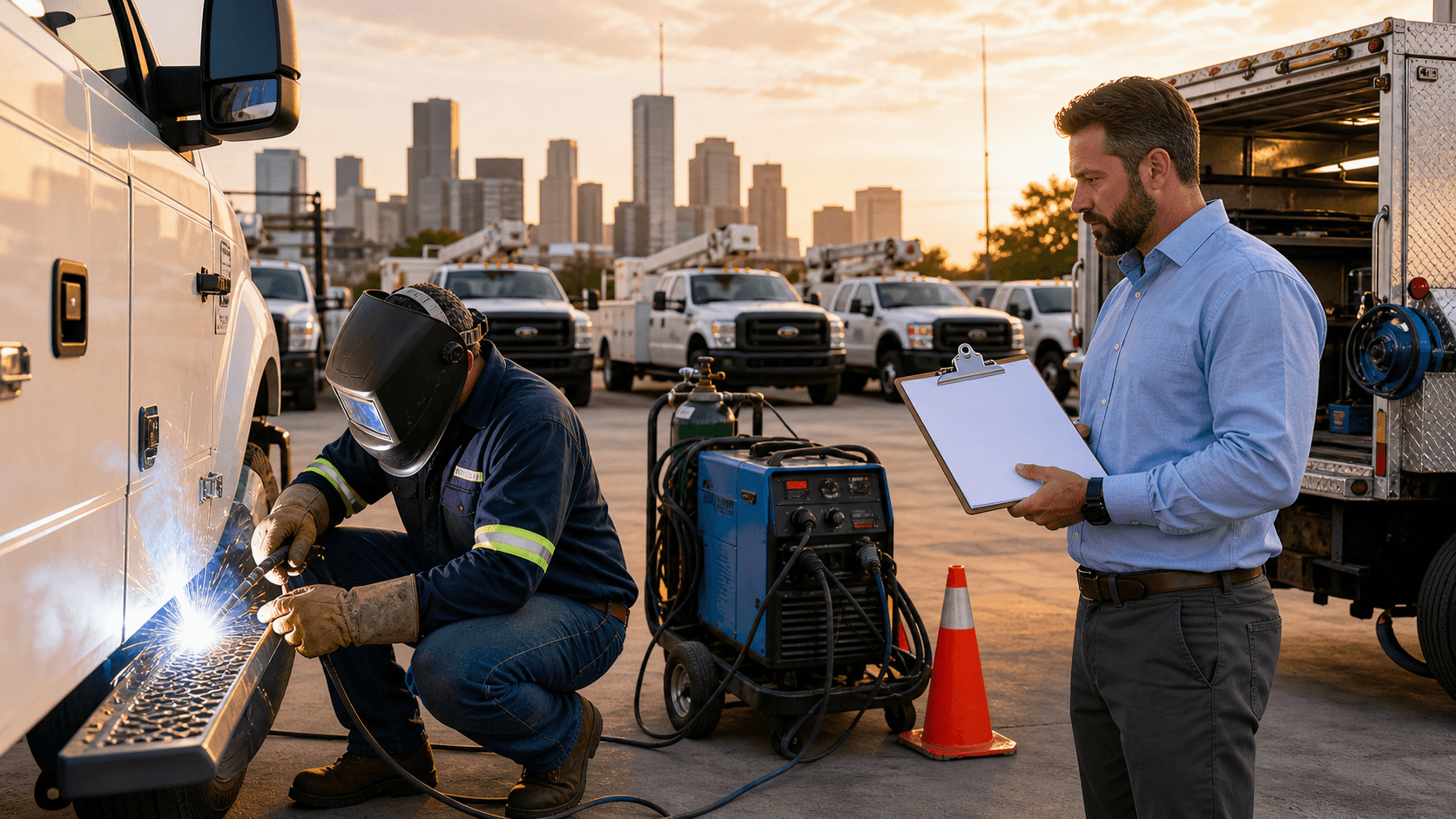
Cut Unplanned Downtime From Your Houston Fleet
Houston fleets work hard. Heavy traffic, long freeway miles, yard time on rough ground, and constant heat all put stress on metal. A small crack in a bracket or gate today can turn into a big roadside event on the Katy or the Beltway when you can least afford it.
A solid preventive maintenance program, supported by mobile welding services, lets you turn surprise weld failures into planned work. Instead of scrambling when a trailer door will not close or a crossmember breaks under a hot load, you can catch problems early, schedule repairs in your yard, and keep trucks moving on your terms.
For petrochemical haulers, construction fleets, and distribution trucks running tight schedules and strict safety rules, this is a business issue, not just a shop issue. Fewer missed deliveries, safer drivers, and steadier repair patterns all flow from a good plan. We will walk through how to build a weld-focused PM schedule, where failures usually show up, when to choose roadside vs yard repairs, how to shape SLAs with a welding partner, and how to track uptime so your program gets better every season.
Designing a Weld-Focused PM Schedule for Houston Fleets
Most fleets give welds a quick look during oil changes, then move on. In Houston, that is not enough. Heat cycles, Gulf moisture, and storm debris are hard on metal. Frames, racks, lift gates, and trailer bodies all flex and rust faster in these conditions.
Welding checks deserve their own line items in your PM program. Treat them like brakes or tires, not like a side note. Start by breaking your assets into groups, because a yard truck that shuttles trailers all day does not age like an over-the-road tractor.
You can think in terms of:
- Over-the-road tractors
- Flatbeds and step decks
- Enclosed dry vans and reefers
- Tankers and specialty trailers
- Yard trucks and yard-only equipment
Then match inspection intervals to how each unit runs:
- Light visual check of welds at every service
- Deeper structural walkaround each quarter
- Extra detailed inspections before and after high-stress periods like peak shipping seasons or big project pushes
Standardized checklists keep things simple. For each unit type, define:
- What to photograph and log
- Where to measure for distortion or bending
- What counts as "watch and recheck next service" vs "repair now"
When you bring a mobile welding partner into your PM plan, you can batch small fixes. If your techs flag cracked stake pockets or early lift gate wear, you schedule a weld day in your yard instead of waiting for something to fail on the road.
Targeting the Most Common Weld and Metal Failure Points
Some parts of a truck or trailer almost beg to crack. They take constant vibration from Houston traffic, rough job sites, and repeated loading. Watching these spots closely gives you the biggest return on your effort.
Common trouble zones include:
- Trailer crossmembers and side rails
- Kingpin areas and fifth-wheel plates
- Landing gear legs, feet, and brackets
- Hinge points on swing and roll-up doors
- Lift gate arms, platforms, and pivot pins
- Headache racks and pipe racks
- Tank saddles, straps, and supports
- Bumper assemblies and underride guards
Train techs to look for more than big breaks. Small clues usually show up first:
- Hairline cracks at the toe of a weld
- Rust trails running out from a joint
- Bent or twisted gussets and braces
- Torn or stretched stake pockets
- Deformed handrails, ladders, and steps
Early-stage defects can often be fixed quickly right in your yard with mobile welding services. Leave them alone, and you may end up taking a unit out of service for major cutting, replacement, and refit.
Prioritizing findings helps you stay organized. Safety-critical items go straight to the front of the line, like:
- Parts that affect brakes or suspension mounting
- Steps, ladders, and platforms workers use every day
- Tank supports and anything touching pressurized or hazardous product
Less urgent structural damage can be grouped into scheduled weld days. A welding partner can help you build a visual library of what "good," "watch," and "repair now" look like for your exact fleet mix, so field identification gets faster and more consistent.
Roadside vs Yard Repairs: Making the Right Call Fast
When something cracks on the road, your team has a choice. Do you fix it where the truck sits, or can you bring it back to the yard safely? That call affects safety, uptime, and your whole dispatch plan.
Roadside repairs have clear downsides: after-hours work, driver waiting time, traffic hazards on busy freeways, and late loads. But sometimes you do not have a choice. If the failure affects load security or visibility, or puts the driver at risk, you handle it right away.
Yard repairs, on the other hand, let you work on multiple units in one visit. You can line up trailers, handle a list of known issues, and keep drivers focused on driving. The trick is knowing what can wait.
Build a simple decision framework for your dispatch and maintenance teams. When a driver calls in about a broken bracket or cracked component, ask:
- Is the load secure and legal, including lights and reflectors?
- Is any part of the frame, tank, or suspension compromised?
- Can the unit travel at reduced speed to a safe yard without further damage?
- What are traffic and daylight conditions right now?
With a strong mobile welding relationship, you can support both paths. You get help triaging failures, choosing between safe temporary fixes or "park it now," and bundling non-critical items into regular yard visits instead of constant one-off emergencies.
SLAs, Uptime Metrics, and Continuous Fleet Improvement
High-use fleets around Houston feel the squeeze when holiday and year-end freight picks up. You cannot afford unclear expectations with any repair vendor, especially for welding and metal work that keeps units legal and safe.
Service level agreements with your welding provider put clear guardrails around service. Key items to define include:
- Target response times for roadside calls
- Maximum lead time to get a yard visit on the calendar
- After-hours coverage rules
- How updates and approvals are handled
- What kind of photos, notes, and weld documentation you receive after each job
Once repairs are flowing in a steady pattern, start tracking some simple metrics:
- Downtime per unit tied to welding or metal issues
- Repeat repairs by location, such as lift gates versus crossmembers
- Average time from request to repair completion
- Seasonal spikes in certain failures, like storm-related damage
Feed this data back into your PM schedule. If certain racks crack every few months, you might tighten inspection intervals or reinforce those spots by design. If roadside calls drop after adding quarterly structural checks, you know the new process is working.
You can keep everything organized by pulling welding reports into your fleet maintenance software and tagging weld jobs with cause codes like impact, fatigue, or corrosion. A quick review each quarter with your welding partner helps you adjust your plan before busy seasons hit.
Turn Your Welding Plan Into a Competitive Advantage
Weld and metal integrity is not just a shop concern. It shapes your on-time record, your safety scores, and how confident your customers feel when they hand you a load. Fleets with a mature welding PM program tend to have fewer roadside surprises and more predictable operations, especially when freight volume is high.
A simple way to move forward is to:
- Review recent weld-related road calls and out-of-service events
- Create or tighten a weld inspection checklist by asset type
- Set clear inspection intervals tied to usage, not just miles
- Define your rules for roadside vs yard welding decisions
- Outline SLA expectations before bringing in or updating a welding partner
You can start small by piloting this program on a slice of your Houston fleet, then rolling it out once you like the results. As a welding company that supports industrial, commercial, and facility fleets across major Texas metros, we have seen how a thoughtful plan and reliable mobile welding services can become the backbone of a stronger, uptime-focused maintenance strategy.
Get Started With Your Project Today
If you need precise, on-site welding that keeps your schedule on track, Weldit is ready to help. Our experienced team provides reliable mobile welding services tailored to your project's requirements. Tell us about your timeline and scope, and we will recommend the most efficient approach. To schedule service or request a quote, simply contact us today.