
Keep Houston Fleets Moving With On-Site Welding
Keeping trucks, trailers, and service vehicles moving in Houston is not optional. When freight is stacked up, crews are waiting on material, and plants are running hard, one cracked trailer frame or broken ramp can throw a whole day off. Late summer often brings long workdays, tight delivery windows, and very little slack in the schedule.
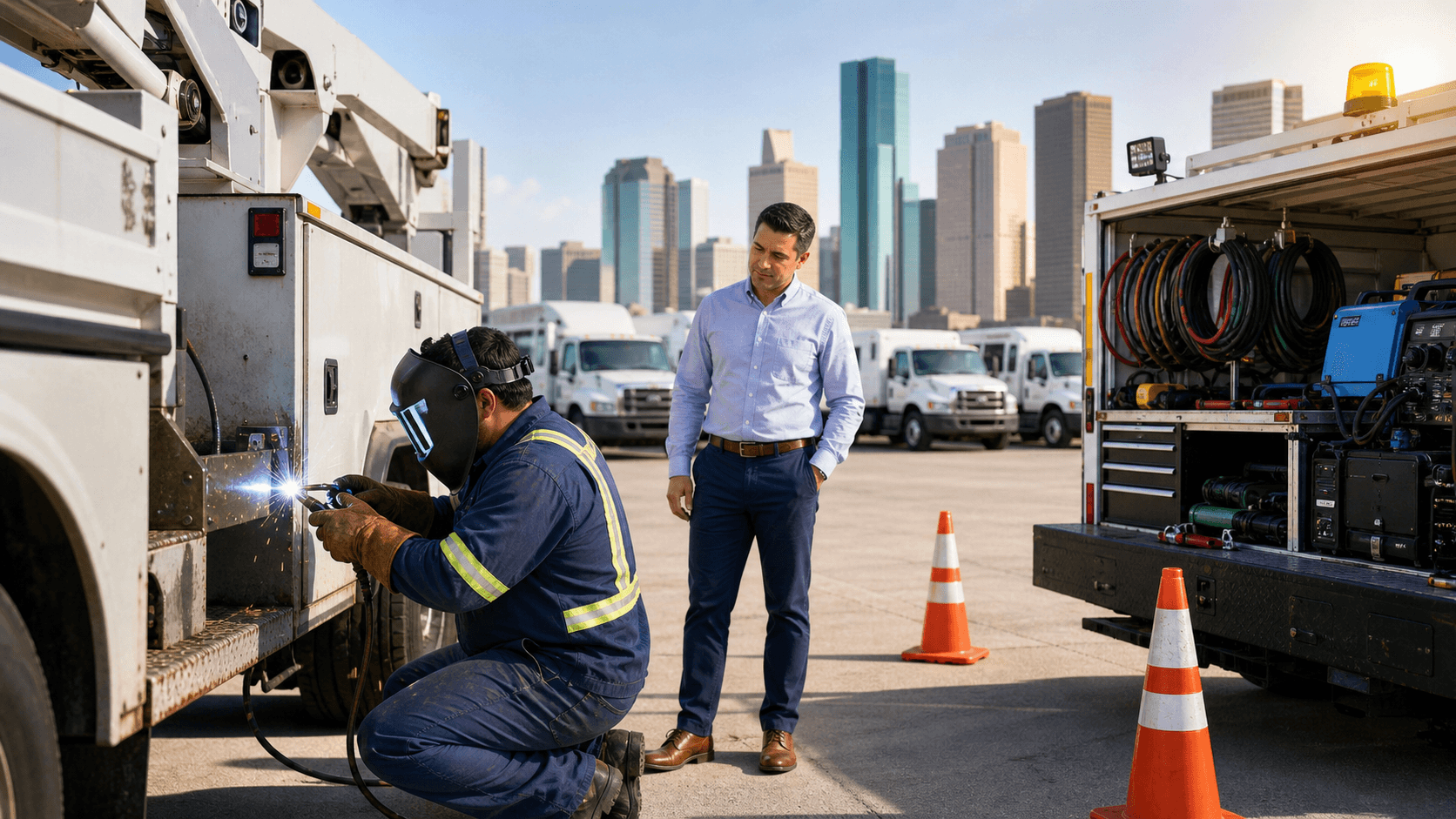
Mobile welding brings the repair shop to your yard, depot, or job site. Instead of sending equipment away, certified welders show up with a full rig, ready to inspect, repair, and get your units back into service where they sit. That means less shuffling, less towing, and fewer surprises for dispatch.
Our team at Weldit focuses on on-site, code-compliant welding and fabrication for industrial, commercial, and residential clients across major Texas metros, including Houston. We support owners, general contractors, and plant managers who need structural and repair welding that meets AWS and ASME standards, right where their fleets actually work.
What Mobile Welding Services in Houston Actually Cover
Houston fleets work hard: port runs, plant turnarounds, construction hauling, and service calls across the metro. All that work shows up in metal fatigue and damage. Mobile welding services can cover many of the common pain points that keep equipment parked.
Typical fleet-related welding often includes:
- Trailer frame cracks or broken crossmembers
- Bent or cracked tongues, hitches, and couplers
- Liftgate and ramp repairs on delivery and equipment trailers
- Headache racks, ladder racks, and side rails that need reinforcement
- Cargo tie-down points, winch tracks, and stake pockets that tear out
Service bodies and specialty trucks usually need more serious attention. We often see:
- Utility beds with cracked supports or rusted sections
- Outriggers, stabilizers, and crane mounts that need structural welding
- Winch mounts and bumper reinforcements for heavy recovery work
- Oilfield and plant support trucks that require code-conscious repairs
Mobile welding also helps when trouble hits at the worst time. Breakdowns do not always happen near a shop. On-site services can include:
- Emergency repairs for broken brackets, guards, and steps
- After-hours callouts when a key unit fails mid-shift
- Custom brackets and mounts made on the spot for hoses, tanks, and tools
- Weld repairs that consider Houston's heat, humidity, and coastal conditions
Instead of patching things together with temporary fixes, mobile welding lets you get professional, structural repairs without pulling units across town.
Why Mobile Welding Beats Traditional Shops for Fleets
Moving a disabled truck or trailer into a shop sounds simple until you add up the lost time. You may need a wrecker or a second unit to tow it. Then the vehicle sits in line, waits for inspection, waits for approval, and finally gets repaired. All that time, it is not working.
With mobile welding services in Houston, the equation looks different:
- Welders come to your yard, plant, port lot, or job site
- Repairs start once the unit is inspected on the ground
- Other trucks keep moving while one is being welded
- Dispatch can see progress and adjust routes in real time
When demand peaks around late summer, every hour counts. Pulling multiple trucks out for shop visits can throw off delivery schedules, concrete pours, or plant shutdown work. On-site welding helps you:
- Keep more assets available on any given day
- Cut down on empty miles and towing coordination
- Reduce rescheduling headaches with suppliers and customers
There is also a safety and compliance angle. When repairs happen where vehicles work, fleet managers and safety leads can walk the unit, review the damage, and confirm the repair plan before any welding starts. That means:
- Better visibility into what is being repaired and why
- Quicker decisions about when a unit can safely return to service
- Less guesswork when documenting repairs for audits or inspections
Safety, Codes, and Compliance for Fleet Welding Work
Any time you touch a structural member or pressure system with a welder, you are dealing with more than looks. For many fleet units, repairs must line up with recognized codes and standards so the vehicle is safe and acceptable on regulated sites.
AWS and ASME standards guide how welds should be designed, prepared, and checked. For fleet work, that can apply to:
- Structural members on trailers, cranes, and lifting devices
- Mounts and frames that support heavy equipment or loads
- Pressure piping on certain industrial support vehicles
Using certified welders is about more than a stamp. It ties into:
- Following established weld procedures, not guesswork
- Matching filler materials to the base metal and service conditions
- Keeping traceable records when needed for inspections or plant entry
For fleets that serve refineries, chemical plants, and other regulated facilities around Houston, code-conscious welding can reduce headaches at the gate. Good documentation and sound procedures help lower risk, support safety programs, and give your team confidence when a unit is inspected.
How Weldit Mobilizes for Houston Fleet Operations
When a fleet manager calls for help, the goal is simple: get that vehicle safely back to work as soon as it makes sense. To support that, mobile rigs need to be set up like rolling shops, ready for different situations.
A typical mobile welding setup from our side includes:
- Generators and welding machines sized for structural work
- Cutting tools for removing damaged steel and prepping new pieces
- Material handling gear for tight yards and crowded plants
- Safety gear and barriers suited to active work sites
For a normal service call, the process is straightforward. It often looks like this:
- You send a request with a short description of the problem.
- Photos or simple sketches help us understand the damage before we roll.
- We arrive on-site, inspect the unit, and discuss options with your team.
- We prepare and complete the weld repair or fabrication, following needed procedures.
- Final checks confirm that the work meets the agreed standard before the unit goes back into rotation.
We support industrial, commercial, and municipal fleets across Houston, including those working with owners, general contractors, and plant managers on multi-vehicle repair programs. Coordinating several units in one visit often helps fleets catch up on deferred repairs without shutting everything down at once.
Choosing the Right Mobile Welding Partner in Houston
Not every welder is a good fit for fleet work. Trucks, trailers, and service bodies bring their own mix of structural, safety, and access challenges. Before you bring a welding crew into your yard or plant, it helps to ask a few key questions.
Smart fleet managers often ask about:
- Certifications and experience with AWS and ASME related work
- Proof of insurance that fits your site requirements
- References or past projects involving fleets and industrial sites
- Ability to work with the materials your units use, like carbon steel or stainless
Beyond technical skill, daily operations depend on how a welding partner communicates. It is helpful to have:
- Clear scheduling and realistic ETAs for routine and urgent jobs
- Simple, written scopes of work that match your safety rules
- Straightforward descriptions of what can be repaired on-site versus what might need shop time
For fleets in Houston, long-term relationships pay off. A trusted mobile welder who understands your units, your busiest seasons, and your plant or port rules can help you:
- Plan seasonal repair days before workloads spike
- Support hurricane or storm readiness by checking critical units
- Extend asset life with timely structural repairs instead of last-minute patches
With the right partner, mobile welding becomes part of your normal maintenance rhythm, not just an emergency fix when something breaks at the worst moment.
Get Started With Your Project Today
If you are ready to repair, modify, or fabricate metal on your schedule, Weldit is here to help with reliable mobile welding services in Houston tailored to your job. We bring professional equipment and experienced welders directly to your location so you can keep your project moving without delays. Tell us what you need, and we will recommend the best approach and provide a clear, straightforward quote. Have questions or a tight deadline? Just contact us and we will respond promptly.