Cutting pipe in the shop is the easy part. Making sure those spools drop in during a Houston outage without rework, lost time, or safety headaches is where the real work starts. Pipe spool prefabrication in Houston only pays off when every step is lined up, from IFC drawings to the last tie-in weld.
In this guide, we walk through a field-ready checklist you can use on your next project. We cover drawing release, MTO checks, quality hold points, coating and insulation timing, transport and rigging, and finally tie-in planning. The goal is simple: spools that show up ready to bolt and weld, not to be cut apart and fixed in the field.
Cut Rework and Downtime on Houston Pipe Spool Jobs
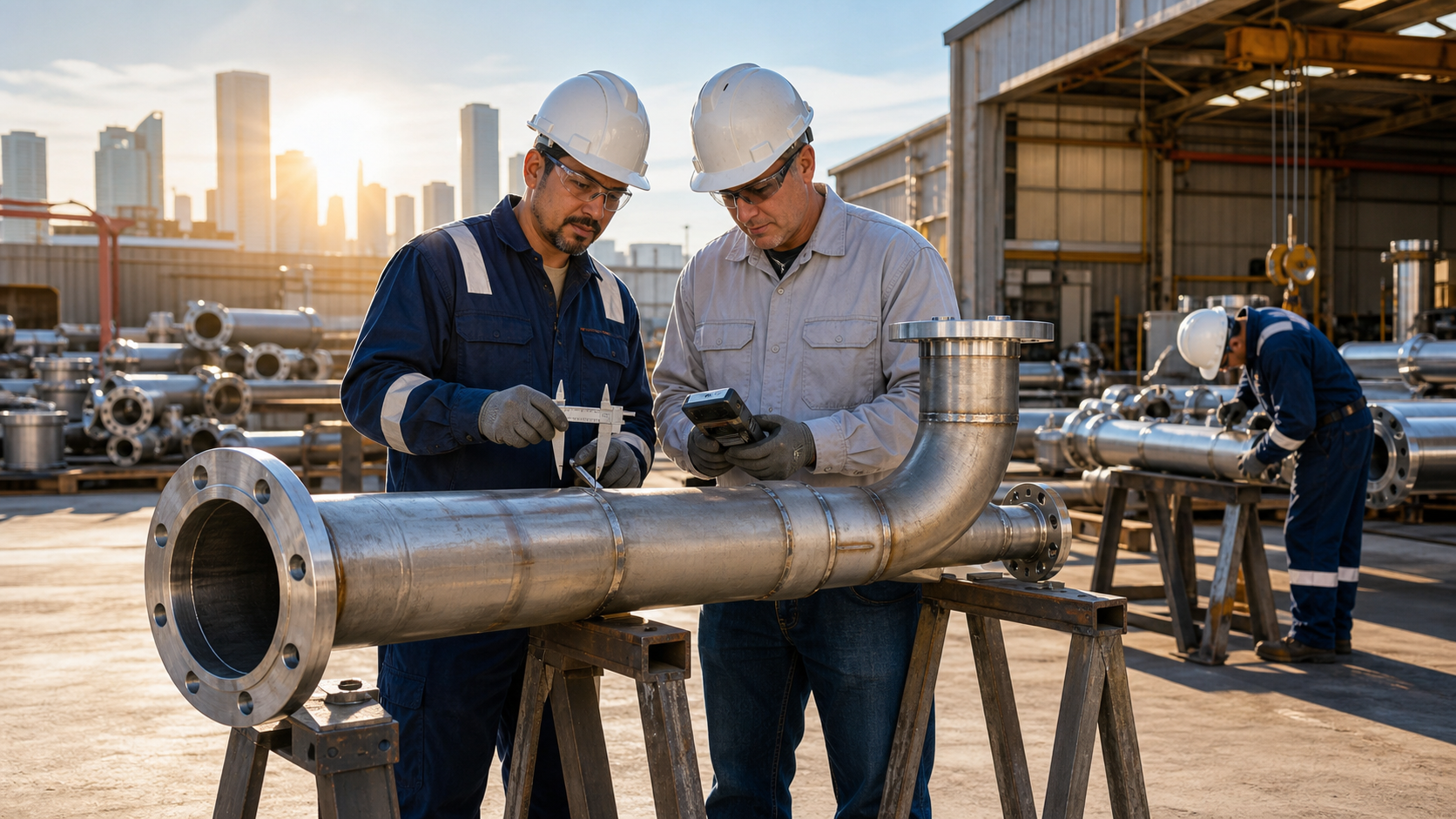
Pipe spool prefabrication means building pipe sections in a controlled shop, then shipping them out ready for fast install. For Houston industrial, commercial, and energy jobs, this helps keep tight outage windows and fast-track schedules under control. Done right, it shifts chaos out of the plant and into a place where you can plan it.
A practical field-ready checklist keeps everyone on the same page, including:
- Engineering and design
- Shop fabrication and welding
- Coating, insulation, and trace crews
- Field install and tie-in crews
When these groups are aligned, spools arrive labeled, documented, and ready to set. There is less rework, fewer "hold up, that is the wrong wall thickness" moments, and fewer blown outage days waiting on a fix. As a mobile welding and fabrication team based here in Texas, we care a lot about making that handoff from shop to field as smooth as possible and keeping both shop quality and code-compliant field work in sync.
Getting IFC and Isos Right Before You Cut the First Joint
If the drawings are not right, nothing that follows will be right. A solid IFC and isometric release strategy is the base of any good pipe spool prefabrication in Houston, especially leading into busy turnaround periods.
Some simple but powerful habits help:
- Do not treat "Issued for Construction" like a guess. Confirm IFC status before buying or cutting.
- Lock version control on isometrics so everyone works from the same revision.
- Release isos in logical construction work packages that match outage phases and field priorities.
Breaking work into clear CWPs, by unit or area, lets the shop focus on what the field needs first. It also helps planners line up cranes, permits, and crews with real dates instead of guesses.
Design changes will still happen, so have a clear process ready:
- Keep a running revision log for each iso and spool ID.
- Capture redlines from the field and feed them back to engineering fast.
- Tag affected spools as "hold," "rework," or "scrap" so the rest of the shop schedule can keep moving.
This kind of discipline sounds simple, but it is what keeps you from cutting 20 spools that no longer match the rack.
Nail Your MTO and Weld Hold Points Before Welding Starts
A clean material takeoff is your next safety net. If the MTO is sloppy, you will find out at the worst time, when the welder is standing over the joint and sees the wrong schedule or metallurgy.
Your MTO check should cover at least:
- Pipe size, schedule, and wall thickness
- Material grade and metallurgy
- Valve tag and spec breaks
- Fittings, branch connections, and specialty items
Once material is right, plan your quality hold points before the first arc. A clear chain of inspections keeps work moving without cutting corners:
- Fit-up inspection for alignment, gap, and hi-low
- Visual checks on root and cap passes
- NDE stages like RT, UT, MT, or PT as the spec requires
- Documentation tied to each spool ID, including weld maps and welder IDs
Hydrotest planning also starts early. Set your test boundaries and pick where you will use temporary blinds, vents, and drains. Make sure you have:
- Calibrated gauges and test records
- Confirmed test pressure and medium per spec
- Hydro hold points that roll straight into turnover and client sign-off
When these steps are built into the checklist, you are not scrambling at the end of the outage to pull paperwork together.
Plan Coating, Insulation, and Trace Around Houston's Climate
Houston's heat and humidity are tough on coatings and insulation. If you do not plan your sequencing, you can end up with flash rust, damaged coating at field welds, or soaked insulation before the line even runs.
Think through your order of operations:
- Internal cleaning and drying before any coating or insulation
- External surface prep with the right blast profile
- Primer and topcoat system that can handle high humidity and hot steel temps
Decide what gets done in the shop and what waits for the field. For shop coating, pay attention to cure windows in late summer heat, masking of weld ends, and how NDE fits in. Often you will:
- Leave bare bands at field-weld locations
- Coordinate NDE timing so you are not grinding off fresh coating
- Use transport packaging that protects finished surfaces from straps and dunnage
For insulation and heat trace, planning is just as key. Make sure you define:
- Leave-off lengths around field welds and flanges
- Vapor barriers and jacketing details
- Labeling of lines, flow direction, and insulation type
- Edge protection for runs that will be handled more than once before final tie-in
A little foresight here keeps you from cutting off brand new insulation just to make one weld.
Transport, Rigging, and Tie-in Outage Playbook
Moving spools safely and getting them into tight spots is its own project. Start transport planning early, not the week before the outage.
Plan around:
- Spool breaks that actually fit on standard trailers
- DOT route checks for height, width, and weight, especially around Houston freeways
- Dunnage, cribbing, and tie-down methods that protect bevels and coatings
- Clear tagging so laydown yard crews can stage by CWP or system
Lift and rigging work needs the same kind of thought. Field crews do better when they know how a spool is meant to be picked and set:
- Plan rigging points and pad eyes where needed
- Check center of gravity so spools stay level during lifts
- Use simple lift drawings for congested units or pipe racks
- Coordinate crane time with outage work so everything is ready when the hook shows up
Finally, plan your tie-in outages like a script, not a guess. Before shutdown, do detailed walkdowns to confirm real-world conditions match your isos. Then set a clear sequence:
- Weld order at tie-in points
- Hot work permits and gas testing needs
- Backup plans if supports, existing piping, or valves are not where the drawings say
When you build all of this into your pipe spool prefabrication in Houston, those tight outage windows start to feel much more predictable, and your crews can focus on safe, clean work instead of last-minute scrambling.
Get Reliable Pipe Spool Prefabrication Support Today
If you are ready to streamline your next project, our team at Weldit is here to help you plan and execute efficient pipe spool prefabrication in Houston. We work closely with you to understand your specifications, schedule, and quality requirements so your spools arrive ready for installation. To discuss timelines, pricing, or technical details, simply contact us and we will respond promptly with the information you need.