Plan Your Houston Pipe Project with Fewer Costly Surprises
Industrial pipe fabrication in Houston is all about moving fluids safely, every single day, in tough conditions. When that piping serves refineries, petrochemical units, food plants, or manufacturing lines, small planning misses can turn into lost production, safety risks, and schedule headaches.
A clear planning checklist keeps everyone on the same page, from the plant engineer to the welding crew in the field. Houston's mix of heavy industry, high humidity, and Gulf Coast exposure puts extra pressure on material choice, corrosion control, and code-compliant welding. With a structured checklist in place before work starts, teams can cut down on rework, failed inspections, and shutdowns that drag on longer than anyone wants.
Clarify Scope, Fluids, and Operating Conditions
The first step is slow on purpose. Before anyone orders pipe or books a shutdown, lock in what the system does and how it will run. Start by confirming the process basics: the fluid, gas, or product (including whether it is hazardous or food-grade), the operating and design pressures and temperatures, the service type (continuous, batch, or only for startup and backup), and the expected flow rates, along with whether future capacity growth is likely.
Next, define the physical scope so the fabricator and field crews are not guessing later. Confirm whether this is a new installation, tie-in, replacement, or reroute; the expected pipe diameters and overall length range; whether piping will be aboveground, underground, on pipe racks, or in trenches; and the exact tie-in points to existing systems, including any space limits around them.
Cleanliness and special service needs should also be clear up front, not during inspection week. Some common items to confirm are:
- Sanitary or food-grade standards and surface-finish requirements
- NACE or sour service requirements
- Insulation, heat tracing, and jacketing plans
- Painting or coating systems and color codes
- Any acoustic or vibration limits from nearby equipment or occupied spaces
When this information is written down and agreed on, it becomes much easier for everyone to design, fabricate, and weld to the right target.
Align Materials and Codes with Houston's Industrial Demands
Once the scope and service are clear, the next checklist step is materials and codes. Houston plants work hard and so does their piping, so shortcuts here tend to show up later as corrosion, leaks, or rejected welds.
For material selection, confirm the base metal and construction details are right for both the operating conditions and the environment. That includes the required carbon steel, stainless, duplex, aluminum, or other alloys; pipe schedules and wall thickness based on pressure and corrosion allowance; matching flanges, fittings, and gaskets that can handle both temperature and chemistry; and any need for specialty valves or lined components for aggressive fluids.
On the code side, the project team should be on the same page about which standards govern design, welding, and verification. That means aligning on:
- Which ASME B31 code applies, such as B31.1 for power or B31.3 for process
- Which AWS welding codes apply, such as D1.1 for structural steel or D1.6 for stainless work
- Any API specifications that drive design or testing
- Local rules and owner standards that are specific to that plant or facility
Houston's climate adds its own layer. The mix of humidity, salt in the air, and strong sun can be rough on unprotected steel, so good checklists also address exposure-related needs such as coatings and primers that match the environment, cathodic protection for underground or submerged pipe, supports/guides/anchors that manage wind loads and pipe movement, and low points, drains, and vents so lines can be safely drained and dried when needed.
Build a Realistic Schedule Around Houston Site Conditions
A nice Gantt chart is not enough if it does not match real field conditions in Houston. The schedule part of the checklist should call out the biggest drivers early, including:
- Time for engineering and drawings to be fully released
- Material lead times, especially for valves, specialty alloys, or custom fittings
- Shop prefabrication windows and shipping plans
- Planned shutdown, turnaround, or outage dates
- Inspection and testing milestones that must be met before startup
Summer adds another twist. Intense heat, afternoon storms, and long daylight hours all affect how work gets done, so a practical plan needs to account for safe work-rest cycles for welders and fitters, weather days for outdoor welding/rigging/crane work, and shifting some tasks to earlier or later in the day where plant rules allow.
Operations must also be part of the schedule talk from the start. Make sure the planning conversation includes what lockout/tagout steps are required for each tie-in, how hot work permits and gas testing will be handled, and what areas must stay live versus what access windows can be offered to contractors. When these are clear, the schedule becomes something the field team can actually follow instead of something that only works on paper.
Confirm Weld Procedures, QA, and Mobile Support
Piping is only as strong as its welds. For industrial pipe fabrication in Houston, welding procedures and quality checks need just as much planning as materials or layout.
On the welding side, the checklist should cover:
- Approved Welding Procedure Specifications and supporting PQR records
- Welder qualifications for the specific processes, positions, and alloys
- Required preheat, interpass temperature control, and any post-weld heat treatment
- Special techniques for stainless or alloy work to avoid contamination
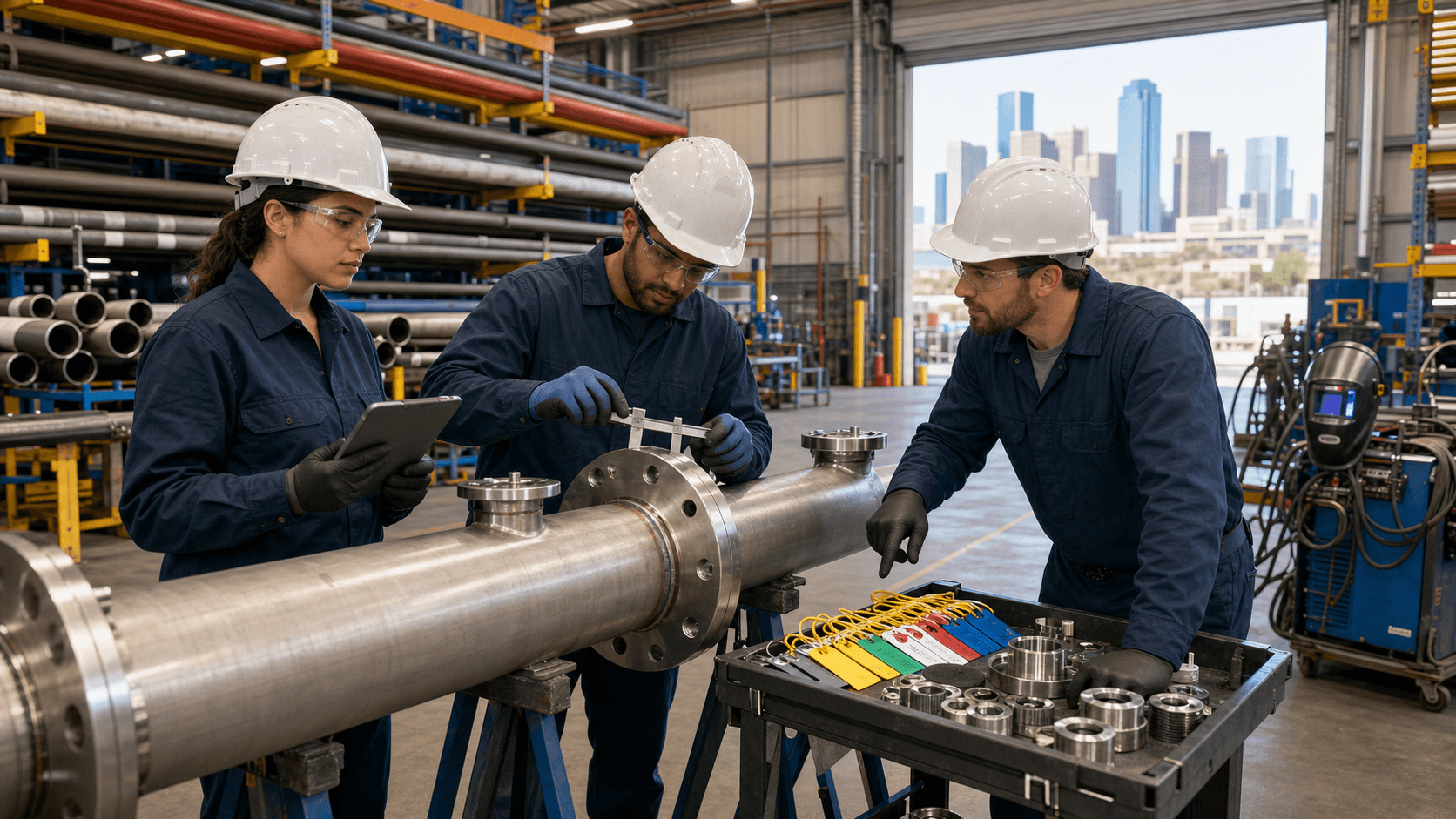
Quality control should not be an afterthought. Before the first arc is struck, agree on the inspection and documentation expectations, including visual inspection steps and fit-up checks, weld mapping and traceability, required NDE methods (radiography, ultrasonic, liquid penetrant, or magnetic particle), hydrostatic or pneumatic test pressures and hold times, and turnover packages such as weld logs, NDE reports, and test records.
Fabrication strategy also matters because not everything should be built in the same place. Some work fits best in a shop, while some must be done in the field due to site constraints. Keep the field-execution details clear by confirming:
- What spools can be prefabricated and tested off-site
- What must be cut, fit, and welded in place due to tight spaces or complex tie-ins
- How certified mobile welding crews will access the work area
- Power, lighting, and consumable supply for remote or congested locations
In Houston, where plants and facilities often run around the clock, having mobile support ready for last-minute changes or emergency fixes can be the difference between a smooth startup and a long delay.
Lock in Safety, Access, and Reliable Field Execution
The final piece of the checklist pulls safety, access, and communication together so crews can work clean and steady.
A project-specific safety plan should spell out:
- Hot work controls and fire watch expectations
- Confined space entry rules for pits, vessels, or tight pipe racks
- Fall protection methods for elevated work
- Crane and rigging protocols, including pick plans and spotter roles
- Training and orientation needed to work inside that particular facility
Access and constructability are just as important as the drawings. Before work begins, walk through key site logistics such as crane paths and lift zones for pipe racks and heavy spools, laydown areas for prefabricated pipe/supports/equipment, scaffold needs (including stair towers and elevated work platforms), and how mobile welding rigs and trucks will reach tight or remote corners of the plant.
Good communication keeps all of this tied together. Simple habits help a lot:
- Clear contact lists for operations, safety, inspection, and contractors
- Shift handoffs so night crews know what day crews found and fixed
- Daily reports that track progress, problems, and upcoming risks
- Agreed change-order and approval steps so surprises get handled quickly
When owners, engineers, and field teams use a checklist like this from the start, industrial pipe fabrication in Houston becomes a lot more predictable. The work is still tough, but the path is clearer, and everyone has a better shot at a safe, code-compliant system that passes inspection and comes online on time.
Get Started With Your Project Today
If you are ready to move forward with reliable industrial pipe fabrication in Houston, Weldit is prepared to support your schedule, specifications, and quality standards. We work closely with your team to understand project requirements and deliver precise, code-compliant pipe spools. Reach out to our team to discuss timelines, materials, and any specialized needs, or contact us to request a quote today.