Houston Roads, Heavy Loads, and Your Trailer Hitch Safety
Trailer hitches in Houston take a beating. Between crowded freeways, stop-and-go traffic, and long hauls to the lake, plant, or job site, that chunk of steel under your bumper is working hard every mile.
Many drivers do not think about their hitch until it is time to pull the boat to the bay, haul equipment across town, or hook up a camper for a long weekend. That is usually when problems show up, and it is also when a failure can hurt people and damage property. Trailer hitch repair or replacement is not just about convenience, it is about keeping control of your load.
Right in the middle of summer trips, lake weekends, and hurricane-season prep, your hitch is under extra stress. This is the perfect time to give it a real look and decide if repair is enough or if full replacement is the smarter, safer call. Our goal is to help you spot trouble early, understand your options, and know when it is time to bring in a certified mobile welder in the Greater Houston area.
How to Spot Trailer Hitch Trouble Before It Fails
Hitch problems often start small. If you catch them early, you have more choices and less risk.
Watch for visible warning signs like:
- Rust pitting on the hitch body or receiver tube
- Bent or oval-shaped receiver openings
- Elongated or wallowed-out hitch pin holes
- Cracked welds around the hitch or mounting brackets
- Loose, missing, or mismatched mounting hardware
You might also feel issues before you see them. Pay attention if:
- The trailer is hard to attach or does not line up like it used to
- You hear clunks, pops, or feel extra play when starting or stopping
- The rear of the truck sags more than normal when you hook up
- The trailer wanders or tracks funny on rough Houston streets
Some setups are at higher risk. For example, hitches that have:
- Been on vehicles involved in rear-end collisions
- Pulled heavy loads often in oilfield, plant, or construction work
- Been dipped in saltwater during Gulf Coast boat launches
- Been cut, drilled, or modified in a backyard project
When these signs are ignored, the stakes get high. A weak hitch can let the trailer break free, swing the back of the vehicle, or cause a loss of control at highway speeds. If it is clear the hitch was neglected, there can also be liability and insurance headaches after a crash. Catching problems early is not just smart, it is a safety choice for everyone sharing the road.
When Trailer Hitch Repair Is a Smart, Safe Option
Not every damaged hitch needs to come off the truck. In some cases, trailer hitch repair can be a safe and practical answer.
Repair can be a good option when:
- Rust is only on the surface and has not thinned the steel
- The receiver tube has light wear that can be reinforced
- Non-critical brackets have small cracks that can be rewelded
- The main structure and mounting points are still solid
This often fits newer hitches with one problem area, or commercial and work trucks that need to get back on the road fast. If the original design, rating, and geometry can be kept, a proper repair can bring the hitch back to safe use without starting from scratch.
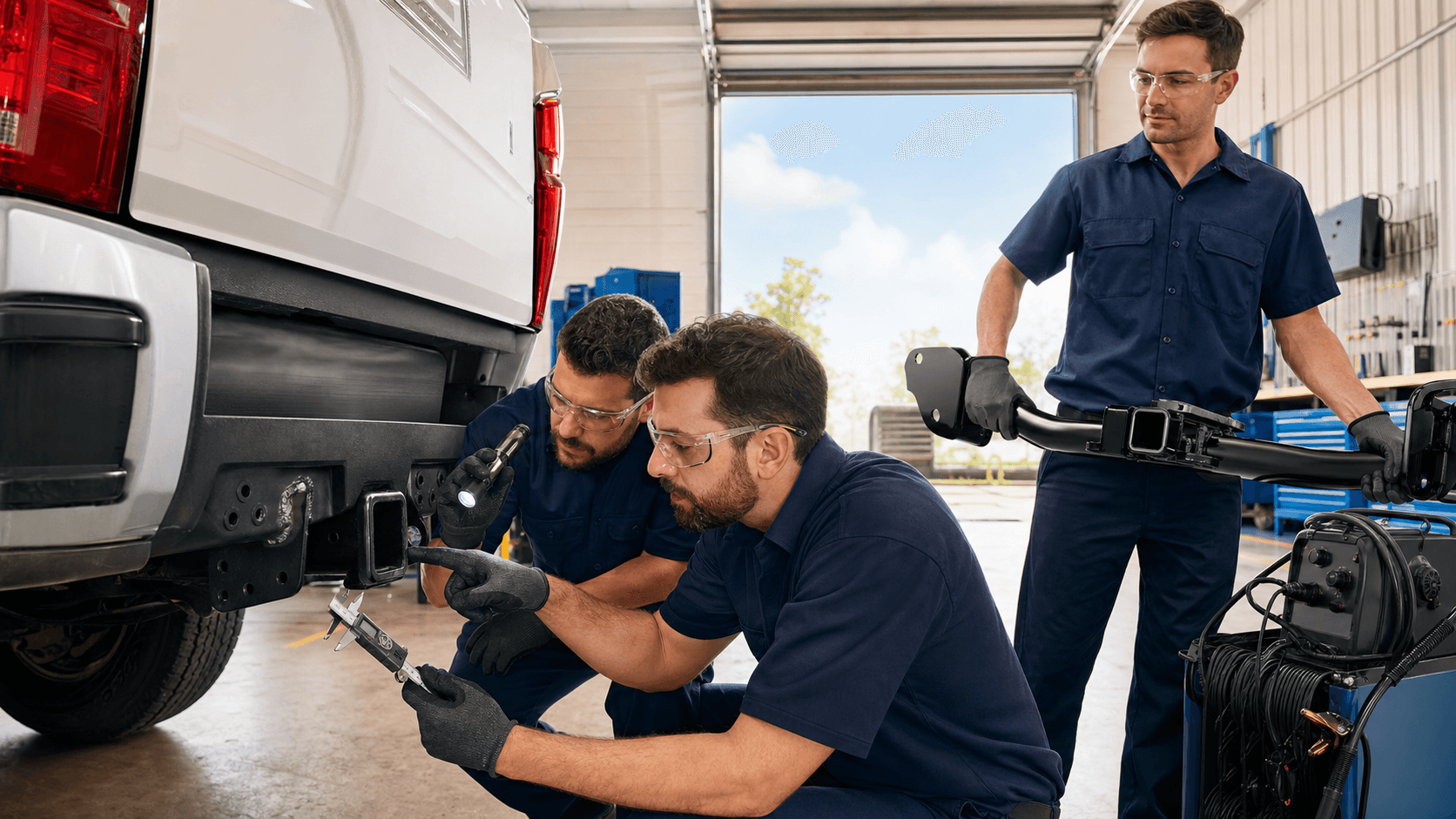
A certified mobile welder plays a big part here. Before any welding happens, the steel needs to be inspected, metal thickness checked, and the damage mapped out. Strong, code-compliant weld procedures and proper filler metals help keep the repair consistent with the original strength of the hitch, especially around load paths and brackets.
For many fleets and contractors around Greater Houston, repair also means:
- Less downtime, since work happens on-site where the vehicle is parked
- No hassle moving trucks in and out of a shop line
- Fewer interruptions to crews that rely on their trailers every day
When the base metal is sound and the hitch rating still matches the load, repair can be a smart middle ground between doing nothing and a full teardown.
Clear Signs You Need Full Hitch Replacement Instead
There is a point where trailer hitch repair is not enough and trying to save the old hitch can actually be unsafe.
Replacement is usually the only real option when:
- Rust has eaten deep into the steel or caused flaking and holes
- The hitch is bent, twisted, or pushed off center
- There are long or repeated cracks at the main load paths
- The vehicle has been in a hard rear impact that distorted the frame area
In cases like these, patch after patch can make things worse. Overly welded or heavily modified hitches might not match the original manufacturer design, can go against guidelines for safe towing, and can raise questions for safety managers and insurance carriers if something goes wrong.
You might also need a new hitch when your towing needs change. If you are moving to:
- A heavier trailer than your current hitch is rated for
- A different hitch style, like weight distribution or fifth-wheel
- Regular commercial hauling instead of light weekend towing
Trying to "beef up" an underrated hitch is not the answer. The safer path is to install a properly rated hitch, attached the right way to the vehicle, with the towing system matched to your actual loads.
Over time, a clean replacement can be more cost-effective than chasing problem after problem. You reduce the chance of sudden failure, lower the risk of surprise downtime, and keep your setup closer to what safety policies and common sense both expect on busy Houston highways.
Why Mobile Welding Is Ideal for Hitch Work in Houston
Trailer hitch work fits very well with mobile welding, especially in a big, spread-out area like Greater Houston.
With mobile welding, certified welders bring the rig, tools, and materials directly to:
- Homes and neighborhoods
- Industrial plants and yards
- Construction and oilfield sites
- Commercial parking lots and fleet yards
That on-site setup lines up with the way many people here use their trailers. Service trucks pulling equipment, construction rigs hauling tools, small business fleets running deliveries, and weekend haulers all benefit from shorter downtime and less shuffling of vehicles across town.
Hitch work also overlaps with heavier tasks like structural steel, pipe welding, and custom fabrication. Those skills carry over into building strong brackets, making clean welds in tight spaces under a frame, and paying close attention to load paths and safety.
Houston brings its own set of challenges too. Heat, humidity, and coastal air can speed up corrosion, especially on unprotected steel. Professional welders can choose welding processes, filler metals, and protective coatings that hold up better in this climate, so your repair or replacement does not start failing again right away.
Make a Safer Choice for Your Hitch Before Your Next Haul
When you are trying to decide between trailer hitch repair and full replacement, a simple mental checklist can help:
Repair may make sense if:
- Damage is minor and in one spot
- Rust has not thinned or weakened the main structure
- The hitch rating still matches what you tow
- A certified welder confirms the base metal is sound
Replacement is the better move if:
- There is deep rust, heavy bending, or long cracks
- The hitch has been through a serious collision
- It has been patched multiple times already
- You plan to tow heavier or change hitch styles
Before your next summer road trip, busy work season, or storm-season evacuation plan, take a slow walk around the back of your vehicle. Look closely at the hitch, mounting points, and receiver. If anything looks off, do not hook up the trailer until a professional has given it a real inspection. A few minutes of caution now can prevent hours on the side of the road later, and helps keep your family, crew, and cargo safer on Texas roads.
Get Started With Your Project Today
If your hitch is bent, cracked, or not towing the way it should, Weldit is ready to help you get back on the road safely with expert trailer hitch repair. We take the time to inspect the damage, explain your options, and recommend the safest, most cost-effective solution. Reach out today to schedule your repair or ask questions about your specific setup, or simply contact us and we will respond promptly.