Spotting High-Caliber Stainless Steel Welds on Site
Quality stainless steel welding is easy to notice when it is good and even easier to notice when it is bad. In industrial and commercial work, those welds are not just about looks. Flaws can lead to leaks, product loss, contamination, and shutdowns that slow everything down at the worst time.
As late-summer and early fall projects stack up, many facilities push hard to finish maintenance, turnaround work, and upgrades before the holiday season. That rush can tempt people to accept "good enough" welds. Our goal here is simple: give facility managers, general contractors, and project engineers clear, practical ways to recognize solid stainless steel welding in the field, even if they have never picked up a welding hood.
Stainless is unforgiving. Imperfections stand out, and hidden problems often show up later as rust, cracks, or failures. With a little know-how, you can stand next to a weld on site, look at it, ask a few smart questions, and feel confident about what you are signing off on.
What Makes Stainless Steel Welding So Demanding
Stainless steel behaves differently from carbon steel, and it demands more control from the welder. One of the key things that makes stainless "stainless" is the thin chromium oxide layer that forms on its surface. When welding is done right, that layer rebuilds and protects the metal. When it is done wrong, that layer is damaged and corrosion gets a way in.
A few things are going on in the background when someone welds stainless:
- It is very sensitive to heat input and travel speed
- It can "sensitize" if held too hot for too long, which can cause corrosion along the grain boundaries
- It moves and distorts more easily than carbon steel when it heats and cools
Compared with carbon steel, stainless needs:
- Tighter control of interpass temperature
- Cleaner joints with no oil, paint, or dirt
- Correct filler selection to match the grade and service conditions
If those details are off, you might see cracking, rust, or warping later on. For many industrial projects, work should follow codes like AWS D1.6 for structural stainless and the applicable ASME sections for pressure piping, food-grade systems, and sanitary lines. Even if you never read those books, you should expect your welding contractor to work to that level of process control.
Visual Clues That Reveal Weld Quality on Site
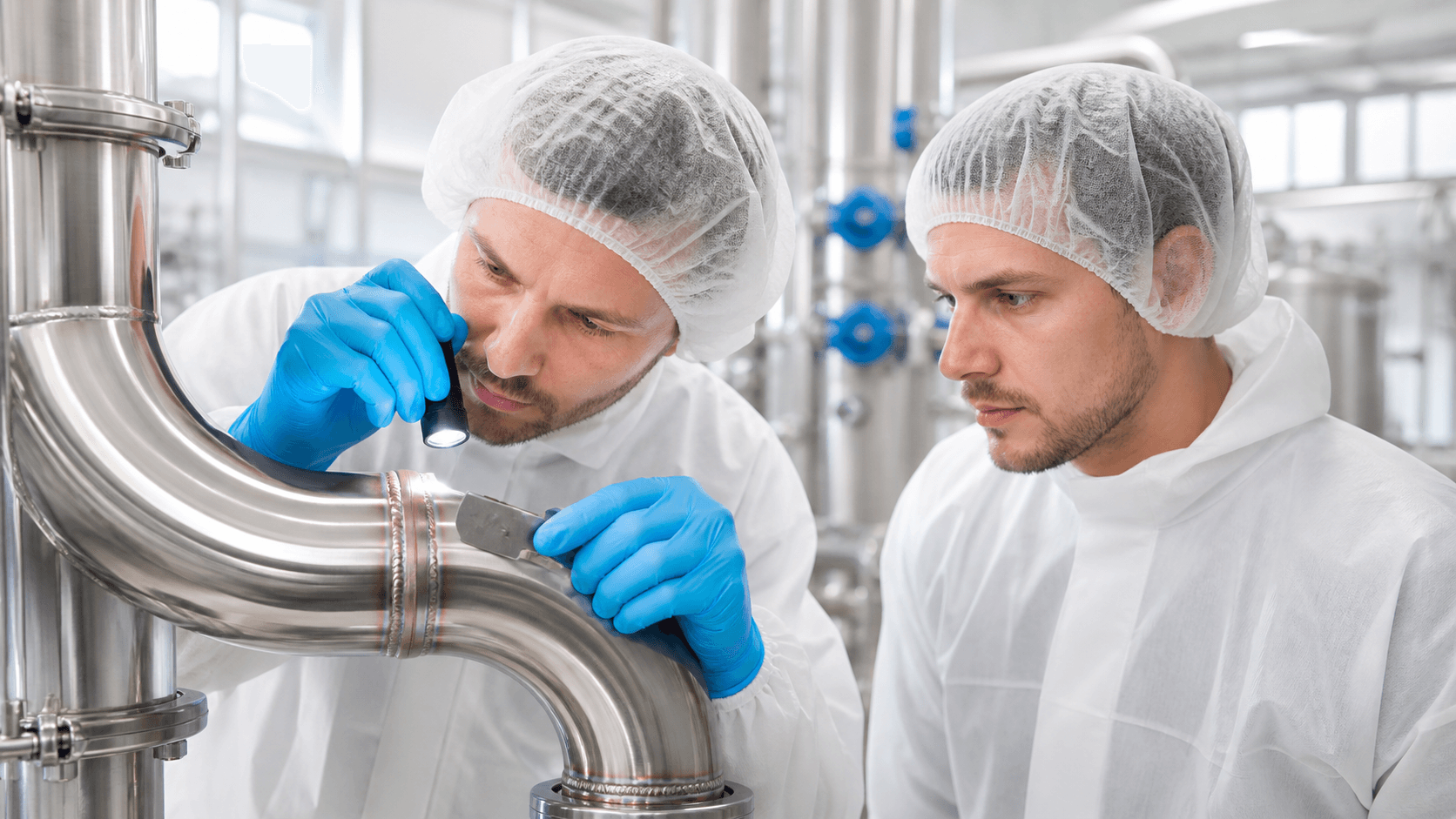
You do not need to be a welder to spot a clean weld. Your eyes can tell you a lot.
On a typical stainless fillet or groove weld, good visual signs include:
- A consistent bead profile from start to finish
- Even reinforcement, not too high or sharp, not sunken
- Smooth tie-ins where one bead meets the next
- Toes that blend gently into the base metal without sharp notches
Red flags to watch for:
- Undercut, where the weld has eaten into the base metal along the toe
- Overlap, where metal spills over the side without bonding
- Visible porosity, little pinholes or pits in the weld
- Excessive spatter all around the weld area
- Crater cracks at the end of the weld
- Dark blue or black heat tint spreading far from the weld
Color tells you a lot on stainless. A narrow band of light straw, gold, or light blue close to the weld may be acceptable in some structural services, especially if it will be cleaned. Dark blue, purple, or black tint over a wide area often means the surface has overheated and lost corrosion resistance. On food, pharma, or harsh chemical service, those dark colors are usually not OK and should be cleaned and passivated, or the weld may need work.
Field Checks for Cleanliness and Heat Control
Cleanliness is a big deal with stainless. Contamination that would be minor on carbon steel can ruin stainless performance.
Before welding, good prep means:
- Surfaces free of oil, grease, tape adhesive, paint, and rust
- Edges cut and cleaned so there is no slag or heavy burrs
- No embedded carbon steel from shared grinding wheels, wire brushes, or handling tools
After welding:
- Brushing done only with stainless brushes, not regular steel ones
- Smooth, even cleaning around the weld, not random scratch marks
- Signs that internal weld sugar in pipe has been prevented or cleaned where the inside is critical
Heat control shows up in how the finished parts sit and line up. Signs that the welder controlled heat well:
- Limited distortion, parts still fit where they should
- A reasonably narrow heat-affected zone around the weld
- Flanges that sit flat, not warped, and supports that line up
If you see badly warped flanges, big pulled joints, or heavy brown or blue burn marks from poor back purging on pipe welds, that usually points to poor heat control or weak purge practices.
Verifying Code-Compliant Work Without a Lab
On code work, you will not have a full lab on site, but you can still check for seriousness. Professional stainless steel welding projects should come with paperwork. At a minimum, you can ask your contractor about:
- Written Welding Procedure Specifications (WPS)
- Procedure Qualification Records (PQRs) that back up those WPS
- Welder qualification records to AWS or ASME for the process and position used
A few simple questions go a long way:
- What process are you using here, TIG, MIG, flux-cored, or a combination?
- How are you purging the stainless pipe or tube on the inside?
- What filler metal are you using and how does it match the base metal and service?
- How do you track and label your welds for traceability?
You can also do some basic non-destructive checks by eye:
- Is fit-up tight and even before welding, or are there big gaps and mismatched edges?
- Where you can see the root side, does the first pass look uniform and fully fused?
- Are purge dams, purge lines, or vent holes present where they should be on stainless pipe?
- Are welds marked or stamped in a clear, organized way that matches the drawings or weld maps?
Those checks help you confirm that what is on paper is actually happening in the field.
Choosing a Mobile Welder Who Gets Stainless Right
Not every welder who can handle carbon steel should be working on your stainless systems. When you are vetting mobile welding and fabrication help:
- Solid stainless-specific experience in industrial and commercial settings
- Proven work with AWS and ASME code projects
- A strong safety record and good communication with site safety teams
- The ability to staff up for shutdowns, turnarounds, and off-hour work
In Texas, where our team works across major markets, mobile fabrication and repair support can make a big difference during late-summer and fall. Heat, heavy production schedules, and storm season can stress equipment and structures. When a stainless line leaks, a tank nozzle cracks, or a support breaks, having a mobile crew that can come to your site, work to code, and turn paperwork around quickly helps keep projects on track.
Coordinated stainless work should include QA/QC steps, clear documentation, and a plan that respects both your production schedule and your safety rules. The right team treats your site like their own plant, not just another stop on the route.
Next Steps to Protect Your Stainless Investment
As calendars fill up and fall projects ramp, this is a smart time to do a quick stainless walkdown. Take a practical look at:
- Critical process lines and manifolds
- Tanks, nozzles, and support saddles
- Handrails, platforms, and structural stainless items
- Food or pharma systems where cleanliness and finish really matter
Use what we covered here to build a simple weld acceptance checklist for future work. Include visual weld criteria, color limits, cleanliness standards, required documents, and basic questions for your contractor. A little structure on the front end helps you avoid surprises later and keeps your stainless systems performing the way they should.
Get Started With Your Project Today
If you are planning a complex fabrication or piping job and need reliable results, our team at Weldit is ready to help. We bring specialized expertise in stainless steel welding to support your schedule, budget, and performance requirements. Tell us about your project and we will recommend the right approach, from material selection to final inspections. To discuss timelines, pricing, or technical details, just contact us today.