Stop Guessing: A Clear Path for Critical Weld Repairs
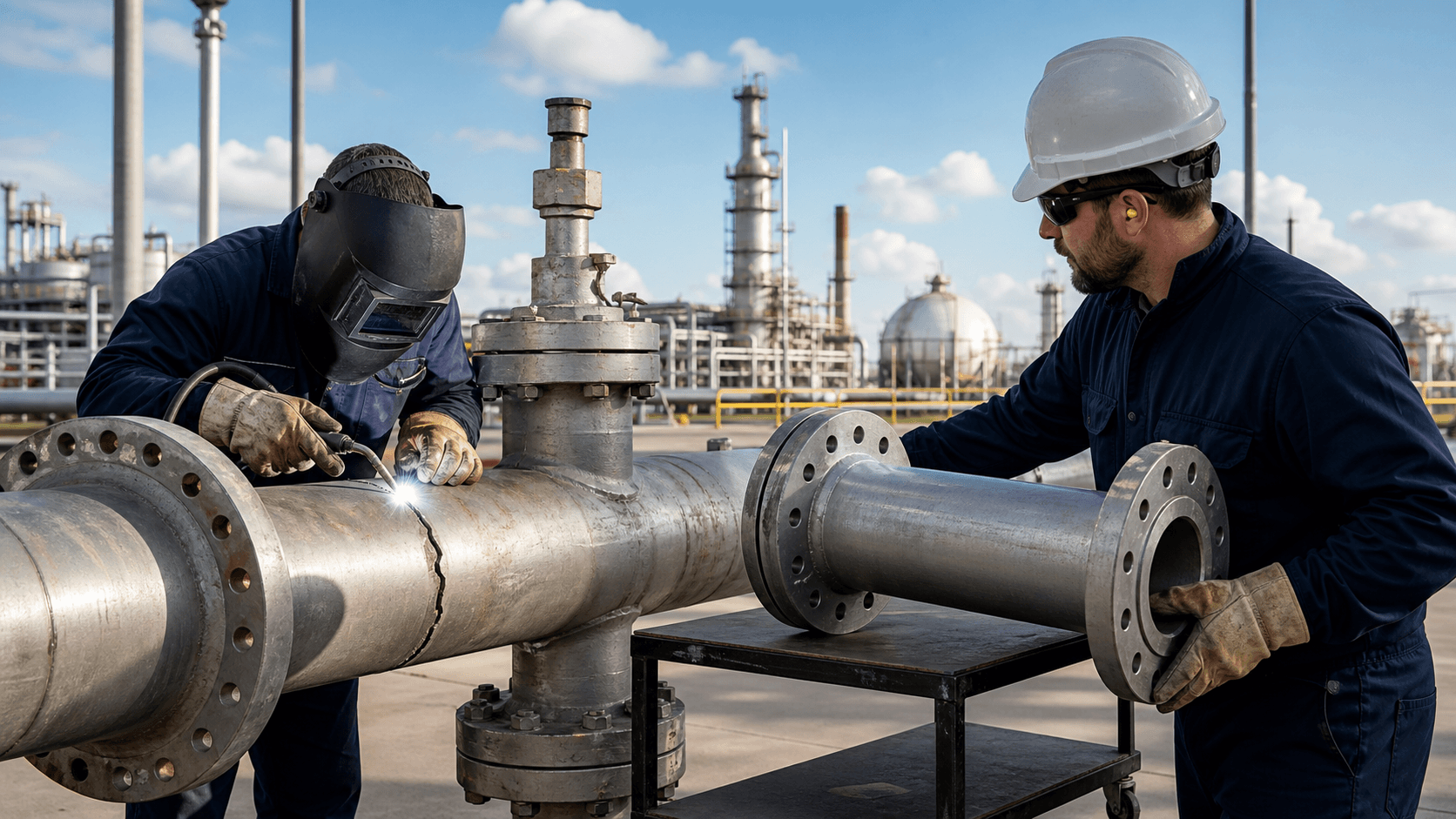
When a weld cracks in the middle of peak production or hurricane prep, nobody has time for long debates. Maintenance, inspection, and operations all want the same thing: a safe repair that gets the unit back online without creating a new problem down the road. The real question is simple but heavy: do you repair in place or pull the part and send it to the shop?
That choice often comes down to gut feel or who talks the loudest in the room. That is risky for high-pressure lines, coded vessels, and tight Houston units where every hour of downtime hits real output. A better way is to use a clear decision tree built around four practical filters: access, metallurgy and PWHT, NDE, and downtime. In this article, we walk through how teams in plants, refineries, and industrial sites around the Gulf Coast can use these filters to make faster, defensible calls during both planned turnarounds and those late-night unplanned outages.
When to Repair in Place vs. Go to the Shop
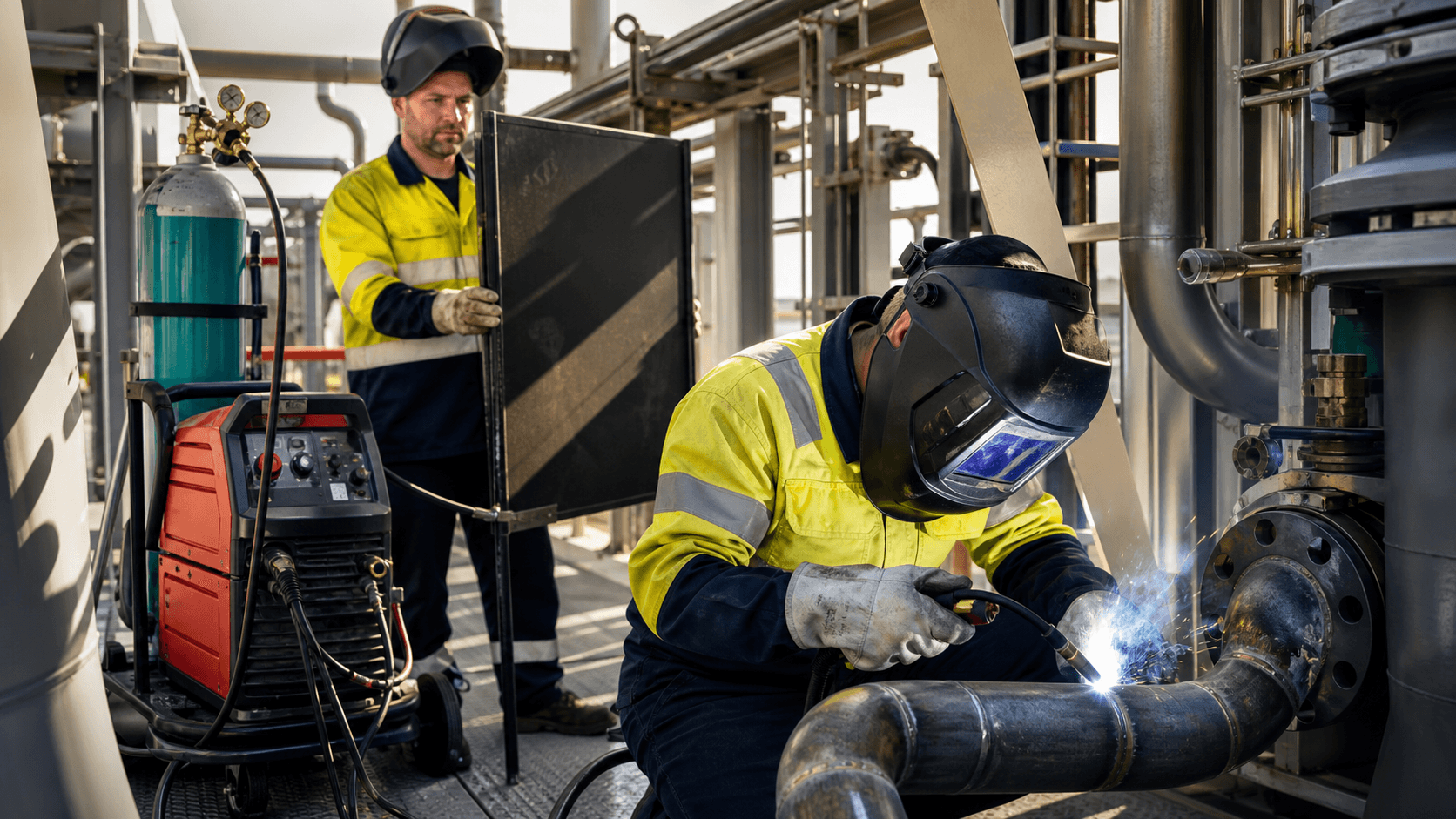
Repair in place usually sounds like the hero move. No big disassembly, less rigging, no trucking across town. You keep the component where it lives and fix the weld right there. But you trade away some control, such as perfect part positioning, climate control, and full shop tooling.
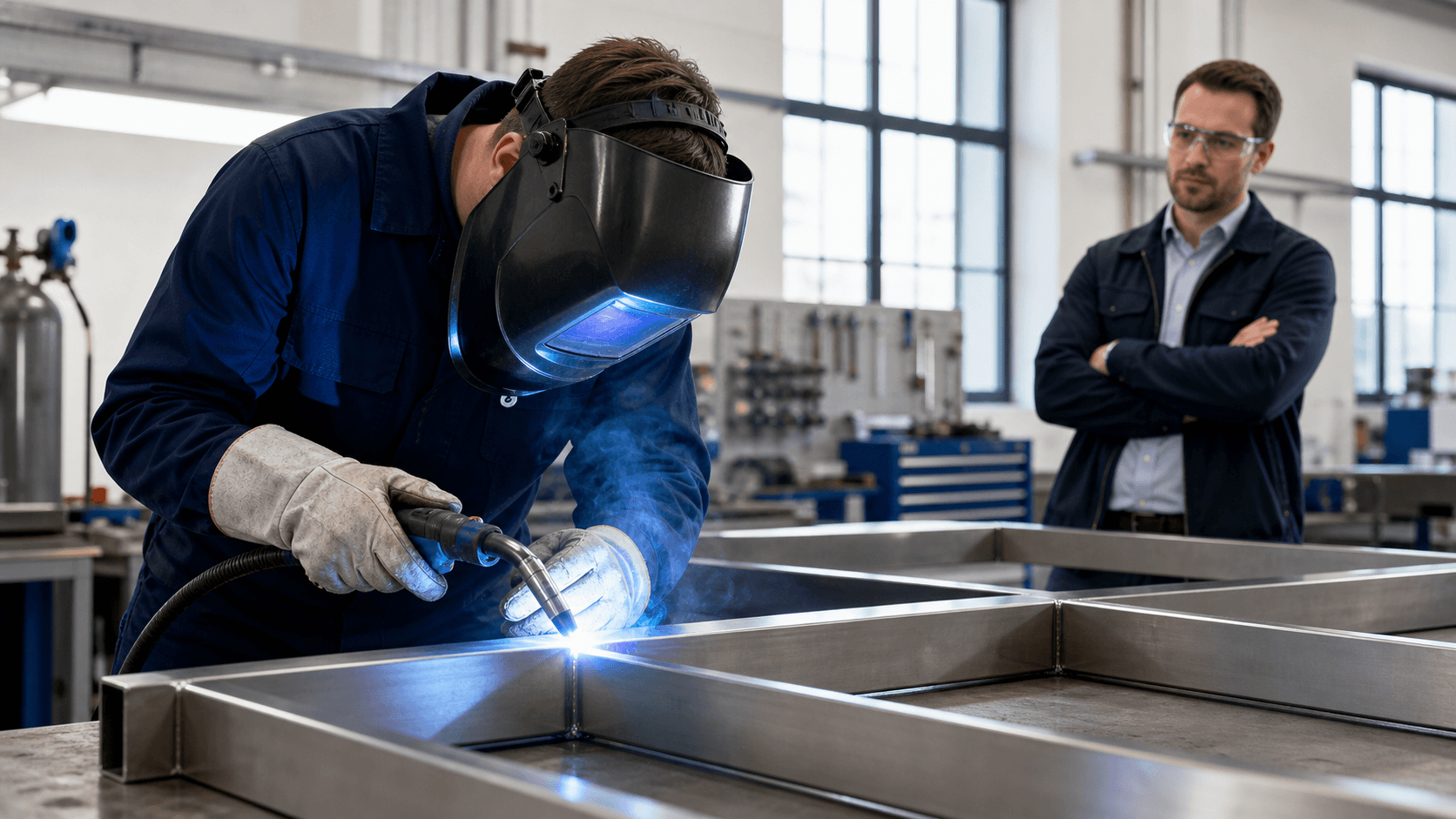
Shop work brings the other side of the trade. You gain maximum access, stable fixtures, easy power, controlled heating, and often simpler NDE layouts. The flip side is longer downtime and added handling risks from cranes and transport.
Typical in-place candidates often include:
- Structural supports and pipe shoes tied into big structures
- Large-bore process piping that would trigger big process breaks
- Fixed tanks or tower nozzles that cannot realistically move
- Components where removal would touch multiple systems at once
Shop repair is often better when you have:
- Skids, small vessels, or spools that come out in one piece
- Heat exchanger bundles that need precise alignment
- Parts that need machining along with welding
- Complex weld procedures that are easier in controlled conditions
Safety and compliance always sit over the top. Some code-critical repairs might need shop conditions to satisfy owner specs or insurer requirements. Others are clearly allowed in the field with the right qualified procedure and properly certified welders. A structured decision tree helps standardize these calls so the choice is not different every time depending on who is on shift.
Access and Site Conditions: the First Go/No-Go Filter
The first real filter is simple: can people and equipment safely get to the weld and work it the way it needs to be worked? In congested Houston units, that is not always a given. You might be looking at a crack tucked inside a pipe rack, a nozzle on the side of a tall tower, or a repair inside a vessel that counts as a confined space.
Key access questions usually include:
- Is this in a confined space that needs special permits and standby?
- Does the work require scaffold or manlifts at height?
- Are there hot lines or live systems nearby that limit welding options?
- Is there enough room for proper torch angle, grinding, and NDE probes?
Sometimes you can make repair in place possible with scaffold, rigging, or temporary platforms. But the access solution itself can turn into the biggest line item. If you have to build a huge scaffold, shut surrounding areas, and still fight poor angles, pulling the part for shop work might turn out faster and safer.
Houston conditions add one more layer. By fall, heat and humidity can still be heavy. Long welds on thick-wall piping in that environment can wear out welders and make it harder to hold preheat steady. Consumables need dry storage, power needs to be stable, and temporary shelters might be needed to shield from rain bands and heavy wind.
A mobile welding crew with its own generators, positioners, and portable preheat can close much of the gap between field and shop. That support can turn a borderline in-place job into a realistic option, but it should still pass the basic access and safety test first.
Metallurgy, PWHT, and Code Compliance Requirements
Once you know the weld is physically reachable, the next filter is the metal itself. Not all materials behave the same when repaired in the field. Carbon steel might be simple, but low alloy, stainless, duplex, and nickel alloys can call for tight control of heat input and very specific filler metals.
For each repair, teams should understand:
- What is the base metal grade and thickness?
- What filler and process are qualified for this combination?
- Does the code or owner spec require preheat or PWHT?
- How strict are hardness, toughness, or impact requirements?
PWHT is often the big splitter between field and shop. Electric resistance heating blankets, insulation, and thermocouples can do a lot in place, but large or awkward components are hard to heat evenly. Reaching and holding a code-required soak temperature across the full section, with uniform ramp up and cooldown, can be much easier in a furnace cycle.
Shop PWHT usually makes sense for:
- Thick-wall alloy piping in pressure boundary service
- Nozzles and welds that carry higher risk if they fail
- Parts where code and client specs demand tightly logged cycles
On top of that, welding procedures and welder qualifications must line up with standards like ASME, API, and AWS that apply to refinery and process work. A short discussion with a certified mobile welding provider can help sort out whether a code-compliant in-place repair is truly practical or if shop work is the only sound option.
NDE Strategy and Downtime Economics
NDE is more than a final checkbox; it shapes the repair plan from the start. Some methods, like simple visual testing, are easy in the field. Others, like radiography or full phased array UT on odd geometry, get harder in tight units.
NDE planning should cover:
- Required methods, VT, PT, MT, RT, UT, phased array, hardness
- Access for probes, film, or scanners around the full joint
- Need for controlled areas, especially for RT in heavy units
- How many repair cycles are realistic if indications show up
Field RT can cause real downtime, especially in crowded areas where you need to clear people and stop other work while shots are taken. UT and phased array might need repeat passes and careful couplant control on hot steel. In the shop, those same methods can be repeated faster and with cleaner geometry.
All of this rolls up into downtime economics. You can do a simple compare:
- Crane time, rigging, and transport for shop work
- Disassembly and reassembly labor at the unit
- Field mobilization for welders and NDE crews
- Added time for access control and repeated field NDE
Building realistic NDE and downtime assumptions into the decision tree lets planners model both emergency and planned scenarios quickly instead of arguing in the alley beside the unit.
Turning the Decision Tree Into a Ready Repair Plan
The real power comes when you turn these four filters into a standard playbook. Access, metallurgy and PWHT, NDE, and downtime can be written as a simple decision tree or checklist used by maintenance, inspection, and reliability teams on every industrial welding repair in Houston.
Many plants tie this into outage plans and hurricane readiness. When everyone agrees ahead of time on when to stay in place and when to pull to the shop, those tense moments during unplanned failures get a lot calmer. Teams can also walk the facility with a welding partner, review likely failure points, and pre-qualify weld procedures for both field and shop paths, so the next crack is a controlled event, not a scramble.
Protect Your Operation With Fast, Reliable Welding Support
If you are facing structural damage, worn equipment, or safety concerns, Weldit is ready to help with expert industrial welding repairs in Houston tailored to your facility. Our team works efficiently to minimize downtime while meeting strict quality and safety standards. Tell us about your project or emergency needs, and we will provide a clear plan and timeline. Get started today by using our simple form on contact us so we can keep your operation running safely and efficiently.