Stop Leaks Before Shutdowns Hit Your Bottom Line
Stainless steel pipe spools keep your product, water, and process fluids moving, even when Houston heat is pushing everything to the limit. When one of those spools fails in the middle of summer, it is not just a mess on the floor; it can slow or stop production right when demand is highest. That kind of unplanned shutdown hits your bottom line fast.
Across Greater Houston, stainless steel pipe spools show up in plants, commercial buildings, and even high-end homes. They connect equipment, turn corners, and tie your whole system together. They are built to handle tough service, but they are not magic. Humidity, coastal air, and harsh chemicals all work on them every single day.
Most of the time, your stainless spools start talking long before they give up. The warning signs can be small, easy to miss, and easy to ignore. A local specialist who understands our codes, climate, and typical process fluids can spot those signs early and help you avoid shutdowns. We are going to walk through the most important visual, performance, and safety clues that say your stainless steel pipe spool needs professional attention, plus what a certified mobile welding and fabrication contractor can do to fix problems fast.
Visible Wear That Puts Stainless Steel at Risk
Stainless steel looks strong and clean, which makes many people think it is "set and forget." In Houston, that is not the case. Salt in the air, chemical fumes, and moisture can all attack the thin passive layer that protects stainless from corrosion.
Some of the first signs show up on the outside of the spool:
- Brown or orange "tea staining" on the surface
- Yellow or rainbow discoloration along welds
- Rust-like spots that come back after cleaning
Those marks are not just cosmetic. They are a signal that the protective film is breaking down, and corrosion may be starting underneath.
Other visual red flags include:
- Warping or bowing along long runs
- Dents from impact or dropped tools
- Pitting that feels like tiny pinholes under your fingers
- Hairline cracks at weld toes or in heat-affected zones
- Flanges that no longer line up flat or square
Some of these come from poor fit-up or installation. Others grow over time as the system heats, cools, and vibrates through long days of operation.
Houston summers bring extra stress. High temperatures and long hours of operation mean more:
- Thermal expansion and contraction of long spools
- Vibration from pumps, compressors, and rotating equipment
- UV and heat working on supports, gaskets, and coatings
Mid-year visual inspections catch issues while they are still small, before a hairline crack or warped support turns into a leak or full failure.
Leaks, Pressure Drops, and Flow Problems You Cannot Ignore
Not every warning sign is easy to see. Some show up as small changes in how your system behaves. These can be just as serious as a rust spot on the outside of the pipe.
Watch for early leak signs like:
- Damp or stained insulation that never fully dries
- Condensation that only appears around one part of the line
- Small drips at joints, valves, and spool connections
If you are seeing puddles, you are already past the early stage. Even a slow weep along a flange face can be a clue that the sealing surface or spool alignment is not right.
Performance problems can also point straight at your stainless steel pipe spool:
- Sudden or recurring pressure drops that are hard to explain
- Flow restriction where the line used to run smooth
- Inconsistent output or product quality tied to a certain run of pipe
Inside the spool, internal corrosion, scaling, or rough weld roots can choke down the line. If the geometry of the spool was not fabricated correctly, elbows and branches may be creating extra turbulence and pressure loss.
In Greater Houston, many systems carry:
- Petrochemical products
- Food and beverage ingredients
- Wastewater and treatment chemicals
These fluids demand tight tolerances, clean welds, and the right stainless grades. Once you see performance changes, it is time to bring in a specialist who can check the inside of the spool, not just the outside.
Code Compliance and Safety Red Flags in Houston Facilities
Even if a spool seems to be "holding" for now, it might still be a problem for codes and safety. Over time, small changes and quick field fixes can leave you with a system that no longer matches drawings or inspection records.
Common compliance issues include:
- Welds that do not match approved procedures
- Spools modified in the field without documentation
- Materials swapped out for something "close enough"
If an inspector shows up and your stainless steel pipe spool assembly does not line up with code or paperwork, that can mean headaches with insurance, audits, and regulatory agencies.
Safety red flags are just as important:
- Alarms that keep tripping in the same area
- Hot spots around welds or supports when the line is under load
- Unusual vibration or rattling at hangers and racks
- Emergency shutdowns linked to a specific line or piece of equipment
These signs can point to hidden structural problems, cracked supports, or welds that have been stressed past their limits. A certified mobile welding contractor who understands ASME, AWS, and local inspection standards can evaluate the welds, confirm materials, and document any repairs so your records stay clean.
When Repair Makes Sense and When Replacement Is Smarter
Not every problem means you need to scrap a spool. Some issues can be handled with code-compliant repairs right where the pipe sits, which is a big help when access is tight or the line runs through a busy area.
Typical repair options include:
- Grinding out and re-welding small cracks
- Adding reinforcement pads or supports
- Correcting misaligned flanges or brackets
- Trimming and re-fabricating spool ends for better fit
These types of fixes work best when problems are caught early and the base material is still sound. Once corrosion, cracking, or deformation goes too far, replacement becomes the smarter move.
Full spool replacement may be needed when:
- Wall loss is advanced or widespread
- Multiple welds have failed in the same section
- Geometry is wrong and keeps causing flow problems
- Materials do not meet current code or service needs
Catching trouble early lets a Houston specialist help plan repairs or replacements during planned outages instead of racing against an emergency shutdown in the middle of peak demand. Upgrading to properly fabricated stainless steel pipe spools can give you better corrosion resistance, tighter fit-up with existing systems, and long-term peace of mind.
How a Houston Specialist Keeps Your Spools Online
A local stainless steel pipe spool expert brings more than a welding machine. In our work across Greater Houston and other Texas metros, we see the same patterns again and again, from industrial plants to commercial sites and high-end residential systems.
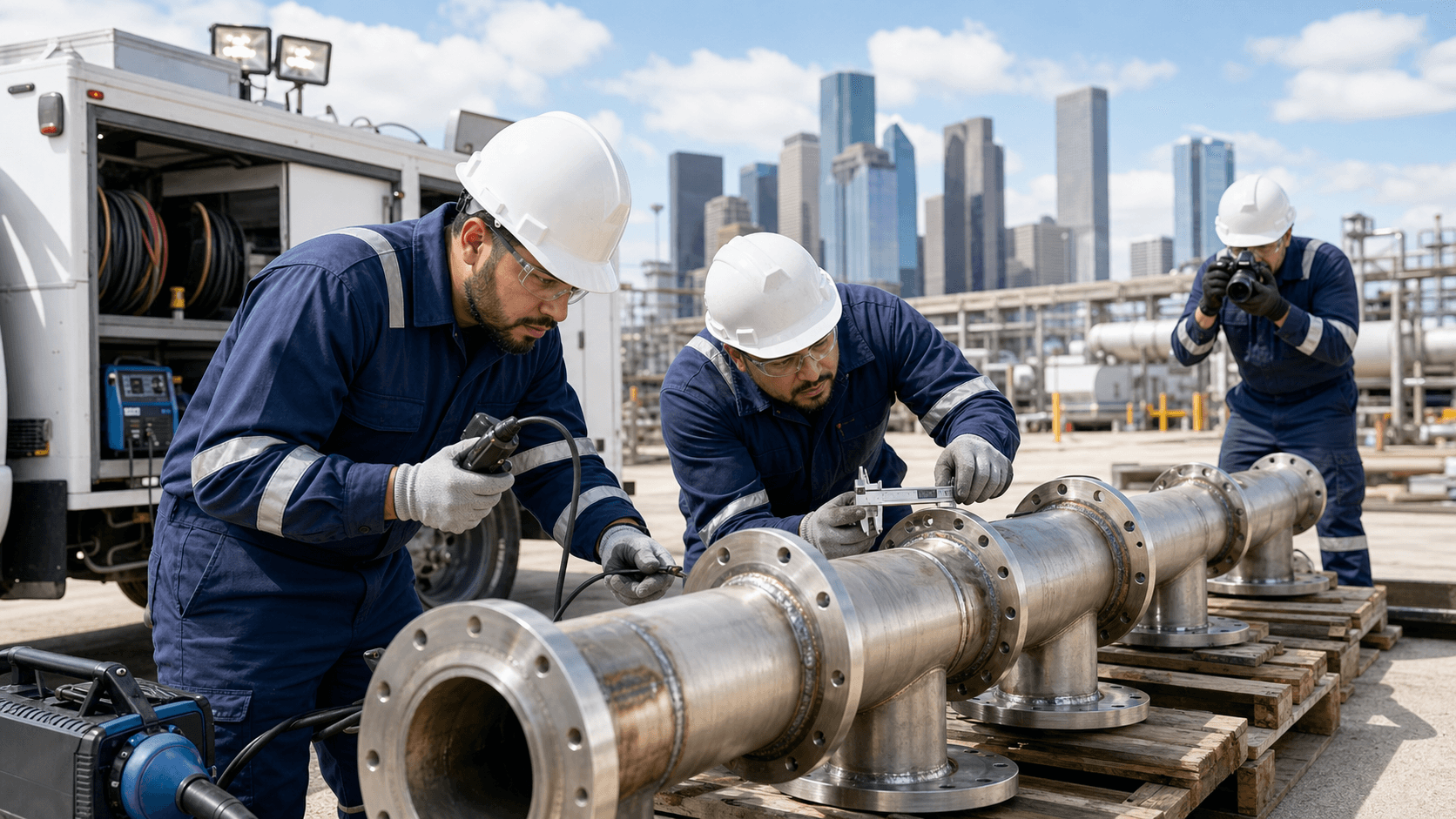
A typical service process often includes:
- On-site visual assessment and measurements
- NDT inspection where needed to find hidden defects
- Review of code requirements and existing documentation
- On-site weld repair or in-field spool fabrication
- Final checks and clear documentation of the work performed
Because mobile rigs come to you, many issues can be handled without pulling long sections of pipe or sending spools off-site. That speed matters when you are trying to keep operations running.
It also helps to have one contractor that can handle more than just the spool itself. When the same team can work on structural steel supports, pipe racks, and related metalwork, you are not stuck with one group fixing the pipe while another chases a loose support. The whole system gets checked as a unit, which is how it actually performs in real life.
Schedule a Mid-Summer Spool Check Before Problems Grow
Mid-summer is a smart time for facility managers, building engineers, and contractors to pause and ask one question: How hard have our stainless steel pipe spools been working lately? Heat, long days, and heavy production all stack up by this point in the year.
Getting ready for a specialist visit is simple. Helpful items include:
- Recent incident or alarm logs tied to specific lines
- Photos of any discoloration, leaks, or damaged supports
- Previous inspection or test reports
- Access plans for ladders, lifts, or confined spaces
Having this information ready makes the inspection faster and more focused, so the welding and fabrication team can spend time fixing instead of guessing. A certified mobile contractor like Weldit can then perform a code-compliant, on-site evaluation across Greater Houston and other Texas metros, helping you spot small issues before they grow into leaks, failures, and unplanned shutdowns.
Get Started With Your Project Today
If you are ready to move from planning to production, our team at Weldit is here to help. Learn how our stainless steel pipe spool capabilities can support your specifications, schedule, and budget. We will review your requirements, provide clear recommendations, and coordinate fabrication so your project stays on track. Have questions or need a quote quickly? Just contact us to get started.