Protecting Houston Barges and Workboats From Costly Downtime
Marine welding keeps barges and workboats working when everything around them is trying to wear them out. On the Houston Ship Channel and along the Gulf Coast, crews depend on vessels that are safe, tight, and ready every day. When welds fail, work stops, schedules slip, and everyone upstream starts feeling the pain.
Small issues in hulls, decks, or structure rarely stay small. A thin spot at the waterline can turn into a leak. A cracked tow knee can sideline a barge. Loose deck fittings can bring unwanted attention from the Coast Guard, terminals, and insurance carriers. All of that leads to unplanned outages, delayed cargo, and higher risk.
Marine welding is a focused trade built around keeping steel boats and barges working in harsh salt air, sun, and constant motion. Good marine welds fight corrosion, handle vibration, and hold up under heavy use. With mobile welding, that same quality can be brought right to the pier, yard, or dock, so work happens close to where vessels actually run.
What Makes Marine Welding Different in Houston Waters
Welding on barges and workboats is not the same as welding a stand-alone frame in a calm shop. Marine structure lives in a moving, wet, and corrosive world. Every day, the steel is hit by waves, barge impacts, and changing loads from cargo and gear.
Houston adds its own challenges:
- Brackish ship channel water that eats away at coatings and weld toes
- Heavy industrial traffic that causes more bumps, rubbing, and fender hits
- High summer heat and humidity that affect how welds are planned and controlled
- Tight schedules that pressure crews to work fast without cutting corners
In this setting, welds are not just holding pieces together. They are part of a system that must stay strong under:
- Saltwater exposure and galvanic corrosion
- High-cycle fatigue on workboats that never really stop moving
- Repeated loading and unloading around tanks, decks, and frames
That is why marine welding should be driven by written procedures and codes like AWS D1.1 for structural steel, D1.2 for aluminum, D1.6 for stainless steel, along with ASME standards where tanks or pressure parts are involved. These codes guide things like:
- Joint design and fit-up
- Welding process and filler selection
- Preheat and interpass temperature limits
- Required inspections and testing
Proper joint prep, temperature control, and post-weld inspection are not extra steps; they are the way to get welds that last. Grinding out cracks fully, cleaning away coatings and contamination, controlling heat input, and then inspecting the weld helps avoid repairs that fail again when the vessel goes back to work.
Critical Weld Areas on Barges and Workboats to Watch
On barges in the Houston area, certain spots take a beating and deserve regular attention. Common trouble zones include:
- Hull plating near the waterline, especially where coatings are thin
- Rakes that meet impacts, groundings, and strong currents
- Cargo holds and tank boundaries where product and moisture collect
- Tow knees and push knees that see repeated impacts from tugs
- Corner connections where flexing and twisting are common
Workboats have their own set of high-risk areas:
- Decks around winches, fairleads, and towing bits
- Bulwarks, railings, and handrails used constantly by crew
- Winch foundations and crane pedestals that see high loads
- Fuel and hydraulic tanks and their supports
- Engine-room girders, brackets, and supports that feel vibration all day
Finding problems early is the key. Regular inspection routines can include:
- Visual inspection for rust, cracking, broken welds, or coating failure
- Magnetic particle testing on critical structural welds
- Dye penetrant on non-ferrous or stainless components
- Thickness testing to spot thinning plate before it leaks
With that information, a marine welding contractor can help build a preventive maintenance list and repair schedule. Work can be planned around known yard stops, light traffic periods, or crew changes, instead of scrambling when something fails during a busy run.
Code Compliance and Safety for Marine Welding Projects
On the Houston waterfront, compliance is not just about passing a visit from the Coast Guard. Many terminals, refineries, and major customers expect documented, code-based work on the vessels they accept. Insurance carriers and internal safety teams pay close attention to how structural repairs and hot work are handled.
Code-compliant marine welding is built around:
- Certified welders qualified for the processes and positions required
- Written Welding Procedure Specifications, so every weld is done the same way
- Procedure Qualification Records where codes call for proven, tested procedures
Safety on barges and workboats also has its own set of rules. Hot work on a vessel almost always needs:
- A proper hot work permit from the vessel and, often, the terminal
- Gas detection in confined and enclosed spaces before and during work
- Fire watches with the right gear and clear escape routes
- Close coordination with crew so everyone knows what is happening and where
When welds, procedures, and inspections are documented, that paperwork can support Coast Guard inspections, customer audits, and company safety programs. It shows that repairs were planned, controlled, and inspected, not just patched together in a rush.
Mobile Marine Welding Solutions for Houston Fleets
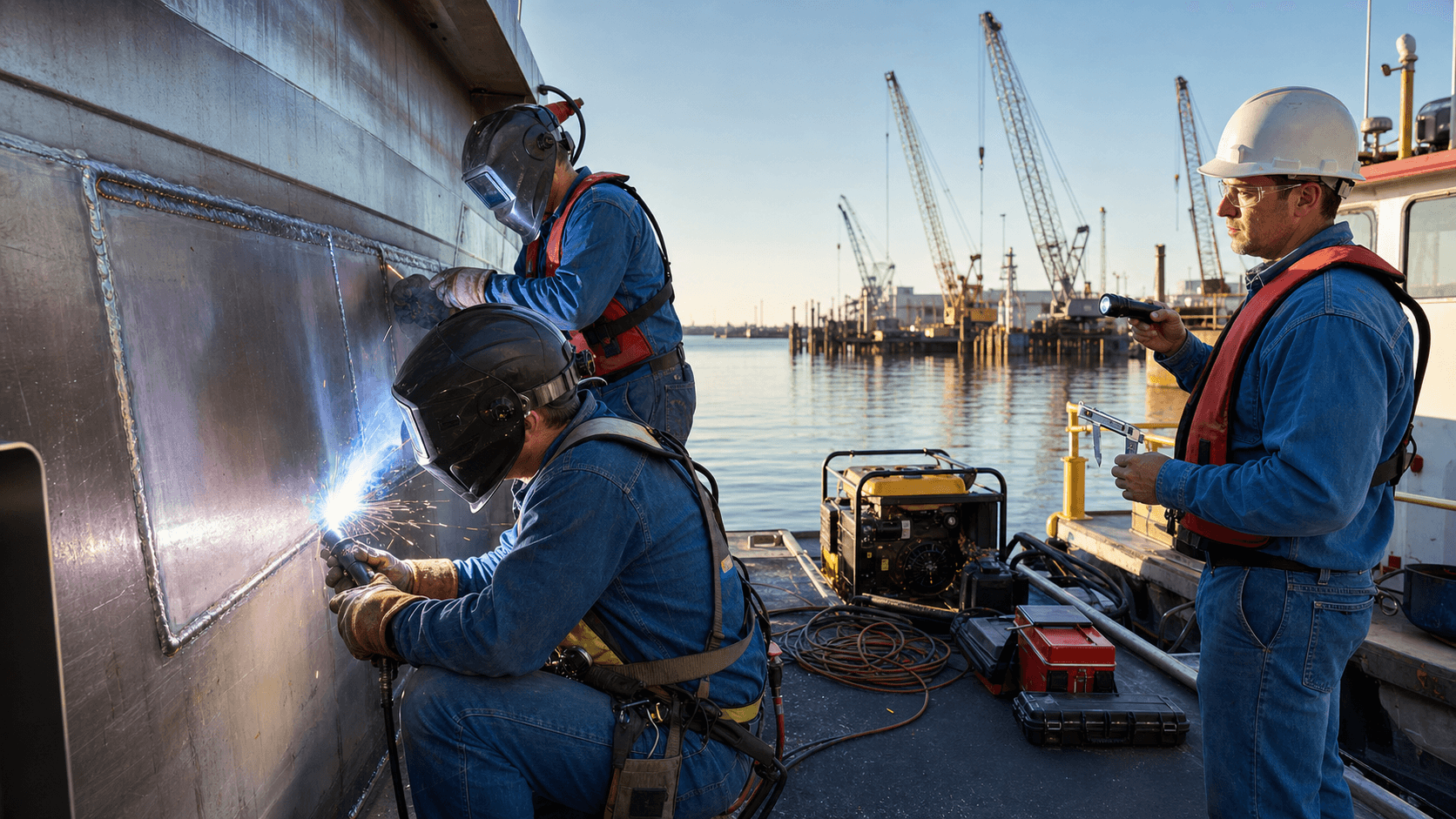
For Houston barge and workboat operators, taking a vessel far from its normal route just to get a weld fixed is not ideal. Mobile marine welding teams solve that by bringing qualified welders and gear directly to:
- Ship Channel docks and fleeting areas
- Local yards and industrial waterfronts
- Nearby rivers and Gulf Coast facilities
On-site, a contractor can handle many common marine tasks, such as:
- Structural repairs on hulls, rakes, and frames
- Deck and hull patches and insert plates
- Handrail, ladder, and access platform replacement
- Skid-mounted equipment frames and tie-downs
- Pipe spool repairs and small piping projects
Shop-quality fabrication still plays a big part in marine work. Structural brackets, skids, mounts, and supports can be built in a controlled shop environment, then moved to the pier and installed on the vessel. That mix of shop and mobile work helps keep weld quality high and downtime lower.
Another piece of the puzzle is scheduling. Houston fleets deal with:
- Tides and draft limits
- Cargo loading windows and tow schedules
- Afternoon storms and summer lightning
A flexible mobile welding partner can plan work during crew changes, short layovers, or light traffic periods, so repairs fit around operations instead of stopping them.
Keeping Your Houston Marine Assets Working All Year
Houston barge and workboat owners know that the busiest times often line up with long days, strong sun, and an active Gulf. That is not when anyone wants to pull a vessel from service for emergency welding. Proactive, code-based marine repairs and upgrades help extend vessel life, reduce surprise problems, and protect crews as they keep cargo moving.
A focused inspection and maintenance plan around marine welding can make a big difference. By checking high-risk areas, planning repairs before they grow, and using qualified mobile welders backed by strong procedures, marine operators can keep their fleets ready for whatever the next season of work brings. Weldit supports that goal with mobile welding and shop fabrication built around the needs of Houston barges and workboats.
Get Started With Your Project Today
If you are planning a repair, refit, or new build, our certified marine welding services keep your vessel safe, compliant, and on schedule. At Weldit, we work closely with your team to understand your requirements and deliver precise, documented results. Tell us about your project and we will recommend the right approach and timeline. To discuss specs, schedules, or inspections, simply contact us.