When Pipe Problems Do Not Require Full Replacement
Pipe trouble never shows up at a slow, easy moment. A line starts leaking, a spool warps, or a weld cracks right when your plant, building, or property is running hard and every hour of uptime matters. In Texas, peak-summer demand pushes chilled water, steam, fire-protection, fuel-gas, and process lines to their limits. The pressure is simple: get back online fast, keep people safe, and do it without blowing the maintenance plan.
Many teams are told right away that a full pipe spool replacement is the only smart and safe option. Pull the old section, drop in a new one, and move on. Full replacement can feel like the clean answer, especially when you are worried about code rules and long-term reliability. But in a lot of cases, you do not need to rip out a whole section of piping to solve a local problem.
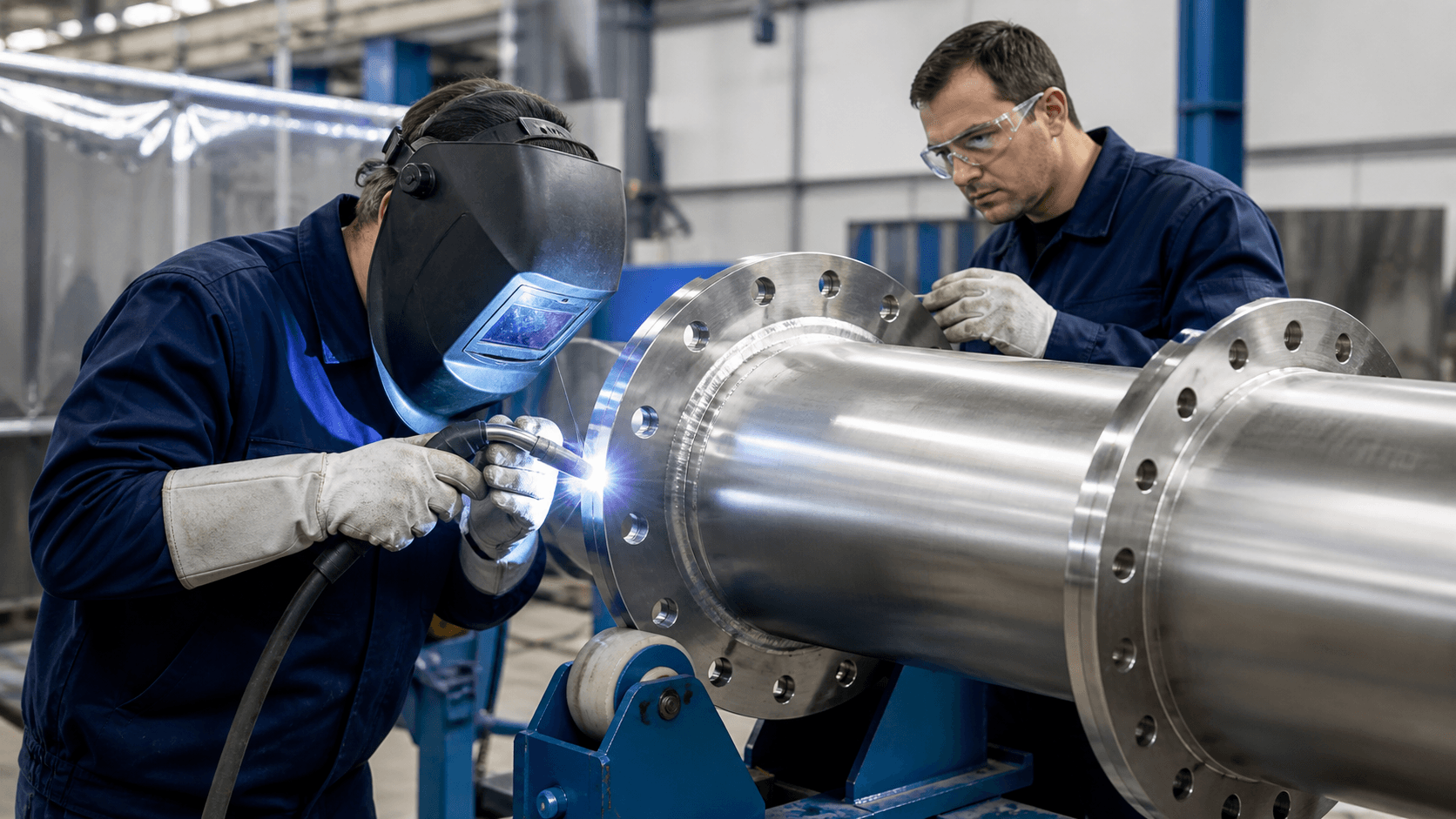
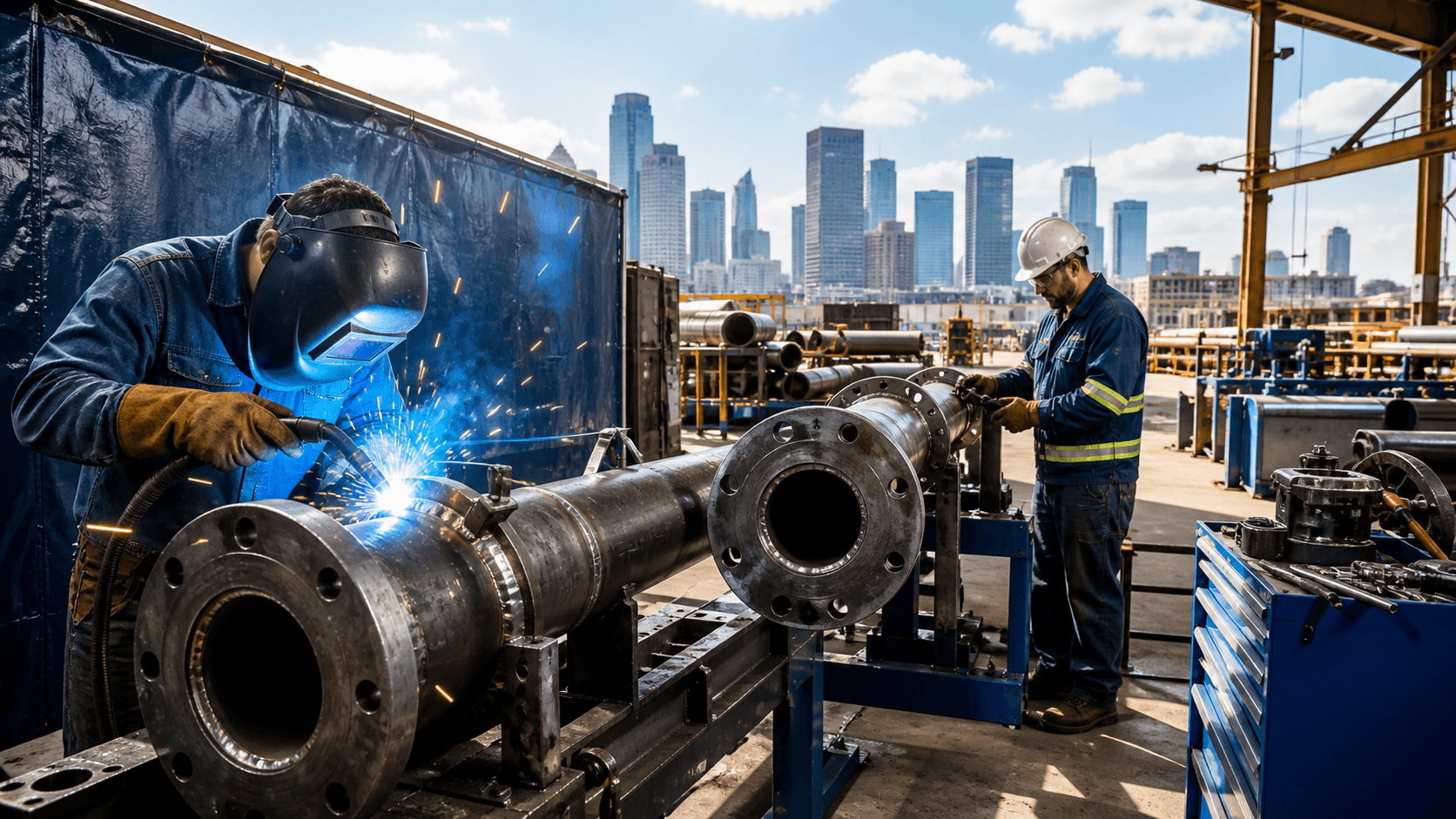
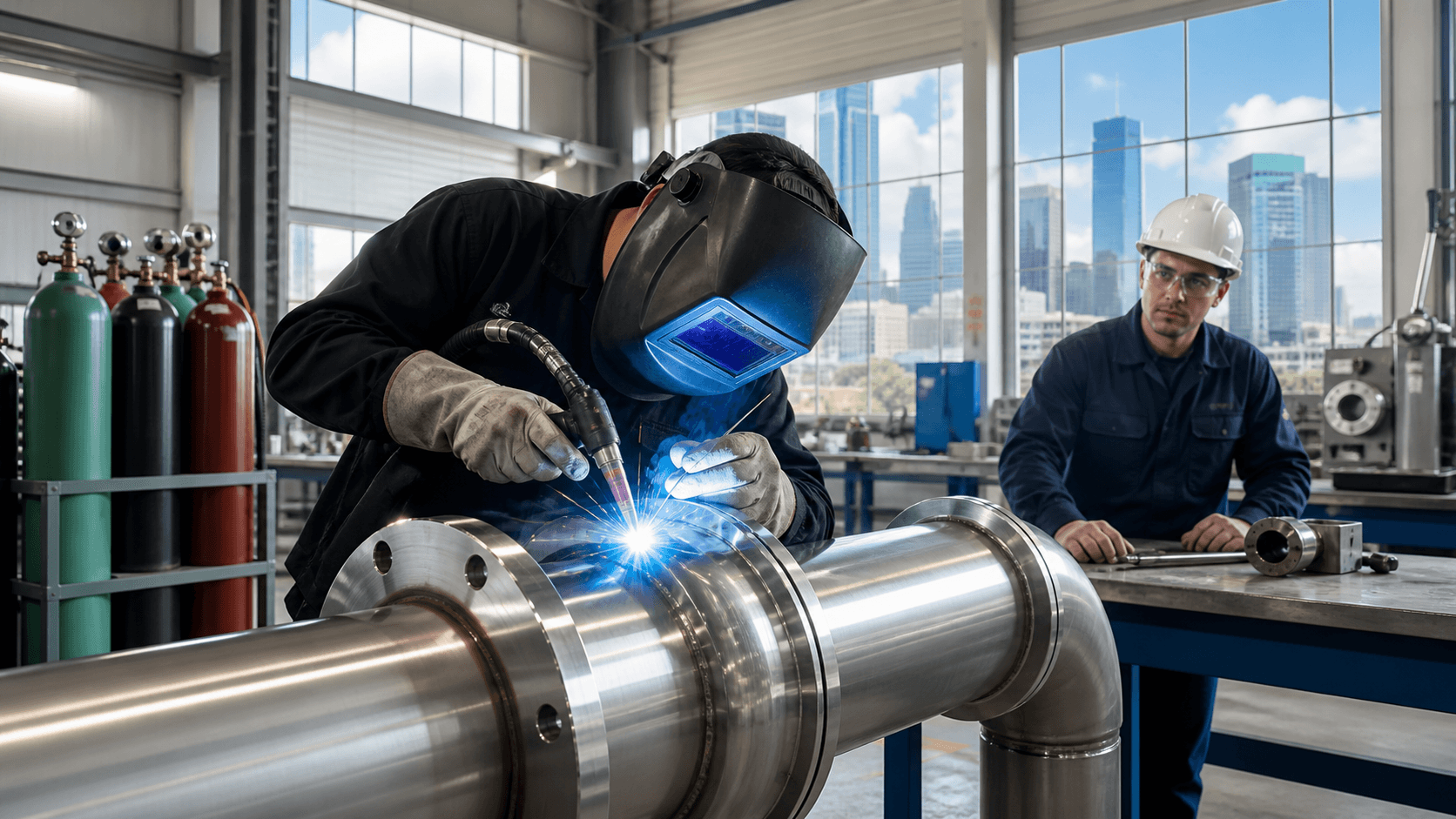
With the right on-site welding services, damaged or misaligned areas can often be repaired, reinforced, or modified in place. When that work is done by qualified welders who understand AWS and ASME requirements, you can restore performance and keep code compliance without a major teardown. That is where a mobile welding and fabrication partner serving Greater Houston and other major Texas metros can step in, bringing shop-style precision right to your jobsite at any hour.
Why Full Pipe Spool Replacement Is so Disruptive
Full spool replacement sounds simple until you map out everything that has to happen around it. The visible work is only part of the story. The real pain sits in all the steps before and after the pipe is swapped out.
Some of the hidden costs of a full replacement can include:
- New spool material and fabrication time
- Crane or rigging support to move heavy sections
- Line isolation, draining, and cleaning where needed
- Permits and approvals for extended hot work
- Extra labor for shutdown and restart support
On top of that, custom spools, especially on code-governed systems, rarely show up overnight. They often need:
- Engineering review so the design stays within code
- Updated drawings and approvals
- A spot in a busy fabrication schedule
While that is going on, the facility might be running at reduced capacity or sitting idle. In the middle of high-demand season, that lost time can ripple through production runs, comfort levels in commercial buildings, and service levels for tenants or customers.
There are also real safety and operational risks with large-scale teardown work. In tight mechanical rooms or pipe racks, pulling whole spools can disturb nearby lines and supports. It can mean more hot work in cramped or elevated spaces, extra confined space controls, and more people working shoulder to shoulder. Every added step raises the chance for delays, near misses, or new problems that did not exist before the pipe was touched.
When Onsite Welding Services Are the Smarter Fix
Full replacement is sometimes the right answer, but not every defect justifies that level of disruption. Many issues are local and can be addressed directly where they sit.
Good candidates for on-site repair or modification often include:
- Localized corrosion, pitting, or wall loss in a small area
- Small cracks at or near weld joints or attachments
- Misaligned flanges causing gasket problems or leaks
- Support failures that stress the pipe or welds
- Noncritical reroutes to clear a new obstruction
When welders are working under proper AWS and ASME procedures, they can repair, reinforce, or alter piping in ways that meet or even raise code expectations for that section. The key is that the work is engineered and controlled, not improvised.
A simple decision framework can help teams think through repair versus replacement:
- Is the damage local or spread across the whole run?
- Is remaining wall thickness still within code design limits?
- Is the base material sound or showing wide failure patterns?
- What is the expected remaining service life of the system?
- How do downtime and access constraints affect the choice?
In an industrial plant, that might mean repairing a bad weld at a nozzle instead of swapping a long, complex spool. In a commercial tower, it could be correcting flange misalignment on a chilled water riser rather than cutting out an entire vertical section. Even in demanding residential systems like high-end pools or boiler loops, focused repairs can keep things running without opening walls or tearing up finished spaces.
How Certified Mobile Welders Restore Piping in Place
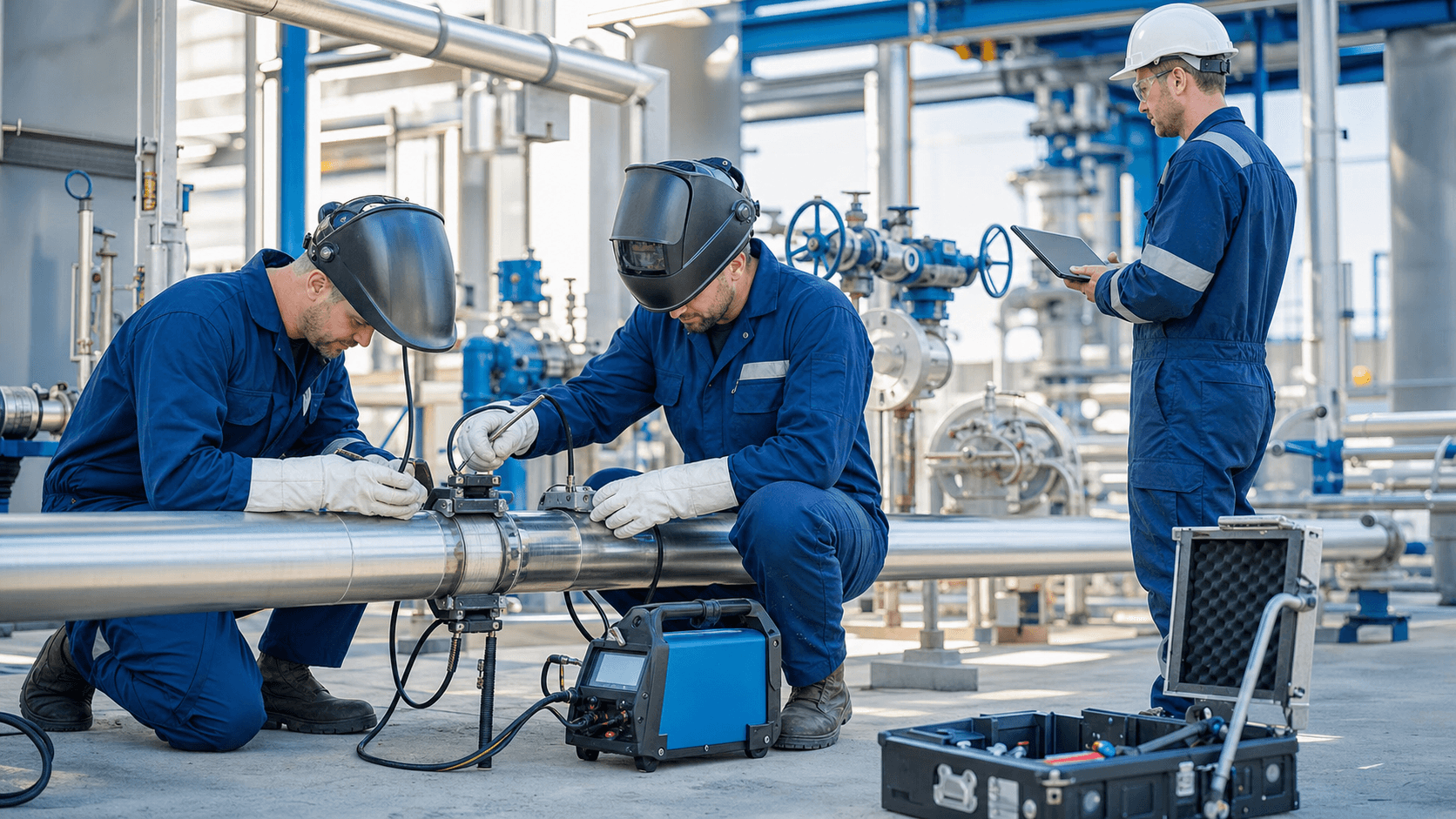
When on-site welding services are the smarter path, the work still has to be planned and controlled. Good mobile teams do not just show up, strike an arc, and hope for the best.
A typical field workflow often includes:
- Visual inspection of the problem area and surroundings
- Thickness checks or other NDT as needed
- Verifying pipe material, schedule, and service conditions
- Reviewing existing drawings or previous repair records
- Selecting a repair procedure and welding process that fits
Once the plan is set, the goal is to bring shop-grade control into a live environment. Experienced mobile welders use portable power sources, pipe stands, clamps, and alignment tools to get tight fit-up, correct root openings, and proper support. Where required, they apply preheat or controlled cooling so the weld area behaves as expected. Even on a crowded jobsite, the focus stays on good access, body position, and clear communication with the facility team.
Quality control does not stop just because the work is in the field. Reputable on-site welding services track:
- Welder qualifications and continuity
- Strict adherence to approved WPS and PQR documents
- Weld inspection, visual and, when needed, MT, PT, or RT
- Hydro or pressure testing for certain systems
- Final repair documentation for audits and insurance records
The result is a repair or modification that is not just "good enough for now" but defensible when a third-party reviews it later.
Texas Heat, High Demand, and 24/7 Pipe Repair Needs
Texas heat puts constant load on systems that move water, steam, air, and fuel. Plants ramp up production, AC runs longer hours in commercial properties, and life-safety systems must stay ready at all times. When a pipe issue hits in the middle of that cycle, the impact is bigger than a wet floor or a noisy leak.
Responsive on-site welding services allow facility teams to plan repairs around their own peak windows. Work can be done at night, on weekends, or during short production breaks, instead of waiting for a long shutdown. That kind of timing can keep a chilled water loop serving a full building, a process line feeding a key unit, or a fire-protection system available with minimal interruption.
Because Texas has several major metros spread out across a wide area, it also helps to have mobile crews that can travel. When welders can mobilize across Greater Houston and into other large cities for both emergency callouts and planned tie-ins, facility managers have more options. They are not stuck choosing between a slow replacement plan or an unsafe quick fix.
Take Action Before Your Next Pipe Spool Emergency
The best time to think about repair versus replacement is before you are watching fluid drip onto the floor. A proactive walk-down of critical piping runs can highlight problem spots early. Localized thinning, stressed supports, and small alignment issues often show themselves long before a full failure.
When teams already know which sections are good candidates for reinforcement or repair, they can plan work ahead of peak season. That means less emergency downtime and fewer hard choices under pressure.
It also pays to build a relationship with a qualified mobile welding partner before you need one. Pre-checking certifications, code experience, safety practices, and documentation habits gives you confidence that, when a spool issue shows up, you have someone ready who understands AWS and ASME work in real field conditions.
For facilities across Greater Houston and other Texas metros, that kind of partnership can be the difference between a fast, targeted on-site repair and a long, disruptive round of full spool replacement at the worst possible time.
Get Started With Your Project Today
If you are ready to repair critical equipment or complete a custom metal project on your schedule, Weldit is here to help with professional onsite welding services that come to you. We work around your operations to minimize downtime while delivering precise, code-compliant results. Tell us about your project and timeline, and we will provide a clear plan and upfront pricing. To schedule service or request a quote, simply contact us.