Why Early Stainless Steel Spool Failures Hurt Houston Plants
When a stainless steel line lets go in the middle of summer production, nobody on site is relaxing. A small leak on a hot line can force a unit slowdown or a complete shutdown, and that lost run time adds up fast. Many Houston plants see the same pattern: new stainless steel pipe spooling, unexpected leaks, rushed repairs, then the same run fails again.
We see this across refineries, chemical plants, terminals, and power facilities around Greater Houston and other Texas metros. The metal is not always the problem by itself. The failure usually comes from a mix of climate, design, fabrication, and maintenance choices that stack up over time. Let us walk through why stainless steel pipe spooling taps out early in Gulf Coast plants and what can be done differently.
How Houston's Climate Punishes Stainless Steel Pipe Spooling
Houston's weather is rough on stainless, especially on outdoor pipe racks and utility lines that stay hot or warm day and night. In late summer, the metal can see wide temperature changes between nights and full sun. Every heat-up and cool-down makes the pipe expand and contract, over and over.
Here is what that means for pipe spools around the plant:
- Thermal growth fighting against tight anchors and supports
- Repeated movement at welds, flanges, and branch connections
- Condensation forming on cooler lines when humid air hits them
On top of that, we live near the Gulf. The air often carries chlorides, mixed with industrial pollution and chemical vapors that move across large sites. Those chlorides attack the thin oxide layer that protects stainless. Once that layer breaks down, pitting and crevice corrosion follow, even on metal that looks good at first glance.
Some of the spots we see fail the most are:
- Cooling water and utility lines in pipe racks
- Insulated process lines where water gets trapped under the jacketing
- Outdoor runs that see direct sun and heavy rain with no drain paths
If insulation and coatings are not chosen and installed with Gulf Coast conditions in mind, stainless steel pipe spooling can corrode much sooner than anyone expects.
Hidden Metallurgy Mistakes in Stainless Steel Pipe Spooling
Many early failures start back at the material choice. Not every stainless grade can handle chlorides, high temperature, or certain chemicals. Using 304 where 316 or duplex is needed is a common shortcut. It may look fine on paper at first, but under Houston plant conditions the weaker alloy can pit and crack much faster.
Weld metallurgy is another quiet trouble spot. If the filler metal is wrong for the base pipe or the service, the weld can be less corrosion resistant than the pipe itself. Overheating the joint or skipping proper purge gas inside the pipe can burn out the protective elements and leave a rough, sugared root that is ready for attack.
A few common mistakes we run into include:
- Ignoring WPS and PQR requirements in the rush to "get it done"
- Skipping PMI on fittings and spools and mixing alloys by accident
- Welding dissimilar metals without planning for galvanic effects
These issues do not always show themselves right away. The spools may pass pressure tests at startup. Then a few hot summers and aggressive chemicals later, the heat-affected zones turn into the first leak points.
Fabrication, Fit-up, and Field Damage That Show Up Later
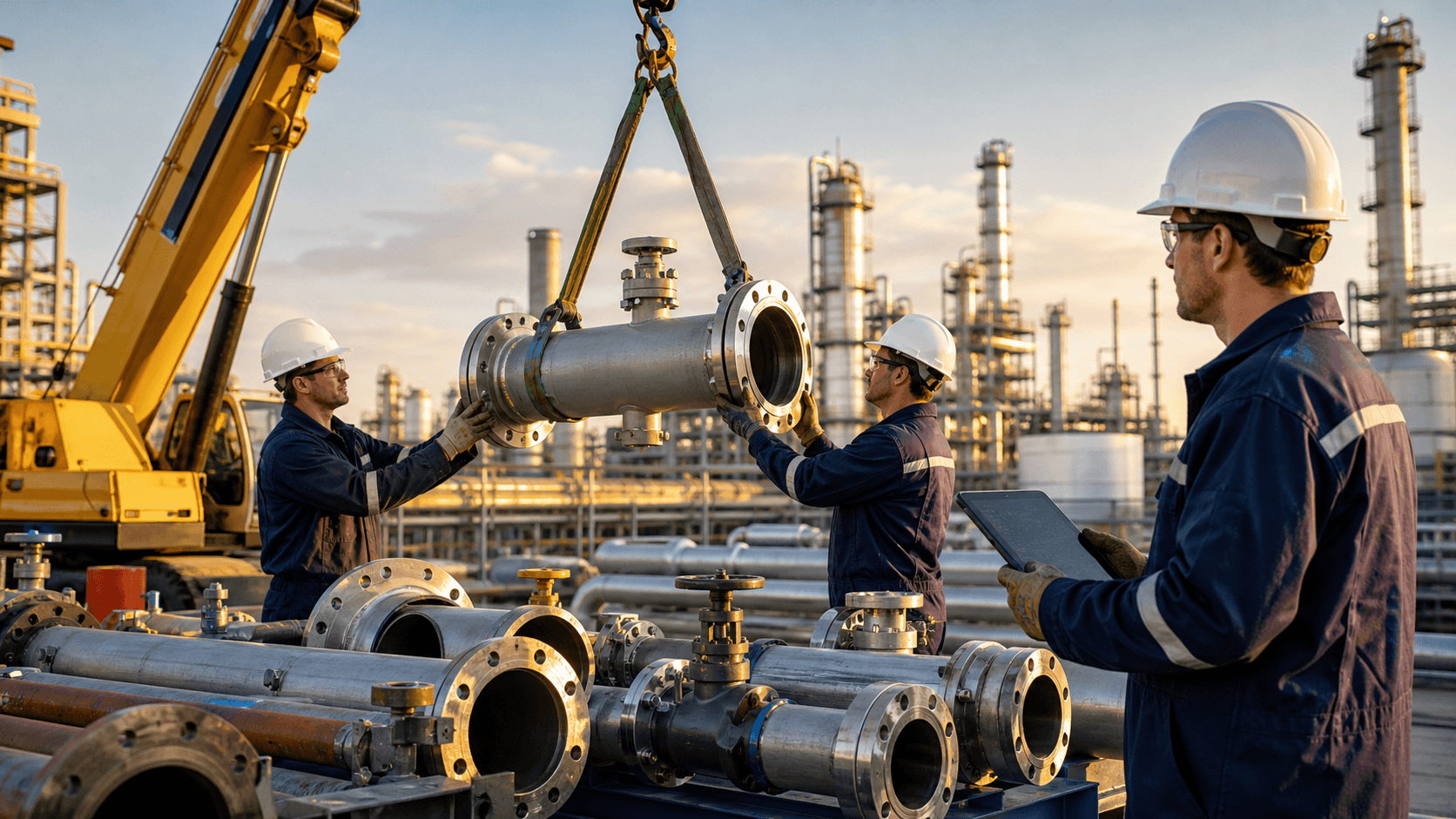
Even when the right alloy is chosen, how the spool is built and installed matters a lot. Poor fit-up and alignment create high residual stress in the system before it ever sees pressure or heat. When flanges are forced together or supports pinch the pipe, that stored stress gets added to thermal movement during summer cycling.
Common fabrication and fit-up problems include:
- Misaligned flanges that need to be pulled together with bolts
- Tight supports that do not let the pipe slide as it expands
- Branch connections with sharp transitions and no smooth flow path
Spools built nicely in the shop can get damaged on the way to the field. Rough rigging, dropped pieces, or dragging stainless across carbon steel can all leave hidden cracks or contamination. Then, during rushed tie-ins, welders may have limited access, bad angles, or poor purge setups. The weld might look fine from the outside, but inside there could be:
- Undercut that thins the wall at the weld toe
- Porosity from moisture or surface contamination
- Lack of fusion and sugaring at the root
Those small flaws turn into leak paths once the line heats up, vibrates, and sees real process conditions.
Installation, Support, Insulation, and Maintenance Gaps
Even perfect spools will struggle if the support and insulation design in the field is off. Pipe supports need to match real pipe loads, not just ideal drawings. If spacing is too wide, the pipe sags. If spring supports are not set correctly, loads shift to nozzles and welds instead.
Some frequent support and insulation issues we see are:
- No guides or stops where thermal movement needs to be controlled
- Rigid anchors installed too close to rotating equipment
- Expansion loops or joints left out to "save time"
Insulation is its own trap for stainless in Houston. Water finds its way in through small gaps, then, has a hard time draining or drying in our humid air. When insulation holds moisture against stainless, under-insulation corrosion can show up much faster than most people expect, especially if cladding material is not well matched to the environment.
On the maintenance side, many plants put heavy trust in the hydrotest and first startup checks, but skip deeper follow-ups. Over time, chloride stress corrosion cracking, fatigue, and vibration damage build up quietly in:
- High-temperature lines with repeated heat cycles
- Lines with mixed-phase flow, hammer, or pump vibration
- High-chloride services like some water, brine, or process streams
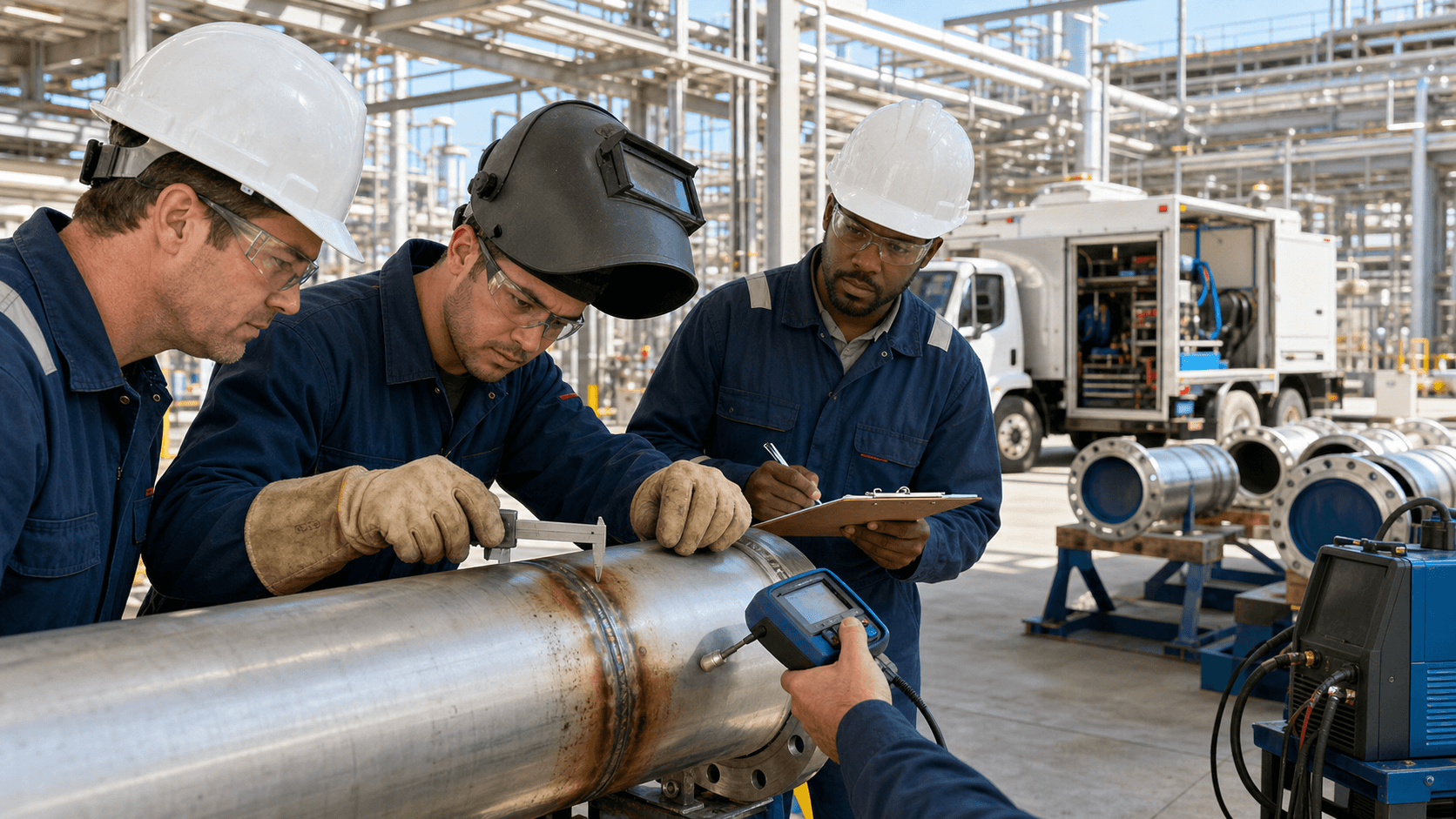
If critical stainless steel pipe spooling does not get regular NDE, such as dye penetrant, radiography, or UT on risk areas, problems can grow unseen. Weak documentation and loose change control make this worse, since it becomes hard to trace which alloy, WPS, or spool drawing was used. That is when the same runs fail again and again without a clear fix.
How Mobile Welding Pros Help Stainless Spools Last Longer
This is where a certified mobile welding and metal fabrication contractor can really change the story for stainless pipe spools. At Weldit, we work across Greater Houston and other Texas metros, so we know the local plant conditions these systems face.
When we come on site, we can:
- Walk existing stainless lines and supports to spot high-risk areas
- Verify materials with PMI so alloys match the service they see
- Review welds, hangers, and insulation details against real pipe movement
From there, we help plant teams choose better long-term options, not just patch jobs. That can mean:
- On-site spool repairs that actually address root causes, not just the leak point
- Code-compliant replacement spools with proper alloys and filler metals
- Support and insulation improvements designed for Gulf Coast heat and humidity
During peak summer production, fast emergency response can keep a problem from turning into a full shutdown. During planned turnarounds, careful spool upgrades and weld repairs can break the cycle of repeat failures. With the right stainless steel pipe spooling design, sound welding, and field practices that match Houston conditions, those lines can run longer, safer, and with far less drama for your operations team.
Get Started With Your Project Today
If you are planning a complex stainless steel pipe spooling project, Weldit is ready to help you move from concept to completion with precision and reliability. We work closely with you to understand your specifications, schedule, and quality requirements so your system fits and performs as intended. Reach out to our team with your drawings or scope and we will provide clear recommendations and a straightforward path forward. If you are ready to move ahead, simply contact us to discuss your project details.