Pipeline welding on a live Texas road is no place for guesswork. When crews are working inches from moving traffic during peak construction season, one small mistake can turn into a serious struck-by incident that stops work across the whole project.
This kind of work demands tight traffic control, clear spotter plans, and smart equipment staging. Keeping a pipeline welder and ground crew safe is not just about PPE, it is about how trucks move, how people communicate, and how the site is laid out from the first weld to the last.
Keep Crews and Drivers Safe on Live Texas Roads
On a crowded road or plant entrance, everyone is in a hurry. Drivers want to get past the cones. Crews want to finish the tie-in and move to the next location. In that rush, it is easy for someone to step into the path of a backing truck or for a vehicle to clip a welding rig that sits a little too close to the lane.
Struck-by incidents on pipeline welding jobs can involve:
- Passing vehicles entering the work zone
- Backing equipment like side-booms, excavators, and trucks
- Swinging loads from cranes or forklifts
- Flying materials from grinding, cutting, or dropped pipe
One incident can shut a site down, bring OSHA out, damage trust with the owner, and throw a schedule off for days. Pipelines, facility tie-ins, and municipal work are often on tight timelines, so safety planning has to be part of the work, not an afterthought.
We work as a certified mobile welding and fabrication partner on industrial, commercial, and municipal projects across major Texas metros. Our focus is safe, code-compliant structural steel, piping, and custom metal work. In this article, we will walk through traffic control strategies, spotter and communication plans, and equipment staging steps that help pipeline welder crews work safer with general contractors and other subs.
Understanding Struck-by Risks on Pipeline Jobsites
Pipeline projects bring a constant flow of heavy equipment in and out of the weld zone. Struck-by risks show up in patterns that repeat on almost every job.
Common scenarios include:
- Dump trucks or water trucks backing through the weld area
- Side-boom tractors tracking along the right-of-way as welders work on stringing or lowering-in
- Excavators swinging buckets or pipe over worker paths
- Forklifts delivering fittings or structural steel near hot work
- Delivery vehicles weaving through cones to reach a gate or laydown yard
In tight urban Texas corridors, welders might be working next to busy intersections or frontage roads, inches from high-speed traffic. On rural right-of-way work, the danger can be long, straight county roads where drivers get distracted and drift into the work zone.
Seasonal and environmental factors add to the risk. In late spring, days are longer, which often means longer shifts and more fatigue. Heat, direct sun, and humidity can slow reaction times. Afternoon storms can cut visibility, make pavement slick, and hide cones and workers from drivers for a few seconds, which is all it takes.
OSHA expects employers to control struck-by hazards and to plan work zones, traffic flow, and equipment movement. Owners and general contractors often add their own requirements for traffic control, flaggers, spotters, and hot work. For mobile welding operations, this applies to:
- Moving rigs and trailers on and off the road
- Setting up welding and cutting areas
- Handling pipe and steel with equipment or cranes
- Relocating equipment as the weld front moves
Traffic Control Plans That Protect Welding Crews
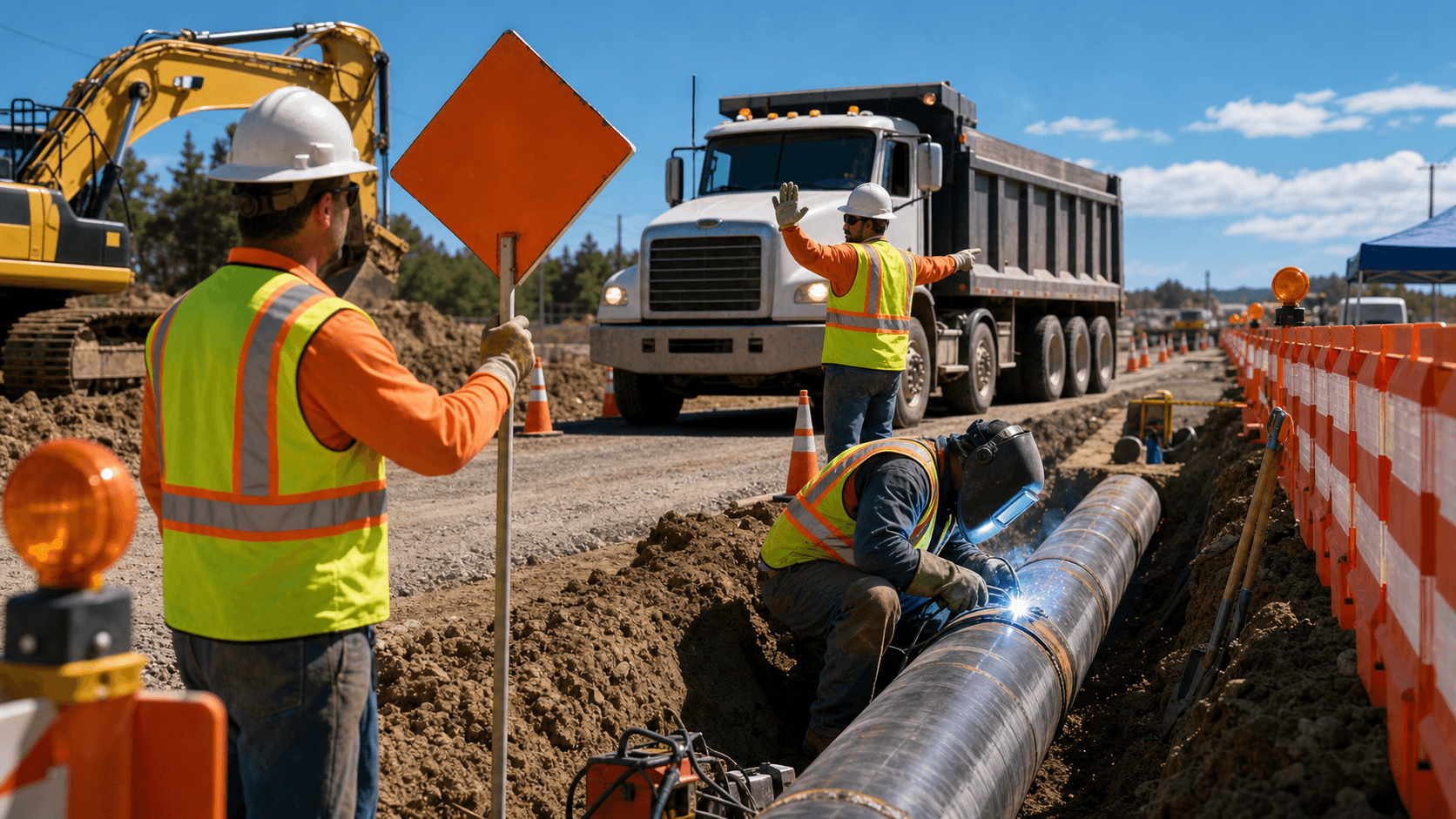
Strong traffic control starts before any rig pulls onto the shoulder. Pipeline welding crews should be part of early talks with traffic control vendors, the general contractor, and local agencies. Together, the team can decide where lanes close, where flaggers stand, and how detours work so that welding zones stay protected.
Key elements of a solid traffic plan include:
- Advance warning signs far enough upstream for drivers to react
- Speed reduction zones leading into the work area
- Physical barriers like drums, cones, or barricades between traffic and workers
- Crash cushions or shadow vehicles to shield the crew from errant cars
- Clear entry and exit points for construction traffic
- Marked pedestrian and equipment crossings
No two Texas jobsites are the same. Downtown streets have tight spaces and more pedestrians. Frontage roads and highways bring higher speeds and more aggressive lane changes. Rural county roads may have low volume but poor shoulders and less lighting. Night work calls for brighter lighting, more reflective gear, and careful attention to glare and shadows.
As conditions change during the day, the plan may need quick adjustments, such as:
- Shifting cones or signs as the weld front moves
- Adding a flagger when traffic backs up around a plant gate
- Extending taper lengths when drivers are not slowing down
Spotter and Communication Strategies That Prevent Blind Spots
A good spotter is like an extra set of eyes for everyone in the weld zone. Spotters help keep a pipeline welder, helpers, and operators out of the line of fire when trucks back up, loads swing, or pipe is set into the ditch.
A spotter's main duties are to:
- Watch for workers in blind spots
- Guide backing trucks and equipment
- Keep people clear of suspended loads
- Call for a stop when conditions are not safe
Communication has to be simple and consistent. That usually includes:
- Standard hand signals that everyone on site understands
- Radios with clear channels for operators, spotters, and supervisors
- High-visibility PPE so spotters stand out in crowded areas
- Pre-shift briefings where the team reviews traffic flow, blind spots, and emergency steps
Spotters need to be competent and focused. They should not be loaded with other work that pulls their attention away. As the site gets more crowded during the day, field leaders should be trained to recognize when one spotter is not enough and add more spotters or flaggers around tight corners, plant entrances, or busy laydown yards.
Smart Equipment Staging to Reduce Struck-by Hazards
Even the best traffic control plan can fail if the site layout forces people to walk through equipment paths. Smart staging keeps a pipeline welder crew productive and out of harm's way.
Basic staging layout ideas include:
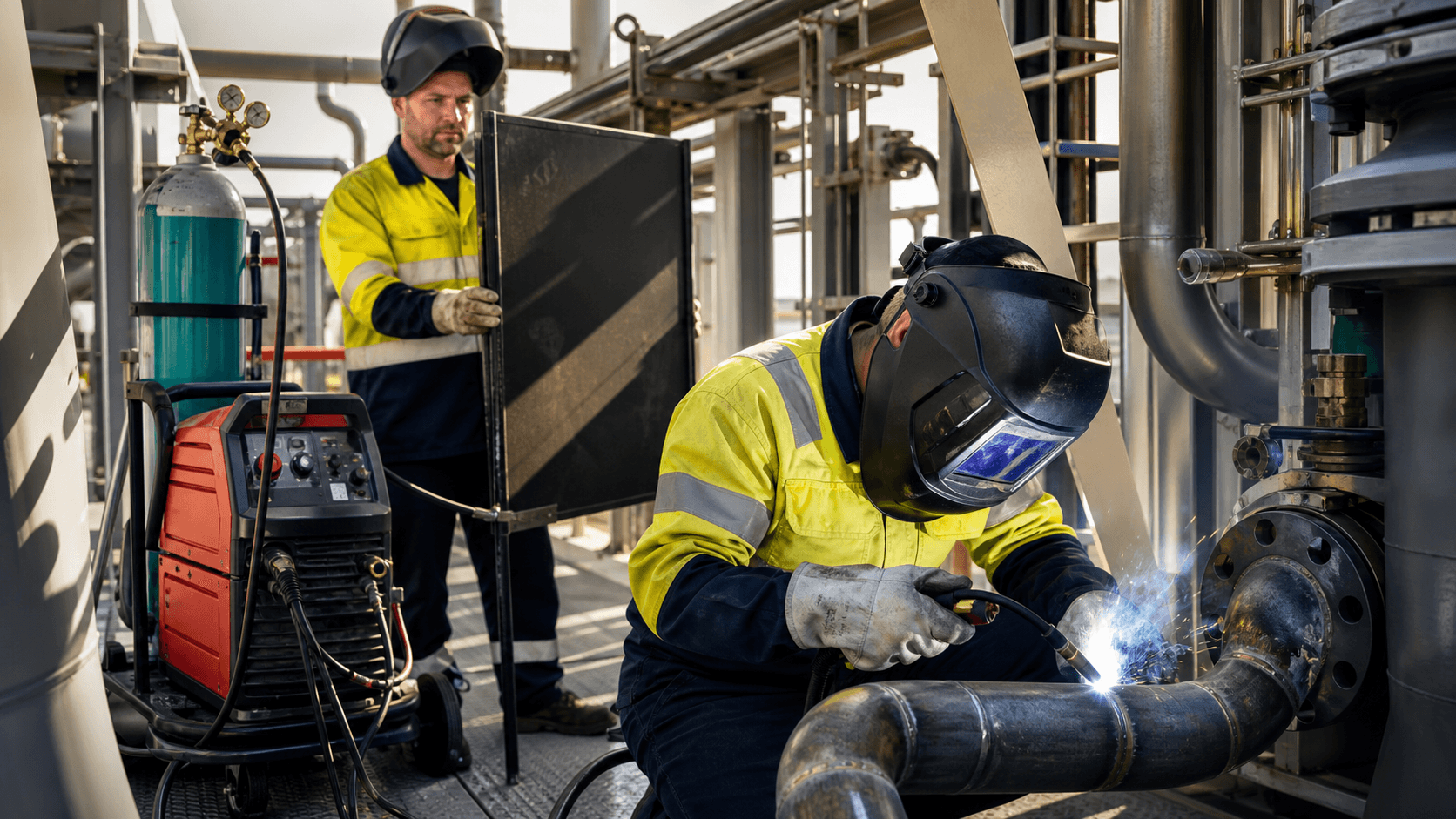
- Placing welding rigs and generators where they are protected from traffic but still close to the work
- Keeping gas cylinders, leads, and hoses tidy to avoid trip hazards and last-second moves
- Setting pipe racks and laydown areas so equipment can load and unload without crossing pedestrian paths
Think about how people, pipe, and vehicles move:
- One-way travel paths for trucks and equipment when possible
- Dedicated loading and unloading zones away from hot work and foot traffic
- Clear pedestrian walkways that keep welders and helpers out of vehicle routes
- Marked no-park areas so emergency access stays open
On an industrial site, there may be underground utilities, overhead racks, and existing structures that limit where you can place welding rigs and pipe. On commercial or municipal work, sidewalks, driveways, and tight corners can funnel both public traffic and jobsite vehicles into the same space. Pretask planning and toolbox talks tied to a daily staging map help everyone know where they can move and where they cannot.
How Weldit Builds Safety Into Every Pipeline Weld
As a certified mobile welding and fabrication company serving major Texas metros, we build safety into our work from the start. Our teams join pre-construction meetings and job hazard reviews so traffic control, access routes, and staging fit the welding scope from day one. We coordinate with traffic control providers and civil crews so our rigs, laydown areas, and weld points support a safer, smoother site.
We focus on code-compliant structural steel and piping, which reduces rework and cuts down on unplanned moves near traffic and heavy equipment. Less rework means less time exposed to backing trucks, side-booms, and busy roads. Our mobile units are set up to support clear staging, strong communication, and controlled hot work, whether the project is industrial, commercial, or municipal.
Keep Your Texas Pipeline Projects Moving Safely This Season
If your next project calls for a certified pipeline welder who treats traffic control, spotter plans, and equipment staging as non-negotiable, Weldit is ready to help. We bring mobile rigs, code-compliant procedures, and clear communication to busy Texas job sites so work can continue without unnecessary shutdowns from struck-by incidents. Share your scope, schedule, and safety requirements and we will build a welding plan that fits your operations. To schedule service or request a bid, contact us today.