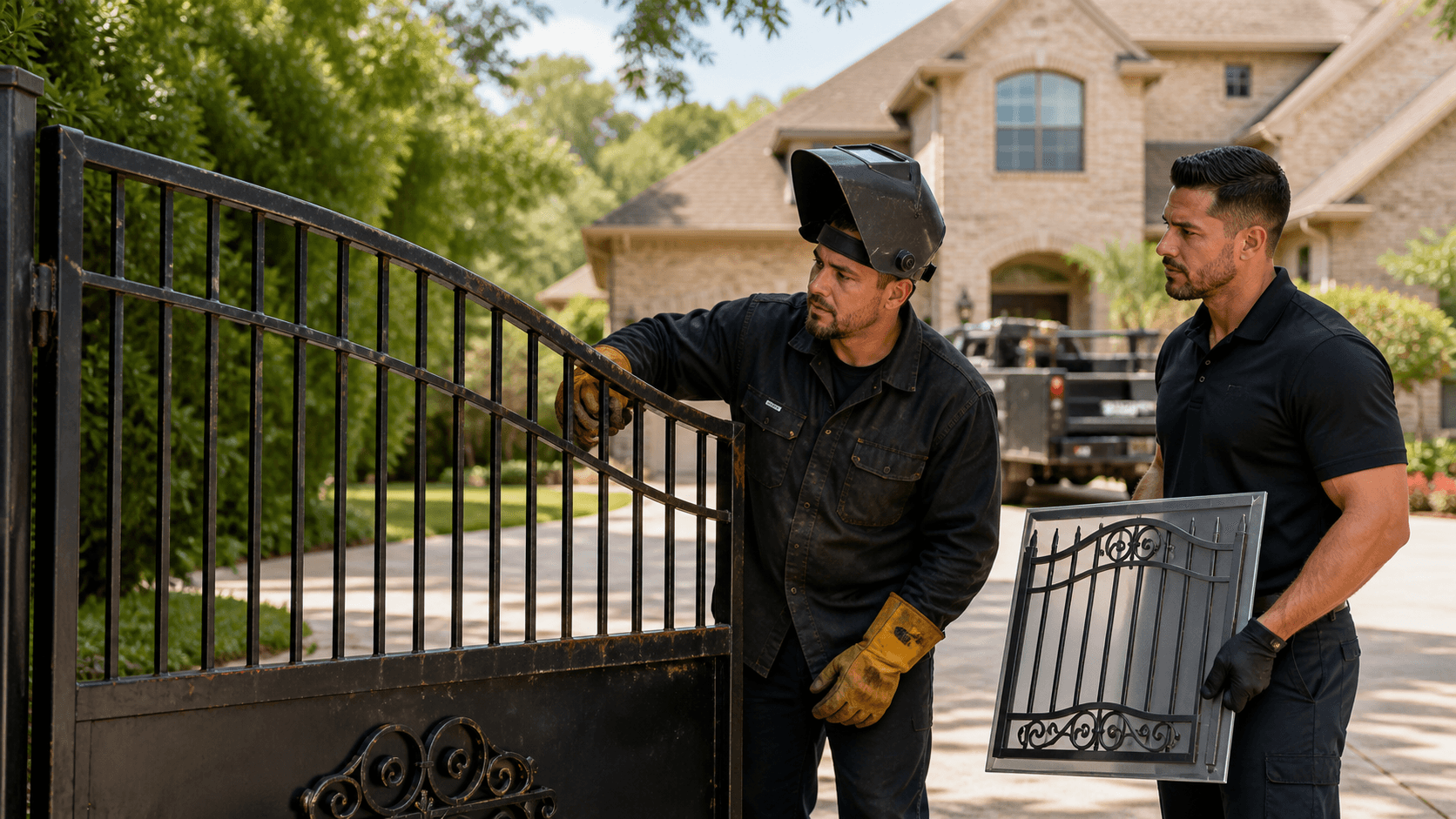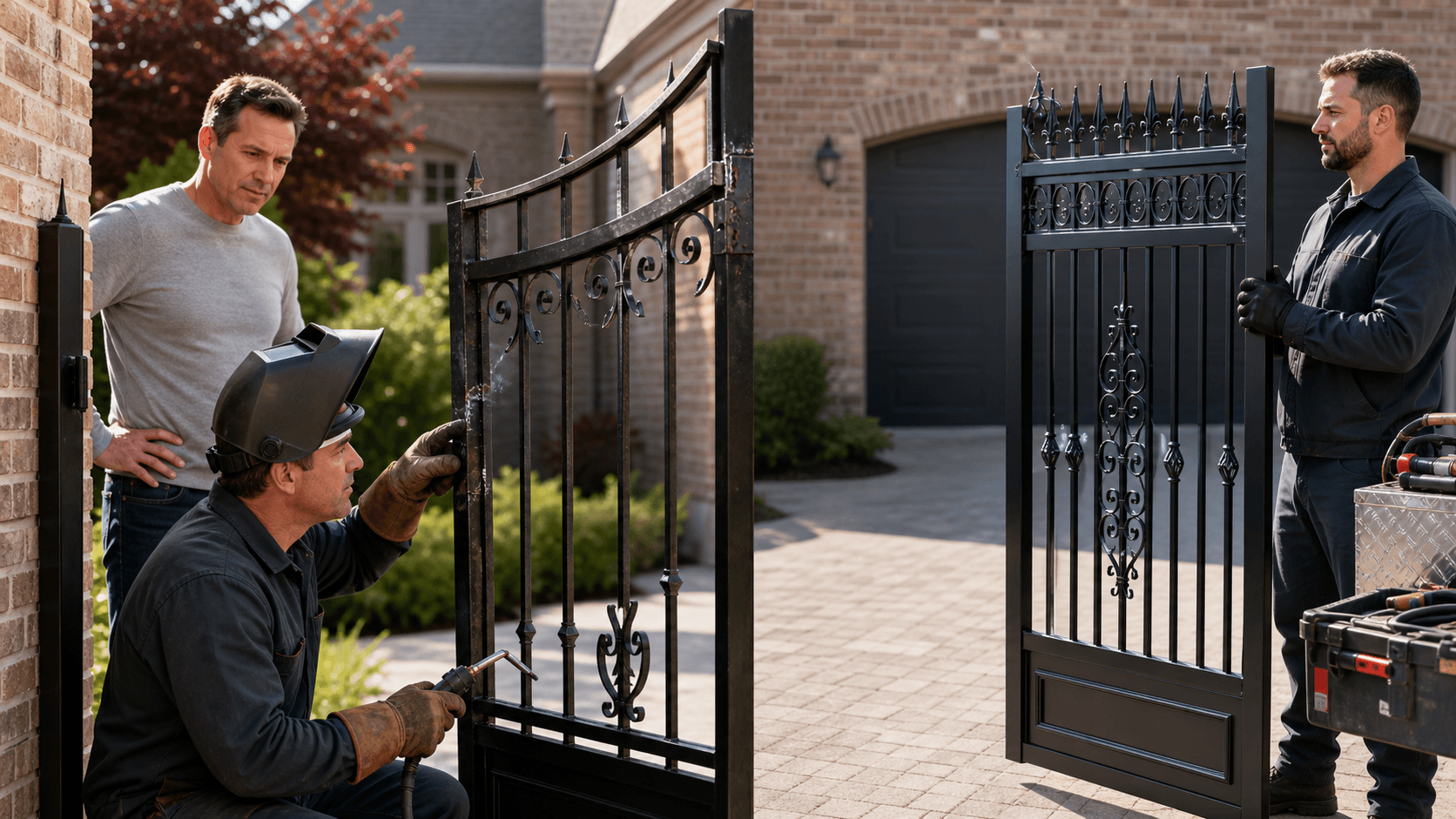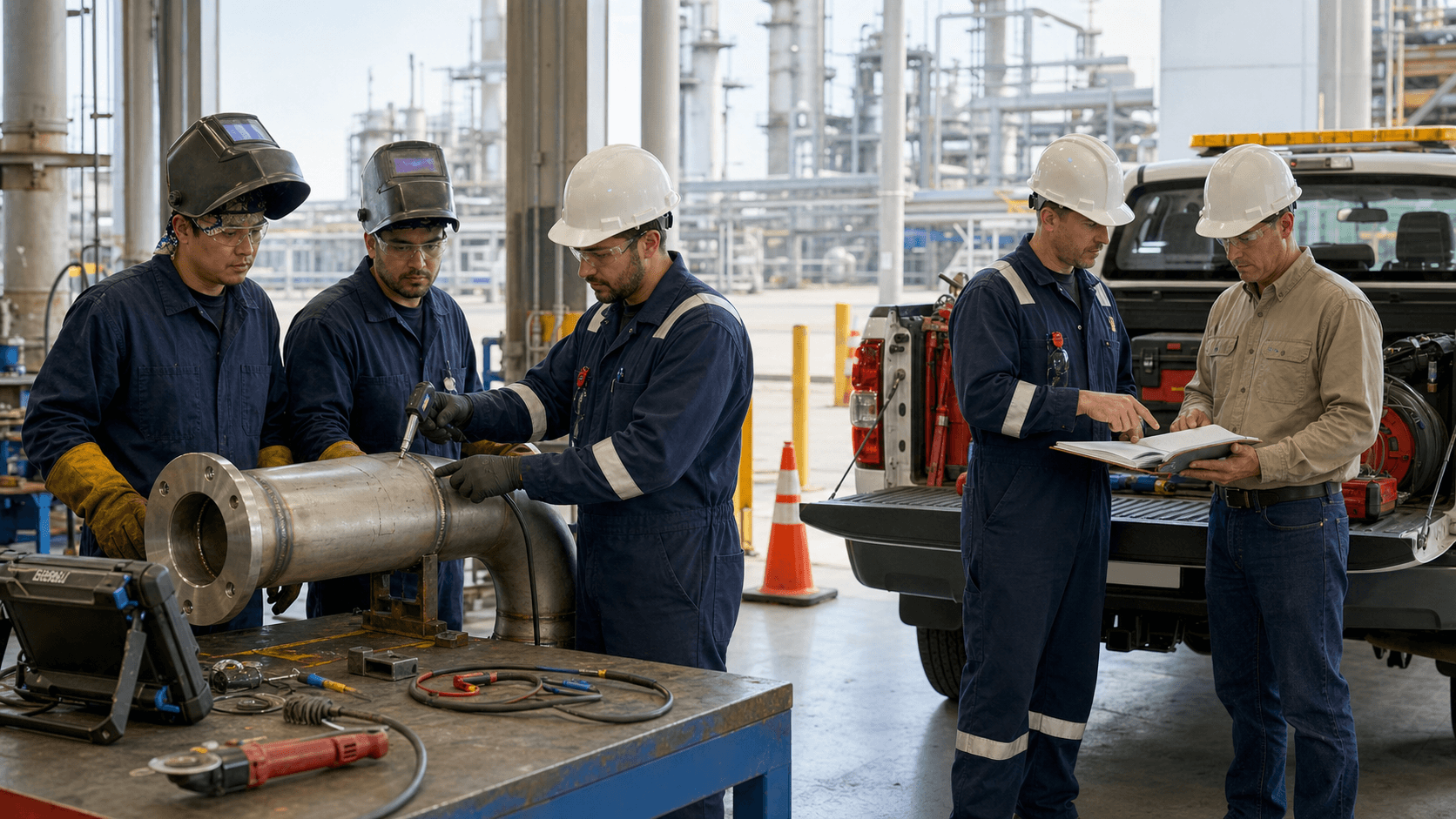
Unplanned weld repairs at a Houston plant are never calm or convenient. A line leaks, a support fails, or a summer storm takes out a section of pipe rack, and the clock starts ticking on production loss and safety risk. That is why having an emergency welder RFP ready, clear, and approved matters long before the first spark flies.
In this guide, we walk through a practical RFP template you can tune for your own facility. We focus on scope, ASME and API expectations, response SLAs, NDE, documentation, and pricing questions that help you quickly separate qualified, code-focused mobile welders from everyone else when the pressure is on.
Build an Emergency Welder RFP That Houston Plants Can Trust
During peak summer production, small welding problems can grow fast. Storm damage, unplanned outages, and turnaround surprises all hit at the same time everyone else in Houston is calling for help too. When that happens, a loose, one-page request is not enough.
A structured emergency RFP helps your plant:
- Filter for code-aware vendors fast
- Set clear expectations around safety and access inside operating units
- Shorten the time from call-out to first safe arc
Instead of scrambling through old contacts, your team can work from a ready template that already matches your internal standards. The goal is simple: before the next emergency, build one RFP you can send to any emergency welder in Houston that lines up with ASME, API, and your own QA program.
Defining Scope for High-Risk Emergency Welds
Scope is where many emergency jobs go sideways. The RFP should guide your team to define the work as clearly as possible, even if details will change once the damage is fully seen.
To keep vendors aligned, ask bidders to address the types of assets you expect to touch (pressure piping, tanks, structural steel, skids, or supports), the material grades and typical thickness ranges you commonly repair, and the welding processes allowed in your units (SMAW, GTAW, FCAW, or GMAW). It also helps to confirm the typical weld positions you anticipate, such as overhead, vertical, or tight-access locations, so the contractor plans appropriately for access constraints and fit-up realities.
Time is a big part of scope in emergency work, so spell out expectations around:
- Expected mobilization window after notice
- Typical duration for minor, moderate, and larger repairs
- Shift coverage needs, such as night work, weekends, and holiday coverage
- How added findings will be handled when the crew uncovers more damage
Because the "mobile" part of mobile welding can vary a lot, ask each vendor to explain what their setup looks like when it arrives at your gate. Specifically, you can request details on the number and type of rigs or trucks they dispatch, the power sources and generators they bring, and what positioners, rigging, and lifting support they can provide. You should also confirm what standard safety gear they carry for hot work and confined space entry, since emergency conditions often mean access and permitting are already complicated.
You can also include questions on how they work inside live units, handle plant permits, and coordinate with your operations and safety teams.
Verifying ASME and API Certifications That Actually Matter
When repairs touch pressure parts, tanks, or critical supports, code alignment is just as important as speed. Your RFP should call out the specific programs and documents you want to see.
Common items to request include:
- ASME Section IX welding procedures where applicable
- API 1104 for pipeline-related work if that fits your assets
- API 650 or API 653 alignment for aboveground storage tank repairs
- Any NBIC or state-required authorizations that apply to your facility type
Beyond listing standards, ask for clear proof that the vendor has qualified WPSs, PQRs, and WPQs that match your materials and thicknesses. The RFP can ask bidders to provide a sample procedure index for the alloys you use most, show example welder continuity records, and identify what ranges of thickness and position each procedure covers so you can quickly validate real coverage versus generic claims.
It is also helpful to ask about their quality system as a whole. For example, you can request:
- A copy or outline of their quality manual
- Details on third-party audits or reviews they have passed
- A summary of experience working in refineries, chemical plants, or midstream sites
That way, when you bring an emergency welder into your Houston facility, you are not starting from zero on QA and documentation expectations.
Setting Response SLAs, NDE Requirements, and Documentation
Response time terms need to be written down before the pressure is on. Your RFP can define service-level expectations such as:
- Maximum time to acknowledge an emergency call
- Target hours from notice to wheels rolling toward your site
- Arrival window at the plant gate under normal traffic
- Time to add additional welders or fitters if the scope grows during the job
For inspection, different damage types may need different NDE approaches. Instead of leaving this vague, specify which methods may apply at your plant, including:
- VT, PT, or MT for surface defects
- UT or RT for volumetric checks
- PMI or hardness testing where alloy or heat input control matters
Also clarify up front whether NDE will be supplied by your plant or by the vendor. If it is vendor-supplied, ask them to list:
- Their preferred NDE partners
- Typical turnaround for on-site readings and formal reports
On the documentation side, define what a complete closeout package looks like for you so the contractor plans for it from day one. Common deliverables include:
- Weld maps and repair sketches or updated isometrics
- Repair reports tied to line numbers or equipment IDs
- NDE records and acceptance criteria used
- WPS and WPQ traceability back to each weld
- As-built photos and final signoff sheets for QA, regulators, or insurers
When this is baked into the RFP, your maintenance and reliability teams get what they need without having to chase paperwork after the fact.
Pricing Structure Questions That Prevent Surprises
Even when you are not talking about exact fees, the structure of pricing matters for planning and approvals. Use your RFP to ask how vendors build their emergency invoices.
Helpful line-item topics include:
- Hourly rates by craft, such as welder, fitter, helper, and inspector
- Minimum billable hours per call-out
- Trip or truck charges and any per-diem expectations
- Stand-by rates when crews are on-site but waiting on permits or operations
- After-hours or holiday multipliers during heavy outage periods
To make comparisons cleaner, ask vendors to explain how they apply straight time, overtime, and double time, and where they draw the lines in real call-out conditions. You should also include questions around premium conditions such as:
- Confined space work
- Elevated work at height
- Critical path repairs that require rapid shift changes or extra supervision
One way to compare offers is to require an example scenario. For instance, you can ask each emergency welder in Houston to price a typical 12-hour call-out that includes:
- Travel
- Labor
- Basic consumables and minor materials
- NDE time and reporting
This does not lock anyone into a quote, but it does show the real shape of each provider's cost structure.
Turn This Template Into Your Plant's Emergency-Ready SOP
Once you build an RFP that covers scope, certifications, SLAs, NDE, documentation, and pricing structure, do not let it sit in a folder. Turn it into part of your plant's standard way of working during emergencies.
A strong next step is to:
- Review the template with maintenance and reliability
- Align it with safety and operations leaders
- Get procurement and legal comfortable with the wording
- Keep a short list of pre-vetted vendors who have already responded
Here at Weldit, we see how much smoother emergency work goes when facilities treat this as an ongoing process instead of a last-minute scramble. When your teams, your paperwork, and your partners are ready before the next outage or storm season, you can move from panic-driven calls to controlled, code-focused repairs that protect both people and production.
Secure Qualified Emergency Welding Support For Your Next RFP
When an unplanned outage hits, you need an emergency welder in Houston who already understands ASME/API expectations, plant safety culture, and the documentation your RFP requires. At Weldit, we align our mobile crews, procedures, and NDE partners with your response SLAs so you can keep production on track and close out work cleanly. If you are ready to tighten up your template and pre-qualify a proven welding partner, reach out through our contact us page and we will respond promptly with scope, certifications, and pricing details tailored to your facility.