Reworking pipe spools in the field hurts schedules, budgets, and morale. In big Houston projects, one bad fit at a tie-in can stall cranes, crews, and permits while everyone waits on a fix. The fastest way to cut that pain is not more overtime in the field; it is tightening the feedback loop between the field and the shop before the spool ever leaves the rack.
We want to walk through a simple idea: when field conditions, shop work, and as-built records talk to each other in real time, pipe spooling in Houston, TX gets a lot cleaner. With clear fit-up reports, solid dimensional checks, and current as-built updates, you can catch problems early, protect critical path work, and keep turnarounds from blowing up.
Cutting Pipe Spool Rework Before It Hits Your Houston Site
Houston industrial, refinery, and midstream sites are busy even on a normal day. During a summer outage, they get even tighter. When a pipe spool does not fit, everything around it feels the hit.
Rework in the field usually means:
- Extra crane time and rigging
- Extra hot work permits and fire watch
- Extra safety exposure for everyone nearby
- Extra pressure on already tight shutdown windows
A better way is to build a disciplined field-to-shop feedback loop. That loop starts with real dimensions from the field, moves through controlled fabrication in the shop, and ends with clean fit-up reports and as-built updates back to engineering. When we support projects around Houston and other Texas metros, our goal is to bring shop-level quality control into the field so design, fabrication, and installation are working off the same reality, not three different versions of it.
Where Pipe Spool Rework Really Comes From
Rework is not random. It usually comes from the same few sources over and over again. When teams see these patterns, they can plan around them and reduce surprises.
Some common causes are:
- Inaccurate or old field dimensions used for new spools
- Design changes that do not reach the shop in time
- Mill tolerances, weld shrinkage, and heat movement that no one allowed for
- Rushed fabrication when summer outage windows start slipping
Houston plants add their own twists. Many facilities are congested, with layers of legacy piping and undocumented past repairs. High humidity and heat can make fit-up harder, especially when gaskets, bolts, and tools are pushed to their limits during long shifts. On large energy and chemical sites, multiple contractors may be working in the same area, which raises the chance of clashes with supports, cable trays, or nearby lines.
The part that often gets missed is the hidden cost. One misfit spool can:
- Push a crane schedule back for hours
- Hold up the next crew in line, like insulation or paint
- Force extra hot taps or temporary supports
- Add risk to critical path tie-ins and shutdown milestones
Stopping those hits means tracing each problem back to its source and closing the loop between field and shop.
Building a Field-First Feedback Loop That Fabricators Trust
A strong feedback loop starts in the field, long before the first pipe is cut. The goal is simple: give the shop clear, repeatable, and verified data they can trust.
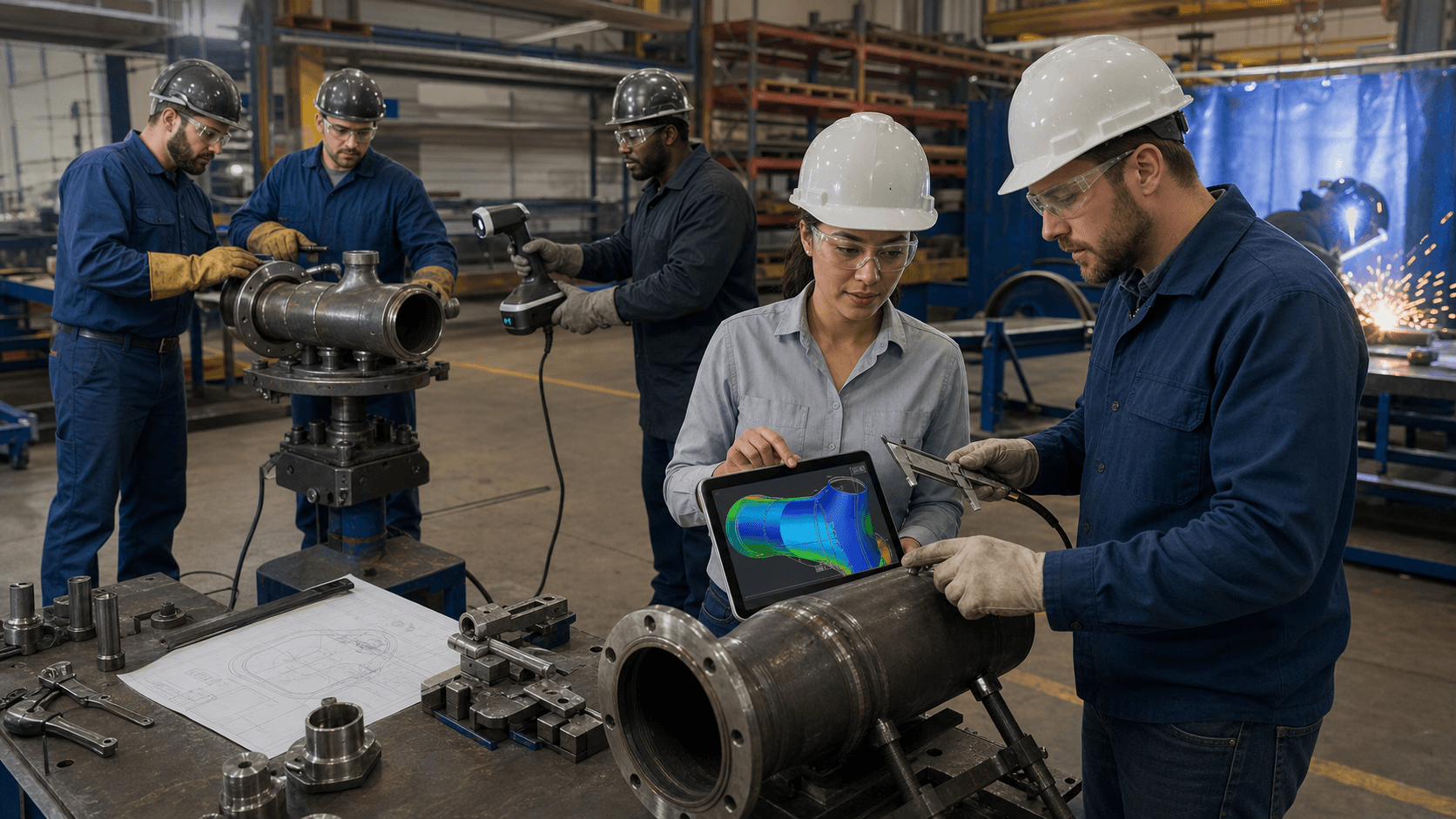
Good dimensional capture usually includes:
- Laser measurements of center-to-center distances
- Flange details like bolt pattern, rotation, and face orientation
- Elevations tied to known benchmarks, not guesswork
- Clear notes on existing field welds and supports
Those measurements should live in standardized digital forms, not on random notepads. When installers start fit-up, they then become another key part of the loop. Fit-up reports help capture reality at the last possible moment before a problem turns into a rework headache.
Strong fit-up reports cover things like:
- Gaps that are too large or too tight
- Flange misalignment or face rotation that is off
- Clashes with nearby steel, cable tray, or other lines
- Support locations that do not match drawings
Photos, clear naming conventions, and good revision control tie it all together. Instead of sending blurry texts or unclear comments, the field sends structured data back to the shop, where it can be turned into real corrections, not guesswork.
Turning Field Checks Into Shop-Ready Fabrication Data
Field measurements and fit-up notes only help if they feed directly into fabrication. That is where updated isometrics and spool sheets come in. As-built dimensions from the field get marked onto drawings so everyone is working from one single source of truth for pipe spooling in Houston, TX.
From there, QA and QC can do their part. Things like:
- Weld mapping matched to real field weld locations
- Heat numbers tracked to actual pieces in each spool
- Hold points tied to new dimensions and revised drawings
This matters for code-compliant work that lines up with ASME, API, and site standards. A spool can be perfect on paper and still fail in the rack if the data was wrong. To avoid that, the feedback loop has to move fast. Mobile welding crews in the field and teams in the shop should share digital tracking so a dimensional correction can become a fabrication work order in hours instead of days.
As-Built Updates That Protect Your Next Turnaround
The loop is not closed until the final installation is captured and documented. That is where as-built updates earn their keep. When every spool, valve, and support is recorded the way it was actually installed, the next outage or capital project starts from reality instead of guesswork.
Strong as-builts usually include:
- Updated P&IDs with true valve and line details
- Isometrics that show final spool lengths and field welds
- 3D models that reflect clashes solved during construction
- Notes on any engineering-approved deviations from original design
For owners and contractors with multiple facilities around Houston and other Texas metros, keeping this practice consistent across sites brings even more value. The same level of documentation on each site means the next spool order, no matter where it lands, has a lower chance of surprise rework.
Weldit focuses on tying all these pieces together, from mobile welding in the field to fabrication support and updates that help your future projects.
Using Houston's Summer Window to Fix Your Spool Process
Summer shutdowns and June turnarounds are stressful, but they also offer a clear window to improve how work flows between field and shop. Crews are already mobilized, access is open, and systems are offline. That is the perfect time to tighten your process, not just fight fires.
A simple way to start is to pick one unit or system and run a focused pilot:
- Use standardized digital forms for all field measurements
- Require fit-up reports with photos for each key spool
- Track drawing revisions and spool IDs in one shared log
- Review what worked and what did not right after startup
From there, you can roll the best parts into your standard work and apply them across other units and facilities. With a clear field-to-shop feedback loop, better dimensional control, and honest as-built updates, rework on pipe spooling in Houston, TX does not have to be a given every summer. It can become the rare exception instead of the rule.
Reduce Pipe Spool Rework On Your Next Houston Project
If you are ready to tighten your field-to-shop feedback loop and cut rework on critical piping, our team at Weldit can help you put a proven process in place. Learn how our QA reporting, dimensional checks, and as-built updates support reliable pipe spooling in Houston, TX for fast-moving industrial and commercial schedules. We can review your current workflow, suggest practical improvements, and align our mobile crews with your shop and GC requirements. To schedule a walkthrough or request a quote, simply contact us and we will follow up quickly.