Turnaround hot-work is some of the toughest welding you will see in the field. You have packed schedules, tight work areas, and a lot of energy sources in one place. A missed step on hot-work permitting or fire watch can shut down a job, damage equipment, or injure people. A clear, repeatable checklist helps keep everyone safe and keeps the work moving.
In the Greater Houston area, summer turnarounds stack crews on top of each other in refineries, plants, terminals, and large commercial sites. Welding, cutting, and grinding are happening next to live systems and sensitive equipment. In this guide, we walk through a simple, field-ready process you can use for hot-work permits and fire watch, so welders and supervisors can get faster approvals with fewer surprises.
Safer Turnarounds Start with Better Hot-Work Planning
Turnaround hot-work is any welding, cutting, brazing, or grinding during a planned outage or major maintenance window. The risk is higher than normal because:
- More crews are working at once
- Areas are crowded with tools, gear, and materials
- Systems may be in unusual states, like partially isolated or vented
Good planning protects people, equipment, and the schedule. When the heat is up and the June turnaround window is tight, no one wants last-minute permit delays because information is missing.
A simple checklist gives everyone the same playbook. Welders know what to prep before asking for a permit. Site supervisors know what to check before they sign. Safety staff can see that the basics are covered without walking the crew through the same questions over and over.
Pre-Job Risk Scan Before You Request a Hot-Work Permit
Before anyone fills out a permit form, the crew should walk the job. This is where most problems can be caught early. During your walkdown, focus on:
- Verifying drawings, P&IDs, and actual field conditions match
- Confirming lines, tanks, and vessels are properly isolated as planned
- Spotting nearby ignition sources like heaters, motors, or live electrical
- Finding combustibles, old insulation, and hidden debris, especially in older facilities
Houston's heat and humidity make things tougher. Confined spaces and tight corners can trap hot air and fumes. When planning field welding in Houston, TX, think about:
- Ventilation and airflow, not just where to plug in the welder
- Gas monitoring where vapors may collect, like sumps and low spots
- PPE that breathes but still protects from sparks and UV
- How long people can safely stay in a space before rotating out
Before you request the permit, have your information ready:
- Scope: what exact work will be done
- Process: welding, cutting, grinding, gouging, or a mix
- Location: unit, level, and a clear description of the workface
- Materials: base metal, thickness, and any coatings or liners
- Duration: expected start, stop, and any breaks
Supervisors can standardize this by using the same pre-job scan checklist for every crew. When everyone answers the same questions the same way, permits move faster and confusion drops.
Step-by-step Hot-Work Permit Workflow on Houston Sites
Every site has its own rules, but most hot-work permit workflows follow a similar pattern. The key is knowing where your role starts and stops. Common roles include:
- The person requesting the permit, often the foreman or lead welder
- Safety staff, who review controls, testing, and fire protection
- Operations or an owner representative, who confirm isolation and process impact
Mobile welding crews should plug into the site's process without trying to shortcut it. The goal is to be ready so that when safety arrives, everything they expect to see is already in place.
Walk through the permit line by line and verify:
- Exact work location and equipment ID
- Lockout/tagout or other isolation is in place and documented
- Atmospheric testing is completed and within limits required by the site
- Fire protection measures are present and in service
- Time limits, including start, stop, and any extension rules
To keep permits valid:
- Renew or extend them before time runs out, not after
- Stop work and request a new permit if the scope or location changes
- Coordinate with other simultaneous operations, like cleaning, blasting, or loading
When everyone respects the permit as a live control, not a piece of paper, the job runs smoother and safer.
Fire Watch That Actually Works in the Real World
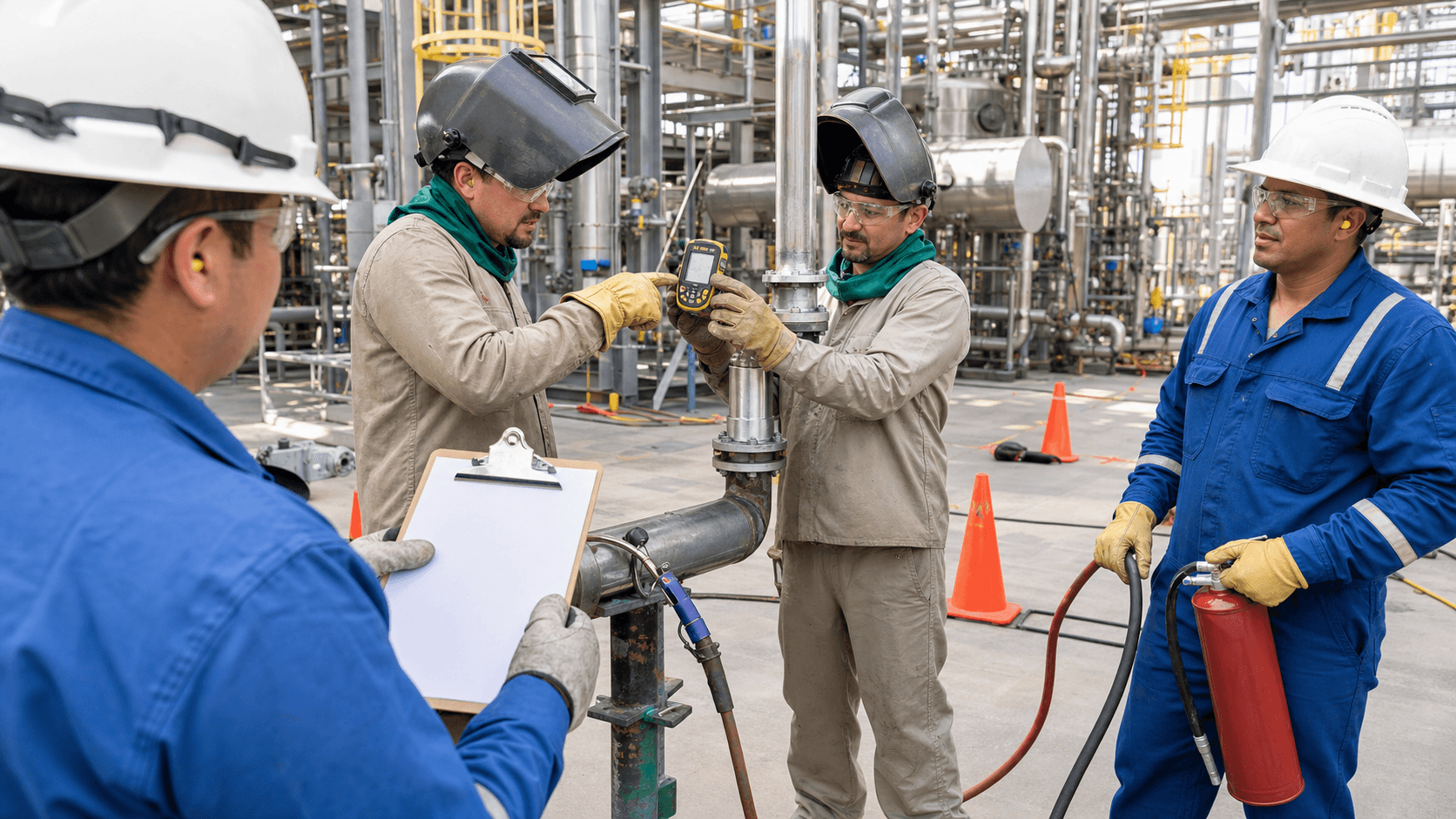
A true fire watch is not just a person standing nearby. It is a trained set of eyes focused only on sparks, slag, and smoke, with the authority to say stop. A good fire watch should:
- Know the work steps and where sparks may travel
- Understand how to use extinguishers and hose lines
- Be able to stop the work the moment something looks wrong
- Stay off their phone and avoid other tasks while on watch
Coverage and duration matter. In tight plant areas with multiple levels, fire watch should be able to see:
- Above the work, where sparks may jump decks or trays
- Below the work, where slag and hot metal can fall
- Adjacent spaces, cable trays, and penetrations where sparks can slip through
Many sites require fire watch to stay after hot work ends. Follow facility rules and NFPA guidance on how long watch must remain, and extend that time if conditions feel risky.
Set them up with the right tools:
- Properly sized fire extinguishers and, where allowed, a charged hose line
- Spark containment, such as fire blankets and pans
- Welding screens to protect other workers from arc flash and small fires from stray sparks
- Extra care for confined spaces and elevated work, where escape can be slower
Field Welding Controls in Houston's Harsh Summer Conditions
Houston summers are tough on people and gear. Welders and fire watch stand near hot arcs, bright sunlight, and reflective metal. Simple heat controls help:
- Hydration plans with frequent small drinks
- Work-rest cycles and shaded rest areas
- Checking leads, hoses, and gas cylinders that sit in direct sun
- Adjusting PPE layers so people stay protected without overheating
Air quality is another big piece. Tank farms, pipe racks, and tight steel can trap fumes. Add mechanical ventilation when natural airflow is not enough, and think about respiratory protection when fumes hang in place or coatings are being burned off.
For structural and pipeline work, the ignition and distortion risks are higher on live or recently isolated systems. Welders should:
- Confirm that lines and tanks are cooled, drained, and vented as required
- Use procedures that limit heat input where distortion could affect fit-up or alignment
- Adjust set-up for mobile rigs and shop-fabricated components that are being tied in onsite
Turning these controls into everyday habits keeps projects on track through the busiest summer work windows.
Turn Your Checklist Into Standard Practice on Every Job
A consistent hot-work and fire watch checklist does more than keep safety staff happy. It cuts down on near-misses, rework, and schedule creep by forcing everyone to slow down for a few key questions before striking an arc. When welders and supervisors follow the same steps every time, it becomes natural to spot what is missing.
Supervisors can turn the ideas here into a simple one-page field form or digital template. Use it during toolbox talks, share it during contractor onboarding, and keep it in pockets or on clipboards. When hot-work permitting and fire watch are treated as standard steps, not interruptions, field welding in Houston, TX, stays safer, smoother, and more predictable for everyone involved.
Keep Your Turnaround Hot-Work Safe, Compliant, and On Schedule
If you are planning turnaround work and need code-compliant hot-work support, our team at Weldit is ready to help you keep welding, cutting, and fire watch activities safe and on track. We provide certified onsite crews for field welding in Houston, TX, including structural, piping, and custom fabrication that align with your facility's permitting requirements. Tell us about your scope and schedule through our contact us page so we can help you build a practical, field-ready plan.