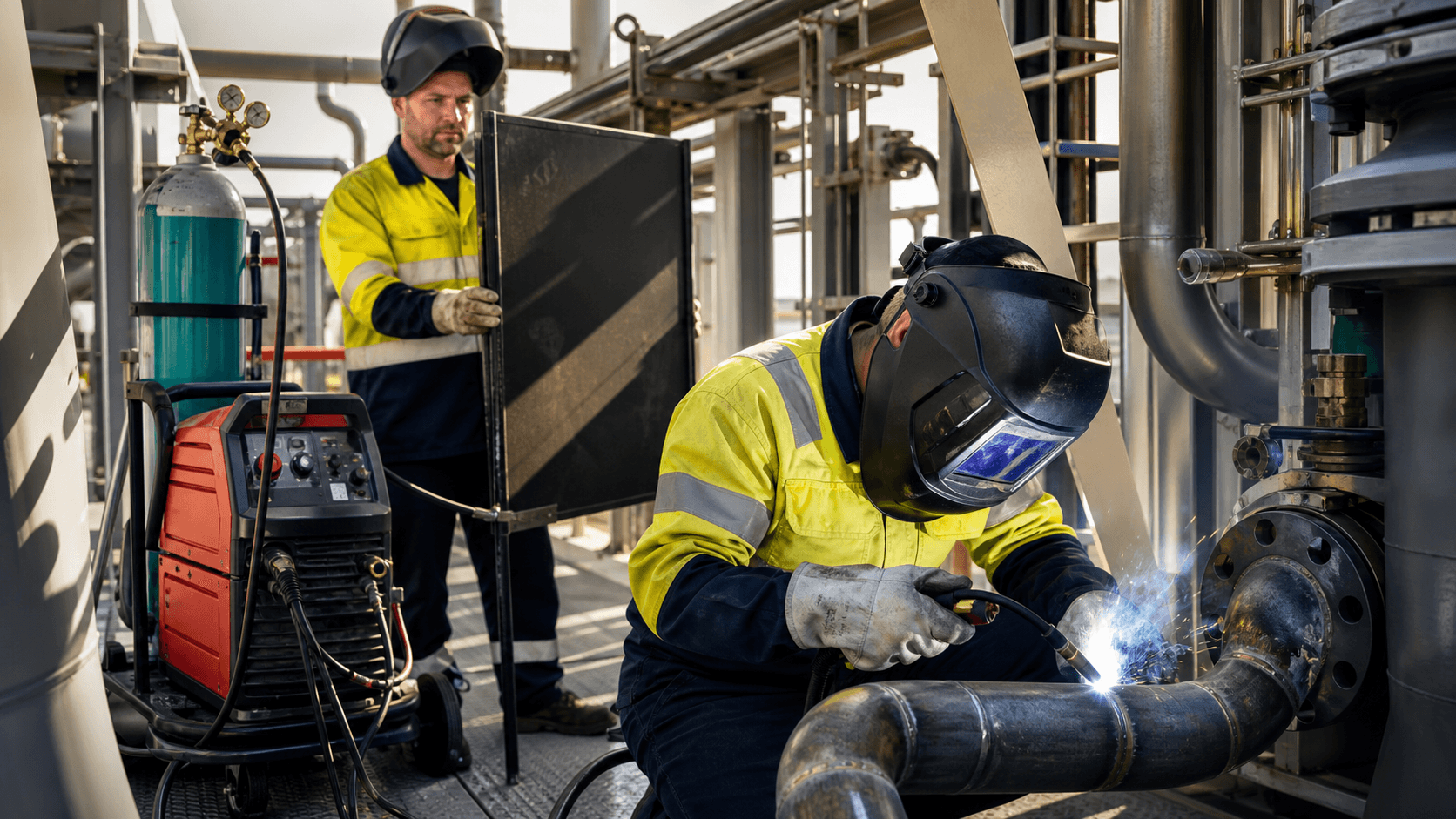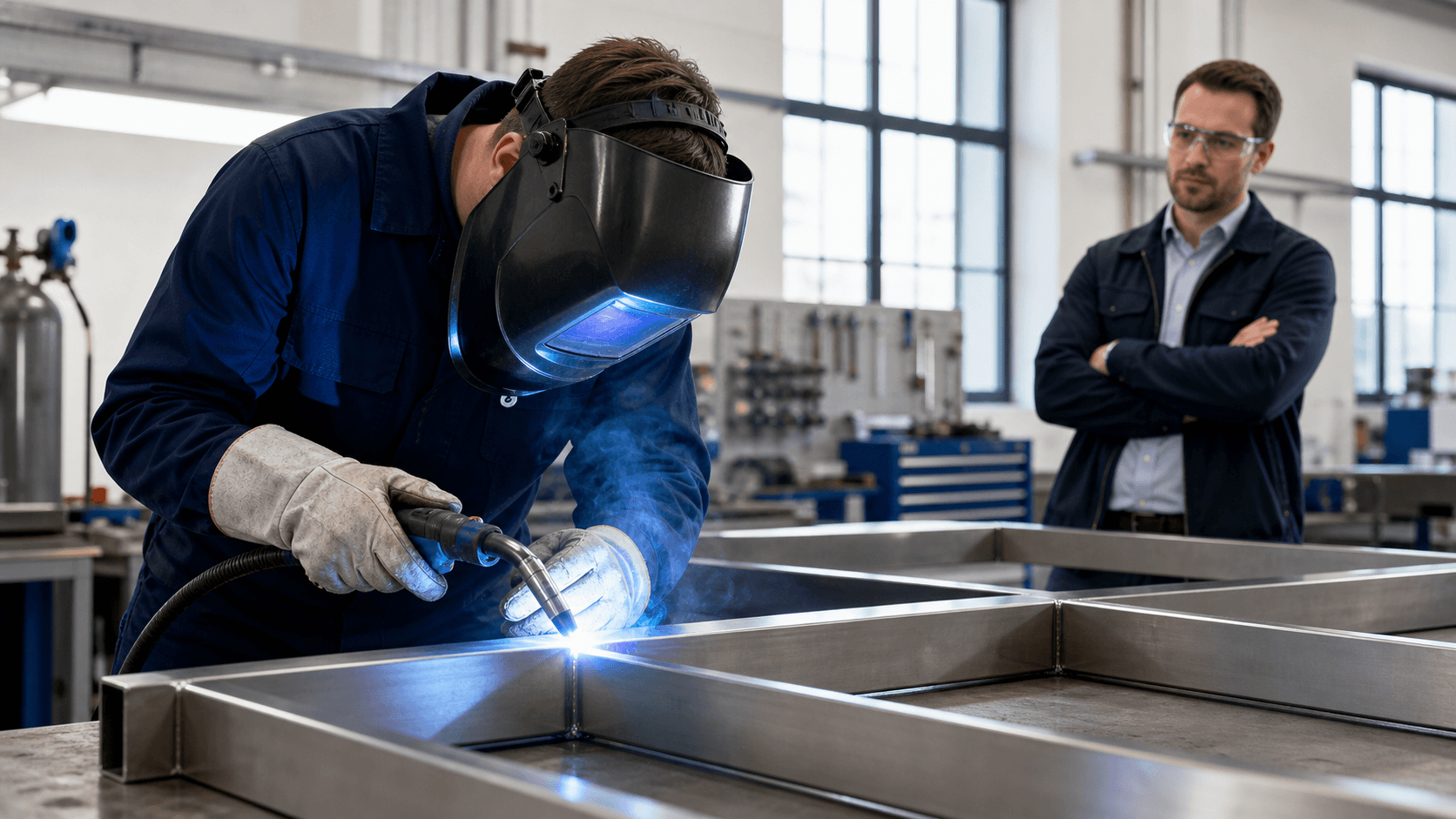
Houston facilities run hard, especially as spring pushes into peak production season. When a weld fails and you already have a long backlog, the next hour can decide whether you stay safe, stay online, and stay off the incident report list. Guessing on priorities or just fixing the loudest complaint is not a plan.
We see many plants, terminals, and distribution centers rely on whoever yells the loudest or whatever is closest to the shop. That might work on a slow week, but it falls apart when equipment is hot, lines are full, and the weld that breaks is holding product, people, or both. A simple welding repair triage system, built around safety risk, downtime impact, and code requirements, gives your team a clear playbook. Let us walk through a practical framework you can adapt before summer loads and storm season push your welds to their limits.
Stop Guessing with Welding Repairs
You have a cracked weld on a structural support, a leaking nozzle on a tank, and a broken handrail at a busy stair tower. Which one gets the crew first? Without a plan, you end up:
- Chasing the last radio call
- Letting real hazards sit too long
- Scrambling for certified help at the worst possible time
A better way is to run every welding repair through three filters:
- Safety risk to people and property
- Impact on downtime and operations
- AWS and ASME code requirements
Once you score each issue, you can decide which repairs must happen right now, which can wait for off-shift or weekend work, and when you need a certified mobile welding contractor to roll to your Houston site.
Start with Safety Risk First
Not every weld is created equal. Some are simply more safety-critical. These are usually found on:
- Structural supports and platforms
- Pipe racks and pipe supports
- Ladders, stairs, and handrails
- Tank nozzles and manways
- Process piping carrying flammable, toxic, or high-pressure media
- Pressure-retaining components like headers or certain fittings
A simple safety triage scale keeps everyone on the same page:
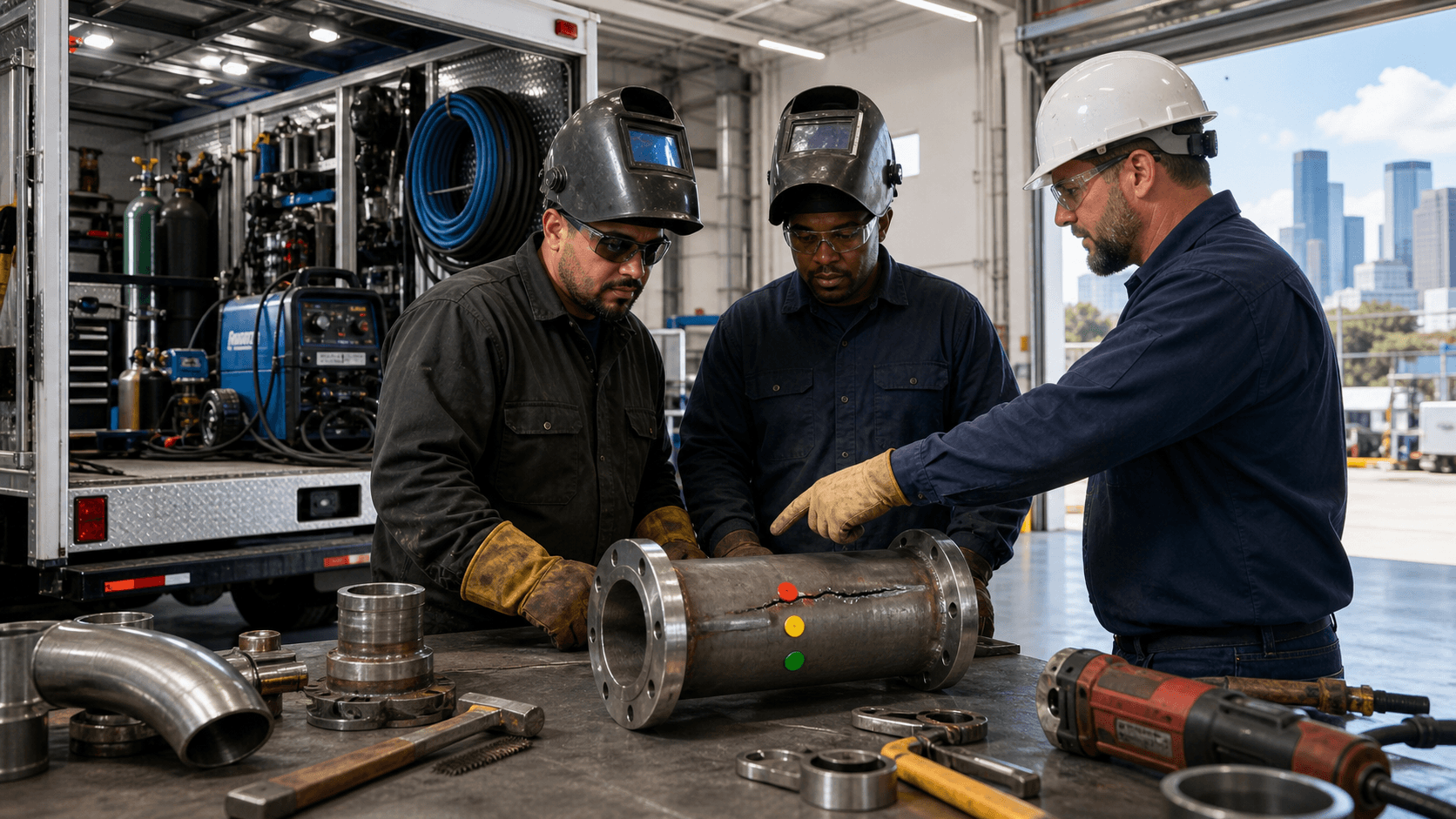
- Red (Immediate Hazard): Visible cracks, deformation, or leaks in structural or pressurized systems. Anything that affects egress, fall protection, or fire protection. These issues call for shutdown or controlled isolation. They often justify calling in 24/7 emergency welding support.
- Yellow (Elevated Risk): Corrosion, misalignment, or intermittent leaks that could get worse with heat, vibration, or storm conditions. These should get near-term repair and closer monitoring.
- Green (Low Risk): Cosmetic weld issues or non-structural attachments that do not affect integrity or safety. These can be bundled with other planned work.
Safety triage works best when it is written down. We always recommend:
- Clear photos of each defect
- Any NDT or inspection reports you have
- A simple risk log tied to work orders
That way, if leadership, auditors, or regulators ask why something waited a week, you have a record that shows your logic.
Measure Downtime Impact, Not Just What Looks Bad
A bent bracket on a remote support may look awful but have little effect on production. On the other hand, a small weld crack on a conveyor frame, pump base, or truck loading arm can stop product flow. When demand is high in late spring and summer, those small spots can shut down a big chunk of your schedule.
Tie each weld issue to how your facility runs. Ask:
- Does this weld touch a main production line?
- Can this equipment be safely bypassed?
- Will this cause manual workarounds or slower rates?
- Does this affect compliance equipment like flare systems or waste handling?
Use a simple downtime scoring system:
- High Impact: Stops a production unit, key packaging line, or a main logistics function. Each hour down has a clear cost.
- Medium Impact: Creates bottlenecks or manual workarounds, but the plant can still run, just not as well.
- Low Impact: Can be isolated or bypassed with no real effect on throughput.
Now match downtime impact with repair duration. Short, high-impact repairs should jump to the top of the list. That is where bringing in a mobile welding crew that can work nights or weekends can protect your peak weekday output.
Respect AWS and ASME Code Requirements
Some welds are not just important, they are regulated. These include items that fall under standards such as:
- AWS D1.1 for many structural welds
- ASME Section VIII for certain pressure vessels
- ASME B31.1 or B31.3 for many process piping systems
When repairs touch these assets, you may need:
- Written welding procedures
- Qualified welders with current records
- Inspection and sign-off before you return to service
These are not the repairs to patch with general maintenance welding. Doing that can lead to citations, insurance problems, or tough audit findings.
To keep this clear in your system, mark assets in your CMMS or work order process:
- Code Critical: Repairs must follow specific code requirements and inspection.
- Code Related: Connected or supporting code-governed equipment, where standards likely apply.
- Non-Code: General plant steel and non-regulated items.
During planned outages, give code-driven repairs early spots in the schedule. Inspectors and qualified contractors across Texas tend to book up fast as more facilities try to squeeze work into the same windows.
Build a Simple Welding Repair Triage Matrix
Now it is time to pull it together into one fast view. A three-axis scoring model lets supervisors see priorities at a glance:
- Safety: 1 to 3, from Green to Red
- Downtime: 1 to 3, from Low to High
- Code: 1 to 3, from Non-Code to Code Critical
Add the scores to get a single priority number. The higher the total, the faster that repair needs attention and often certified help. This is also a great way to sort what must be handled today, what can be done this week, and what can wait for a planned outage.
Houston has its own rhythm, so bend the matrix to fit local realities:
- Before summer peaks, raise scores for welds under high thermal expansion, high flow, or heavy traffic.
- During storm season, bump up anything tied to structural supports, fuel systems, emergency egress, and fire protection.
Share the scoring rules with your preferred welding partner so they can plan manpower, materials, and inspection support ahead of time rather than scrambling when your call comes in.
Turn Triage Into a Real-World Playbook
A triage system only works if your team can use it fast and under pressure. We suggest turning it into a simple playbook that includes:
- A short checklist for rating safety, downtime, and code status
- A habit of taking quick photos for every weld issue
- Standard language for work orders based on your scoring system
- A clear escalation path when an issue hits Red on safety or code
Set aside time before peak demand to:
- Audit your top weld-critical assets, like main pipe racks, tank farms, and key platforms
- Label which equipment is code-governed
- Assign triage roles across maintenance, production, and EHS so decisions stay consistent
As a certified mobile welding and fabrication contractor based in the Greater Houston area, we see how much stress a single weld failure can put on a facility when priorities are unclear. A simple, shared triage system helps your team protect people, protect uptime, and know when it is time to bring in outside help for industrial welding repairs in Houston and other Texas markets.
Prioritize Welding Repairs Before They Disrupt Your Houston Facility
If your triage review has revealed high-risk weld failures or aging structural connections, we are ready to step in and help you act before they impact safety or production. Our certified mobile crews provide 24/7 response for industrial welding repairs in Houston, aligned with your risk rankings, downtime windows, and AWS/ASME code requirements. Weldit can inspect, document, and repair your most urgent weld issues while planning scheduled work around your operating calendar. To schedule a site visit or request emergency support, contact us today.