Turn Weld Inspections Into Uptime Insurance
Weld inspections are really about one thing: keeping your plant running. When you treat welds like a reliability asset instead of a repair headache, you protect throughput, safety, and schedules at the same time. That is true whether you are running a plant in Houston, up the road in Dallas, or at another Texas facility.
Many teams still wait for "signs you need repairs." By the time a crack, leak, or sagging platform is obvious, you are already choosing between production and safety. A proactive weld inspection playbook flips that script. It uses code-informed checks to spot problems before they threaten your next run, outage, or audit.
At Weldit, our mobile welding and metal fabrication crews live in that space between shop-quality work and field reality. We work under AWS and ASME expectations, and we see what usually fails first. This guide shares how we think about where to look, what to measure, and how to time industrial welding repairs in Houston and across Texas so you stay ahead of trouble.
Why Houston Facilities Need a Proactive Weld Playbook
Houston plants see a rough mix of heat, humidity, and coastal air. Add heavy truck and rail traffic, vibration from rotating equipment, and frequent product changeovers, and your welded structures and piping work much harder than they look on paper.
That mix speeds up things like:
- General corrosion on carbon steel
- Galvanic attack where dissimilar metals meet
- Distortion in long runs of hot pipe or thin plate
- Fatigue at supports, anchors, and stiffeners
Seasonal patterns matter too. Late summer can push equipment hard as demand spikes and heat load stays high. Many plants aim for planned work in the fall maintenance window, before year-end production hits and while days are still long enough for outdoor work and inspections.
If you only respond when "something looks wrong," you ride a steep cost and risk curve. Minor toe cracks turn into through-wall failures. A slightly twisted support becomes a misaligned drive that starts eating bearings. What started as a small, code-repairable defect can end in:
- Forced outages and missed orders
- OSHA recordables from trips, leaks, or drops
- Scrutiny over AWS or ASME code compliance
A proactive playbook is really about staying on the flat part of that curve, where repairs are planned, not rushed.
Where to Look First in Your Plant
Every facility is different, but some weld zones almost always deserve first attention. When we walk a site, we focus early on:
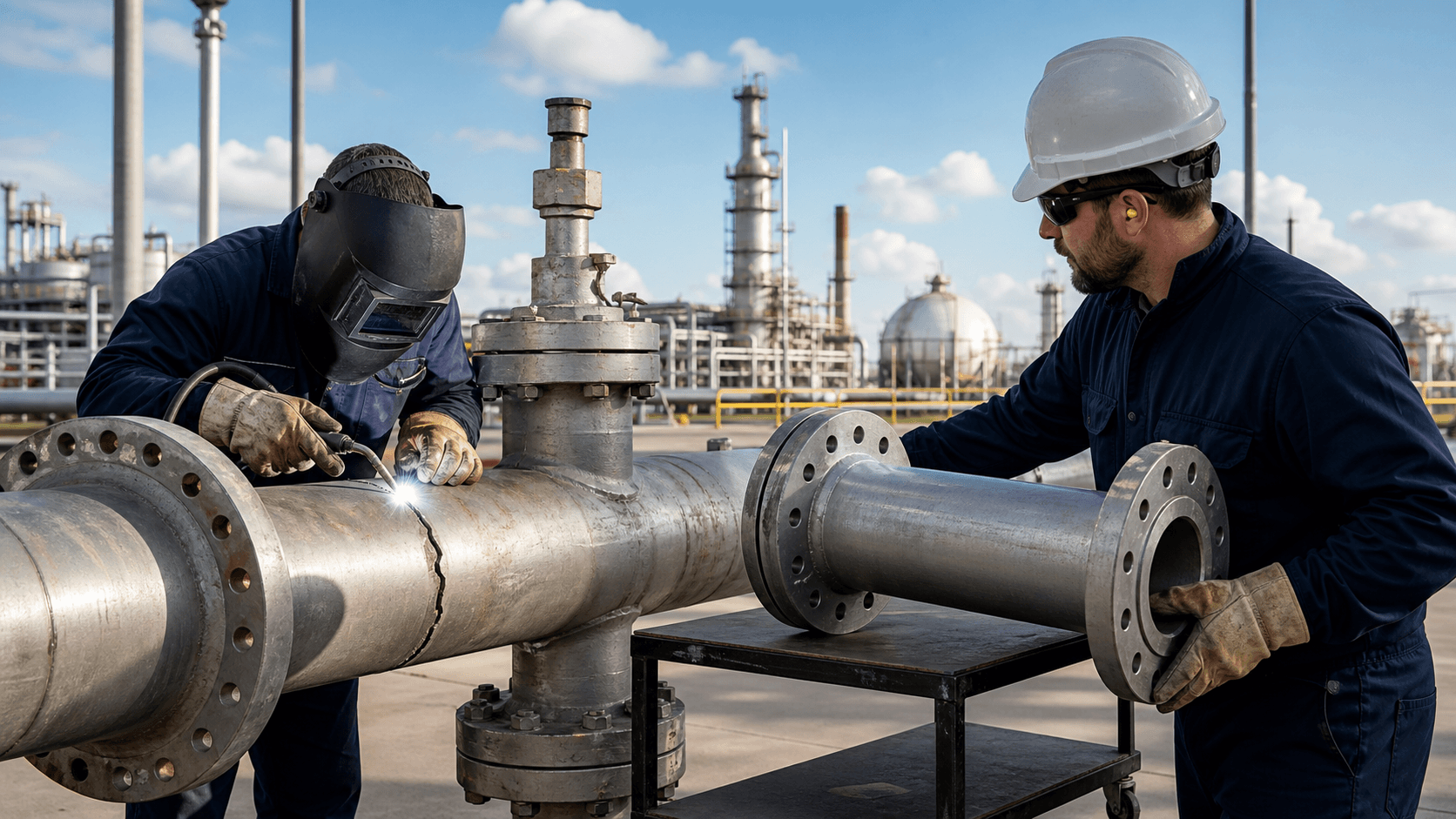
- Pressure piping welds, flanges, and tie-ins, especially changes in direction or size
- Structural steel connections at columns, beams, and braces
- Equipment skids and supports under pumps, compressors, and blowers
- Ladders, platforms, and handrails that see daily traffic, vibration, or impacts
Within those, there are known problem spots you can flag:
- Heat-affected zones around old repairs or field modifications
- Field welds made where access, lighting, or weather were not ideal
- Joints between dissimilar metals, like carbon to stainless or carbon to alloy
- Areas with constant thermal cycling or abrasive product flow, like elbows and reducers
A simple way to get organized is to build a "weld risk register." For each major asset, tag things like:
- Pressure or load level
- Operating temperature range
- Vibration or cycling frequency
- Chemical exposure or coastal air
- Access criticality (how hard it is to repair online)
This does not have to be fancy. A spreadsheet or CMMS flag is enough to prioritize inspection routes and to keep a record of what you saw and when.
What to Measure: Cracks, Distortion, Corrosion, Fatigue
Cracks are the problem everyone worries about, and for good reason. During visual checks, watch for:
- Toe cracks running along the edge of the weld
- Underbead cracking that shows as hairlines near the weld root
- Crater cracks at weld stops and starts
- Surface porosity that opens a path for corrosion
When something looks suspicious, that is when non-destructive testing comes in. Dye penetrant or magnetic particle testing can reveal surface-connected cracks. Ultrasonic testing helps find subsurface flaws in thicker sections. AWS and ASME criteria guide what is acceptable and what needs repair or replacement.
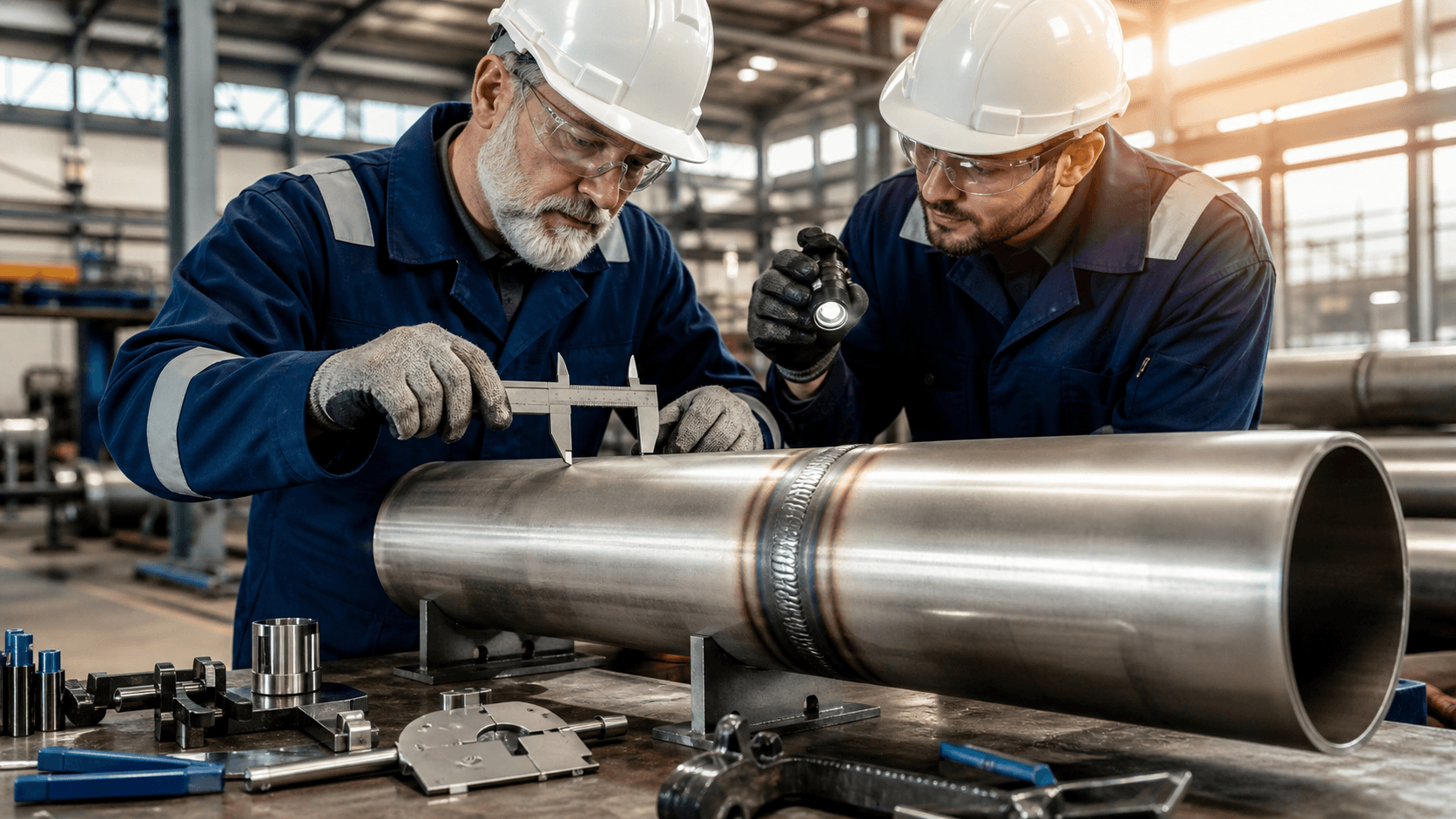
Distortion and misalignment are quieter, but they can be just as serious. Simple tools help here:
- Straightedges or strings to spot bowing or twisting
- Levels to check plumb columns and true platforms
- Tape measures to compare to design drawings
If you see flanges that no longer line up, beams that are not square, or pipe runs that sag between supports, you may be outside code-based limits or design intent, even if nothing has "snapped" yet.
Corrosion and wear need the same level of respect:
- Pitting and wall loss on pipe, tanks, and structural members
- Galvanic corrosion where stainless meets carbon with moisture present
- Erosion at elbows, tees, reducers, and other high-velocity points
As remaining wall thickness drops and service stays the same, you move from "watch" to "plan a repair." That decision should factor in pressure, temperature, and what happens if that item fails during a run.
When to Plan Repairs Versus Wait for a Shutdown
You cannot fix everything at once, so you need clear triggers. Common ones include:
- AWS or ASME defect limits exceeded
- Cracks that are growing between checks
- Corrosion that will reach a minimum wall before the next window
- No real redundancy in the load path or process line
Some items can go on a watch list. Others become must-fix conditions before the next cycle. The key is to decide with intention, not with hope.
For many Houston plants, cooler and drier fall months are the sweet spot for non-critical industrial welding repairs in Houston. You can line up work with existing maintenance outages, reduce heat stress on crews, and usually get better weld quality than in the peak of summer.
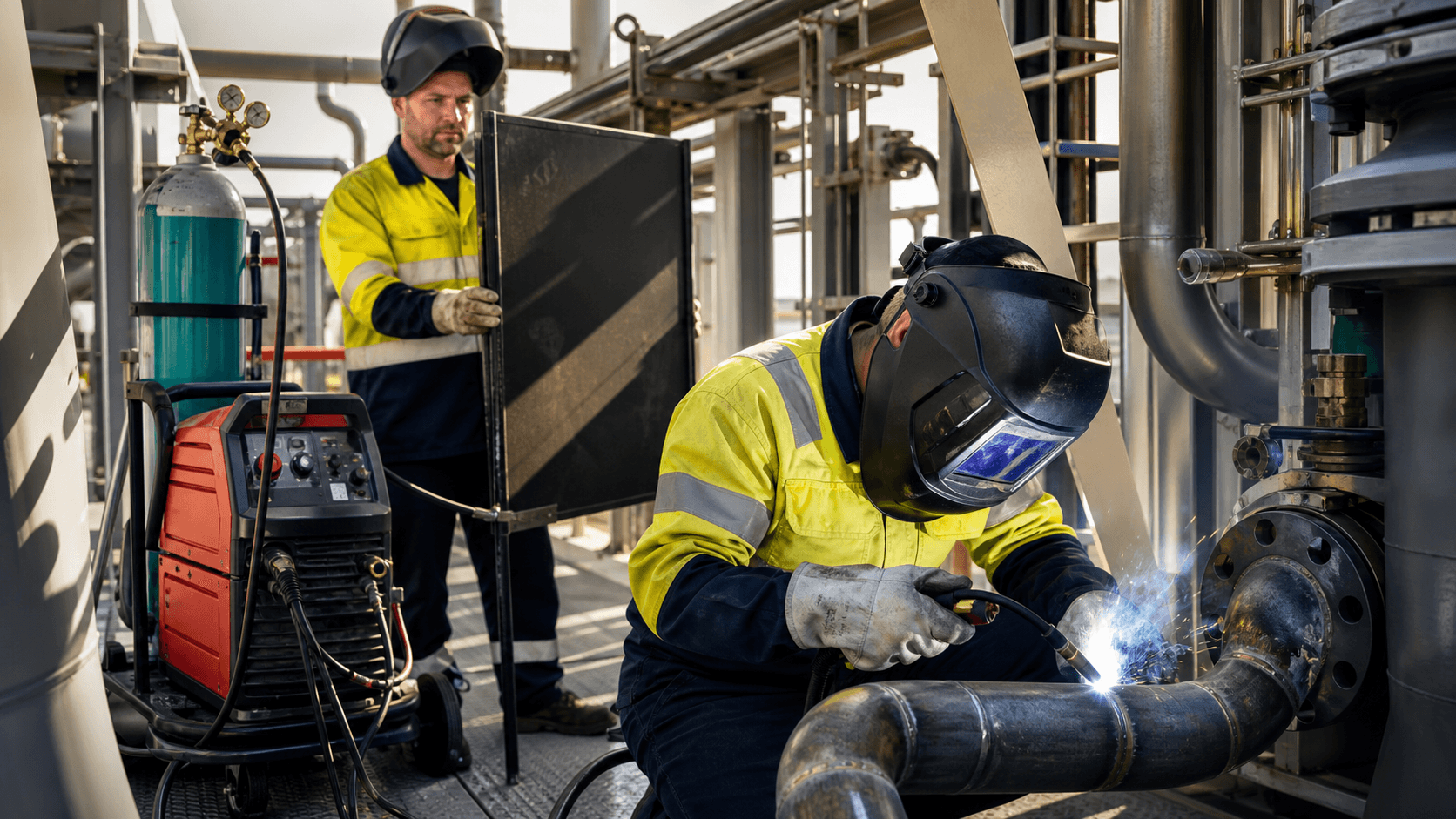
Mobile welding and field fabrication help you squeeze more work into short windows. Pre-fabricated pipe spools, structural braces, or skid components can be built off-site, then swapped in during a tight outage. That keeps shutdown work focused on truly large scopes that cannot be done hot.
Building a Repeatable Weld Inspection Framework
The best inspection plan is the one your team will actually use. We like a simple cadence:
- Daily operator checks of their areas, looking for leaks, unusual noises, or visible weld damage
- Monthly supervisor walkdowns of high-risk routes with a basic checklist
- Quarterly or semiannual certified weld inspections for high-consequence systems
All of that should live in a central log or CMMS. Each weld or joint gets an ID. Each finding ties back to that ID, so you can see if something is stable, creeping, or racing toward failure.
Standardized forms make this easier. At a minimum, capture:
- Date, inspector, and asset tag
- Weld ID or location
- Defect type and simple severity rating
- Photos from the same angle each time
- Recommended next action and timeframe
The quality of repairs matters as much as spotting the issues. Partnering with certified welders who understand AWS and ASME procedures, documentation, and metallurgy helps make sure every fix restores or improves the original design intent, instead of just covering it up.
Turning This Playbook Into a Maintenance Win
It is easy to talk about frameworks, but progress happens in small, clear steps. A simple 30-day plan might look like this:
- Pick your ten most weld-critical assets using risk factors
- Walk them with a basic inspection checklist and camera
- Sort findings into watch, plan this fall, or needs engineering review
- Build one or two small repair packages that can be handled with mobile welding support
When operations, maintenance, and safety teams all agree on who inspects what, how to document issues, and when to escalate, weld integrity stops being a last-minute fire drill. It becomes part of everyday reliability and planning, just like lubrication or instrument checks.
At Weldit, we spend our days helping Texas facilities bridge the gap between shop-quality welding and real-world field work. Whether you need a second set of eyes for a weld condition walkdown, help shaping checklists, or support turning findings into repair scopes, a clear inspection playbook will keep your plant safer, steadier, and ready for the next production push.
Get Started With Your Project Today
If you are facing downtime or safety concerns, we are ready to help you with reliable industrial welding repairs in Houston tailored to your facility's needs. At Weldit, we assess your equipment, identify the root cause of the problem, and prioritize repairs that keep your operation running efficiently. Share a few details about your project and timeline, and we will provide a clear plan and schedule. If you are ready to move forward or have questions, just contact us so we can get your repairs underway.