Holiday Towing Starts with a Safe Hitch
Trailer hitch repair is worth considering before holiday towing when there is any sign of damage, looseness, or wear. A hitch may seem fine on short local runs, but highway speeds, heavier loads, stop-and-go traffic, and long travel days can expose problems that were easy to miss before.
Thanksgiving, Christmas, and New Year trips often mean towing a utility trailer, boat, camper, cargo trailer, or work equipment. For drivers across Greater Houston, handling hitch concerns early gives us time to inspect the problem and decide whether repair, reinforcement, or replacement makes the most sense for the load you plan to pull.
Spot Hitch Damage Before Holiday Travel
Start with a close look at the hitch assembly before loading the trailer. Damage can happen after hauling heavy equipment, traveling over rough roads, or even after a minor backing incident. Rust can also build over time, especially around welds, mounting points, and exposed hardware.
Warning signs we recommend taking seriously include:
- Cracks around hitch welds or mounting brackets
- Heavy rust, flaking metal, or corrosion around connections
- A bent receiver tube, ball mount, or safety-chain attachment point
- Loose bolts, sagging parts, or visible separation at the frame
- A coupler that looks worn, damaged, or difficult to latch
Operational problems matter just as much as visible damage. Trailer sway, clunking during acceleration or braking, uneven trailer positioning, or trouble inserting the ball mount can point to a problem with the hitch assembly or its frame connection. A trailer that does not sit or pull correctly should not be treated as a minor inconvenience before a holiday drive.
A quick walk-around is helpful, but it cannot reveal everything. Corrosion may weaken metal below the surface, and fatigue cracks can begin in tight areas that are hard to see. We suggest having the hitch, coupler, chains, wiring, and trailer frame evaluated before a longer trip, especially when you expect to tow more weight than usual.
When Trailer Hitch Repair Protects Your Load
Not every damaged hitch needs to be replaced. Some issues can be repaired when the surrounding metal is still strong and the damage is limited to a specific area. Minor cracks, damaged brackets, worn mounting points, and localized corrosion may be candidates for professional trailer hitch repair.
Our welding and fabrication team can assess the affected section and determine whether it can be rewelded, reinforced, or rebuilt with a properly fabricated component. The goal is not simply to make the hitch look better. The repair must support the trailer's intended use and the forces created by towing, braking, turning, and changing road conditions.
Certain conditions call for a more cautious approach. Extensive corrosion, multiple cracks, a distorted receiver tube, damaged load-bearing sections, or a compromised trailer frame may mean replacement is the safer route. Repairing badly weakened metal can leave a weak point in place, even if the surface appears fixed afterward.
Holiday towing can put more demand on a hitch than regular errands do. A loaded enclosed trailer, work trailer, recreational trailer, or boat trailer places steady stress on the connection between your vehicle and trailer. Addressing problems before departure helps protect your cargo, passengers, towing vehicle, and the drivers sharing the road.
Weigh Repair Against Towing Risks
It helps to view hitch service as preventative maintenance, not an extra task to put off. A failed hitch can lead to trailer damage, roadside delays, missed plans, interrupted work, and unsafe situations in heavy holiday traffic. The right repair decision starts with understanding what caused the damage and how the trailer will be used.
Temporary fixes can create trouble when the trailer is under load. DIY welding, makeshift reinforcement plates, mismatched hardware, and unapproved modifications may not hold up during sudden braking, long highway runs, or repeated turns. What looks secure in a driveway can behave very differently once the trailer is moving.
The trailer and load should guide the decision. We consider factors such as:
- The trailer's overall condition and frame integrity
- The hitch class and intended towing capacity
- Tongue weight and how the load will be secured
- The location and severity of the damage
- Whether the trailer will carry light cargo, equipment, or a heavier recreational load
A small utility trailer does not place the same demands on a hitch as a commercial equipment trailer or a fully loaded cargo trailer. When structural strength is in question, a professional inspection is the safest way to determine whether trailer hitch repair will hold up over time.
Professional Repairs Support Safer Towing
Structural welding requires more than covering a crack with fresh metal. Before making a repair, we look for the source of the issue, such as corrosion, stress, poor alignment, damaged hardware, or movement at the frame connection. That evaluation helps prevent a repaired area from failing again for the same reason.
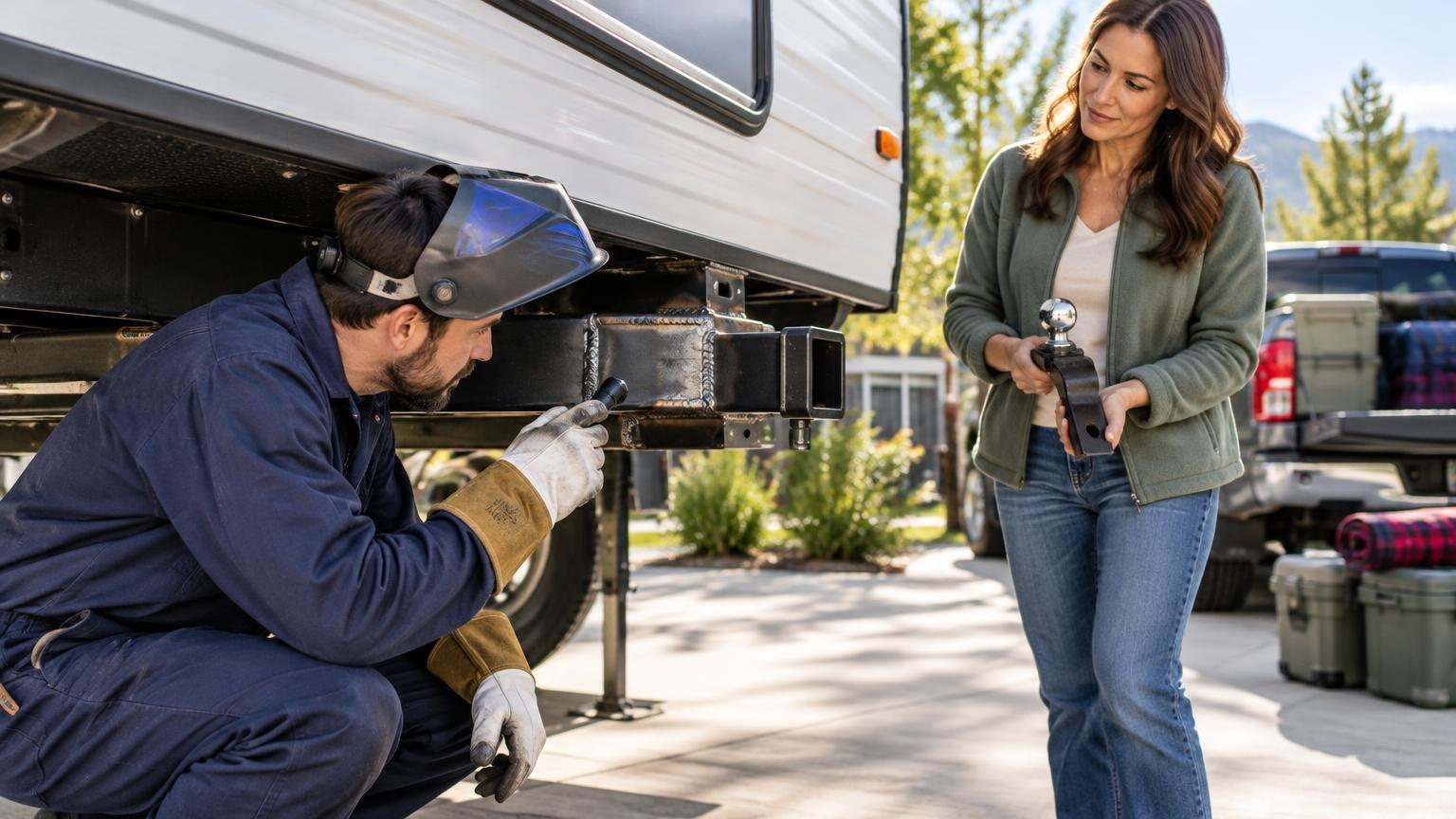
Professional welding and fabrication work is especially important for hitch mounts, coupler brackets, safety-chain connections, receiver areas, and trailer-frame attachments. These components work together, and damage in one area can affect how the rest of the towing setup performs.
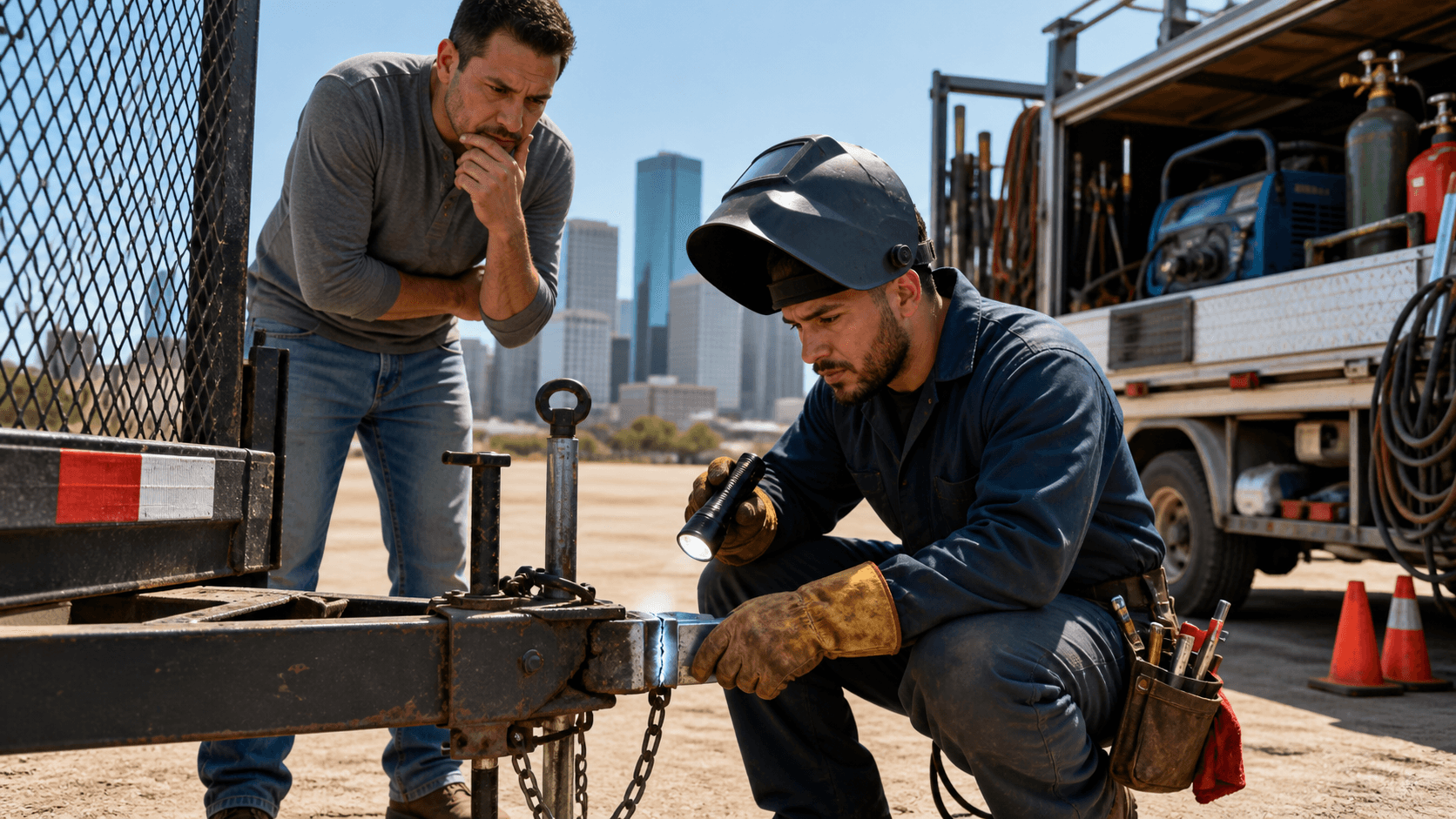
When a trailer is difficult or unsafe to move, mobile welding support can be useful. Our mobile capabilities allow us to evaluate certain trailer and equipment repair needs onsite, which can help commercial fleets, contractors, and trailer owners address concerns before holiday travel or year-end work demands.
A hitch inspection should also be part of a larger towing safety review. Along with the hitch itself, we recommend checking trailer brakes, lights, electrical connections, tires, wheel bearings, safety chains, and load securement. A trailer is only as dependable as the condition of its connected parts.
Plan Ahead Before Holiday Travel
Waiting until the day before departure can limit your options. Early inspection gives you time to identify hidden damage, complete any needed welding or fabrication work, and test the trailer before loading it for the road. It also gives you a clearer answer about whether repair, reinforcement, or replacement is the right choice.
Before towing for the holidays, make sure the hitch matches the trailer, the load stays within the equipment's intended limits, and every connection is secure. A careful review now can help you leave with more confidence and fewer preventable surprises on the road.
Restore Confidence in Your Tow Setup
At Weldit, we can assess wear, damage, and fit issues before they become bigger concerns. Schedule trailer hitch repair to address problems with dependable welding and careful attention to the connection points. If you have questions about your hitch or need an inspection, contact us to discuss your towing needs.