Stop Before You Tow: Rethinking Trailer Hitch Repair
Trailer hitch repair is one of those things people tend to ignore until a big trip is coming up. You walk around the truck before an early morning hunting run or a long holiday drive, and something looks off around the hitch. Rust, a crack, a little movement when you shake the trailer, and suddenly that fun trip feels a lot less relaxed.
That feeling is there for a reason. A "good enough" hitch can be a problem, especially when you are pulling heavier loads, driving long Texas highways, and dealing with traffic during the busy holiday season. The big question is simple: if something is wrong, is mobile welding at your driveway the right move, or do you really need shop-based fabrication and installation?
We work with industrial and commercial welding every day, so we look at even small hitch repairs with the same focus on safety, strength, and proper standards. Let us walk through what is really going on when a hitch is damaged and how to choose the safest repair path.
Hidden Risks Lurking in a Damaged Trailer Hitch
A hitch can look tough and still be weakened in ways that are not obvious at first glance. Some warning signs are easy to spot if you slow down and really look.
Common signs your hitch is not safe include:
- Visible cracks in the hitch, receiver, or welds
- Welds that look pulled, separated, or "torn" at the edges
- A bent or twisted receiver tube that no longer sits square
- Heavy rust around welds, frame plates, and mounting points
- Bolts, brackets, or plates that feel loose, move, or rattle
On the road, hitch failure usually does not happen all at once. It builds over time through metal fatigue. Every bump, brake, and sharp turn adds stress. If the metal is already cracked, rusted, or poorly welded, that stress can finally push it past the breaking point.
This can lead to:
- Sudden breakaway when you brake hard or swerve
- The trailer dropping or twisting, even if it does not fully detach
- Damage to your truck, trailer, and cargo
- Serious risk to other drivers in tight Texas traffic
- Tough questions from insurance if an unsafe repair is involved
Trailer hitch repair is not about looks. It is a structural job, just like brakes or steering work. If it fails, you do not just lose a part, you lose control over what you're towing.
What Mobile Welding Can and Cannot Safely Fix
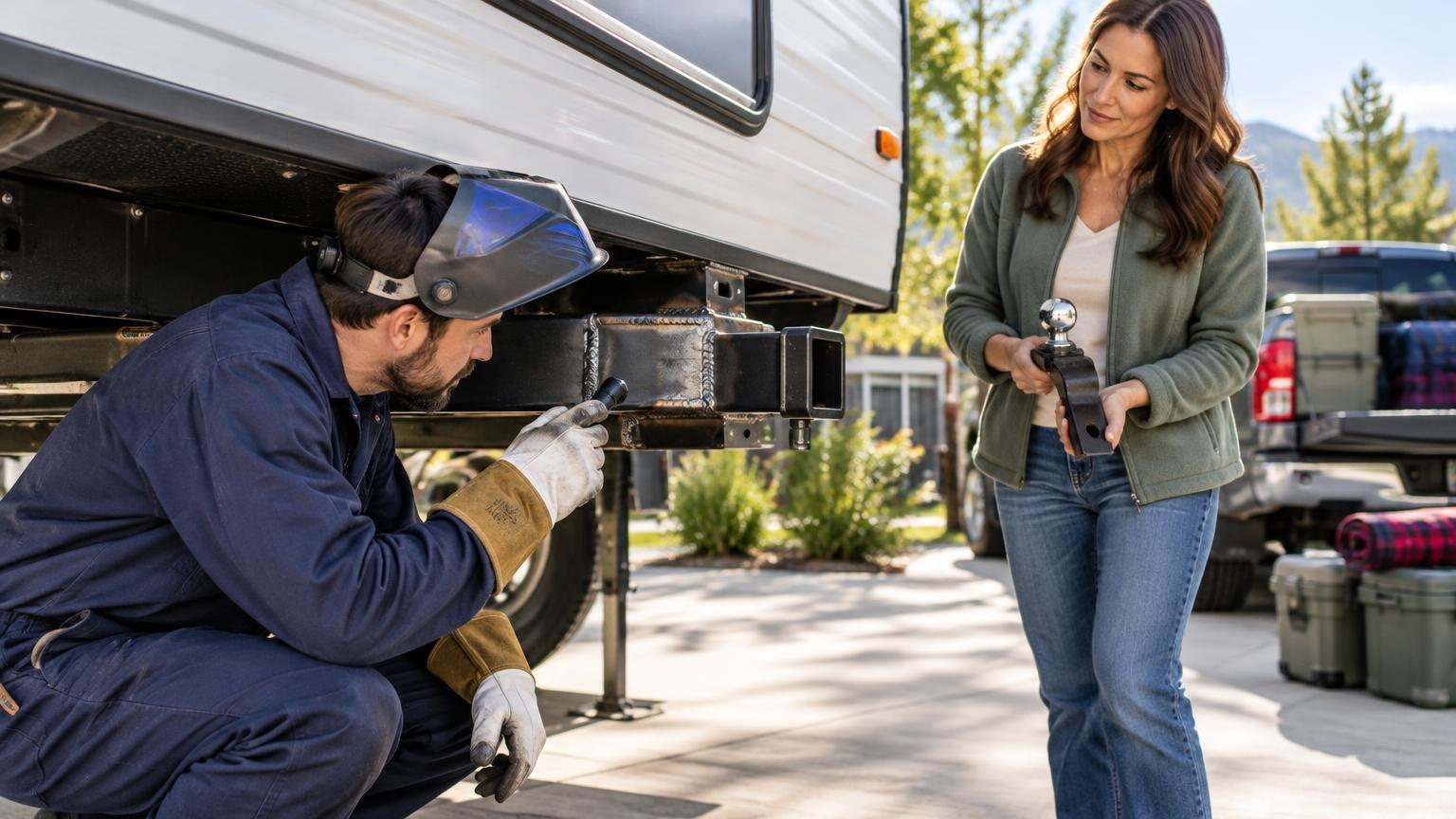
Mobile welding means a welder brings portable gear to you. You might see this a lot on ranches, jobsites, or around farms for quick repairs on gates, skids, or equipment. It can be very handy, and when used the right way, it can help solve smaller problems fast.
Mobile welding can work well for things like:
- Light brackets or add-on tabs that are not load-bearing
- Minor cosmetic fixes on non-critical metal parts
- Temporary patches that let you move equipment slowly to a shop
- Simple repairs on trailers that are not used for highway speeds
But trailer hitch repair is different. When the issue involves the main structure of the hitch or the vehicle frame, mobile work can become risky, especially if:
- The frame or hitch plates are deeply corroded
- The original metal type or thickness is unknown
- There are multiple layers of old, poor-quality welds
- Damage reaches into the mounting points on the chassis
Working in a driveway or parking lot limits what a welder can safely do. A controlled fabrication shop usually has:
- Better tools for cutting out bad metal and fitting new parts
- Solid fixturing to hold parts in the correct position
- Easier ways to clean, prep, and pre-fit assemblies
- Space and lighting for slower, more detailed inspection
Mobile welding has its place, but not every hitch problem should be solved in the field.
Safety and Compliance Beyond a Quick Weld
Every hitch is designed with specific ratings. Things like overall trailer weight and tongue weight are set based on how the hitch was built and attached to your vehicle. When repairs ignore that original design, those ratings can become meaningless.
Key points that affect safe towing include:
- Manufacturer weight ratings and how you use the hitch
- How the hitch connects to the frame or body
- The way load is spread across brackets and plates
- The quality of any added welds, plates, or reinforcements
Professional welding is not just about laying down a bead. It involves using the right joint design, making sure welds have proper penetration where needed, choosing filler metal that matches the base metal, and doing pre- and post-weld checks. All of this matters even if you are "just hauling the family camper" or "just towing a side-by-side for hunting."
A casual patch job might look fine at first, but if it does not respect how the hitch and frame are supposed to carry load, it can leave weak spots that only show up under stress. As industrial welders, we are always thinking about long-term integrity and the real-world liability of our work, not just getting you through one holiday weekend.
Choosing the Right Repair Path for Your Trailer Hitch
So what should you actually do when you spot trouble around your hitch before a big tow?
A simple way to think about it:
- Replace the hitch entirely if it is badly rusted, cracked in many spots, or clearly bent out of shape
- Choose shop-based repair if the damage involves mounting plates, frame connections, or major welds
- Use mobile welding only for limited, well-defined fixes or temporary work to get the vehicle safely to a shop
Before you let anyone touch your hitch, it helps to ask a few direct questions:
- What certifications or training do you have in structural welding?
- How often do you work on structural steel or vehicle frames?
- Do you carry insurance for this kind of work?
- Will you explain exactly what you plan to cut, add, or weld?
- Will you stand behind the repair if there is a problem later?
As the calendar fills with hunting trips, RV outings, and holiday visits, a few other things matter too: shorter daylight hours, busier roads, and tighter travel schedules. It makes sense to handle hitch issues early, before you are trying to beat traffic out of town.
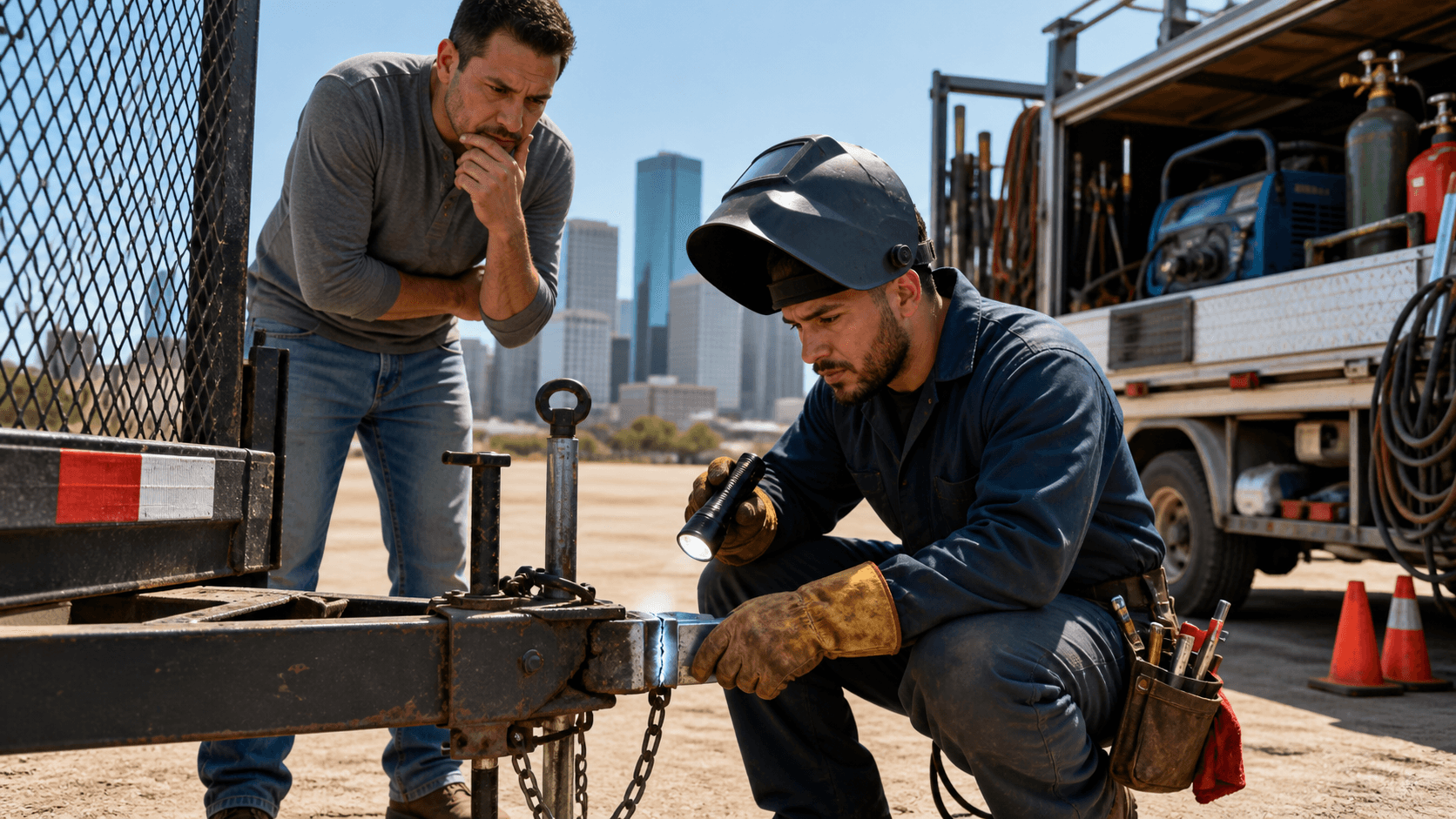
When we get a call about a hitch problem, we start with inspection, then talk through load, use, and risk. From there, we decide if a mobile visit is enough, or if shop-based fabrication and proper installation are the safer path.
Make Your Next Tow Trip the Safest One Yet
If you are already noticing rust, movement, or signs of old DIY fixes around your trailer hitch, waiting for "one more trip" is not worth the stress. A small crack or pulled weld today can become a big problem at highway speeds with a full trailer behind you.
Mobile welding can absolutely be part of a safe solution, but only when the situation is right and the limits are clear. For many structural hitch issues, proper shop work or full replacement is the smarter, safer choice. That peace of mind lets you focus on your trip, your family, or your gear, not on whether the connection between your vehicle and your trailer will hold when you need it most.
Get Started With Your Project Today
If your hitch is showing signs of wear, rust, or damage, Weldit is ready to help you fix it before it becomes a safety issue. Our certified welders specialize in precise, reliable trailer hitch repair that helps keep your vehicle roadworthy and secure. Tell us about your project and we will walk you through practical options, fair pricing, and a clear timeline. Have questions or need to schedule service right away? Contact us today.