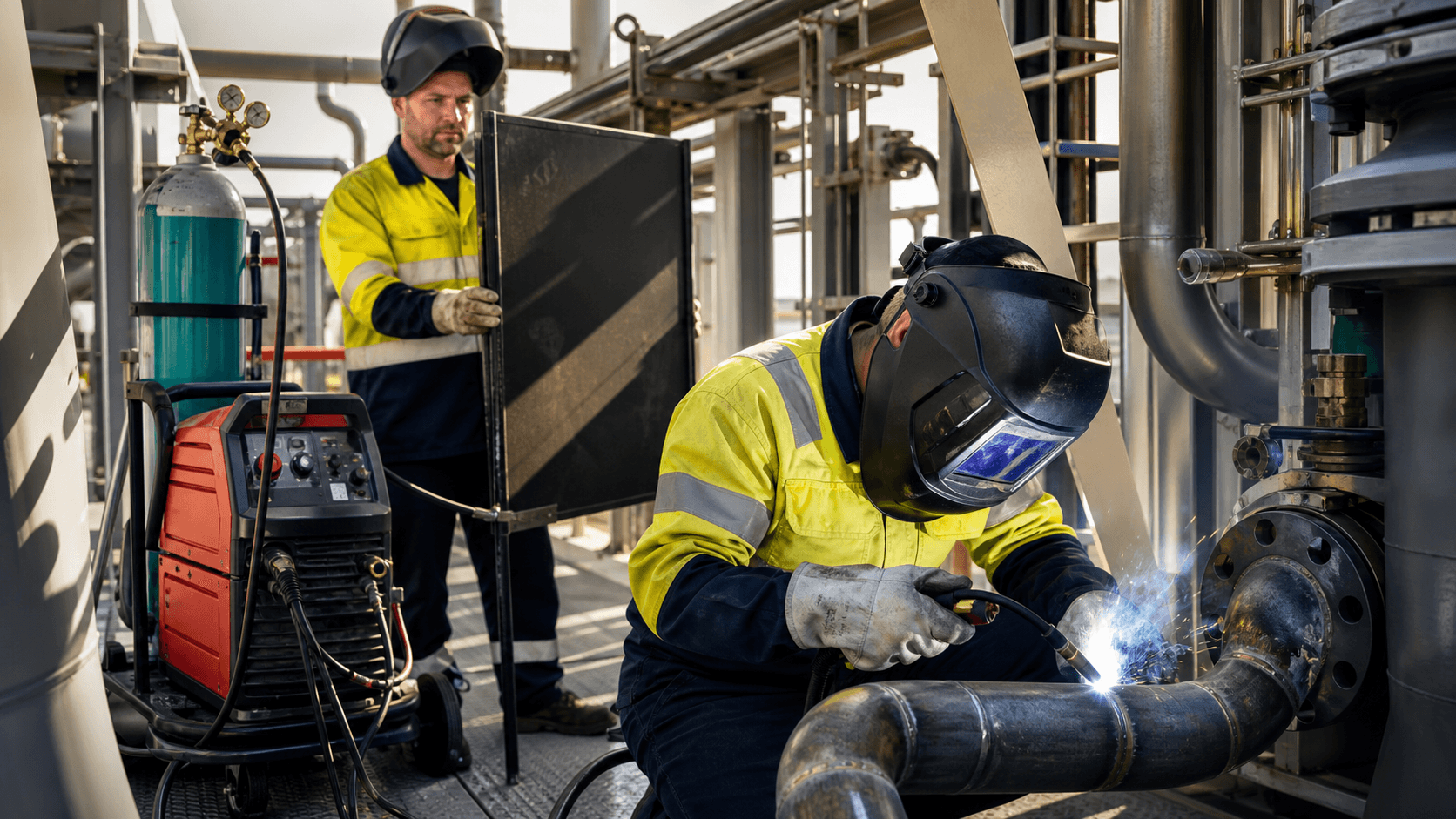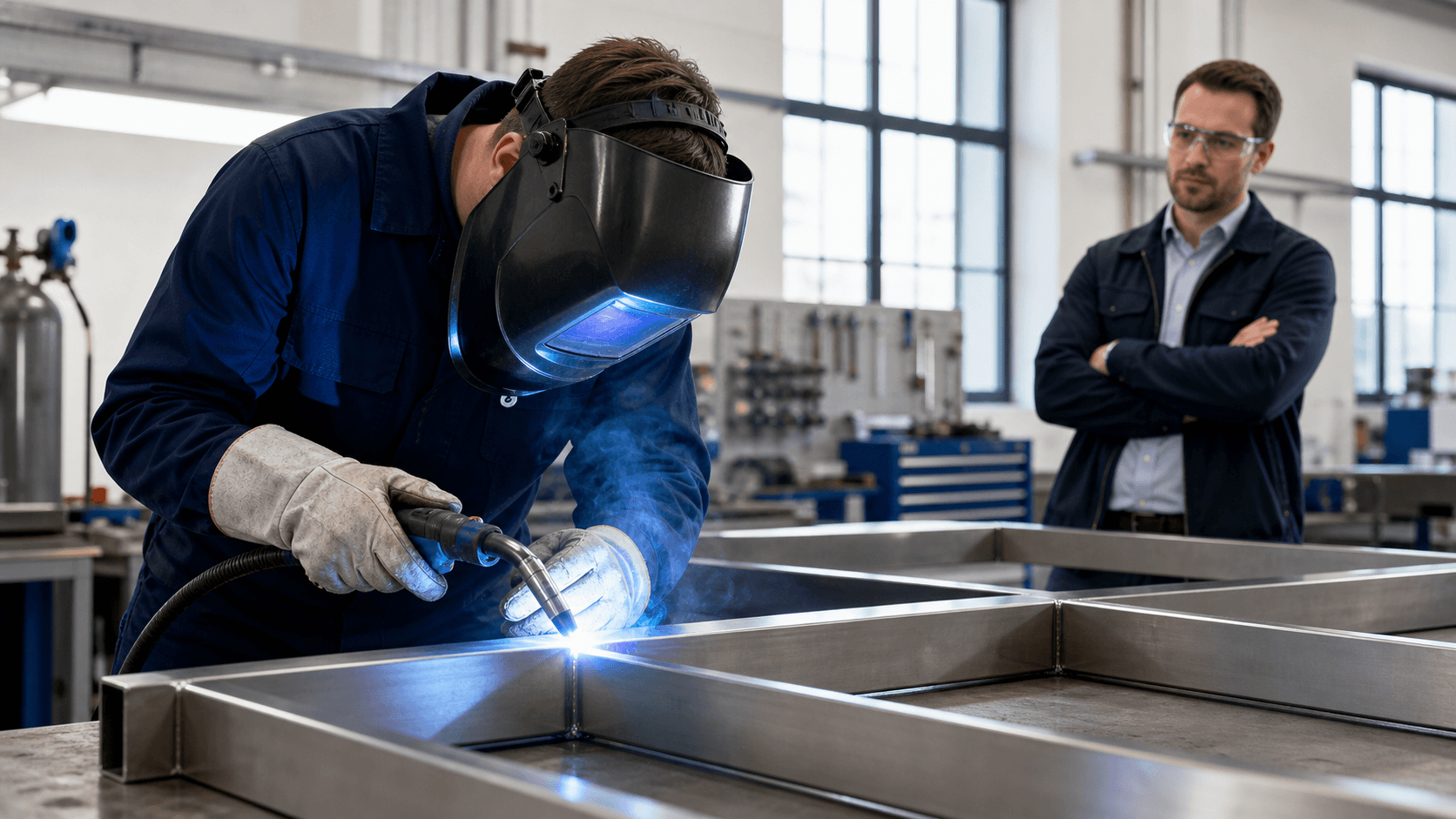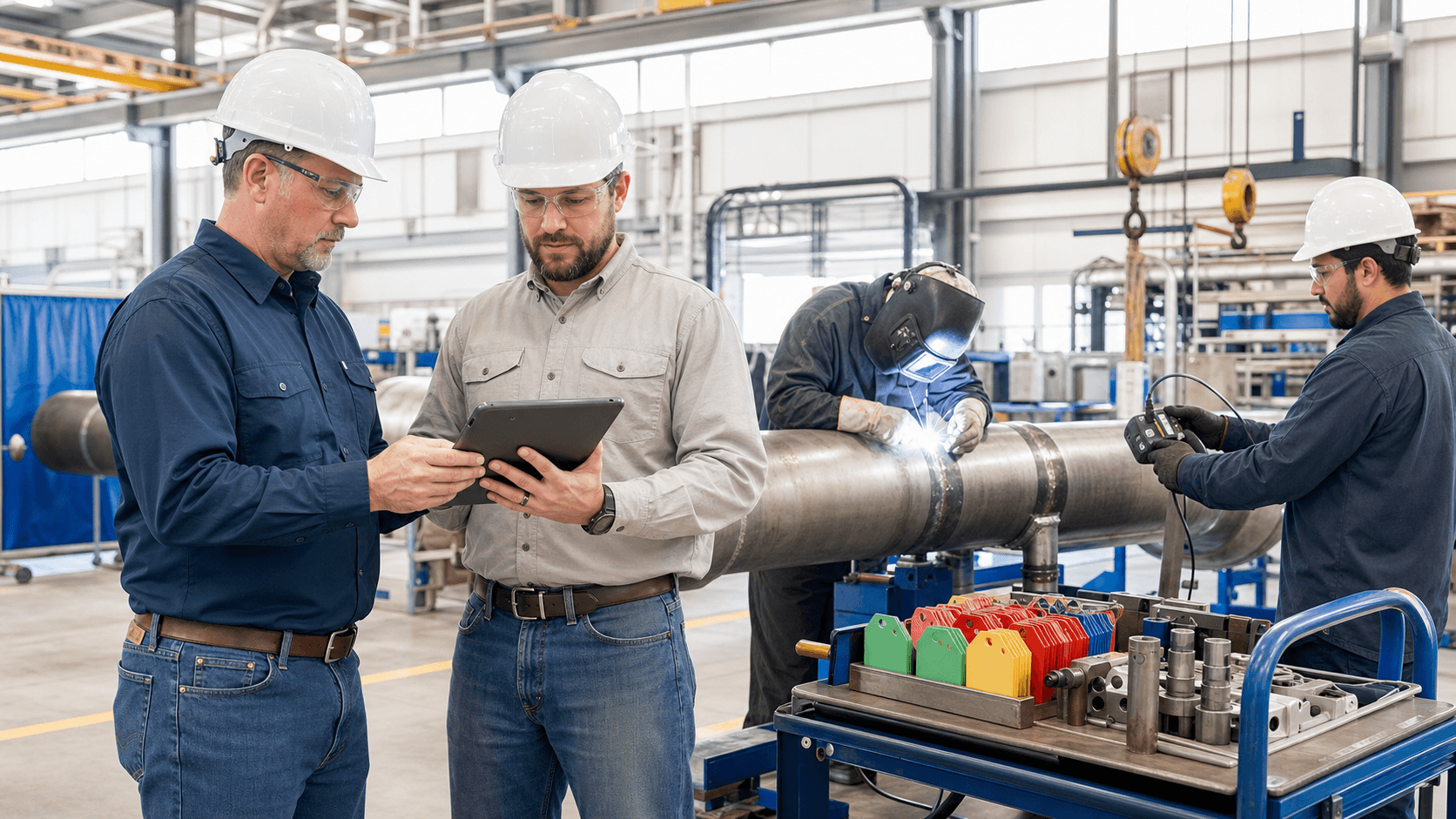
Safe startup in a Texas plant does not happen by luck. It happens when every weld, support, and piece of pipe is checked, proven, and documented before the first flip of a switch. That is what a solid Pre-Startup Safety Review, or PSSR, is about, especially when production is ramping up for busy summer runs and nobody has time for preventable shutdowns.
In welded systems, small misses can turn into big problems under power, pressure, or product. Structural steel, process piping, and custom metal work all have to be right the first time. We want to walk through how PSSR ties into welding, what documents and inspections are expected, and how tight control of punch lists keeps plants safe and on schedule.
Protecting People and Assets Before Plant Startup
When a Texas plant is getting ready for summer production, everything speeds up. Work crews are pushing to hit in-service dates, inspections are stacking up, and management is watching the clock. In that rush, it is easy for a weld report or support bracket to slip through the cracks.
PSSR is the last big pause before systems go live. For welded items, that pause is where you confirm that:
- Structural steel is stable and connected the way it was designed
- Piping is leak-tight, aligned, and supported correctly
- Platforms, ladders, and fall protection are safe to use
- All welding, repairs, and inspections are actually finished
Good welding and fabrication during construction set the foundation for a safe startup later. If the work in the field was sloppy, no amount of office paperwork will fix it. As a certified mobile welding and fabrication team working across Texas metros, we understand how PSSR ties into OSHA expectations, API guidance, and site procedures, and how to close out weld-related work before energization.
What a PSSR Really Means for Welded Systems
In plant terms, PSSR is a formal check that everything is complete, documented, and safe before you introduce power, pressure, or product. For welded systems, that means more than just "welds look good from the ground."
Welded components are often the highest-consequence spots in the whole facility, including the following:
- Pressure piping and process headers
- Structural steel over walkways and emergency exits
- Pipe supports and equipment skid connections
- Access platforms, stairs, and guardrails
- Anchors and tie-offs used for fall protection
Typical PSSR checklist items tied to welding and fabrication include:
- As-built drawings that match what was actually installed
- Weld maps that show where every weld is and who made it
- Material traceability so pipe, fittings, and shapes match the spec
- Pressure test records for piping and vessels
- Clear closure of all weld-related punch items, with no loose ends
When these pieces are ready and easy to review, PSSR moves faster and the startup team can focus on system behavior, not missing weld data.
Closing the Loop on Welding Documentation Before Startup
Texas plants expect a clear welding documentation package before they sign off on a system. This is not just paperwork; it is the proof that the work was done by qualified people using qualified procedures.
Common items in that package include:
- Welding Procedure Specifications, or WPSs
- Welder qualification records that match the work performed
- Material Test Reports, or MTRs, tied to actual heat numbers
- Weld inspection reports, including any Non-Destructive Examination
For a pipeline welder working on process piping, each weld usually needs to tie back to:
- A weld number on a weld map
- The heat numbers of pipe, fittings, and flanges used
- NDE reports that show acceptance to code or standard
If these links are broken, PSSR teams are forced to dig, question, and sometimes hold up startup. We help clients by using consistent joint numbering, keeping a clear repair history for each weld, and building data books that PSSR teams can scan quickly. Less hunting for missing reports means fewer delays when everyone is trying to get systems online.
NDE Closeout and Repair Control for High-Risk Welds
Non-Destructive Examination, or NDE, is where a lot of weld risk is caught and fixed before startup. On Texas plant and pipeline work, you see common NDE methods like:
- Visual Testing, VT
- Radiography, RT
- Ultrasonic Testing, UT
- Magnetic Particle, MT
- Liquid Penetrant, PT
NDE closeout before energization means:
- All required exams are completed, not just scheduled
- Reports are signed by qualified inspectors
- Any indications are interpreted and documented
- Each weld has a clear status: accepted, or repaired and rechecked
Repairs are where control often breaks down. When a pipeline welder or structural welder performs a repair, that work should be:
- Logged with a repair weld number or suffix
- Performed to an approved repair procedure
- Re-examined with the same or higher NDE method
- Marked accepted with the new results on record
Good repair control keeps "mystery repairs" from sneaking into service. If a problem weld makes it past startup, it is much harder and more disruptive to repair later.
Smart Punch-List Management for Summer Startup Deadlines
Punch lists can either keep you safe and organized, or blow up your schedule. When welding punch items pile up at the end of a project, they often include:
- Last-minute pipe supports or braces
- Weld repairs flagged by NDE
- Missing handrails, kick plates, or grating clips
- Documentation gaps for critical welds
A smart punch-list strategy for startup focuses on risk, not just count. It helps to split items into:
- Must-complete-before-energization, like pressure boundary welds or supports for live equipment
- High-priority safety items, such as stairs, platforms, and fall protection in active areas
- Lower-risk or cosmetic items that can be safely planned for post-startup, with controls in place
Mobile welding support makes a huge difference here. Field crews that can respond quickly, fabricate on site, and work off-hours help burn down weld-related punch lists without cutting corners on quality or safety controls.
Partnering with the Right Welding Team Before You Energize
When it comes to PSSR, a disciplined welding partner means fewer surprises, faster document review, and higher confidence when systems go live. Clean weld maps, complete NDE closeout, and smart repair control all reduce stress for plant managers, construction managers, and maintenance leads facing tight summer startup windows.
At Weldit, we work across major Texas metros as a certified mobile welding and fabrication company, supporting industrial, commercial, and residential projects. We understand how much pressure there is to hit in-service dates without putting people or assets at risk. By focusing on code-compliant structural steel, piping, and custom metal fabrication, and by keeping weld data organized and traceable, we help teams step into PSSR with fewer loose ends and a clearer path to safe energization.
Lock In Code-Compliant Welding Support Before Your Next PSSR Sign-Off
Before you energize new lines or equipment this spring, bring in a certified team that understands PSSR documentation, NDE closeout, and punch-list control from the welding side. At Weldit, our certified pipeline welder crews help you tie off open items, confirm traceable weld records, and keep inspectors confident in your startup schedule. If you are ready to align field welding with your plant's pre-startup safety review, contact us to schedule a site walkdown or mobile weld support.