Turnaround welding work in the Texas oilfield is not forgiving. When units are down, every hour counts, and a bad weld can stall an entire restart. That is why picking the right rig welder crew is not just a box to check; it is a key part of protecting your schedule, your people, and your equipment.
We see it every turnaround season as outage windows tighten in late spring and summer. Labor demand spikes, and it gets tempting to grab any mobile welder with a truck and a machine. The better path is slower up front and faster in the outage: strong vetting, clear procedures, and clean documentation so inspectors can sign off and you can get back online on time.
Why Turnaround Success Depends on the Right Rig Welders
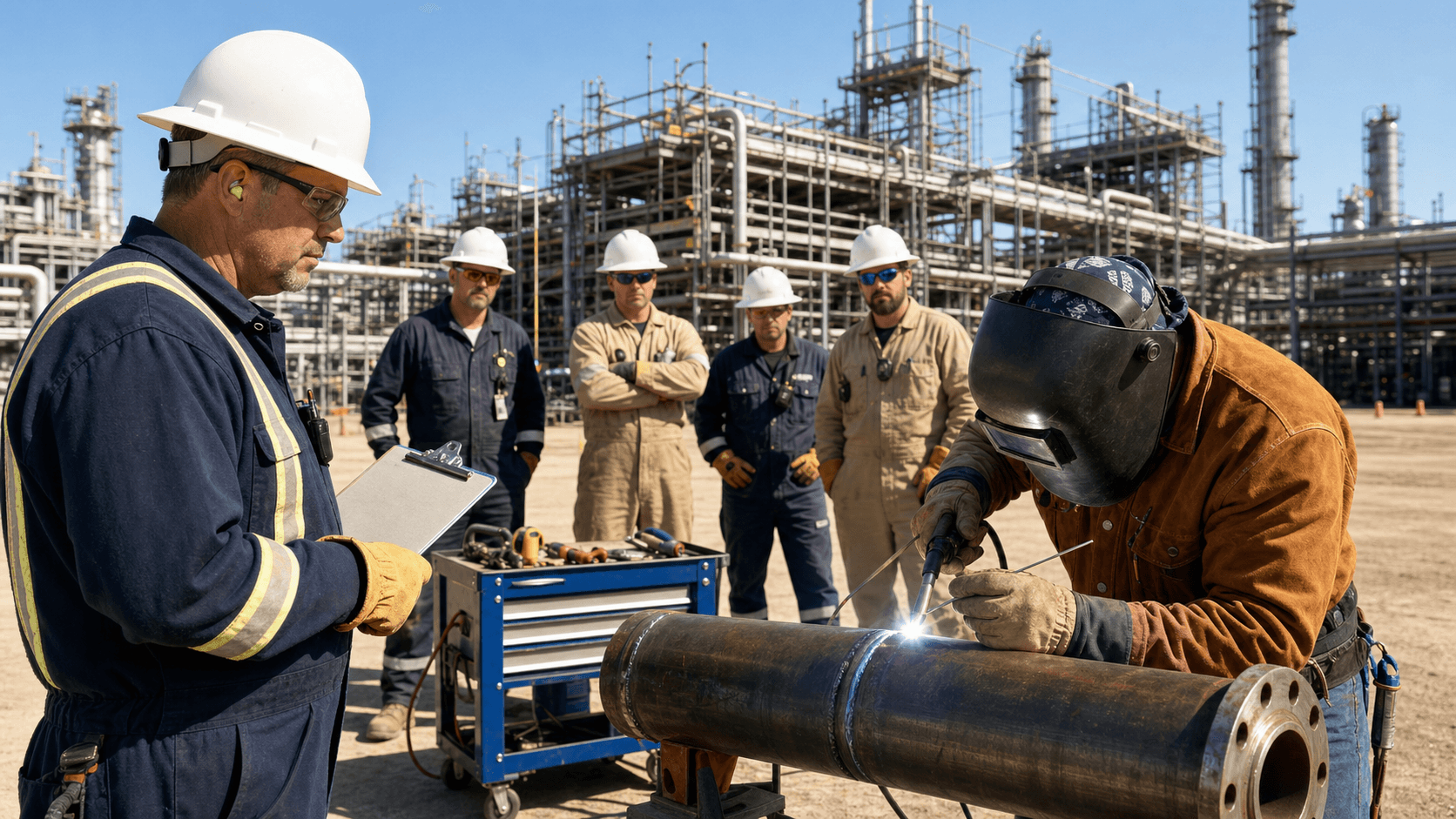
Turnarounds are planned, but they never feel relaxed. You are juggling scaffolds, permits, crane work, line breaks, and NDE, all while the clock keeps ticking on lost production. Welding is often on the critical path, especially for tie-ins, repairs, and code work.
The right rig welder crew helps you by:
- Hitting first-time weld acceptance so you are not cutting out repairs
- Working cleanly under hot work controls so you avoid shutdowns or delays
- Keeping in step with planners, inspectors, and operations during each shift
When the welders are not properly vetted, you see the opposite. Missed procedure limits, failed bends, incomplete documents, and lost certs. That is when rework, failed inspections, and shutdown extensions start to snowball. Careful pre-job vetting is how you avoid that and keep your outage on track.
Defining the Qualified Rig Welder for Texas Oilfields
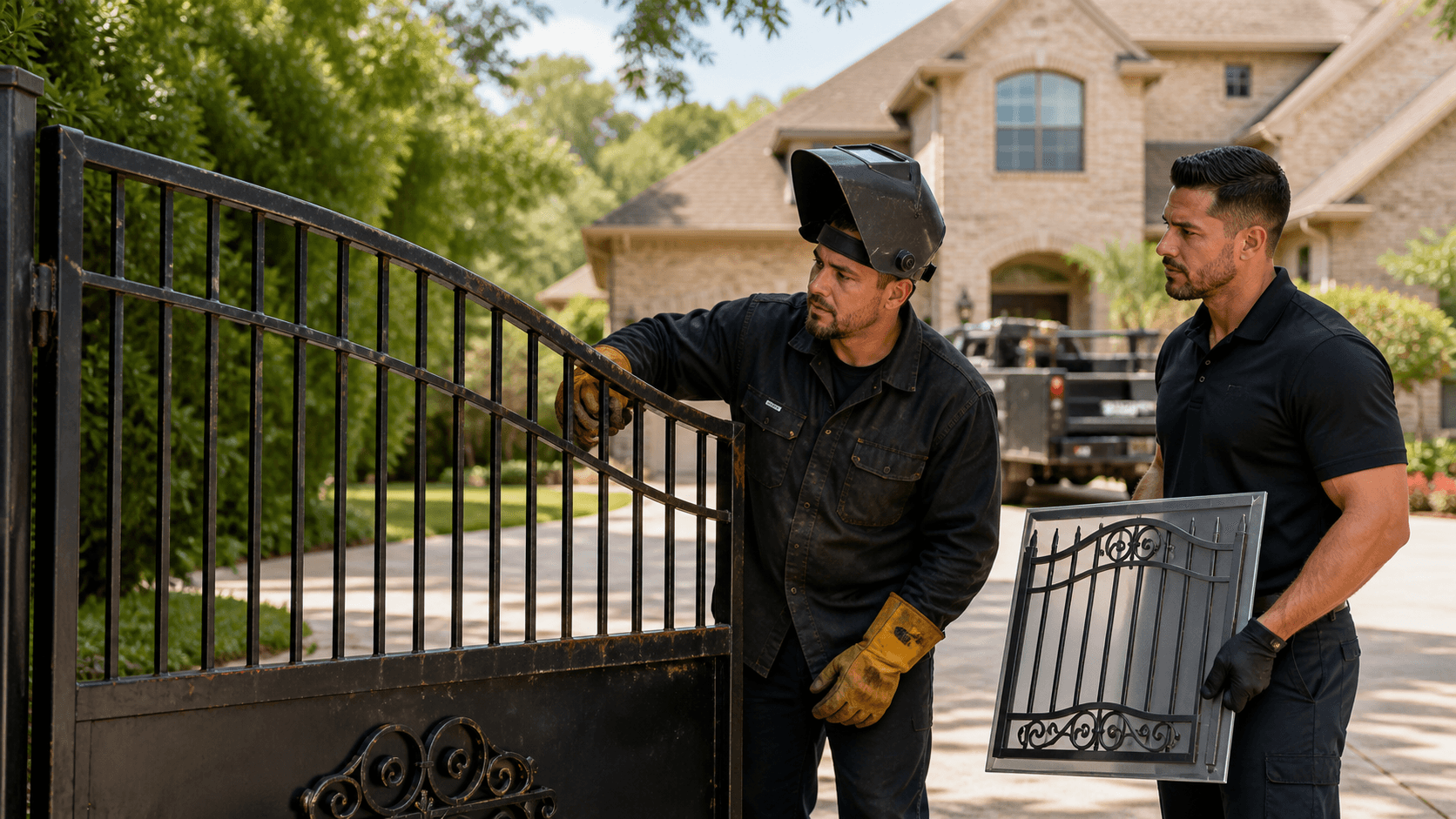
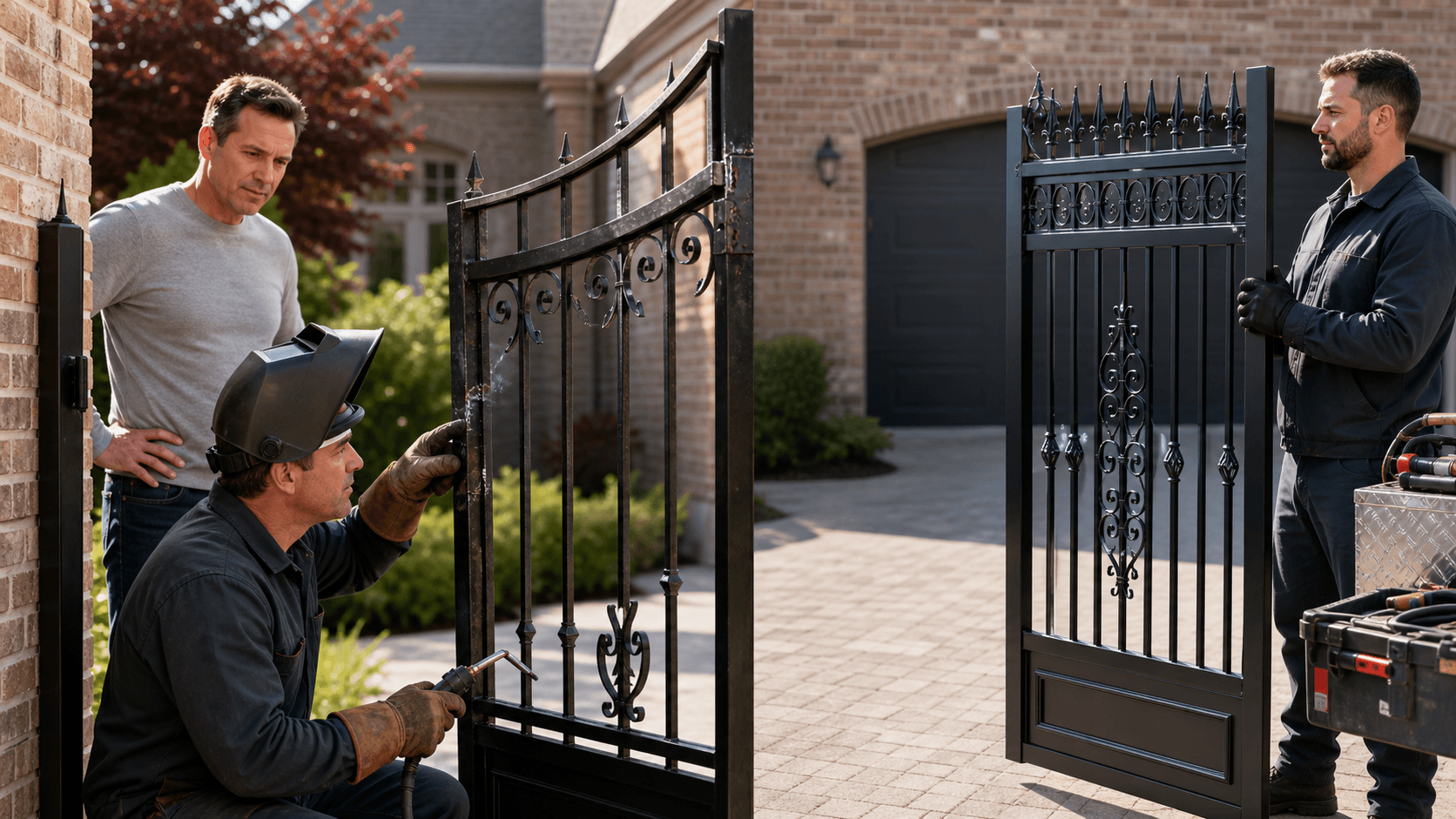
Not every mobile welder is ready for plant and refinery work. A general mobile welder may be great on ranch gates or shop projects, but field work inside units is different. A true rig welder for oilfield turnarounds is comfortable working under permits, around live systems, and to strict codes.
On the technical side, you want rig welders who are solid with:
- FCAW, SMAW, and GTAW on carbon and stainless steels
- Pipe and structural, including supports, platforms, and brackets
- Out-of-position welds, like overhead and vertical
- Work in confined spaces and on elevated platforms
Soft skills matter just as much. Good rig welders can:
- Follow permit-to-work and site procedures without handholding
- Communicate with inspectors, foremen, and planners
- Handle 24/7 turnaround shifts without quality drop-off
- Take direction from QA/QC and adjust within the WPS limits
When you add all of that up, the difference between a general welder and a turnaround-ready rig welder is clear. One is just welding metal, the other is supporting a time-bound industrial project.
Qualification Tests and Welding Procedure Controls
Before anyone touches a line, you need proof they can actually produce a sound weld that meets your codes. That starts with qualification tests tied to standards like AWS D1.1 for structural work and ASME Section IX or API codes for pressure parts.
A solid welder qualification program will include:
- Visual inspection of root, fill, and cap
- Bend tests to confirm soundness through the thickness
- Macro-etch checks when required to verify fusion and penetration
- Clear acceptance criteria tied to the governing code
On top of that are the WPS and PQR controls. A Welding Procedure Specification lays out how a weld must be made, including:
- Process, positions, and joint details
- Filler metals and base material groups
- Preheat and interpass temperature ranges
- Amperage, voltage, and travel speed limits
The Procedure Qualification Record shows that the procedure has been proven by test. When you vet rig welders, ask to see:
- Welder qualification records with test ranges and positions
- Continuity logs to confirm their quals are current
- Evidence they have worked under similar WPSs, not just generic shop work
The goal is simple: you want welders who can step into your outage, read your procedures, and go to work without a long retraining curve.
Checking Safety Culture and Compliance Before Mobilizing
Technical skill is only half of the picture. In refineries, plants, and midstream sites, safety is built into every task. Rig welders must be able to work inside that system, not around it.
Key safety items to confirm include:
- Site access needs, such as TWIC or plant-specific badges
- H2S awareness, confined space, and hot work training
- Understanding of lockout/tagout concepts and energy control
- Comfort working under client-specific safety programs
Equipment and PPE must match the work too. That can include:
- Proper PPE from hood to flame-resistant clothing and gloves
- Intrinsically safe tools where the site requires them
- Calibrated gas detection and coordination with fire watch
- Welding machines, leads, and gear that are inspected and maintained
At the company level, ask how they handle:
- TRIR and EMR tracking and reporting
- Near miss reports and lessons learned
- JSAs, or Job Safety Analyses, for each task
- Participation in toolbox talks and site safety meetings
Contracts move fast, especially in busy Texas metros, but it is worth pausing to be sure the welding crew fits your safety culture before you roll them through the gate.
Certifications, NDE Reporting, and Documentation You Should Expect
During a turnaround, paperwork is part of the job. Inspectors, QA/QC, and regulators all depend on clear records. When you are vetting rig welders, look closely at their certifications and how they handle NDE reports.
For welder certs, check:
- Process-specific qualifications, such as FCAW, SMAW, GTAW
- Positions like 6G for pipe and 3G/4G for structural
- Material group coverage that matches your work scope
- Expiration or continuity dates that cover the entire outage
For NDE, you should expect the welding contractor to work smoothly with third-party providers. That includes:
- Understanding VT, MT, PT, UT, and RT workflows
- Knowing the acceptance criteria for the code in use
- Supporting NDE access, fit-up, and pre-cleaning
- Turning around repairs quickly with documented dispositions
A simple documentation checklist helps a lot:
- WPS and PQR packages that match your scope
- Welder qualification records and continuity logs
- Liability and workers' comp insurance proof
- Calibration certificates for machines and gauges
- Turnover packages for your QA/QC files at the end of the outage
Having all of that lined up keeps inspectors focused on weld quality, not chasing missing paperwork.
Turning Vetting Into a Repeatable Turnaround Playbook
Once you have a strong vetting process, the next step is to make it repeatable. That is how turnarounds in Texas plants and terminals get smoother year after year instead of starting from zero every time.
A simple playbook might include:
- Early engagement with welding contractors before the outage window
- Upfront document reviews and test panel verification
- Safety onboarding and orientation finished before day one
- Clear expectations for communication, NDE support, and turnover records
Over time, you can build a bench of rig welders who fit your standards. Track things like weld repair rates, responsiveness, and safety performance across multiple outages. When you find crews that perform well under real field conditions, keep them in your preferred group and bring them back for future work.
As a mobile welding and fabrication contractor working across major Texas metros, we see how much smoother turnarounds run when rig welders are properly vetted. With the right tests, safety checks, and documentation controls, welding shifts from a source of stress to a steady part of your outage plan, even in the busiest summer turnaround season.
Secure Qualified Rig Welders Before Your Next Turnaround Window
If you need a certified rig welder team that already meets Texas oilfield qualification, safety, and documentation requirements, we are ready to mobilize. At Weldit, we align procedure qualifications, welder certs, and NDE reporting with your turnaround schedule so you are not scrambling as the outage date approaches. Share your scope, codes, and inspection criteria, and we will match the right rig crews and procedures to your site. To lock in dates or request documentation samples, contact us today.