How to Avoid Costly Mistakes on Houston Brownfield Tie-Ins
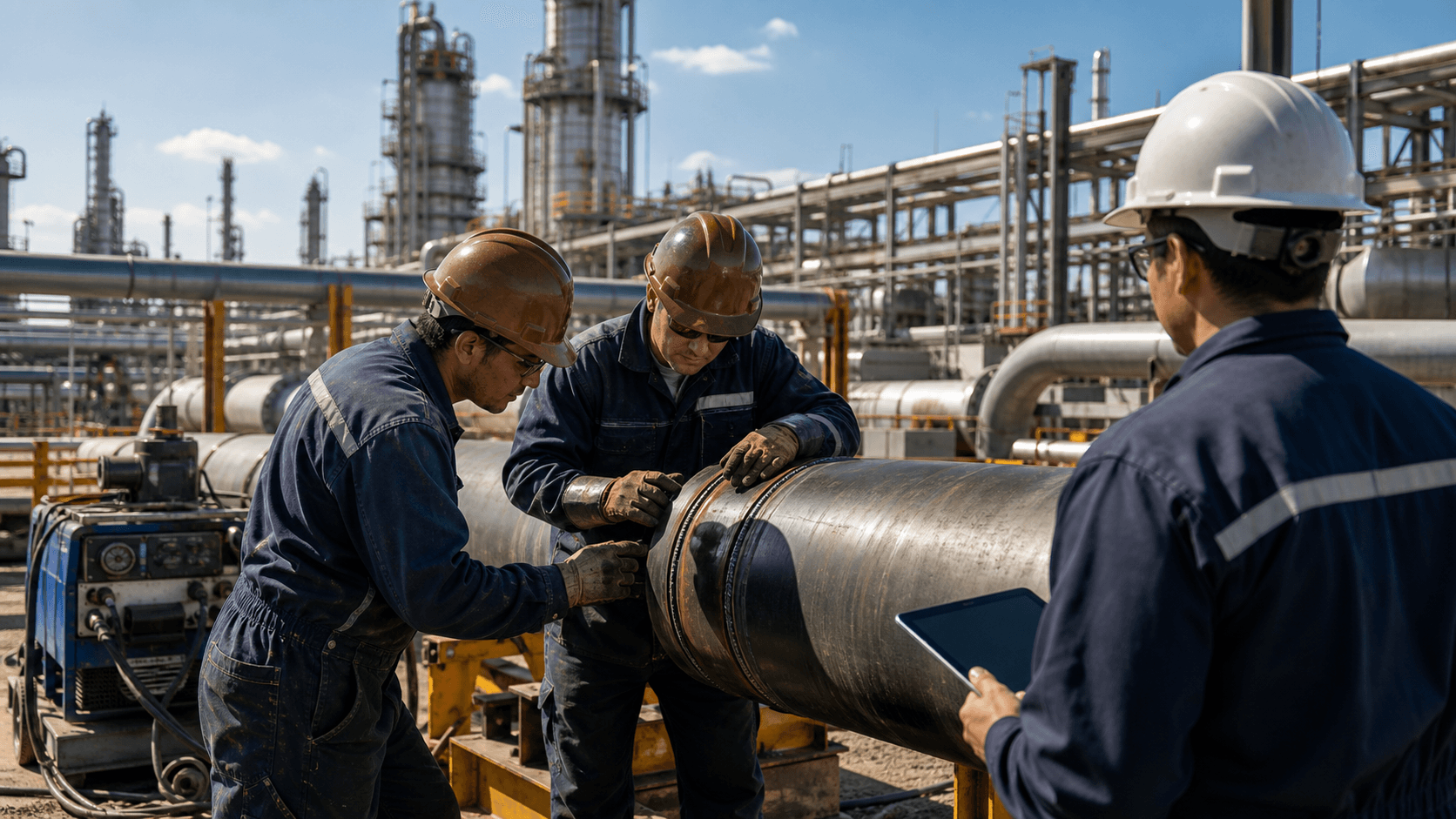
Brownfield pipeline tie-ins in the Houston industrial corridor are not simple cut-and-weld jobs. You are working around live units, aging lines, tight racks, and strict plant rules, often with very short outage windows. One mistake can mean lost product, schedule slip, or a safety event that nobody wants.
That is why the pipeline welding company you choose matters so much. For tie-ins at refineries, chemical plants, and terminals, you need crews who understand real plant conditions, not just new construction. The keys are strong isolation planning, clear hot-work permitting, a smart NDE plan, and a focus on trimming outage time without cutting corners.
Fall turnaround season adds even more pressure. Outages stack up across Houston, demand for qualified welders spikes, and there is less room for rework. At Weldit, we approach these jobs as a mobile welding and fabrication partner, bringing shop-quality work and on-site precision so industrial pipeline projects can move fast and stay safe.
Isolation Planning That Protects People and Production
Isolation planning is the foundation of a safe brownfield tie-in. It means clearly identifying every source of energy that could reach your work area and locking it out in a way everyone understands.
Good isolation planning should cover things like:
- Product in the line, side branches, and nearby connections
- Internal pressure and temperature
- Electrical power for pumps, valves, and instruments
- Mechanical energy, like spring-loaded valves or stored pressure
A strong pipeline welding company should be in those early talks with plant engineering and operations. We help decide where cuts should be made, where the tie-in makes sense, and how line condition or access will affect weld quality. Welders see the real-world impact of isolation choices, so that input up front saves time and risk later.
On brownfield work, good coordination is everything. Before any hot work, we want clear agreement on:
- Line-of-fire risks if something lets go
- Residual product that could still be trapped in low spots
- Venting and purging needs for flammable or toxic service
- Drain and vent points, plus where vapors might collect
Paperwork should match the field. That usually means current P&IDs, isolation plans, blind lists, and sign-offs that spell out who did what, where, and when. Those details lower the chance of backflow, unplanned product release, or an unexpected kick of pressure while the line is open.
In Houston plants, a lot of assets are older and have seen many small projects over the years. Records may not tell the full story, so field checks and experienced mobile welders who know what to look for are very important.
Hot-Work Permits and Fire Safety That Meet Plant Expectations
Once isolation is set, the focus shifts to hot-work permits and fire safety. Every plant has its own rules, but the basics stay the same: know the hazards, control the area, and stay ready to respond.
A solid hot-work permitting process usually includes:
- A clear job hazard analysis
- Atmospheric testing for flammable gases or low oxygen
- An assigned fire watch with the right training and tools
- Defined safe zones around the welding area
Your welding contractor should be comfortable working inside the plant's permit system. That means understanding OSHA rules, company procedures, and being ready for safety audits or surprise checks. It also means we are prepared to stop and adjust when conditions change.
Best practices for hot work on pipelines in brownfield areas include:
- Cleaning and flushing lines as required by the plant
- Verifying zero energy, not just assuming a block valve is holding
- Controlling all ignition sources, including small tools and lights
- Planning for where sparks and slag might land in crowded pipe racks
Mobile rigs help here, since we bring code-compliant power sources, leads, fire extinguishers, spark curtains, and ventilation right to tight areas inside units, racks, or dock lines. In busy Houston sites with limited space, that flexibility is important.
Good permits live or die on communication. Pre-job briefings, clear roles between plant staff and the welding crew, and real-time updates during the permit window keep everyone aligned and on the same page.
NDE Strategy That Matches Code, Risk, and Budget
Nondestructive examination is not something to bolt on at the end. For tie-ins that handle hazardous or high-value products, the inspection plan should be built into the job from the start.
A capable pipeline welding company will help shape an NDE plan that covers:
- Which methods to use, for example RT, UT, phased array, MT, or PT
- Where inspection hold points fall in the schedule
- Acceptance criteria tied to the right AWS, ASME, or API code
There is a direct link between weld procedures, welder qualifications, and NDE results. When WPSs are clear and followed, and welders are properly qualified, inspection tends to be more predictable. That cuts down on surprises and rework during an outage.
A smart NDE strategy also saves time by:
- Lining up inspectors to arrive as welds are completed
- Using mobile NDE on site when possible
- Prioritizing high-risk welds, like those in higher-pressure or higher-consequence service
Houston conditions add their own twist. High humidity, night work during outages, and crowded access around existing equipment all affect how and when NDE can be done. Planning around those limits early helps keep the schedule honest.
Minimizing Outages with Mobile Welding and Prefab
During turnaround and maintenance seasons, outage hours on pipelines that feed process units or export lines go by fast. Every extra hour can ripple through production and shipping.
The best way we have found to protect that time is a shop-plus-field approach. That usually looks like:
- Pre-fabricating spools, supports, and brackets in a controlled shop
- Doing as much fit-up, beveling, and prep work as possible ahead of time
- Using mobile rigs to finish tie-in welds in the shortest workable window
Before an outage, constructability reviews make a big difference. Field measuring, reviewing drawings, and planning how each piece will move into place helps avoid last-minute cutting, grinding, or guesswork. In tight pipe racks or along busy docks, planning lifts and access points keeps crews safer and faster.
Staffing matters too. You want certified welders who can work in shifts around the clock when the plant is ready, and who can sync with operations, NDE, and commissioning teams. When everyone knows the sequence, handoffs are smoother and lines come back online sooner.
In Houston's wide industrial areas, mobile welding units are a big advantage. Shorter mobilization, quick on-site adjustments, and the ability to respond fast when conditions inside the line are not what drawings suggested can keep a small issue from becoming a long delay.
Choosing a Houston Pipeline Welding Partner You Can Trust
When you are picking a pipeline welding company for brownfield tie-ins, it helps to have a simple checklist. Key items often include:
- AWS and ASME-driven procedures and welding practices
- Proven brownfield and hot-work experience in live plants
- A strong safety record and a history of working inside plant permit systems
- Complete WPS and welder qualification records
- Reliable NDE partnerships and coordination skills
Useful questions to ask any contractor are:
- How often do you handle tie-ins under live plant conditions?
- What recent work have you done in the Houston area?
- How do you approach isolation planning and hot-work permits?
- How do you manage schedule risk and rework during outages?
At Weldit, we focus on being that kind of partner, with mobile welding rigs, certified structural and pipeline welders, and code-driven procedures designed for industrial work. We are used to working side by side with plant safety, engineering, and operations teams on brownfield jobs, including pipeline tie-ins around the Houston corridor.
The earlier we are involved, the more chances we have to spot isolation gaps, permit challenges, or NDE bottlenecks before they land on the outage schedule. For plant engineers, project managers, and maintenance leaders planning upcoming tie-ins, thoughtful planning with the right welding partner can protect people, product, and production time during busy fall outage seasons.
Get Started With Your Project Today
If you are ready to move your project forward with dependable, code-compliant piping, our team at Weldit is here to help. As a specialized pipeline welding company, we bring the skills, equipment, and planning support needed to keep your schedule on track. Tell us about your timeline and scope so we can provide a clear, practical path from design to installation. Have questions or need a quote now? Contact us and we will respond promptly.