Build Safer Houston Platforms with the Right Metal
Platform material is a safety, uptime, and planning decision, not just a choice between two metals. When we help Houston contractors, facility owners, and plant managers plan a platform, we look at what it needs to carry, where it will sit, how people will use it, and what it will face every day.
November is a smart time to review platform needs. Holiday shutdown schedules, wetter conditions, year-end planning, and upcoming capital budgets can create a useful window for evaluating repairs or upgrades. Aluminum and steel can both perform well, but the right choice depends on structural strength, corrosion resistance, weight, fabrication needs, installation access, maintenance expectations, and code requirements.
Where Custom Aluminum Fabrication Delivers Value
Custom aluminum fabrication can be a strong fit when a platform needs to be lighter without giving up dependable performance. We often recommend considering aluminum for access platforms, walkways, stairs, service decks, and elevated equipment areas where moving materials into place may be difficult.
Because aluminum weighs less than steel, it can make transportation and installation easier. That matters when a site has limited access, restricted crane capacity, rooftop conditions, or equipment that cannot be moved around easily. A lighter platform can also place less demand on certain supporting structures, although we always review the full attachment and load condition before fabrication begins.
Houston humidity is another reason aluminum gets attention. Aluminum forms a protective oxide layer that helps it resist corrosion in many environments. That can reduce the need for frequent repainting, especially compared with unprotected steel. Still, aluminum is not automatically the answer for every outdoor or industrial setting. Salt exposure, standing water, and certain chemicals can affect how it performs over time.
Aluminum is often worth discussing for areas such as:
- Rooftop equipment platforms with limited installation access
- Marine-adjacent facilities and wet environments
- Food processing spaces with regular washdowns
- Water treatment areas and utility access walkways
- Service decks where crews need a lighter structure
Material is only one part of the plan. During custom aluminum fabrication, we also consider drainage, slip-resistant walking surfaces, handrails, toe boards, connection points, and access for inspections. Those details help shape a platform that works safely in the real conditions your crews face.
Match Steel Strength to Demanding Platform Loads
Steel remains a dependable choice for platforms that need to handle heavy equipment, concentrated loads, forklift traffic, vibration, or high-impact work areas. Its strength and rigidity can allow for compact member sizes, which is helpful when headroom, clearance, or equipment spacing is tight.
Across Greater Houston and surrounding Texas cities, we see steel used for equipment support platforms, mezzanines, loading areas, pipe rack access, industrial maintenance decks, and work platforms near heavy machinery. For these applications, the expected load and traffic pattern should lead the conversation, not appearance or initial material preference.
Before selecting steel, we encourage you to think through questions like these:
- Will the platform support stationary equipment or moving loads?
- Could forklifts, carts, or heavy tools strike the structure?
- Does nearby machinery create vibration or repeated movement?
- Will the platform be exposed to water, chemicals, or industrial emissions?
- How will workers access the platform during maintenance?
Steel does require a thoughtful corrosion-protection plan in humid, wet, or chemically exposed areas. Depending on the application, that may include coatings, galvanizing, and an ongoing inspection and maintenance approach. We do not treat corrosion protection as a one-size-fits-all decision because an indoor maintenance deck and an outdoor process-area platform can have very different needs.
Code-compliant welding and fabrication also matter. A strong material can only perform as intended when the design, connections, welds, and safety features are planned for the job.
Factor Houston Exposure Into Every Material Decision
Houston platforms deal with more than everyday foot traffic. Humidity, heavy rain, sun exposure, industrial emissions, and storm conditions can all affect the way a platform ages. A structure that performs well inside a controlled building may need different details when it is installed outdoors, near chemical processes, or in an area that gets frequent washdowns.
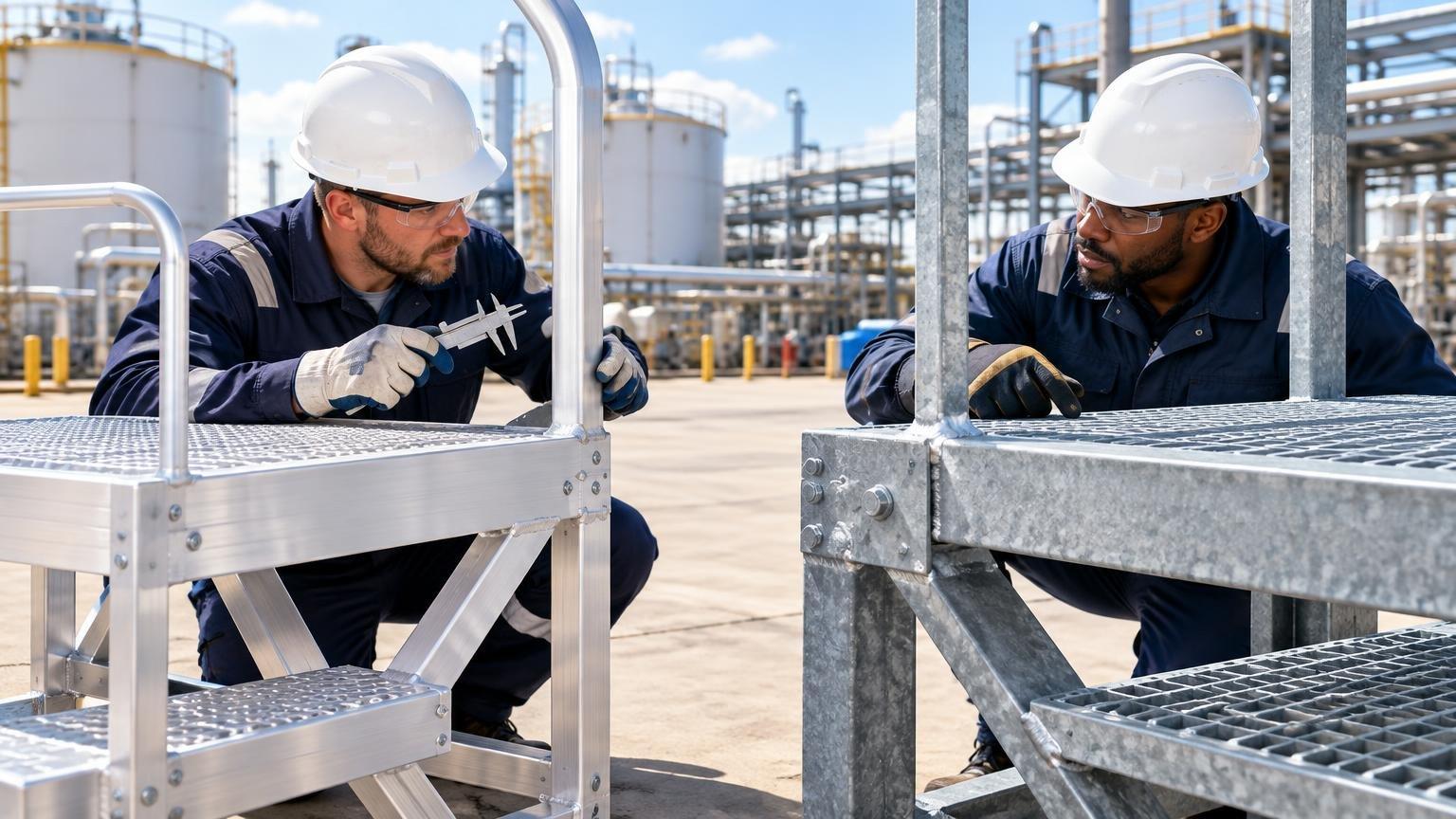
Connections deserve close attention. When aluminum and steel meet in a damp environment, the two metals may need isolation methods to reduce the risk of galvanic corrosion. We consider compatible fasteners, protective barriers, coatings, and separation details before fabrication, rather than waiting for problems to show up after installation.
Water management should also be part of the platform design from the start. Pooling water can sit against structural members, deck surfaces, stair treads, and connections, creating trouble for either metal over time. Good drainage paths, proper deck layout, cleaning access, and inspection space make a practical difference.
The best material decision comes from looking at the full operating environment. A lighter aluminum platform may be ideal in one location, while a coated or galvanized steel structure may make more sense a few feet away in a higher-load area.
Compare Long-Term Ownership Needs Before Installation
Material selection should account for the work a platform will require throughout its service life. Aluminum may need less routine coating attention in certain corrosive or wet settings, and its lighter weight can simplify handling and installation. Those benefits can be meaningful when access is limited or when future maintenance needs to stay manageable.
Steel can be an efficient solution when high structural capacity is the leading concern. Still, its long-term plan should include coating condition, corrosion checks, repair access, and possible downtime for maintenance. We recommend reviewing these needs before fabrication, not after crews are already relying on the platform.
As holiday schedules and year-end project planning move forward, it can help to review platform needs before spring maintenance activity and hurricane-season demands increase. An application-specific assessment should cover dimensions, loads, site access, attachment conditions, safety features, drainage, and applicable code requirements.
Plan Your Next Platform Project for Long-Term Performance
Aluminum and steel both have a place in Houston platform projects. The better choice depends on the loads involved, the exposure conditions, installation limits, maintenance expectations, and how the platform will be used each day.
Before finalizing a material or fabrication detail, make sure the complete platform system has been considered, including decking, handrails, connections, drainage, access points, and corrosion protection. A well-planned platform is easier to maintain, safer to use, and better prepared for the work ahead.
Get a Platform Built for Your Demands
At Weldit, we design and fabricate platform components around your operational requirements, load needs, and long-term maintenance goals. Our custom aluminum fabrication services can help you create durable, purpose-built solutions for challenging industrial environments. To discuss your platform project with our team, contact us today.