A damaged trailer hitch is never just a small problem. If you haul equipment, supplies, or family gear around Houston, that connection point between your truck and trailer needs to be solid every single mile. When it is not, you risk your load, your vehicle, and the people around you on the road. This is even more serious during the busy fall and holiday stretch, when trailers are running harder and more often.
Here, we will walk through why trailer hitch repair should not wait, what can go wrong when it does, and how emergency mobile welding can get you safely moving again. We will also share what to expect during an emergency welder callout and how to pick someone qualified to touch your hitch and frame.
When a Broken Trailer Hitch Cannot Wait Until Morning
Houston traffic never really slows down, and fall only adds to the pressure. There are hunting trips heading out before sunrise, football tailgates packing up grills and coolers, small businesses pushing holiday deliveries, and job sites trying to finish projects before year-end. Trailers are everywhere, from flatbeds on the beltway to utility trailers in neighborhood streets.
When a hitch cracks, bends, or loosens during that rush, your plans can come to a hard stop. Driving with a damaged hitch is not just annoying; it is risky. A failing hitch can lead to:
- Lost loads that scatter equipment or cargo on the highway
- Trailers swinging or fishtailing behind you
- Roadway hazards for drivers who have no time to react
- Serious injuries and major damage if the trailer disconnects
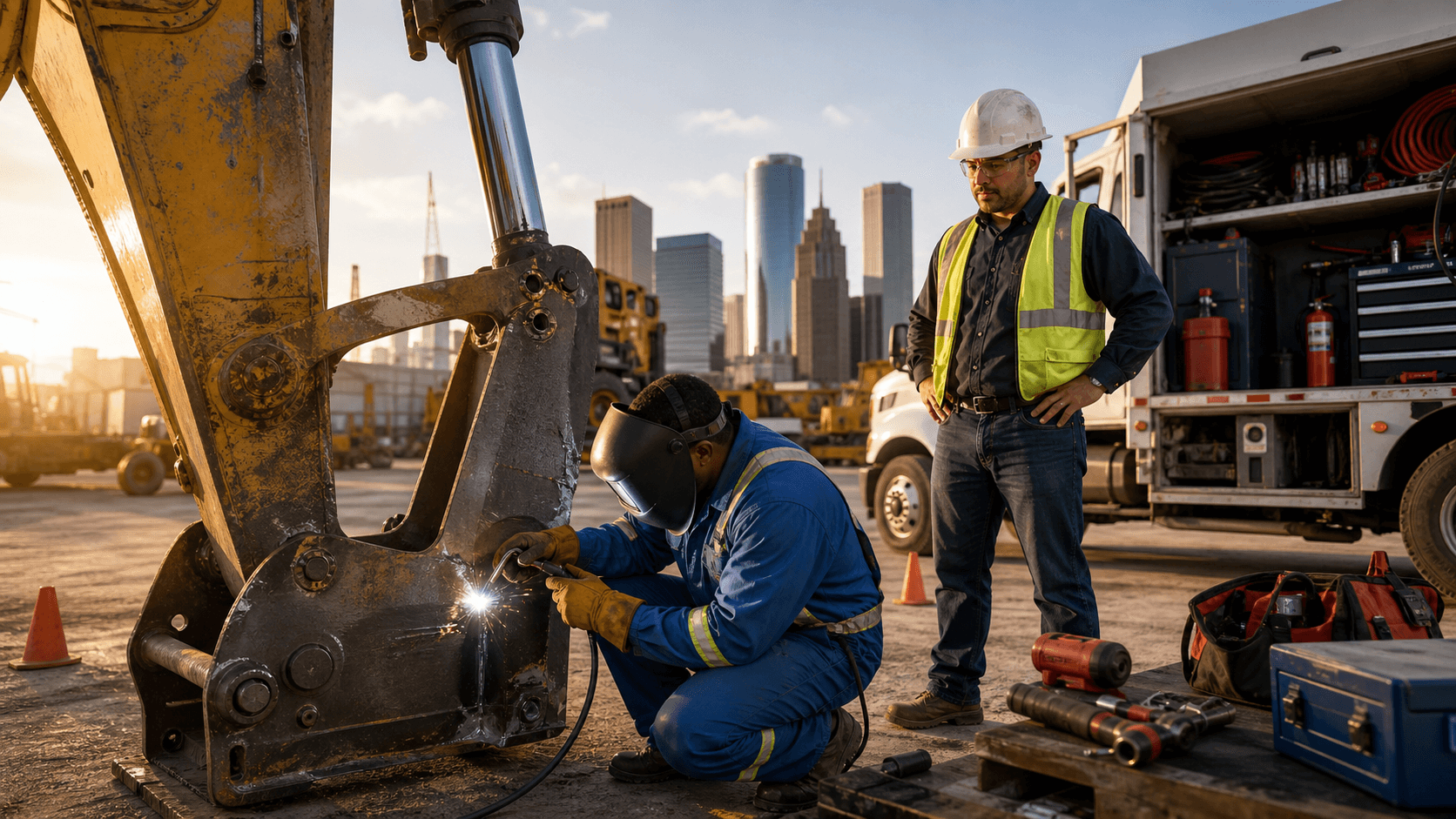
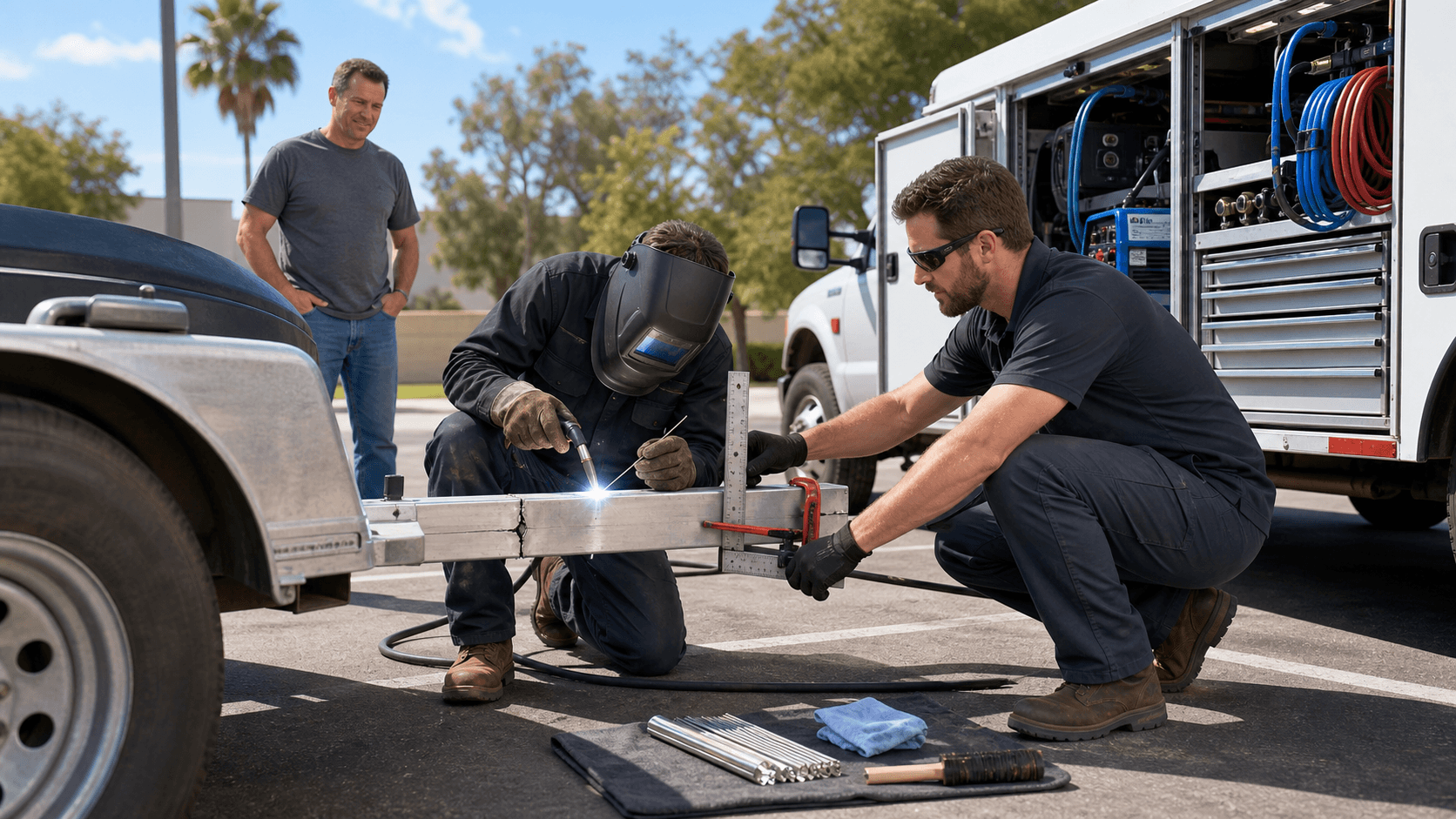
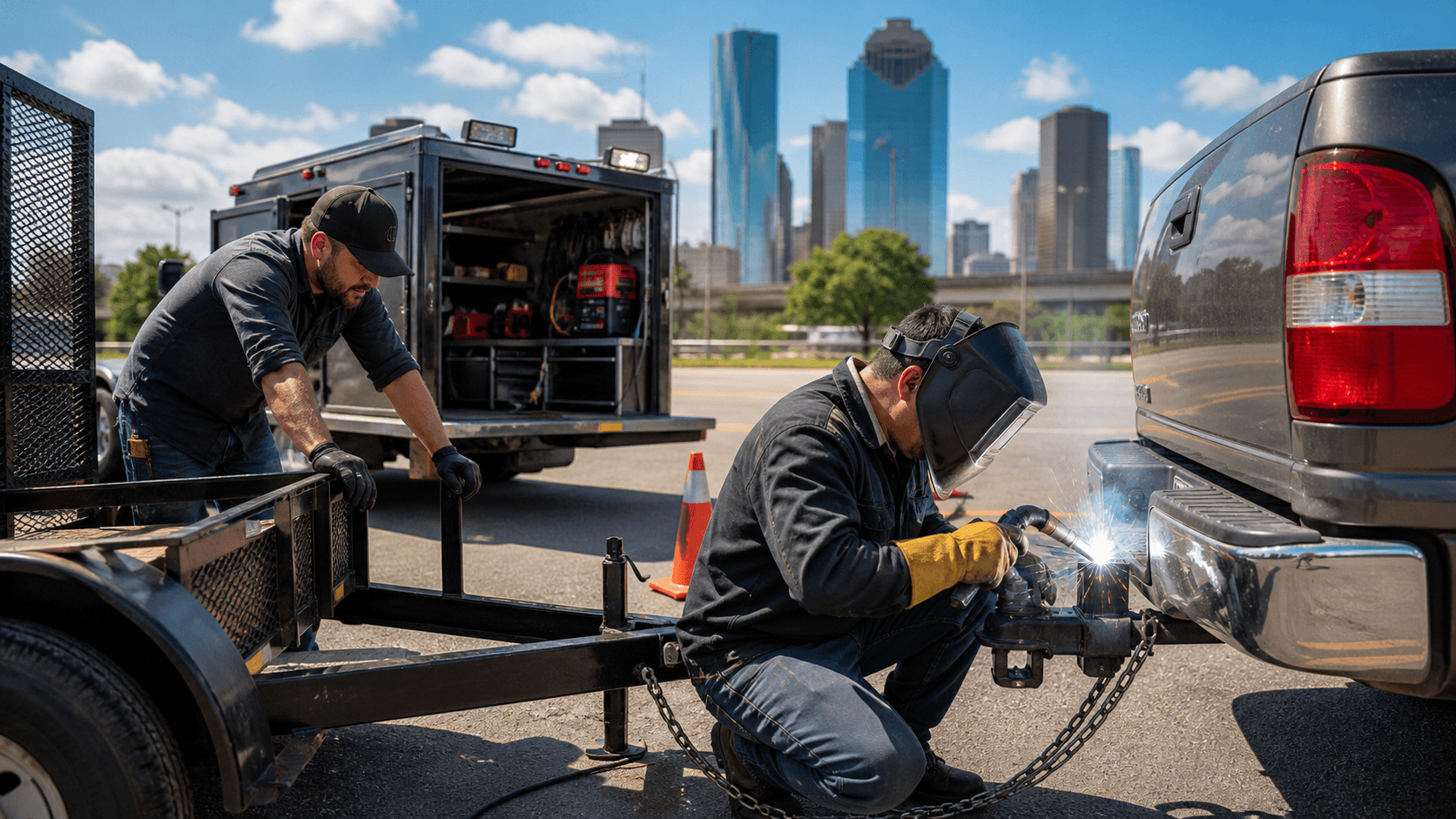
Emergency welder callouts give you a way to deal with that problem right where you are. Instead of waiting days for a shop spot, a mobile welder can come to your site, yard, or roadside location and work to get your hitch safe enough to move, or even fully repaired, depending on the damage.
Hidden Dangers of Delaying Trailer Hitch Repair
Many people keep hauling with a "small" hitch issue, thinking they will fix it when things slow down. That is where trouble starts. Some common types of trailer hitch damage include:
- Cracked welds around the receiver or mounting brackets
- Bent receiver tubes after a jackknife or hard bump
- Rusted mounting plates that are thinning out
- Worn or torn safety chain tabs
- Broken or loose couplers at the tongue
What looks minor on the surface can hide deeper problems. Cracks can spread into the truck or trailer frame, not just the hitch parts. Every mile adds vibration and stress, which speeds up metal fatigue. That load then shifts pressure to suspension components, tires, and even the tow vehicle frame.
There are also rules to think about. In Texas, unsafe loads can draw attention on the road, especially for work trucks and commercial trailers. If there is an incident and the hitch was clearly damaged and ignored, it can make insurance claims harder and bring more questions about safety and maintenance.
Why Houston Drivers Need 24/7 Mobile Welding Support
Houston is busy, wide, and full of heavy work. Between industrial corridors, refineries, ports, and large construction zones, trailers are hauling:
- Equipment and tools
- Structural steel and pipe
- Job site materials and supplies
- Commercial goods and retail stock
When a trailer is down, crews wait, deliveries stall, and schedules slip. Towing a loaded rig across town to a shop is not always simple, and it can cause more damage to frames or axles if the hitch or tongue is already compromised.
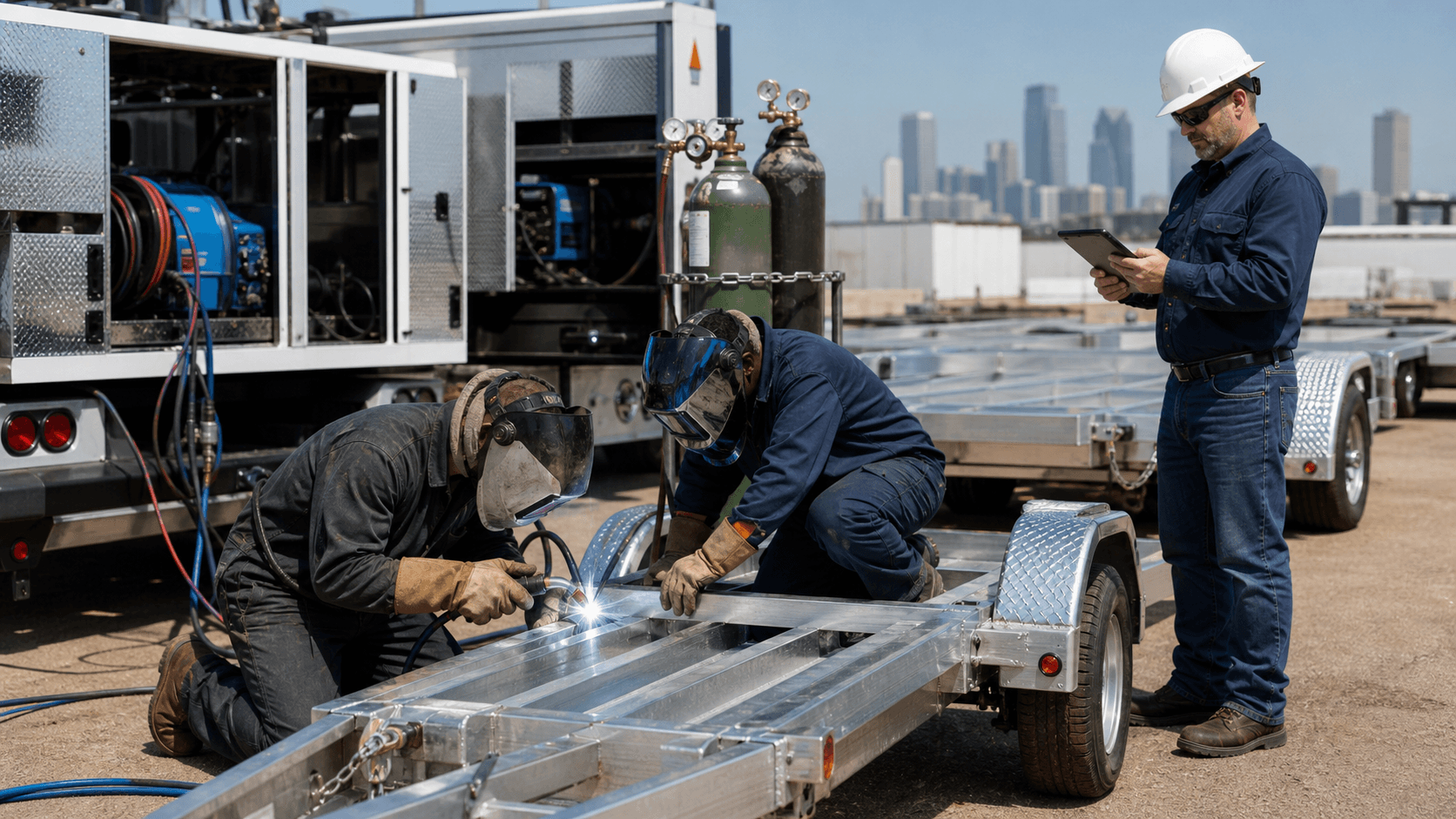
Mobile welding brings the repair shop to you. The advantages are clear:
- On-site inspection and repair without moving the damaged hitch
- Less downtime for drivers and crews
- Lower chance of extra damage from towing or unloading and reloading
A certified welding contractor that works with AWS and ASME codes understands how structural members carry load, how truck and trailer frames are built, and how different metals react to heat from welding. That kind of background matters when the repair is holding thousands of pounds at highway speed.
What to Expect From an Emergency Welder Callout
When you call for emergency welding help on a hitch, the process usually starts before anyone ever turns a wrench or strikes an arc. A helpful intake call should cover:
- Where you are and how to access the site
- What type of vehicle and trailer you have
- How the damage happened, if you know
- Photos or video so the welder can see cracks, bends, and rust
This early info helps the welder plan materials, equipment, and safe work steps. Once on-site, the welder should not jump straight into welding. A careful inspection comes first. That includes:
- Checking all welds around the hitch and mounting plates
- Looking for hidden cracks along the frame rails
- Verifying how the load travels from the hitch into the frame
- Deciding if a temporary fix is enough to move, or if a full repair is needed now
Repair methods can vary, but some common steps are:
- Removing bad welds and weak metal instead of just welding over them
- Adding reinforcement plates that are properly sized and shaped
- Matching filler metal to the base material of the hitch and frame
- Keeping clear space for safety chains, wiring, and brake lines so nothing rubs or overheats
The goal is not just to make it look better, but to restore strength and safe load paths.
Choosing a Qualified Welder for Trailer Hitch Repair
Not every person with a welding machine should be working on a trailer hitch. This part of the vehicle deals with dynamic loads, shock, and constant vibration, so experience and training count.
Key things to look for include:
- Welding certifications and code work experience
- Background with structural steel, piping, and vehicular frames
- Understanding of common hitch styles and how manufacturers intend them to be mounted
- Familiarity with safety expectations for commercial trailers and work trucks
Quality practice shows in the small details. Good welders will:
- Clean and prep metal, removing rust, paint, and oil first
- Follow welding procedures suited to the material and position
- Aim for full penetration, not just surface beads
- Perform visual checks and, when needed, non-destructive tests to confirm sound welds
There is a big difference between a quick patch to "get you home" and a repair that respects code principles and load ratings. A contractor that works with industrial and commercial welding lives in that code-conscious world every day and carries that mindset into trailer hitch repair work.
Fall and Holiday Season Trailer Demands in Houston
When the calendar hits late fall, trailer use around Houston tends to spike. Families hook up travel trailers and cargo trailers for holiday trips. Land care crews push through year-end cleanups. Retail, logistics, and construction all work to finish strong before the new year.
This is a smart time to give your trailer hitch and frame a closer look before loading up. Simple checks include:
- Receiver hitches, pins, and clips for wear or bending
- Safety chains, hooks, and attachment tabs for cracks
- Coupler operation and latch function
- Visible welds around the tongue, frame, and suspension points
If you see cracks, movement when you apply tongue weight, or heavy rust that flakes off in chunks, those are not "later" problems. Non-emergency work can often be planned for mild issues, like surface rust or light wear, especially if you catch them early before a big trip. For more severe damage, or anything that affects how the trailer tracks or how the hitch carries load, emergency welding support can help keep that small issue from turning into a roadside nightmare.
Get Started With Your Project Today
If your hitch is bent, cracked, or just not towing the way it should, we are ready to help you get safely back on the road. At Weldit, our certified welders provide precise trailer hitch repair that restores strength and reliability. Tell us about your vehicle, how you tow, and any problems you are noticing so we can recommend the right fix. To schedule service or request a quote, simply contact us today.