Keep Houston Fleets Moving with On-Site Aluminum Repairs
Mobile aluminum welder support keeps trucks on the road when it matters most. When a fleet vehicle is stuck with a cracked aluminum lift gate or damaged trailer wall, routes back up, drivers wait, and loads sit in the heat. That downtime hits hard during busy summer demand when every hour counts.
Many fleets around Houston run tight schedules with little room for surprise repairs. When a truck has to be towed across town or wait days for a body shop slot, you feel it in missed deliveries and frustrated customers. On-site aluminum repair changes that story by bringing the welding crew directly to your yard, distribution center, or job site.
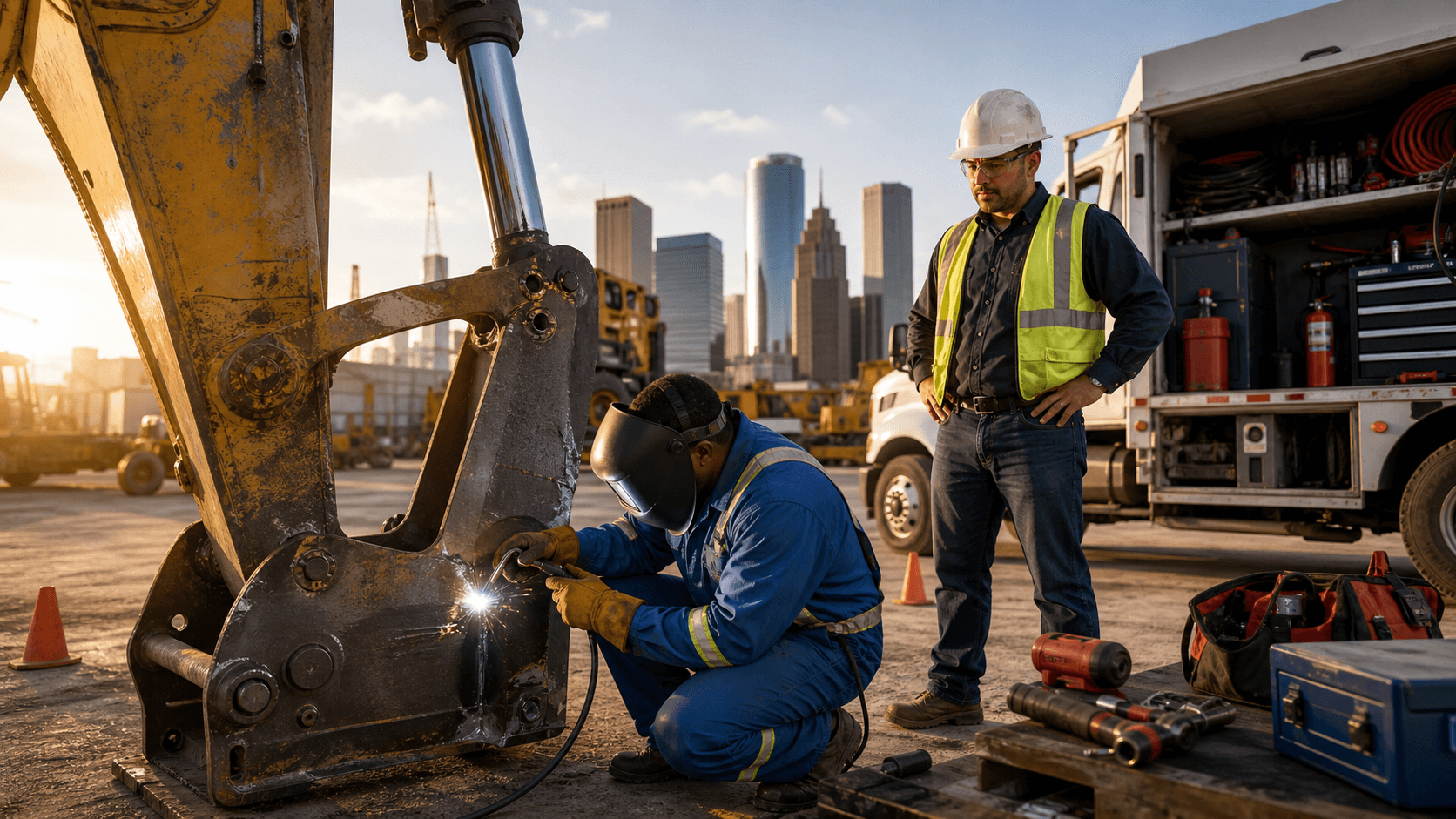
With a mobile aluminum welder, repairs can happen where the truck sits. The gate that would have ruined a full day of routes can get restored far faster, so the vehicle goes back into rotation. Our team at Weldit focuses on certified mobile welding and fabrication for industrial and commercial clients across Texas, so we understand how important it is to keep Houston fleets rolling without long delays.
Why Aluminum Damage Is So Common on Houston Fleet Vehicles
Aluminum shows up all over modern fleet vehicles. It keeps weight down and helps with fuel use, but it also takes a lot of abuse. On a typical Houston fleet unit, aluminum is common on parts like:
- Box truck and trailer walls and roofs
- Lift gates and loading ramps
- Fuel tanks and auxiliary tanks
- Toolboxes and service body compartments
- Refrigeration unit covers and custom enclosures
Houston brings its own special kind of stress to those parts. Long, hot days, heavy sun, and sticky humidity wear on panels and welds. coastal air in the region can be corrosive, and dust and road grime grind into moving pieces year-round. Even without harsh winter weather, that mix is hard on aluminum joints, brackets, and hinges.
Some of the most common failure points we see on fleet vehicles include:
- Cracked welds on lift gates and ramps
- Damaged trailer skins and corner caps
- Broken ladder racks and pipe racks
- Split welds on service bodies and toolboxes
- Worn or bent mounting brackets and hinges
A small crack might not seem like a big deal at first. But every mile adds vibration, loading, and flex. That tiny fracture can grow quickly, and what starts as a simple repair can turn into a structural problem. Left alone, it can affect safety and make a truck fail an inspection or be taken out of service at the worst possible time.
How a Mobile Aluminum Welder Supports Houston Fleet Uptime
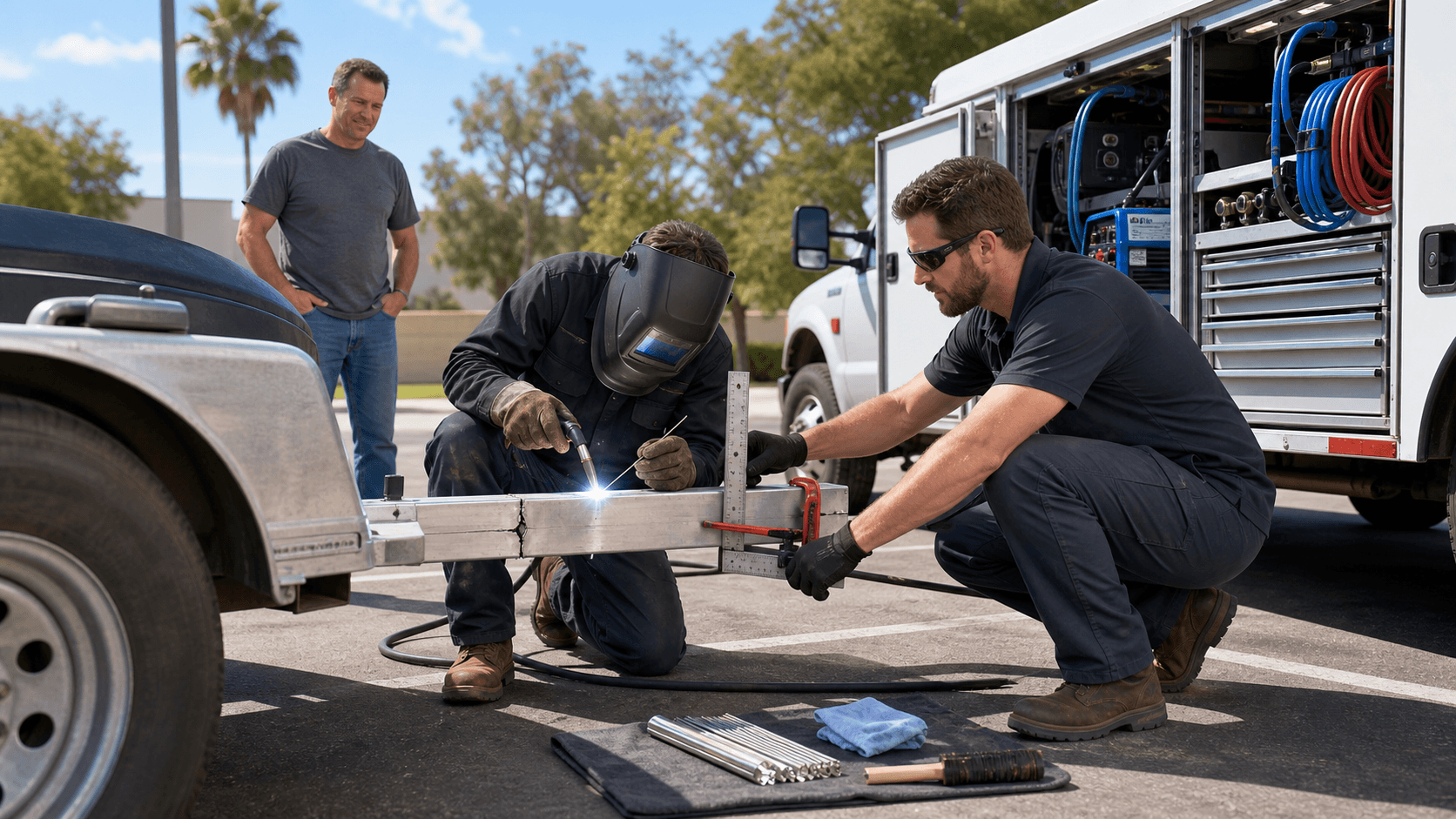
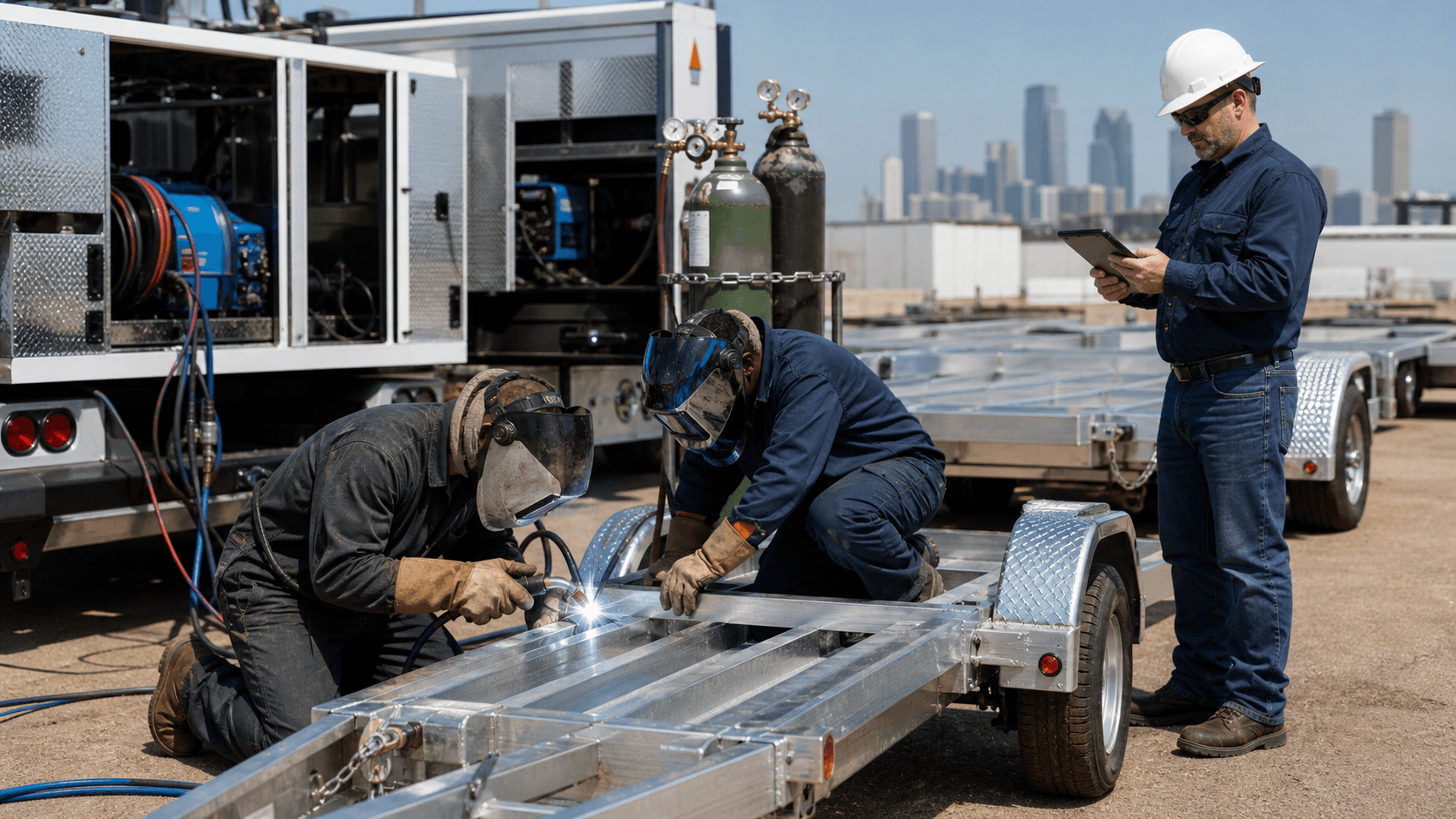
A mobile aluminum welder is basically a rolling welding shop. The service truck carries welding machines, generators, gas, tools, and materials so repairs can be done right where your vehicles sit. For busy fleets, this can make the difference between a long breakdown and a short pause.
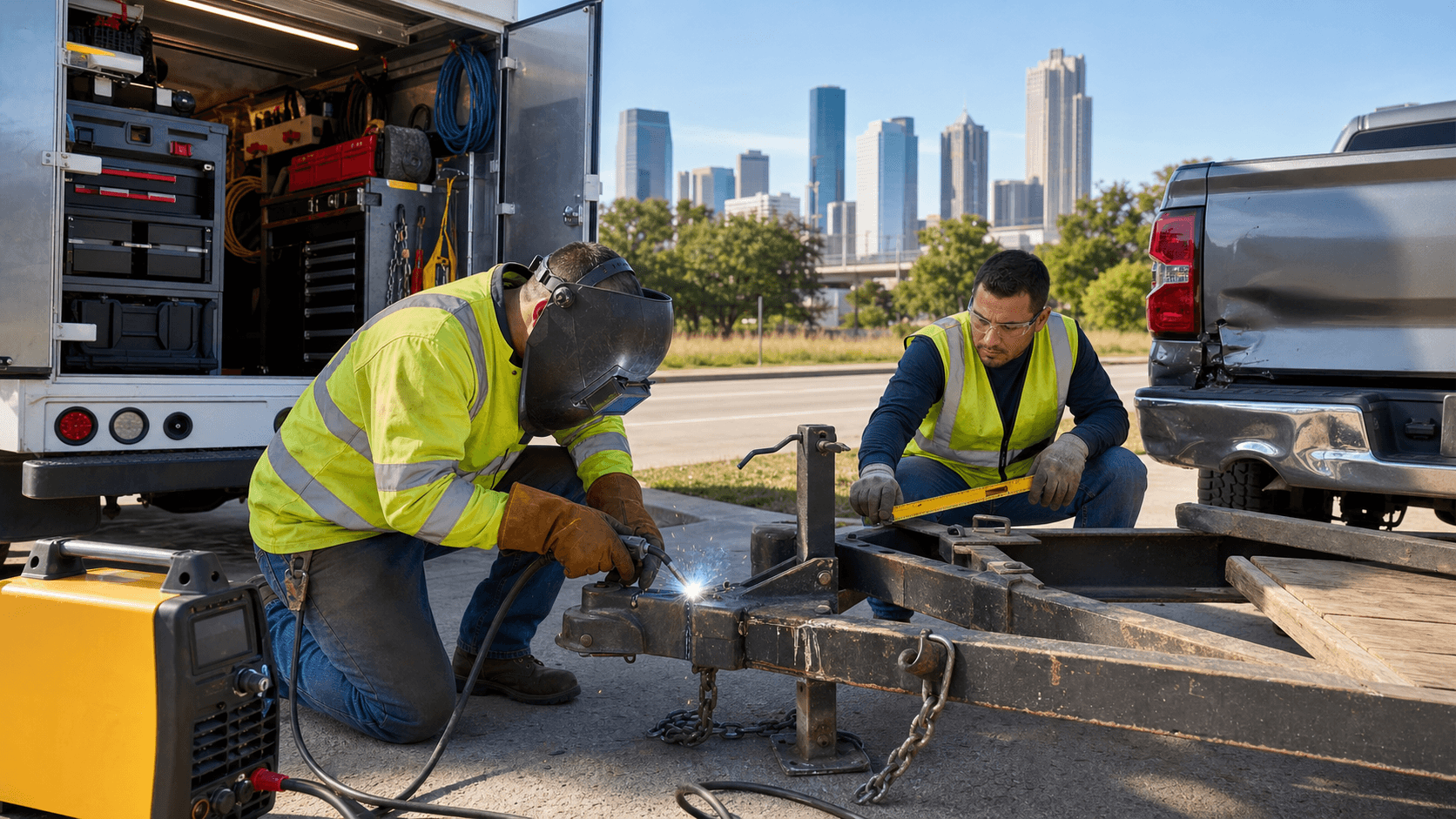
Instead of towing a truck to a shop and waiting in line, you keep that vehicle in your own lot. There is no need to pull off lift gates, bodies, or racks and move them somewhere else. The welder comes to you, sets up, and gets to work while your team keeps running the rest of the operation.
Typical mobile aluminum support for Houston fleets can include the following:
- Crack repair on lift gates, doors, and panels
- Bracket, hinge, and latch replacement
- Reinforcement of ramps, steps, and platform edges
- Repairs on toolboxes, service bodies, and racks
- Custom aluminum add-ons such as guards, plates, and supports
Another big benefit is flexible scheduling. Many fleet managers prefer after-hours or weekend work so daytime routes are not disrupted. A mobile welder can plan repairs around your peak windows, which helps keep your vehicles out on the road when you need them most.
Safety, Compliance, and Code-Quality Welds on the Road
Aluminum repairs are not just about getting through the next shift; they tie directly into safety and liability. A failed lift gate can injure a worker. A broken step can cause a bad fall. A weakened trailer wall can lead to damaged cargo or a load shift that draws unwanted attention during inspections.
That is why the quality of the weld matters. At Weldit, our background is in certified mobile welding and fabrication with a focus on AWS- and ASME code-compliant projects. Those higher standards carry over into fleet work, from the way we prepare joints to how we inspect finished welds.
Good aluminum welding is all about the right process, including the following:
- Matching filler metal to the correct aluminum alloy
- Cleaning away oxide, paint, oil, and dirt before welding
- Controlling heat so metal does not warp or lose strength
- Using proper travel speed and technique to limit porosity
For many Houston operators, recordkeeping and inspection are also important. When needed, we can provide repair notes or photos to support your maintenance logs. Documented work helps show that you are taking care of your equipment, which is helpful in internal audits and when meeting regulatory expectations.
Choosing the Right Mobile Aluminum Welder for Your Fleet
Not every welder is the right fit for commercial vehicles. Fleet work brings tight deadlines, safety concerns, and sometimes specialty equipment. When you look for a mobile aluminum welder, it helps to check for a few must-haves:
- AWS-certified welders with aluminum experience
- Background with industrial and commercial vehicles
- Proof of insurance and safe work practices
- References from other Houston-area fleets or industrial clients
Code-focused contractors like our team at Weldit are a strong match for mission-critical vehicles that run heavy loads, hazardous materials, or temperature-sensitive cargo. Those units put a lot of stress on aluminum parts, so the repair standard needs to match the day-to-day risk.
It is also smart to ask practical questions before trouble hits, such as:
- What is the normal response time in your area of Houston?
- How far does the mobile service travel around the region?
- Is there any kind of after-hours or emergency support?
- How long do common aluminum repairs usually take?
- Can they also help with custom brackets or fabrication needs?
Building a long-term relationship lets the welder learn your specific trucks, trailers, and common failure spots. Over time, patterns show up. That makes it easier to plan repairs before your busy periods, rather than chasing surprises during peak summer delivery or service seasons.
Plan Ahead to Protect Your Houston Fleet This Summer
Summer is often when loads are heaviest, schedules are tightest, and small problems turn into big ones. A bit of planning around aluminum can keep your fleet from getting backed up right when demand hits.
Many fleet managers find it helpful to:
- Schedule mid-year checks on lift gates, ramps, and steps
- Look over bodies, racks, and toolboxes for early cracks
- Flag loose brackets, bent hinges, and worn pins
- Note recurring trouble spots on certain units
It also helps to set a simple internal protocol so repairs move quickly. Drivers should know how to report damage, including clear notes or photos. Your team should know who is allowed to request mobile welder support and how you decide which trucks get priority when several units need attention at once.
With a clear plan and a mobile aluminum welder already familiar with your operation, you can treat most aluminum damage as a short pause instead of a major outage. That means less downtime, safer equipment for your crews, and smoother routes as Houston's busy season keeps rolling along.
Get Started With Your Project Today
If you are ready to repair, modify, or custom-build aluminum components on your schedule, our team at Weldit can help. Work with our experienced mobile aluminum welder service to get high-quality results completed right at your location. We will review your goals, recommend the best approach, and provide a clear plan before any work begins. Have questions or need a quote now? Simply contact us and we will respond promptly.