Fast Welding Help When Your Fleet Cannot Wait
When a work truck, trailer, or service rig goes down, your whole day can fall apart. A cracked frame, bent hitch, or broken ramp does not just look bad. It can stop deliveries, stall crews at a jobsite, and throw off schedules for the rest of the week.
In the middle of a hot Houston workday, that kind of downtime hits hard. Drivers are stuck, customers are calling, and other loads start to back up. An emergency welder in Houston helps keep industrial, commercial, and marine operations moving when vehicles or trailers suffer sudden structural damage from accidents, overloading, or simple fatigue.
We want to walk fleet supervisors, facility managers, and business owners through when to call a mobile welding pro, what to expect when we roll up onsite, and how to cut down on repeat failures. This matters even more during summer construction rush and the Gulf hurricane window, when your equipment is working long hours and the schedule has no room for surprises.
Common Vehicle and Trailer Damage Houston Fleets Face
Work trucks and trailers take a beating. Over time, weak points show up, usually around welds and high-stress areas. Some of the most common failures we see include:
- Cracked truck or trailer frames
- Broken or twisted crossmembers
- Torn or bent spring hangers and brackets
- Damaged stake pockets and rub rails
- Failed gooseneck or bumper-pull couplers
- Ramp or gate hinge and latch failures
Houston adds extra stress. Heat and UV exposure wear on paint and coatings. Heavy stop-and-go traffic keeps suspensions working nonstop. Along the Gulf Coast, moisture and salt in the air speed up corrosion, especially on marine support rigs, yard trucks, and trailers that sit near the water.
It usually does not fail all at once. There are warning signs that trouble is turning into an emergency:
- Visible cracks around weld beads or in the heat-affected zone
- A trailer that leans, sags, or looks twisted under load
- Noisy suspensions, clunks when braking, or harsh vibration
- Misaligned doors, ramps, or gates that suddenly get hard to open
- Old repair areas that start to open up, ripple, or separate again
When you notice any of these, it is time to slow down and take a closer look before the next trip.
When to Call an Emergency Welder in Houston
Not every repair is an emergency. Some small issues can wait for planned shop time. But if damage makes a vehicle unsafe, un-roadworthy, or unable to haul its normal load, that is no longer a minor maintenance item. That is an urgent problem.
Good triggers for calling an emergency welder in Houston include:
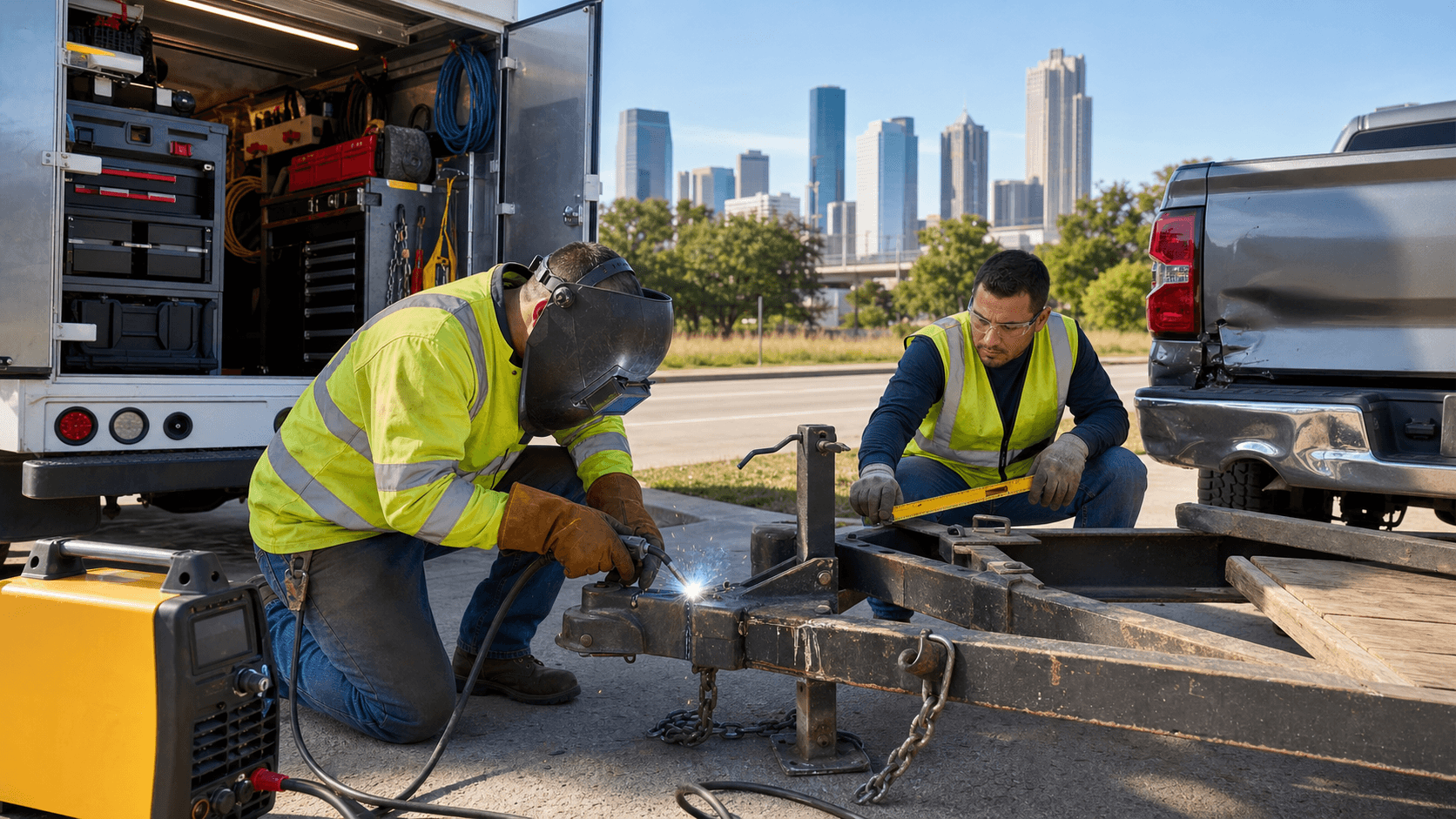
- A roadside incident that bends a hitch, tongue, or coupler
- Impact damage at a loading dock or yard that tears brackets or crossmembers
- Sudden loss of trailer stability or severe sway under normal conditions
- Failed safety chain mounts or broken breakaway brackets
- Cracks found during a pre-trip inspection in any load-bearing area
Fleet operators carry legal and safety responsibilities. Regulations from groups like the DOT and FMCSA expect you to keep equipment in safe working order. If a driver or supervisor knows about a defect and sends that unit out anyway, the risk climbs fast. There is exposure to:
- Liability if something separates on the road
- Fines or out-of-service orders during inspections
- Lost contracts if you cannot cover loads or show up on time
Quick mobile welding can often stop the bleeding, limit towing, and get you back to work sooner. Waiting can mean longer downtime, bigger structural damage, and more units pulled in to cover one failure.
How Mobile Welding Repairs Vehicle and Trailer Damage
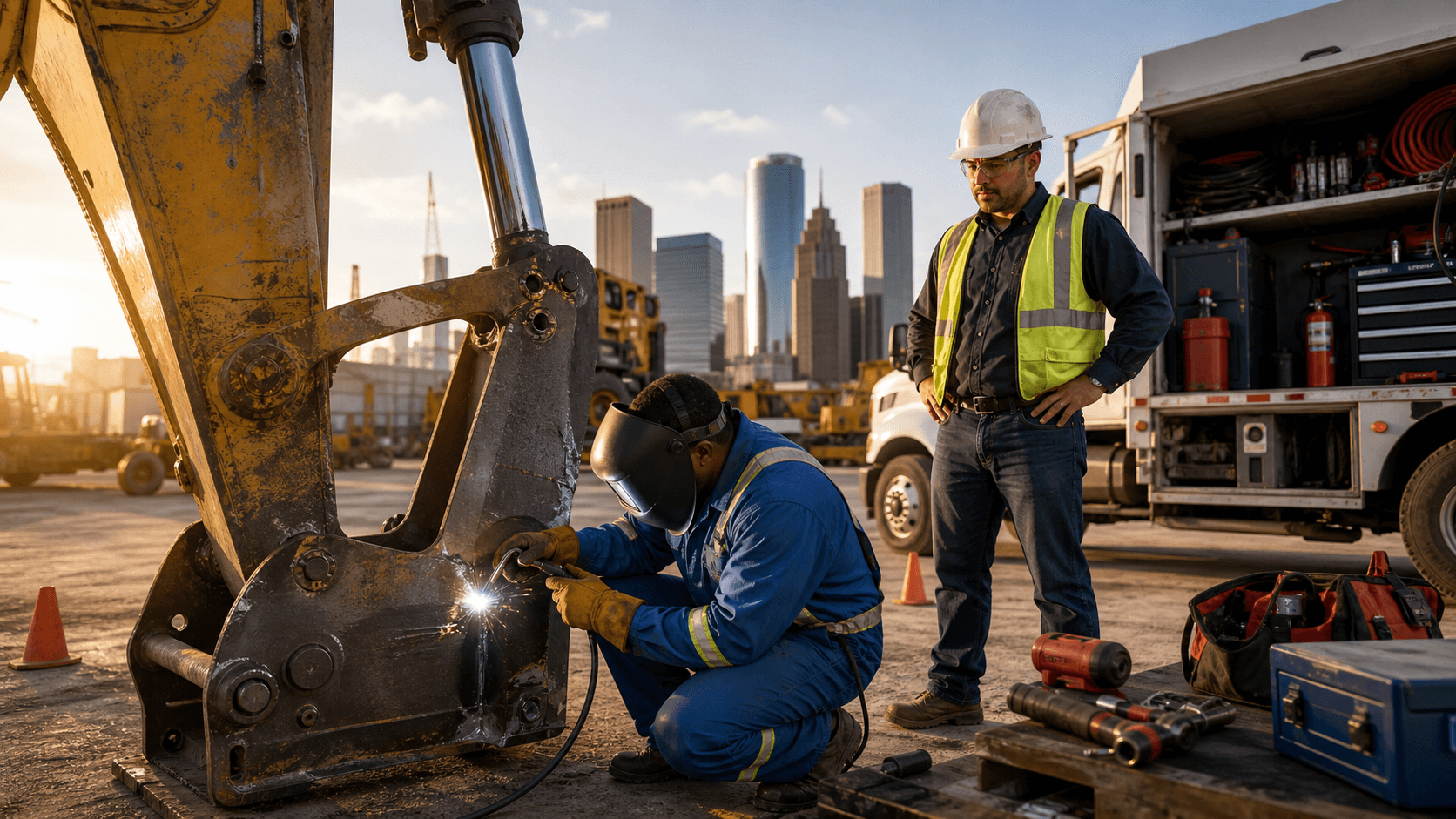
When a Houston emergency welder arrives onsite, the first step is not to strike an arc. It starts with a quick scene assessment and a talk with the driver or supervisor about what happened and how the damage showed up.
Typical steps look like this:
- Secure the area, block wheels, and set up fire watch and screens where needed.
- Inspect not just the obvious break, but nearby welds, brackets, and structural members.
- Review how the vehicle or trailer is used, what it hauls, and any past repairs in that area.
- Agree on a repair approach with the fleet or facility manager before work begins.
From there, the repair itself may include:
- Gouging or grinding out failed or poor-quality welds
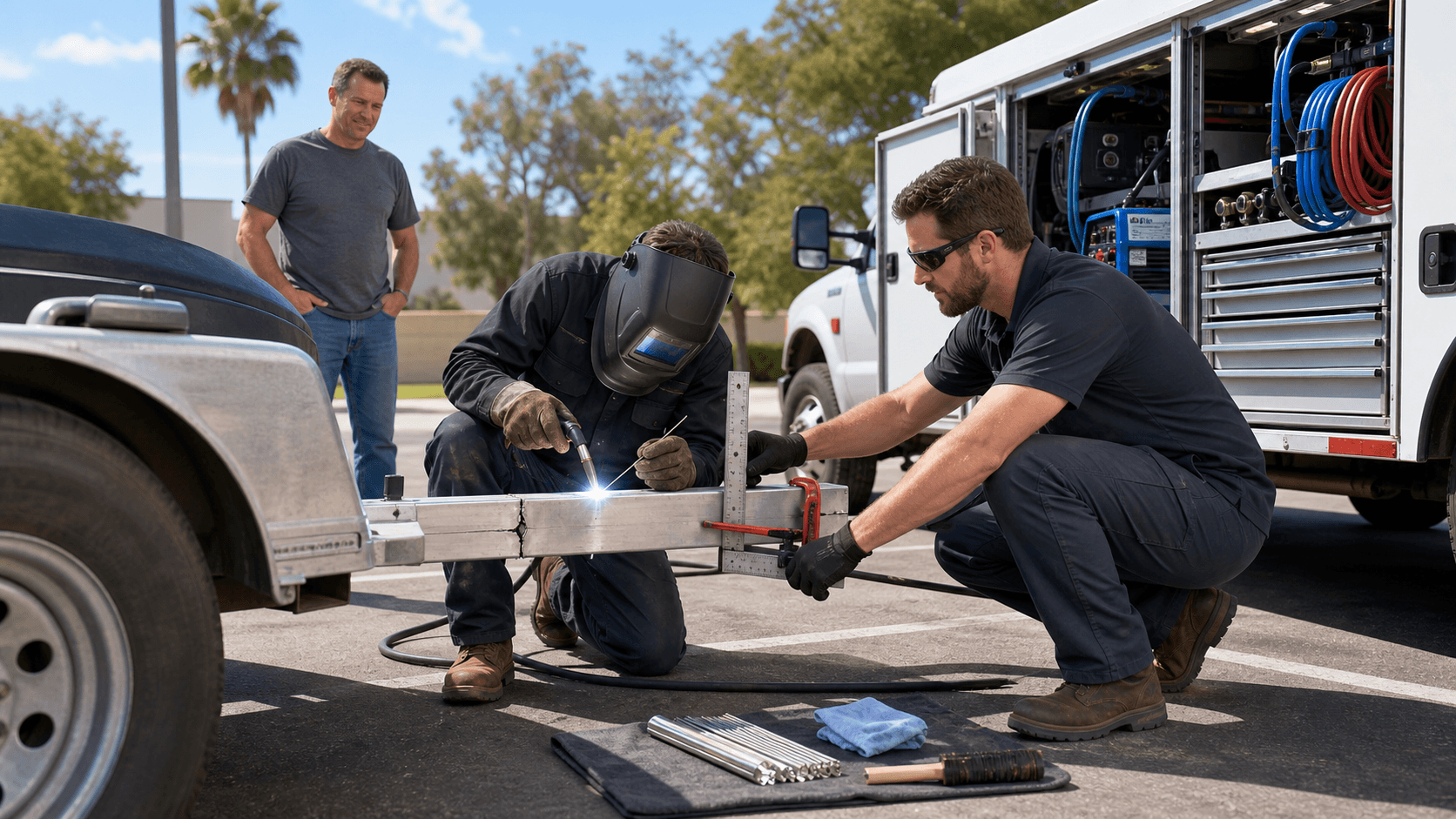
- Heating and straightening bent metal where safe to do so
- Adding plates, fish plates, or reinforcement to high stress zones
- Installing gussets at corners or where vertical and horizontal members meet
- Using proper preheat, filler metals, and welding processes for the material and service
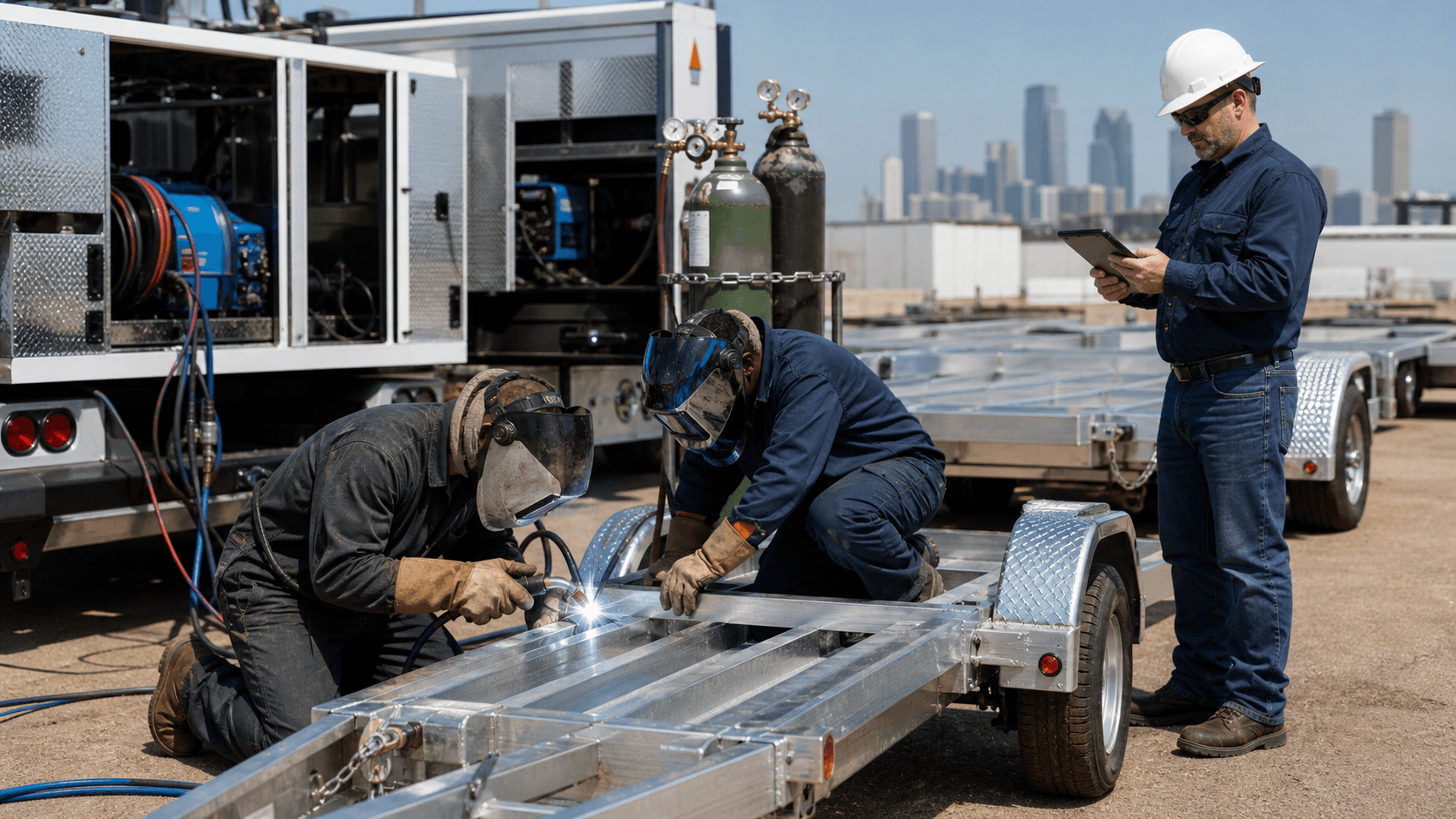
A professional mobile welding and fabrication contractor pays close attention to quality. That includes working to code or OEM standards when required, following proven weld procedures, and using certified welders for structural work. For some fleets, it also helps to provide photos or basic documentation of completed repairs so maintenance and safety teams can keep their records straight.
Keeping Your Fleet Rolling During Houston's Peak Season
Summer tends to be the heavy push for many Houston operations. Construction schedules stretch into longer days. Hauling gets heavier. Hurricane season brings storm prep, emergency response, and more use of generators, fuel trailers, and marine support rigs.
All of that adds load cycles and heat to metal. The more your equipment moves, the more any weak weld or thin section gets stressed. Fast repairs are important, but avoiding emergency downtime in the first place is even better.
Smart steps include:
- Scheduling weld and structure inspections before peak season starts
- Reinforcing known weak points on high-use trailers and rigs
- Flagging older units that carry critical loads for closer checks
- Keeping notes on past failures so repairs address root causes, not just symptoms
When you have an ongoing relationship with a trusted emergency welder in Houston, response is usually faster. The crew already knows your equipment types, typical loads, and safety rules. That makes both emergency and planned work smoother, with less back and forth at the worst possible time.
Protect Your Schedule with Proactive Welding Support
For industrial, commercial, and marine fleets, welding support should sit right beside things like inspections, driver training, and route planning. It is part of risk management, not an afterthought when something snaps out on the highway.
A good next move is to look across your trucks, trailers, and support rigs and make a simple list of current issues: cracked paint lines around welds, any sagging or leaning, and spots that have been patched more than once. From there, you can work with a professional welding contractor like Weldit to set up inspections or a reinforcement plan before the next big rush hits.
It also helps to have an emergency protocol. Drivers and supervisors should know who to call, what photos to take, and what information to share when damage happens. With that plan in place, and with a certified mobile welding and fabrication team ready to respond across Texas, you are in a much better position to keep loads moving, protect your people, and keep trailers and service rigs working when it matters most.
Get Fast, Reliable Welding Help When You Need It Most
When your project or equipment is down, you cannot afford long delays, and that is where our emergency welder in Houston service comes in. At Weldit, we respond quickly, arrive prepared, and focus on getting you safely back up and running. Tell us what you are dealing with and we will walk you through practical options that fit your timeline and budget. Ready to get help now? Contact us so we can get started today.