Winning MISCS Installs on Houston's Tightest Sites
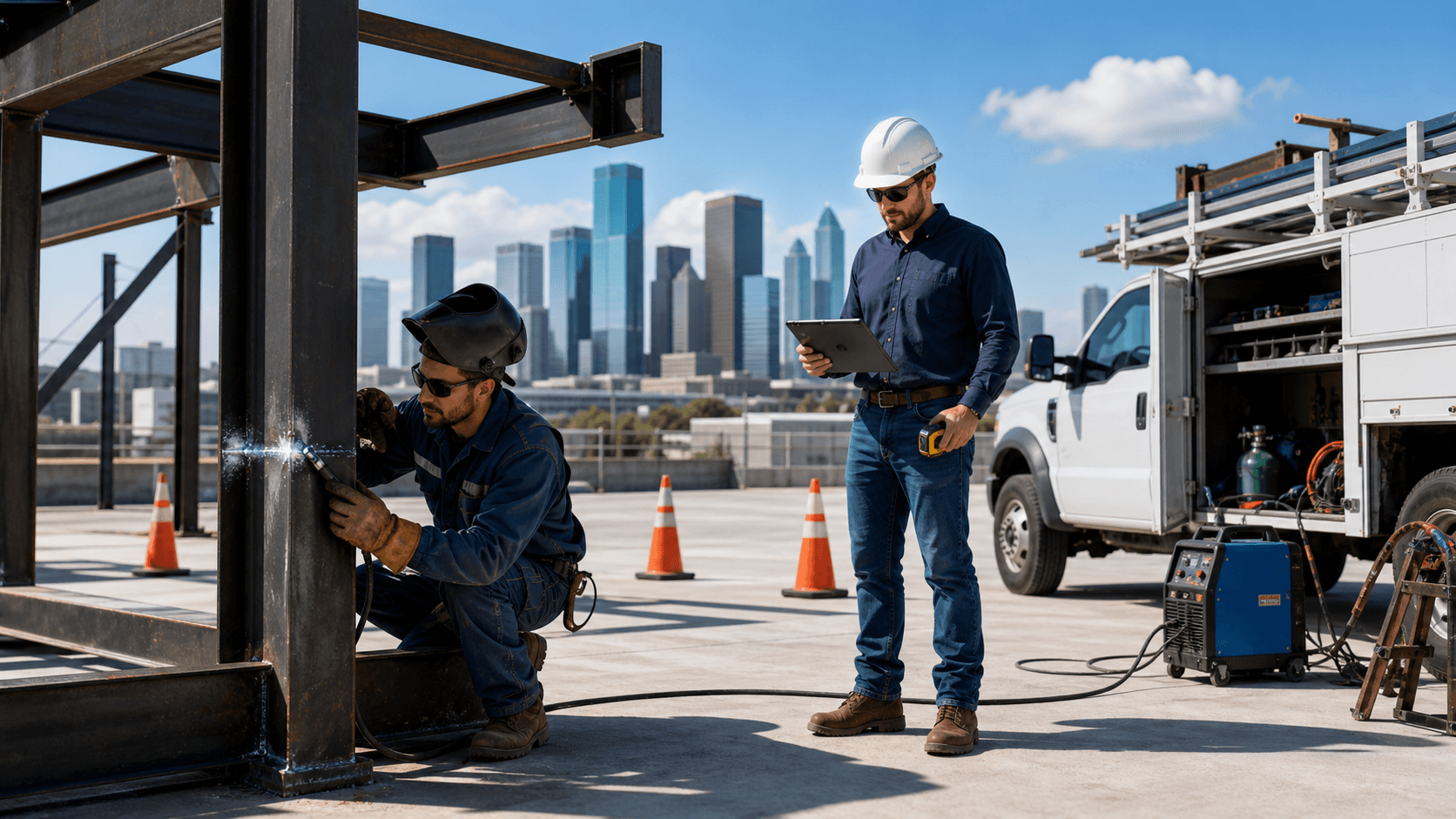
Tight Houston job sites make miscellaneous steel feel bigger than it is. Stairs, rails, embeds, lintels, support frames, all of that small stuff ends up driving access, safety, and final inspections. When the site is boxed in by streets, neighbors, and active tenants, poor planning on miscs can stall everything from MEP rough-in to punch-list signoff.
Fall adds even more pressure. Teams are trying to dry-in, pass life safety checks, and clear long-lead items before the holiday slowdown. That is exactly when miscs coordination matters most, because so many items touch exits, roofs, and equipment access. As a mobile welding and fabrication contractor working across Houston, we see how early field planning turns a tight site from a headache into a clean, steady install.
A mobile, code-compliant partner helps bridge the gap between nice, tidy shop drawings and real-world conditions. Instead of guessing in the shop and hoping it fits, we match fabrication with field checks, access planning, and inspection needs, so stairs, rails, and frames go in once and stay in.
Walking the Site Before Steel: Access and Layout Reality Check
On congested sites, the first smart move is a slow site walk before steel ever shows up. We treat that walk like a field coordination meeting, not just a quick look.
For pre-mobilization route mapping, we like to:
- Walk the actual paths that cranes, forklifts, and carts will take
- Note slab conditions, drains, mud-prone areas, and any temporary ramps
- Flag low canopies, overhead power, balconies, and tight turns for long pieces
- Decide which items should ship in shorter lengths or smaller bundles
This keeps us from discovering a bad corner when a 20-foot stair stringer is already swinging over parked cars.
On micro sites, staging and laydown can make or break productivity. Good habits include:
- Breaking laydown by elevation or zone so each floor has its own small pile
- Keeping common paths, stair cores, and fire lanes as clear as possible
- Using just-in-time drops of small miscellaneous steel, like rails and embeds
- Planning return routes so empty pallets and scrap do not clog access
Field layout and verification also happen early. Before we offload heavy items, we like to confirm:
- Anchor bolt locations against drawings
- Slab edges and actual rough openings
- Control points from the GC or surveyor that we can trust
When existing work does not match the drawings, it is much easier to adjust plates, angles, and clips while steel is still on the truck or in the shop yard than when it is already sitting three floors up.
Sequencing Miscs with Other Trades to Protect Schedule
On tight Houston jobs, miscs can either grease the schedule or block it. The difference is usually sequencing.
Getting miscellaneous steel services into the sequence early helps everyone:
- Pull miscs into design-assist or preconstruction, not after framing is done
- Lock in dates for embeds, edge angles, and roof dunnage before MEP rough-in
- Define when stair stringers must be in so trades can move between floors
Trade stacking in cores and shafts is where jobs often slow down. We try to:
- Coordinate stair and landing installs with fireproofing schedules
- Set landing supports before shaft walls box us out
- Use phased rails, with temporary guardrails first and finished rails later
This way, people stay safe and productive, without ripping out fresh work to fix a missing support or angle.
For communication, simple tools usually beat fancy ones. Things that work well are:
- Color-coded 3-week look-aheads showing where miscs crews will be
- Phased misc drawings that clearly show "now" versus "later" items
- Quick field notes from installers when they spot a clash or missing support
We keep a tight feedback loop between the field and our office, so when our welders see a problem, they send photos and ideas instead of just stopping work and waiting on paper.
Planning Around Cranes, Forklifts, and Fall Weather Limits
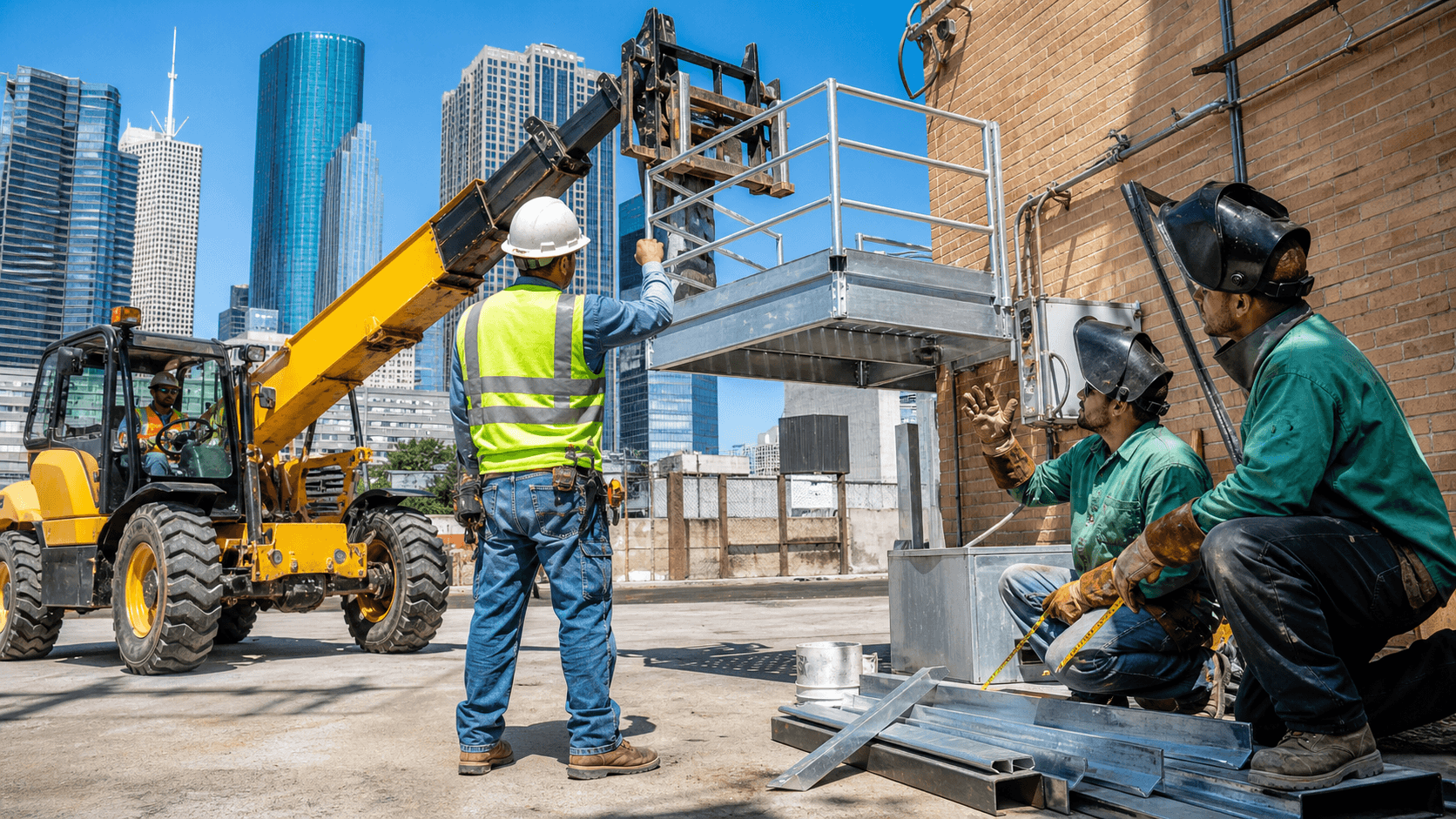
Tight Houston sites often share streets, sidewalks, and drives with the public. That makes crane and forklift planning just as important as welding.
For crane picks and street closures, we try to:
- Schedule picks for stairs, canopies, and big frames in off-peak hours
- Plan bundles by area and elevation so we are not swinging steel all day
- Limit how often we shut down lanes or bring in flaggers
Forklift and hoist constraints are another hidden trap. It helps to:
- Match piece sizes to the actual forklift or telehandler on site
- Think about hoist openings and elevator sizes for high-rise interiors
- Respect deck load limits when stacking rails, embeds, or frames up high
We see a lot of jobs where steel was drawn in long single pieces, but the real site wants spliced, lighter segments that two people and a small lift can handle.
Fall in Houston still has heat and humidity, plus shorter days and more afternoon showers. For welding and finishing, this means we plan for:
- Portable lighting so work stays safe as daylight fades earlier
- Tenting or covers when we need dry conditions for painting or grouting
- More shop preassembly so on-site weld time stays short and focused
Short, planned weld sessions are easier to protect from pop-up showers than big, open-ended field builds.
Temporary Supports and Code Ready Field Welding Details
On crowded job sites, temporary supports often carry more load than people expect. We try to be very clear about what is "temp" and what is final.
For safe, smart temporary bracing, we focus on:
- Giving stairs, canopies, and frames real bracing for construction loads
- Marking temporary posts and braces so no one mistakes them for finished work
- Talking with the engineer of record about load paths and staging plans
That last part matters when multiple trades lean materials on a "temporary" frame that was only meant to hold itself up.
Code-ready field welding is a big deal too. Using certified mobile welders with written procedures helps with:
- Inspections and signoffs, since inspectors know welding is documented
- Consistent weld quality, even in tight or awkward field locations
- Proper preheat, filler metals, and access for visual checks
Our goal is to bring shop quality welding to the field, not accept sloppy work just because access is tight.
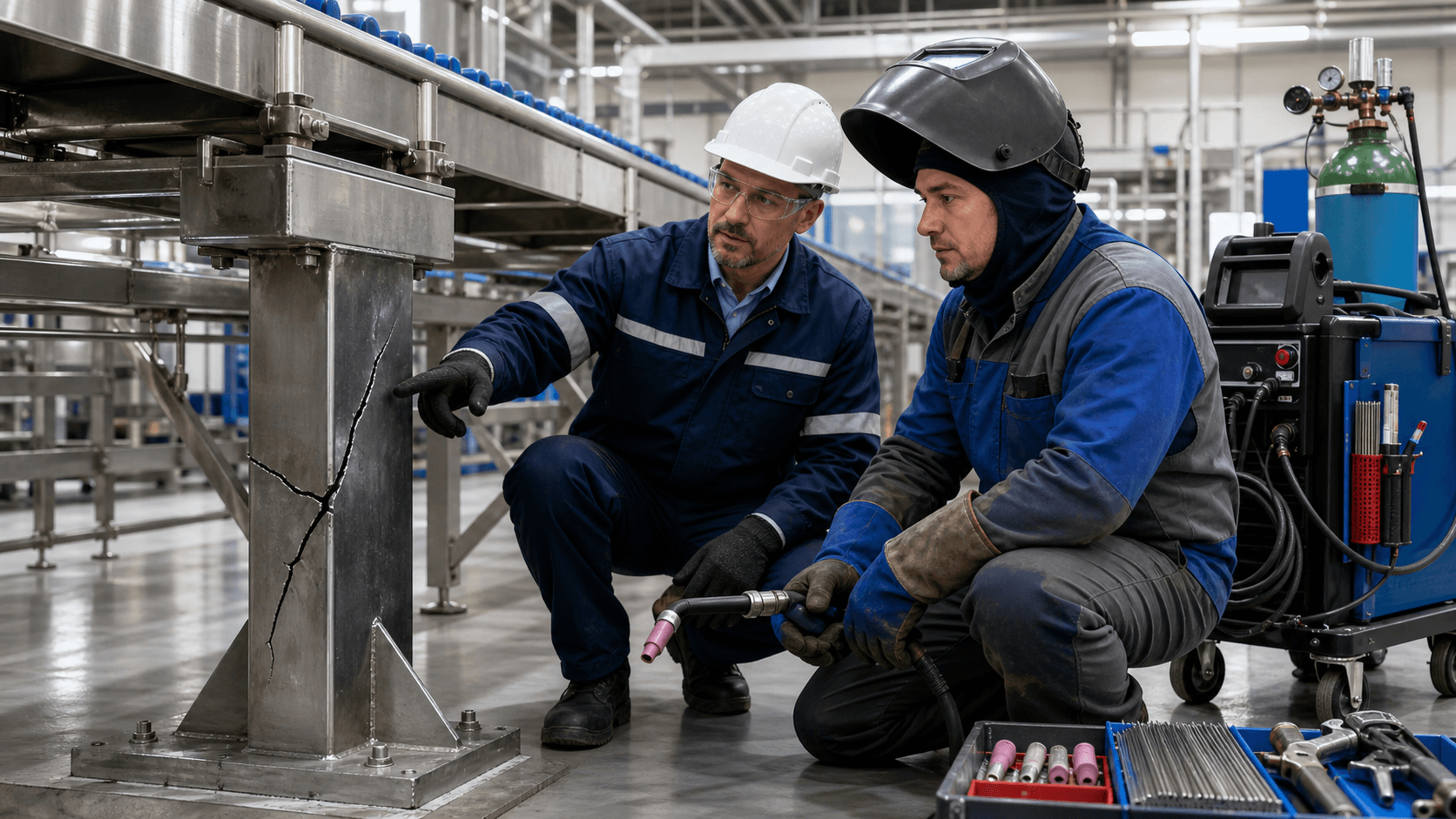
When real conditions do not match the drawings, we prefer engineered fixes instead of guesswork. Common, clean solutions include:
- Clip angle additions when a support line is off a bit
- Stiffeners and plate doublers when loads or spans change
- Small field plates that adjust to actual wall or slab locations
We document field changes with photos and marked-up sketches, so engineers and inspectors stay comfortable that the design intent is still met.
From Walk-Through to Punch-List Closeout Without Drama
To finish clean, we like to treat miscs punch as its own small project. A good miscs-specific punch strategy includes:
- A pre-punch sweep for touch-up paint, bolt tightening, and grout gaps
- Checking toe plates, guard continuity, and ladder cages by area
- Grouping items by elevation so no small fix is missed in a dense zone
Simple checklists go a long way. For example, by floor or roof area, we list:
- Stairs, guards, and handrails
- Ladders and roof access points
- Equipment frames, dunnage, and supports
- Embeds and loose plates that must be exposed for inspection
Aligning with inspectors and owners early helps avoid last-minute surprises. We like to clarify:
- Required rail heights and guard spacing for each use type
- When toe boards, kick plates, or mid rails are needed
- What weld access and finish inspectors expect for final signoff
Targeted walk-throughs on key items, like egress stairs and roof access, done before the year-end rush, keep stress levels down for everyone.
A dedicated mobile miscellaneous steel team that closes loops from first embed to final rail touch-up can save a lot of rework, back charges, and repeat trips. Tight Houston job sites will probably never feel simple, but with clear planning, smart sequencing, and field-ready welding, miscs do not have to be the part that blows up the schedule. Weldit's focus on mobile, code-compliant metal work is built around that idea, so tight sites still move forward one clean, coordinated piece at a time.
Get Started With Your Project Today
If you are ready to move your project from idea to installation, we are here to help with precise, code-compliant fabrication and fit-up. Our specialized miscellaneous steel services are tailored to meet the structural, architectural, and schedule demands of commercial work. Tell Weldit what you are planning and we will recommend practical options, clear pricing, and realistic timelines. To discuss your scope, budget, and deadlines, simply contact us and we will follow up promptly.