Cut Rework on Houston Pipe Jobs Before You Strike an Arc
Rework on industrial pipe welding will wreck a schedule fast. One blown tie-in in August heat can trigger extra hot work permits, extra scaffolds, extra overtime and a lot of finger-pointing. When you are in the middle of a late summer outage in Houston, there is no room for guesswork on fit-up.
This is where the choice between traditional field pipe welding and prefab pipe spools really matters. The work is still the same weld metal, same codes, same safety rules, but how you plan fit-up tolerances, how you survey tie-ins and how you stage prefab can decide if the job runs smooth or turns into a grind. We want to walk through that choice and share how better field tolerances, 3D scanning and smart tie-in planning can cut rework before the first arc is struck.
Late summer is when outages, turnarounds and capital jobs stack up across Gulf Coast plants. One bad set of spools or a poor tie-in plan in August can push work into the rest of the year and crowd out other projects. Our focus is on helping owners, GCs and plant managers keep those windows tight and predictable by connecting shop-quality fabrication with responsive field support across major Texas markets.
Field Pipe Welding vs Prefab Spools on Houston Sites
On most industrial pipe welding jobs, you are choosing some mix of two paths:
- Stick-built field welding: cut, fit and weld pipe in place on site
- Prefab pipe spools: build offsite in a controlled shop, then install as units
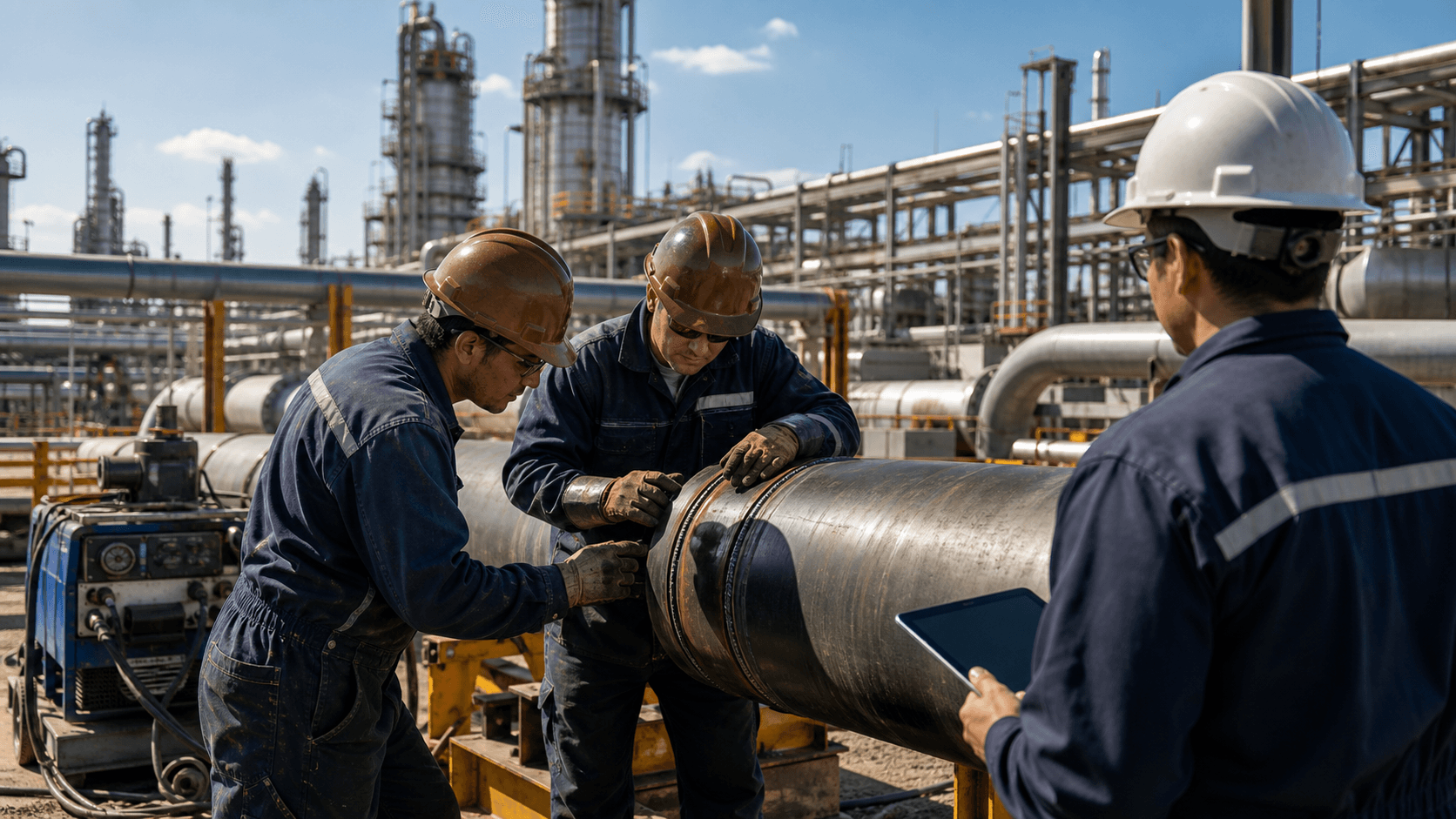
With stick-built field work, fitters and welders have maximum flexibility. If a nozzle is a little out of square or a rack is more crowded than expected, they can tweak cuts, shift supports or roll in an extra pup piece. This approach can work well in very tight pipe racks or when the plant is changing scope late in the outage.
But field-only work has real downsides in Houston:
- Heat, humidity and sun exposure wear crews out quickly
- Wind, rain and access issues can affect weld quality
- More time on scaffolds and in lifts slows productivity
- Inspection and documentation can get scattered between areas
Prefab pipe spools flip that script. You get:
- Shop-level control of fit-up and weld quality
- Positioners, overhead cranes and better access for welders
- Clear weld maps and traceable documentation that travels with the spool
- Faster setting and final welding in the field, if the spools fit right
The catch is accuracy. Prefab is only as good as the survey data and the tolerance assumptions behind it. If the measurements are off, or the design does not allow for real-world movement, the crew ends up torching and reworking anyway, sometimes in the hottest part of the day under tight permit windows.
For owners and GCs, the right mix usually depends on:
- Project phase and how fixed the design really is
- Plant access limits and outage timing
- Inspection and NDE requirements
- How congested the area is and how many trades are stacked up
Mixing both methods is common: prefab what you can, field-build what you must.
Getting Fit-up Right with Tolerances That Survive the Field
Good prefabrication starts with realistic tolerances that still work in the field. On paper, drawings may call out tight numbers for:
- Center-to-center dimensions between fittings
- Flange face elevation and orientation
- Angular alignment between mating flanges and tie-ins
Those are important, but steel and supports are not perfect. Long runs move when they heat up, supports deflect under weight and existing lines in old units rarely match original drawings. In Houston plants, long exposed pipe runs in full sun can grow and shift enough to turn a perfect shop spool into a problem at tie-in.
That is why we like to design for constructability, not just pure geometry. A few field-friendly ideas:
- Add short adjustable spools or pup pieces near critical tie-ins
- Use closure welds to take up small gaps and misalignment
- Give welders some room to pull flanges in with bolts without stressing the pipe
- Match AWS and ASME code limits while still giving practical fit-up options
The best results happen when engineers, fabricators and the mobile welding team talk early. If everyone agrees up front on what is actually buildable in the field, fewer people are surprised when the first spools hit the pipe rack.
From Tape and Level to 3D Scans on Houston Projects
For simple runs and low-critical lines, classic layout tools still have a place. Tape, a level, and a plumb bob can work fine when:
- The run is short and straight
- There are only one or two tie-in points
- Access is wide open and scaffolds are simple
- Service is low pressure and low temperature
The trouble starts when you stack tight racks, aging steel and high-pressure service in the same spot. Traditional methods struggle with:
- Multiple offsets and roll angles in one short run
- Hidden supports and interferences above and behind the pipe
- Out-of-tolerance nozzles on old vessels or tanks
- Dense units with very limited access during outages
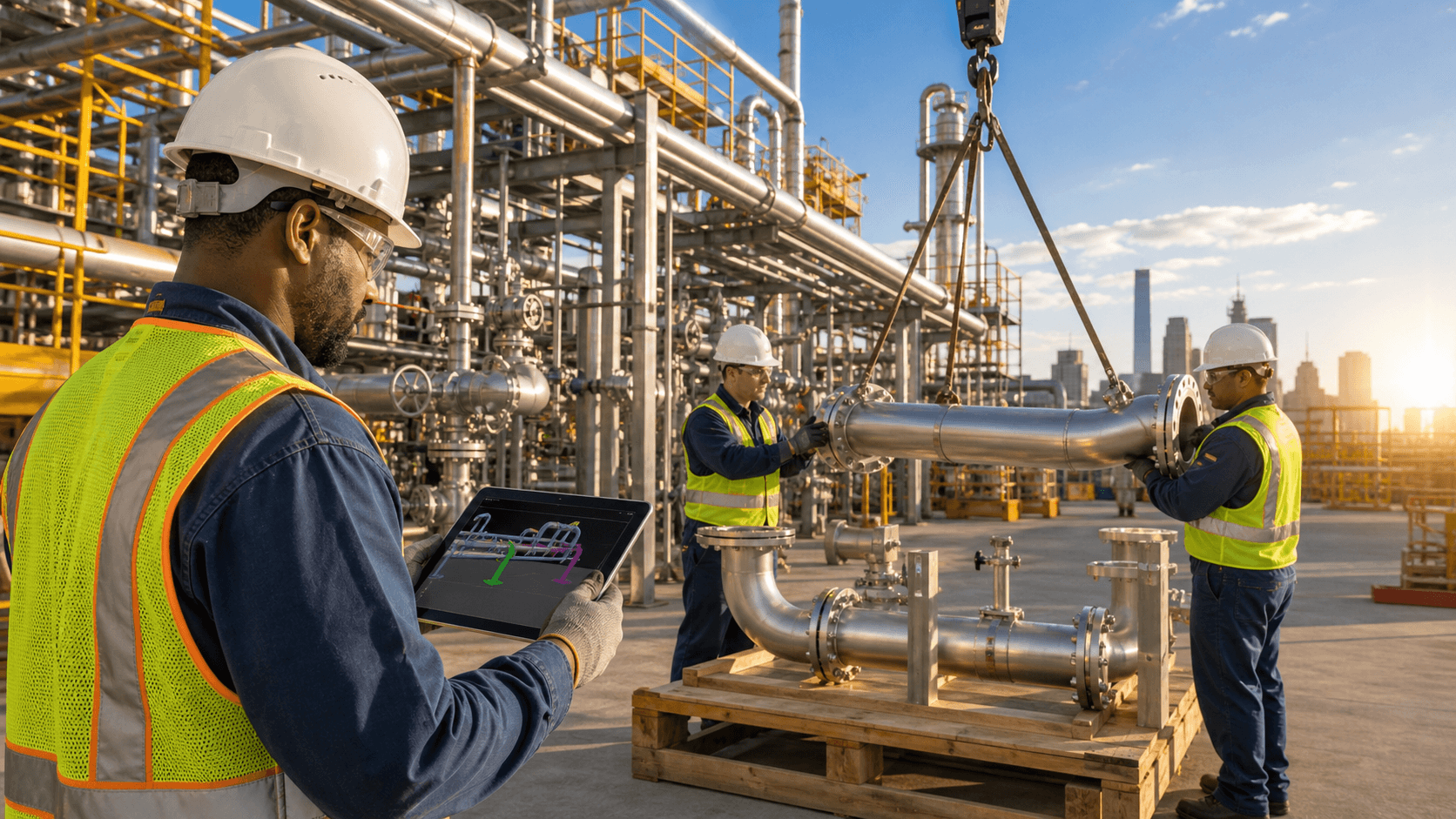
3D laser scanning solves a lot of those problems. A scan captures millions of points in space and builds a detailed picture of the actual plant, not what a drawing showed years ago. Designers can then model new spools and supports inside that real as-built picture and spot clashes before any steel is cut.
A simple prefab workflow might look like this:
- Scan existing lines, steel and equipment in the work area
- Import the point cloud into design software
- Model new spools, supports and tie-ins to match the real geometry
- Generate shop drawings with weld maps and clear dimensions
- Walk the area again and verify critical dimensions before fabrication
A mobile welding partner can add value in that loop by checking key dimensions on site, calling out tight access or lifting issues and confirming that the plan will actually work for the crew in full PPE in August heat.
Smarter Tie-in Planning to Reduce Rework and Overtime
Not every weld on an industrial pipe welding job is equal. Some tie-ins drive the whole outage. Others can slip a day and no one feels it. A simple way to focus effort is to rank tie-ins by:
- Pressure and temperature
- Product or medium in the line
- Shutdown window and isolation limits
- Access and congestion around the weld
The highest risk tie-ins are strong candidates for 3D scanning and prefab. That is where a misfit can eat half a shift and snowball into extra hot work, extended lockout times and long overtime lists.
We also like to build flexibility right into the plan:
- Leave-out spools that are set last to absorb dimensional drift
- Purpose-built closure welds where final gaps are expected
- Adjustable fittings or flanged joints that give a little movement
- Extra lifting lugs or rigging points on heavy spools to ease positioning
On the scheduling side, it helps to:
- Stage spools, hardware and gaskets close to the work
- Pre-verify key fit-up points before shutdown where possible
- Sequence welds so inspectors and NDE crews can stay ahead of the line
- Group code-required hold points so welders are not waiting on paperwork
Clean welding procedure specifications, welder continuity records and inspection reports that travel with the prefab spools tie the whole process together. When those records match what inspectors see at the tie-in, punch lists shrink and the unit can come back online with fewer surprises.
Putting Houston Pipe Projects Ahead of Schedule
When accurate 3D scanning, realistic tolerances and thoughtful tie-in planning all come together, jobs feel different. Crews spend more time welding and less time fighting fit-up in the sun. Outages finish closer to the plan. Startups go smoother because the quality is built into both the spools and the field welds.
Our team at Weldit focuses on that connection, bringing shop-quality fabrication for pipe spools together with certified mobile welders who can handle the tie-ins, adjustments and real-world problems that show up on Houston and other Texas sites. By thinking through survey methods, field fit-up and tie-in strategy before the next outage window is locked, owners, GCs and plant managers can keep industrial pipe welding work ahead of schedule instead of chasing rework in the heat.
Get Started With Your Project Today
If your facility needs reliable industrial pipe welding, Weldit is ready to support your next project with precision and safety at the forefront. We work closely with your team to plan, fabricate, and install piping systems that meet demanding industrial standards and timelines. Tell us about your scope, schedule, and specifications so we can provide a tailored solution that fits your operation. To discuss details or request a quote, simply contact us today.