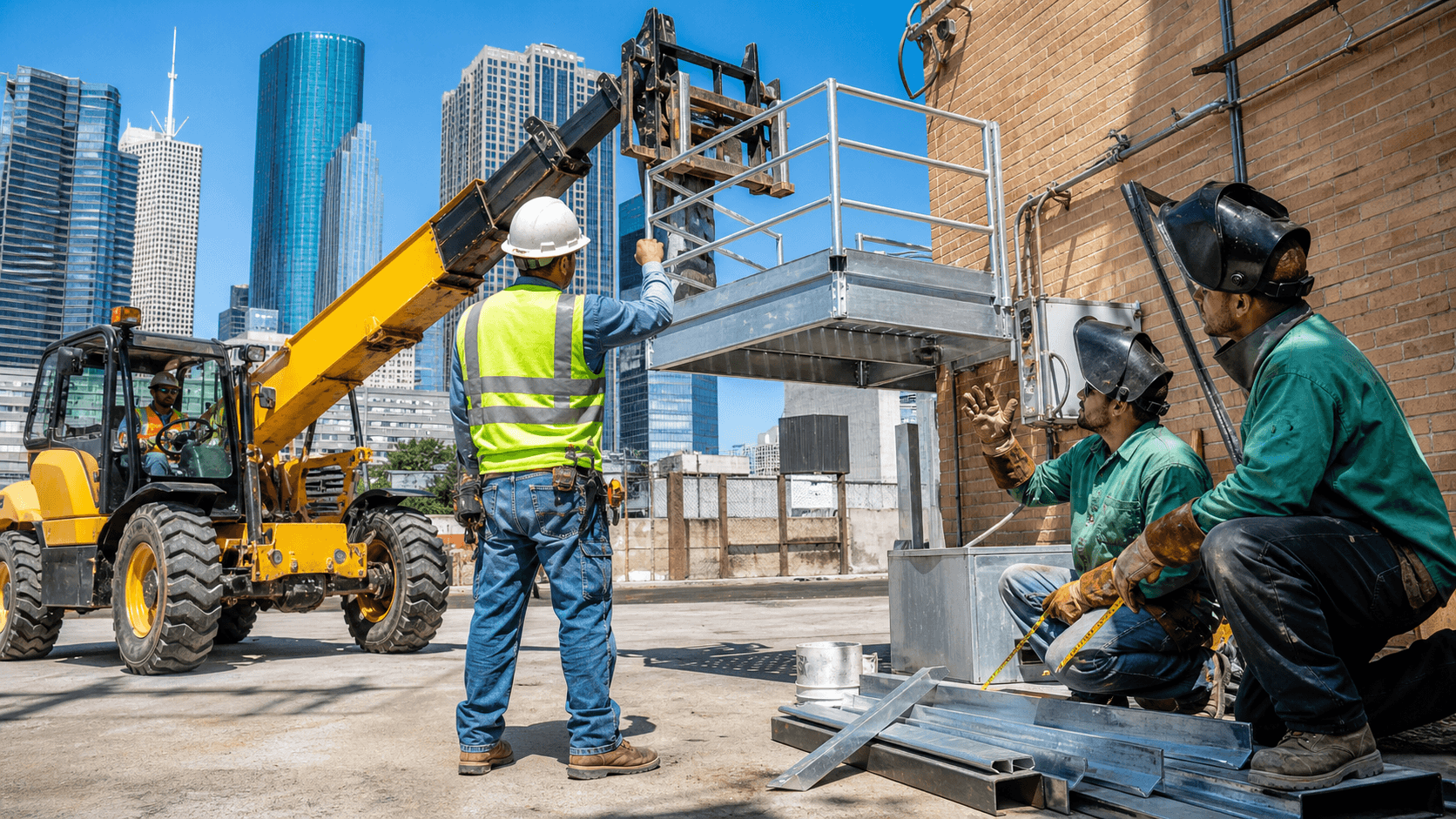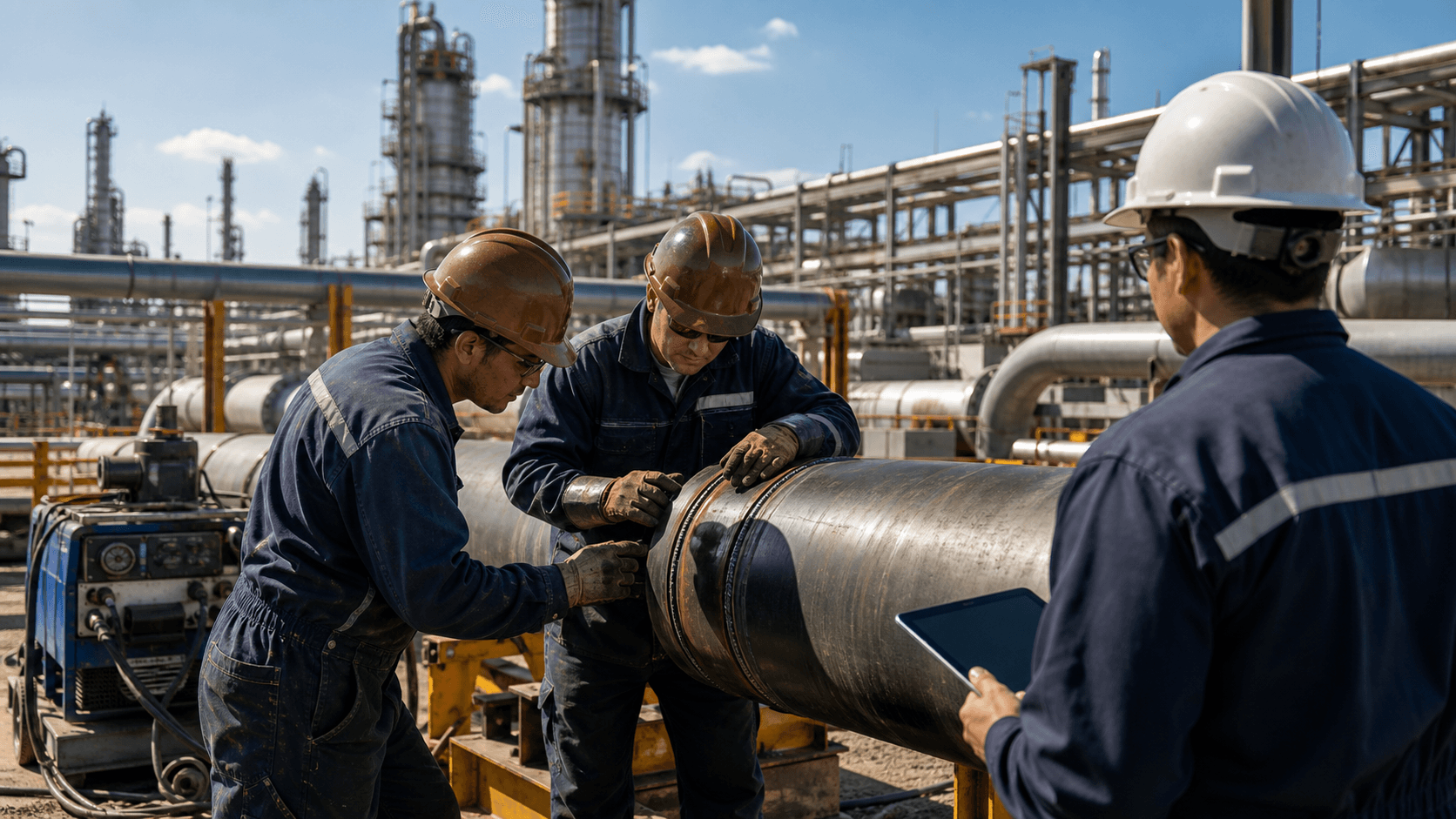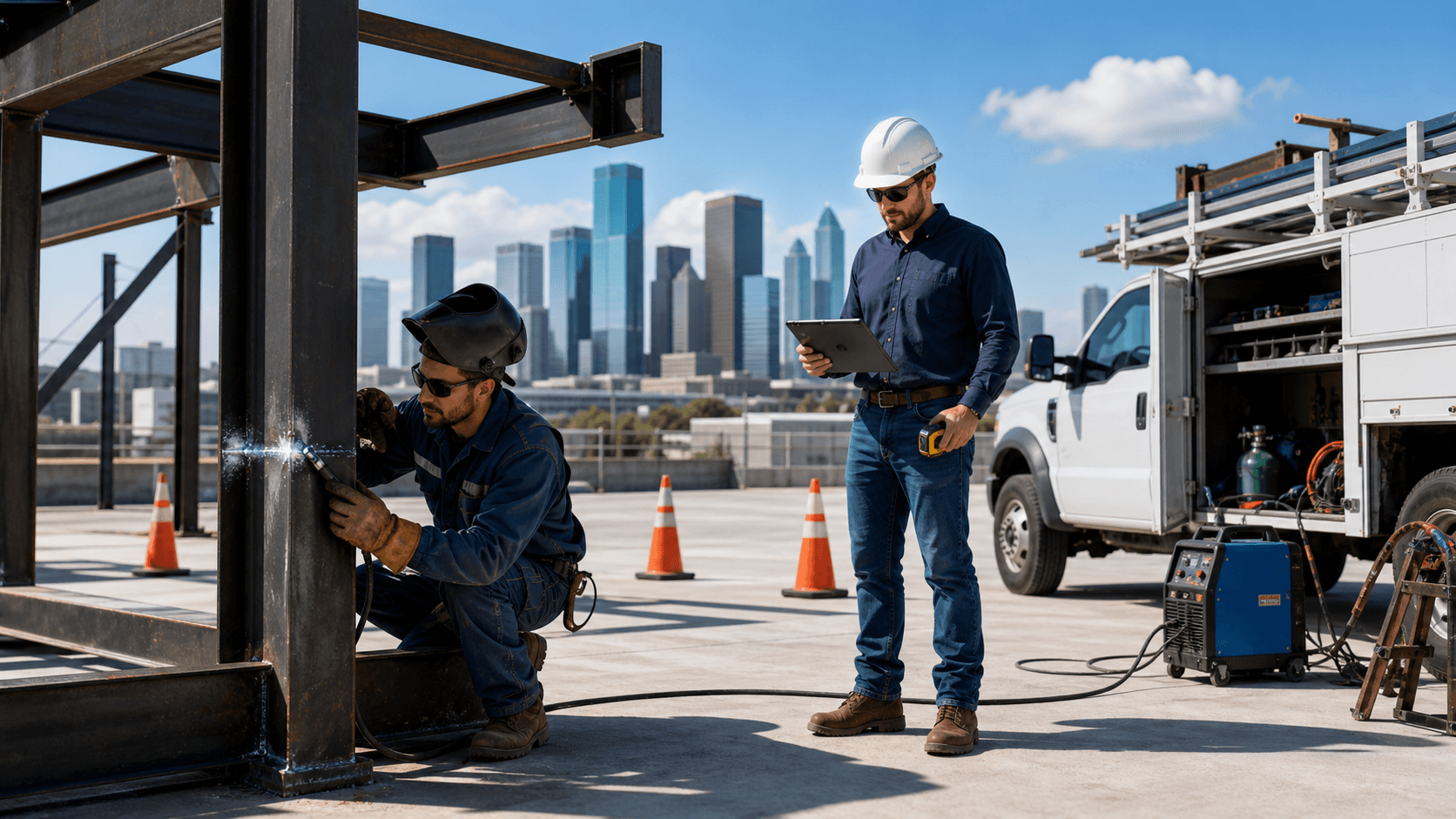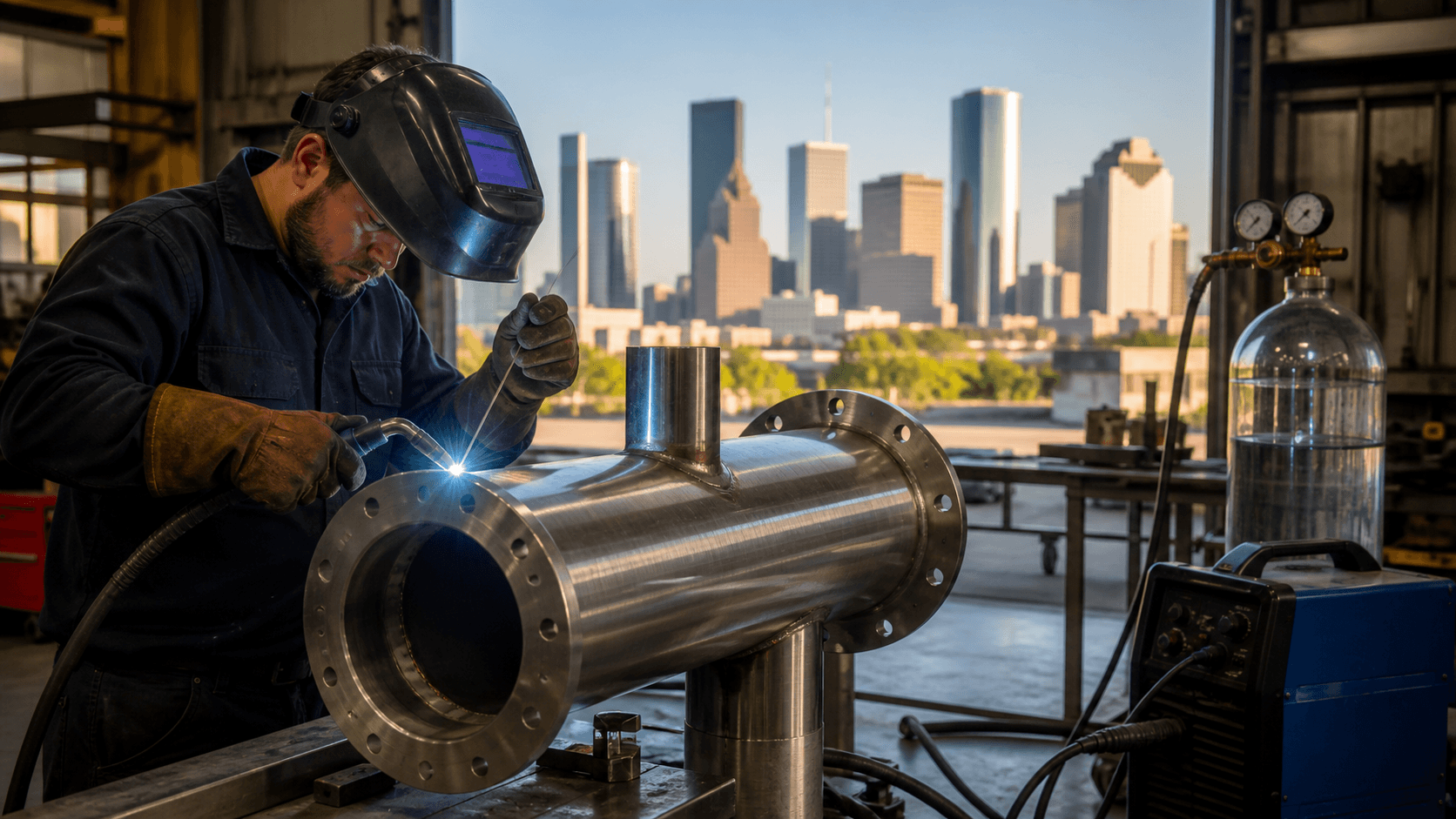
Weldit uses gas-shielded metal arc welding every day on job sites around Houston, so we know how much it matters. This process helps keep steel frames strong, pressure parts tight, and repairs safe so people can trust the structures they walk under and the equipment they work around.
In a fast-growing city like Houston, you see cranes, steel, and pipe almost everywhere. Refineries, tank farms, plants, port facilities, warehouses, and new homes all need clean, consistent welds that pass inspection. Gas-shielded metal arc welding is a big part of that, and when it is done right in the field, it brings shop-quality work right to the project site.
Why Gas-Shielded Metal Arc Welding Matters in Houston
Gas-shielded metal arc welding is any welding process that uses an electric arc and a shielding gas to protect the molten weld from the air. The gas keeps oxygen and moisture away from the weld pool so the metal can cool smoothly and stay sound.
Houston's mix of heavy industry and nonstop building means there is constant demand for welding that is:
- Precise for structural connections and pipe work
- Consistent for long production runs and repeat joints
- Code-compliant so inspections go smoothly
From refineries and chemical plants to port cranes, warehouses, and residential projects, contractors need welds that look good and meet the right standards. Gas-shielded work plays a big role in delivering that level of quality across industrial, commercial, and residential jobs around the city and across major Texas metros.
What Gas-Shielded Metal Arc Welding Actually Is
At its core, gas-shielded metal arc welding is pretty simple. You have:
- An electric power source that creates an arc
- A wire or rod electrode that melts and fills the joint
- A shielding gas that flows around the arc and weld pool
The gas forms a protective bubble around the hot metal so air cannot contaminate the weld. That gives cleaner beads, less porosity, and better control.
Common gas-shielded processes include:
- GMAW, often called MIG welding, great for speed and cleaner welds
- Gas-shielded flux-cored (FCAW-G), which can handle thicker sections and higher deposition
These processes are often used:
- On structural steel where appearance and speed both matter
- On plate and pipe in shops and controlled field setups
- On repairs where you need strong welds without heavy cleanup
Compared to self-shielded wire or stick welding, gas-shielded methods can offer:
- Smoother, more uniform beads
- Less spatter and grinding
- Higher travel speeds in many setups
That is why many Houston projects lean on gas-shielded work whenever the conditions allow it.
Meeting AWS and ASME Codes on Texas Job Sites
For many industrial, commercial, and structural projects in Texas, work must meet AWS or ASME codes. These codes set the rules for how welds are made, tested, and accepted, especially in energy and petrochemical work where failure is not an option.
Staying code-compliant with gas-shielded metal arc welding means paying close attention to:
- Qualified welders who are tested for specific processes and positions
- Written welding procedure specifications, or WPS, that spell out settings and techniques
- Procedure qualification records, or PQR, that prove those procedures work on the given materials
On a job site, that usually includes:
- Clear material identification so the right procedure is used
- Correct joint prep, fit-up, and root openings
- Controlled parameters like voltage, wire feed speed, and travel speed
- Inspection and testing to confirm the weld meets the required code
When all those pieces come together, projects stay inspection-ready, and welds meet the standard from the first pass to the final sign-off.
Tackling Houston Heat and Humidity with Better Welds
Houston heat and humidity can be tough on gas-shielded welding, especially in late summer. High temperatures, sticky air, and sudden Gulf storms can all affect how shielding gas behaves and how welds cool.
Typical weather issues include:
- Wind gusts that blow shielding gas away from the weld
- Humid air that increases the risk of porosity and surface moisture
- Rapid weather shifts that change how metal heats and cools
A professional crew plans for these conditions by:
- Setting up screens or barriers to protect the arc from wind
- Adjusting gas flow rates and stick-out to keep the shield stable
- Storing wire and consumables in dry, protected areas
- Watching interpass temperatures so the weld does not get overheated
That kind of care helps avoid porosity, undercut, and cracking that can lead to delays and rework. In a climate like Texas, experience with weather challenges is just as important as knowing which button to press on the machine.
Choosing the Right Process for Your Houston Project
Not every weld on a Houston project needs gas-shielded metal arc welding, but many do benefit from it. The right choice depends on what you are building, where you are working, and which code you must meet.
Here is how gas-shielded methods often compare to other options:
- Stick welding: very portable and forgiving outdoors, but slower with more cleanup
- Self-shielded flux core: good in the wind and for remote work, but more spatter and sometimes rougher appearance
- TIG: very clean and precise, but slower and often better for thinner materials or special alloys
Gas-shielded GMAW or FCAW-G can shine on jobs like:
- Pipe racks for plants and terminals where production speed matters
- Commercial build-outs where visible welds should look clean and uniform
- Equipment repairs where downtime must be kept low
- Gates, railings, and structural add-ons where appearance and strength both count
To pick the right process and gas mix, we look at:
- Material type and thickness
- Welding position and access
- Indoor or outdoor conditions and expected weather
- Applicable codes and inspection needs
With that information, it is much easier to match the process to the project so welds are efficient, clean, and ready for review.
Put Certified Mobile Welders to Work on Your Timeline
As late summer rolls on and schedules tighten before the busy fall work period, many projects start to compete for the same qualified welding crews. Planning ahead helps keep timelines realistic and avoids last-minute stress on critical path work.
Weldit provides certified mobile welding and fabrication, bringing gas-shielded metal arc welding, inspection support, and code-focused documentation straight to job sites across Houston and major Texas metros. Our goal is to keep your steel, pipe, and repair work safe, compliant, and moving forward without surprises, so your project can stay on track from first arc to final inspection.
Get Started With Your Project Today
If your next commercial project demands precision, reliability, and clean, high-strength welds, we are ready to help. Our team at Weldit specializes in gas-shielded metal arc welding tailored to complex hydronic and mechanical systems. Share your project details and requirements, and we will recommend practical, cost-effective welding solutions that fit your schedule. To discuss scope, timelines, or request a quote, simply contact us.