Why Pipe Welding Tolerances Matter on Houston Sites
Industrial pipe welding is not just about getting two pieces of metal to stick together. On Houston sites like refineries, chemical plants, midstream facilities, and power plants, tight pipe welding tolerances help keep people safe, keep systems online, and keep projects in line with strict codes.
When tolerances slip, you can see more leaks, more failures, and more failed inspections. That can snowball into unplanned downtime, extended shutdowns, and a lot of rework that nobody has time for, especially during summer turnarounds. Add in Houston heat, high humidity, and corrosive Gulf air, and the margin for error gets even smaller.
In this article, we talk through what industrial pipe welding tolerances are, how they are set and checked, what can go wrong when they are ignored, and how a certified mobile welding contractor can help keep your work on track and code compliant across Texas.
Defining Industrial Pipe Welding Tolerances
In industrial pipe welding, the word "tolerance" simply means how much something is allowed to be off from the design. Every pipe and weld has an ideal dimension and position, and then a small window of allowed variation.
Common tolerance areas include things like:
- Pipe diameter and ovality
- Wall thickness and undercut
- Alignment and high-low (internal offset)
- Root opening and root face
- Weld reinforcement and profile
- Angularity and face-of-flange location
There are two main layers of tolerances that come into play. First are the design tolerances that the engineer of record calls out on drawings and isometrics. These control layout, centerlines, and how everything ties into the rest of the system.
Then there are acceptance tolerances, which come from welding and construction codes, such as ASME, API, or AWS standards, along with project and client specifications. These spell out what inspectors are allowed to accept or must reject during visual checks and nondestructive testing.
Tolerances connect directly to:
- Weld Procedure Specifications (WPS)
- Procedure Qualification Records (PQR)
- Welder Performance Qualifications (WPQ)
- Quality control forms and traceability logs
On many Houston facilities, the owner will tighten tolerances beyond the base code. That is because they are dealing with higher pressures, hotter processes, or harsh chemicals, and they want extra safety margin built into every weld and every fit-up.
How Codes and Standards Shape Houston Pipe Work
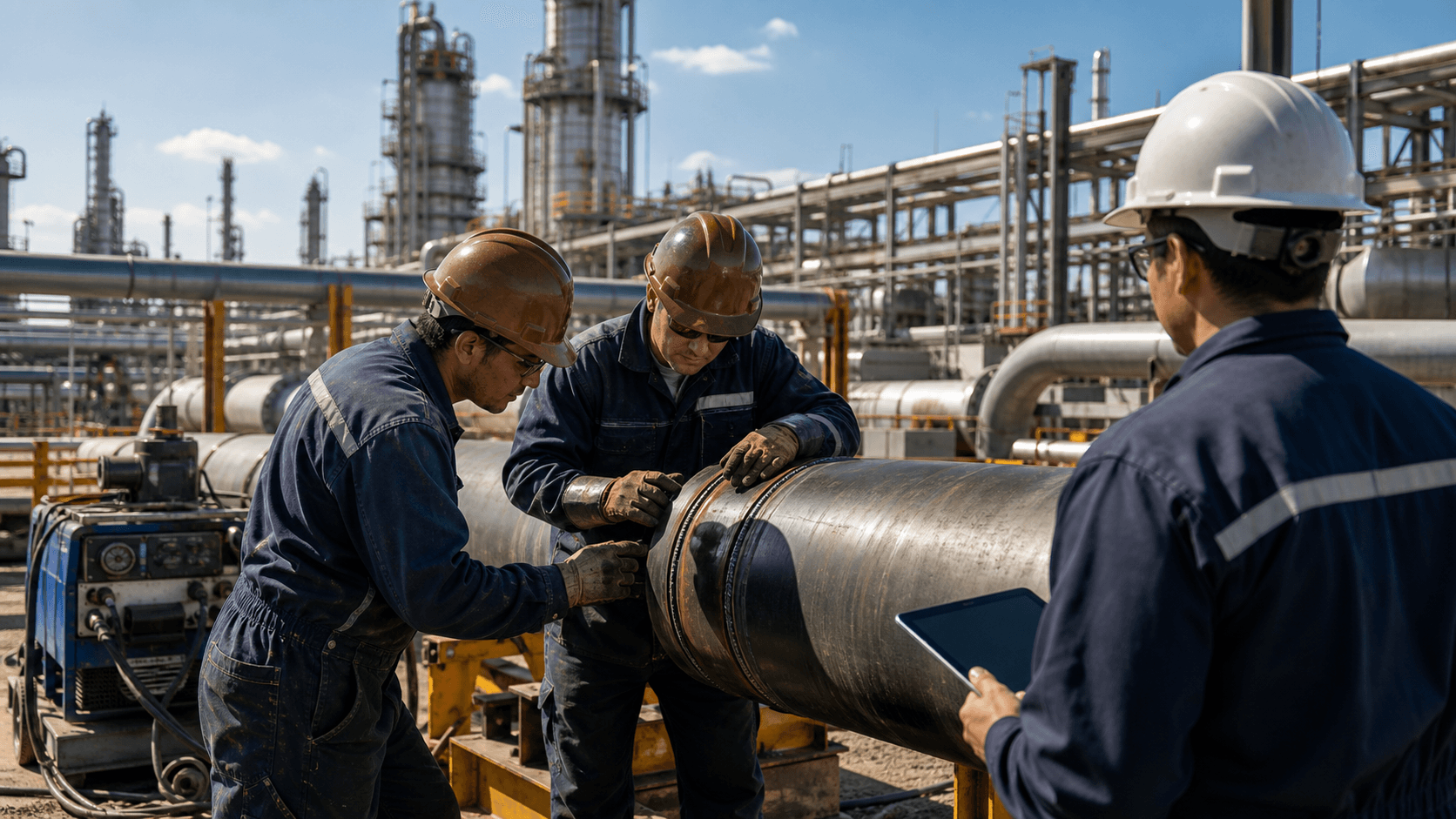
Industrial pipe welding in Houston energy and petrochemical work is driven by codes and standards. These documents guide how joints are prepared, welded, and inspected, from the shop floor to tight pipe racks in the field.
Key code families often include:
- ASME B31 series for process and power piping
- ASME Section IX for qualifying welders and welding procedures
- API standards for pipelines, terminals, and storage systems
On top of that, facility owners build their own specifications. These might limit certain joint types, specify which NDT methods must be used, or call for tighter alignment and reinforcement limits for specific services.
Inspection programs usually combine several methods, such as:
- Visual inspection of fit-up and finished welds
- Radiographic testing for internal weld quality
- Ultrasonic testing for wall thickness and flaws
- Penetrant or magnetic particle testing in certain areas
All of this feeds into traceability. On many Houston job sites, every piece of pipe, fitting, and weld has to be documented, from heat number to final acceptance. For mobile welding contractors, that means shop and field crews must stay aligned with site procedures, signoffs, and safety rules so work passes the first time.
Common Tolerance Challenges on Houston Job Sites
Industrial projects in Houston face several real-world problems that can push welds out of tolerance if teams are not careful. The climate alone can play a part. High ambient temperatures and strong sun can cause parts to grow slightly, shift, or move as they cool down. Humidity and salty air also affect surface conditions and prep.
Crowded pipe racks and tight modules make fit-up harder, especially when you are working around live systems that must stay in service. Clearance for torches, grinders, and weld guns is often limited, which makes it harder to control alignment and root openings.
Common fit-up trouble spots include:
- High-low on the inside of the pipe
- Excessive or uneven root gaps
- Out-of-square or rough cuts
- Misaligned flanges or instrument branches
Houston sites also see heavy turnaround and shutdown work in summer. Short outages, stacked trades, and night shifts raise schedule pressure. When teams rush, they can miss small details on fit-up, which later show up as failed X-ray films, UT indications, or leaks during pressure tests. That means cutting out welds, grinding, and doing it again, right when time is tightest.
Ensuring Code-Compliant Results in the Field and Shop
Keeping industrial pipe welding tolerances tight takes a planned system, not just a good welder with a hood. A certified contractor focuses on both the shop and the mobile side, since Houston work often jumps between prefabrication and field tie-ins.
Key tools and practices include:
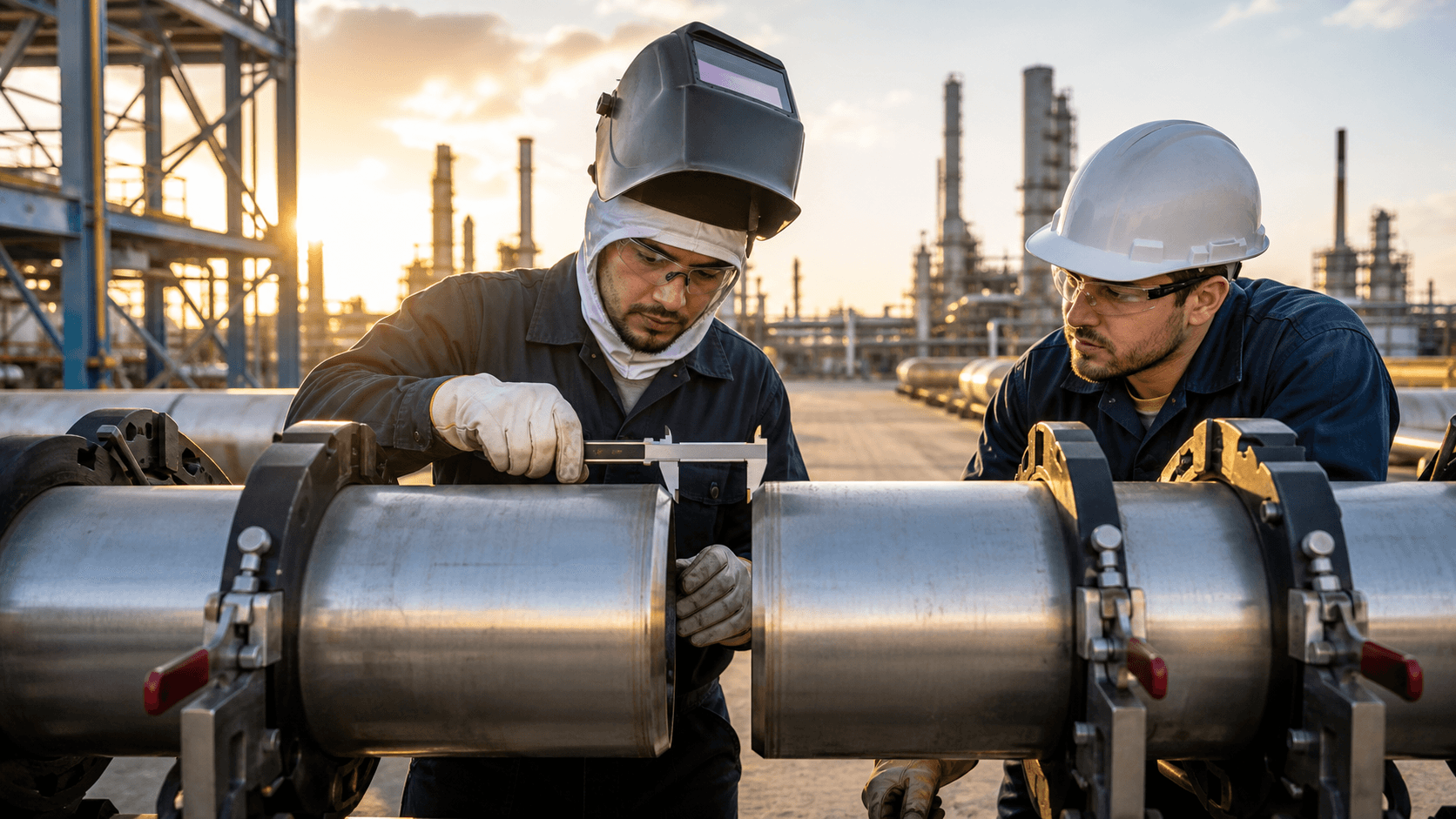
- Calibrated measuring tools, levels, and gauges
- Proper fit-up fixtures and strongbacks
- Controlled preheat and interpass temperatures
- Qualified WPS and trained, tested welders
On an industrial site, a typical quality workflow might look like this:
- Joint preparation, including cutting, beveling, cleaning, and checking fit-up.
- Tack welding with attention to alignment, gap, and distortion control.
- In-process visual inspection of roots, hot passes, and final caps.
- Nondestructive testing as required by the project, such as RT or UT.
- Documented repair procedures if any weld falls outside allowed tolerances.
Experienced welders and fitters make a big difference here. People who can read isometrics, understand centerlines, and think ahead about how heat will pull a joint can often hold tighter tolerances even in tough spots. Clear communication with inspectors and project managers keeps surprises to a minimum and helps keep the schedule steady.
Preparing Your Next Houston Project for Tight Tolerances
As summer work ramps up and shutdown windows get locked in, it helps to step back and look at how your current projects handle industrial pipe welding tolerances. Small gaps in planning tend to show up later as rejected welds or last-minute field fixes.
Useful internal questions include:
- Where are we seeing the most weld rework?
- Are high-low, flange alignment, or root gaps common issues?
- Do our drawings and isos clearly show what the field needs?
- Are our welders and fitters clear on both code and owner specs?
Bringing in a certified mobile welding and fabrication team early in constructability reviews, field measurements, and shop planning can help spot problem areas before pipe ever reaches the rack. Weldit works across Texas with this goal in mind, focusing on code-compliant field and shop fabrication that respects the tight tolerances Houston facilities expect and depend on.
Get Started With Your Project Today
If your facility needs precise, code-compliant industrial pipe welding, we are ready to help you plan and execute your project efficiently. At Weldit, we work closely with your team to understand your system requirements, schedule, and safety standards. Share your project details so we can provide a clear path forward, from design support to final inspection. To discuss timelines, pricing, and next steps, reach out through our contact page.