Hidden Steel Details That Save You Costly Headaches
On many jobs, the big steel gets all the attention. The main frame is up, the concrete is down, the schedule looks good, then one small item holds everything up. A missing stair rail, embeds set in the wrong spot, or support steel that no one actually ordered can slow inspections and turn a smooth week into a scramble.
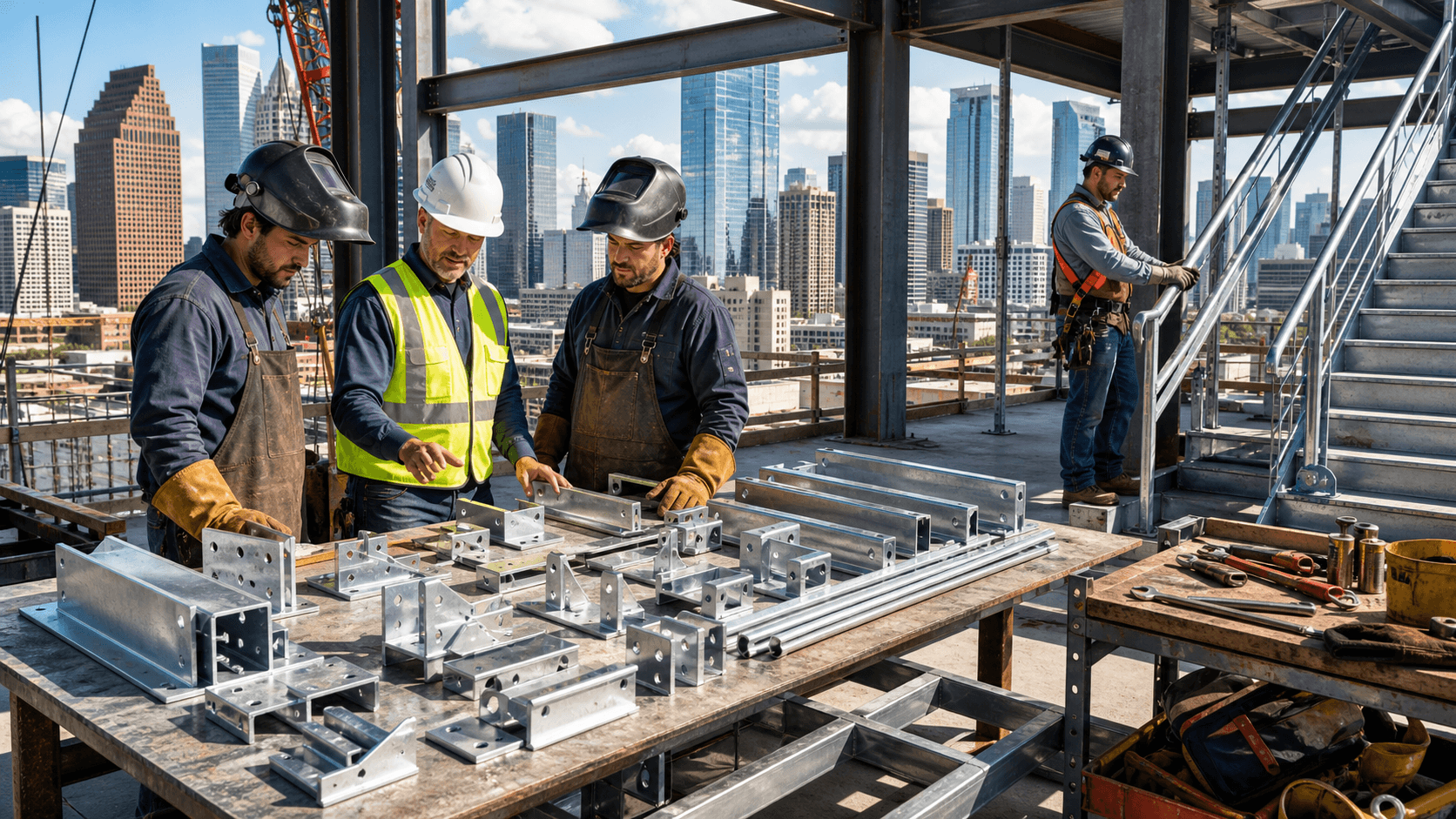
That "small" pile of parts is what people call miscellaneous steel. It may sound minor, but it includes the pieces that let people move through the building, keep workers safe, and support the systems that keep the place running. When these items are missing or wrong, problems show up late, when change is hardest.
Good miscellaneous steel services help keep that from happening. When the right team reviews your plans, measures in the field, and builds what the project really needs, you get fewer RFIs, fewer surprises, and fewer late fixes during punch list time. As a certified mobile welding and fabrication partner working across Texas, we step in with both shop and on-site support when gaps appear and the schedule is tight, especially during the busy fall push.
What Counts as Miscellaneous Steel on Your Jobsite
For GCs, facility managers, and owners, miscellaneous steel is all the secondary steel that makes the building safe and usable. It is not the big beams and columns. It is everything that hangs on them, connects to them, or fills in around them so people and equipment can move.
Common examples include items like:
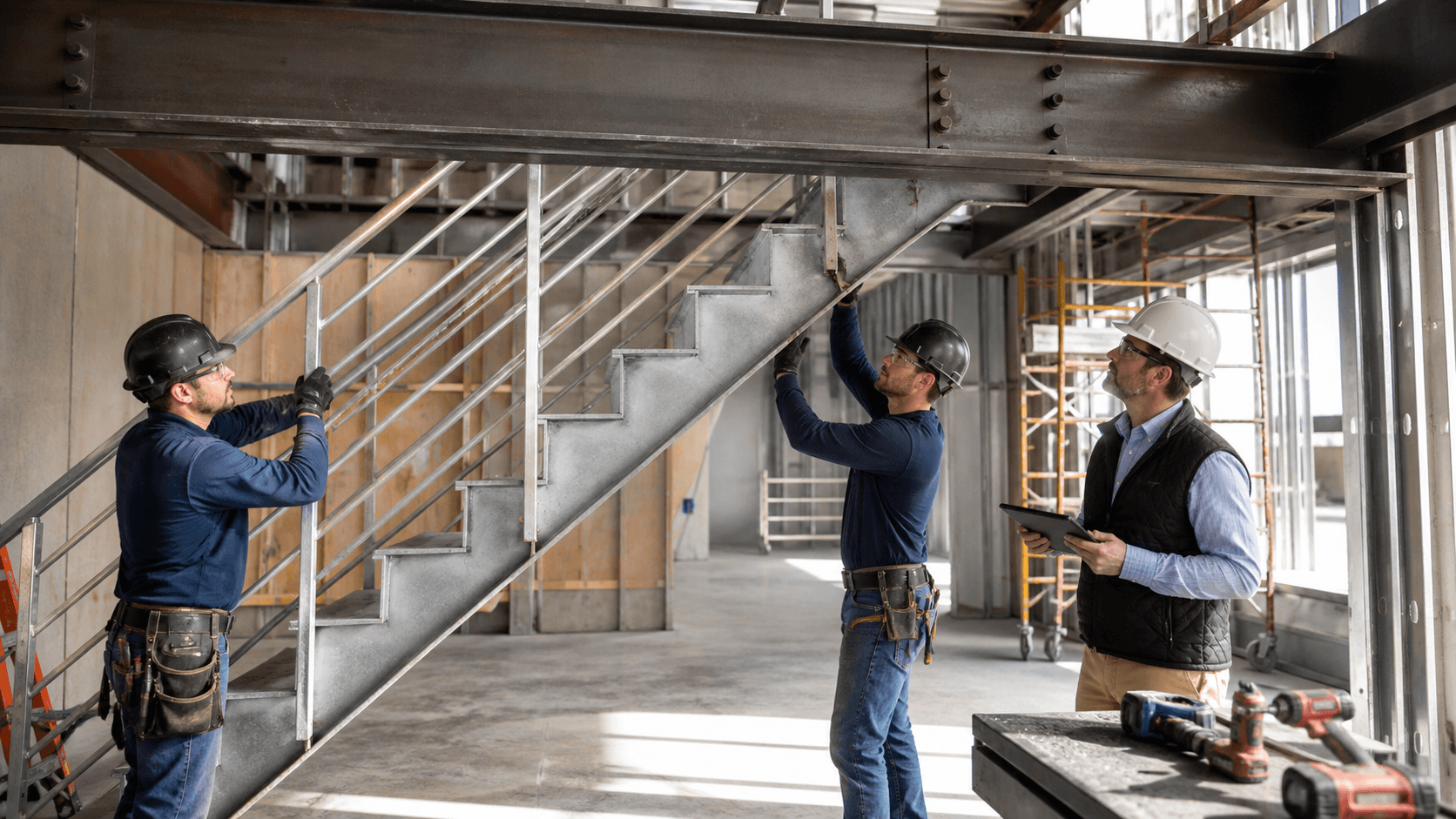
- Stairs, ship ladders, and fixed ladders
- Handrails, guardrails, and safety rails
- Embeds, plates, and small structural angles
- Roof frames and equipment support steel
- Bollards, canopies, grated platforms, and mezzanines
You also see it in small but important pieces, such as custom brackets that carry ductwork, cable trays, or pipe racks. These parts support access, safety, MEP systems, and finishes. If they are missing or off by even a little, the impact can spread across several trades.
These pieces touch key areas on every project:
- Safety, with rails, ladders, guards, and toe boards that keep people protected and in line with OSHA rules
- Accessibility, with stairs and ramps that must meet clear dimensional and clearance requirements
- Long-term durability, with equipment and piping supported the way the engineer intended
When these details get overlooked or under-specified, the job often turns into last-minute changes. You may find out a rail height is off during inspection, or that an RTU support is missing when the crane is already on site. By then, framing, concrete, or finishes may be in place, so even "small" changes cause big schedule hits.
How Miscellaneous Steel Services Prevent Rework and Delays
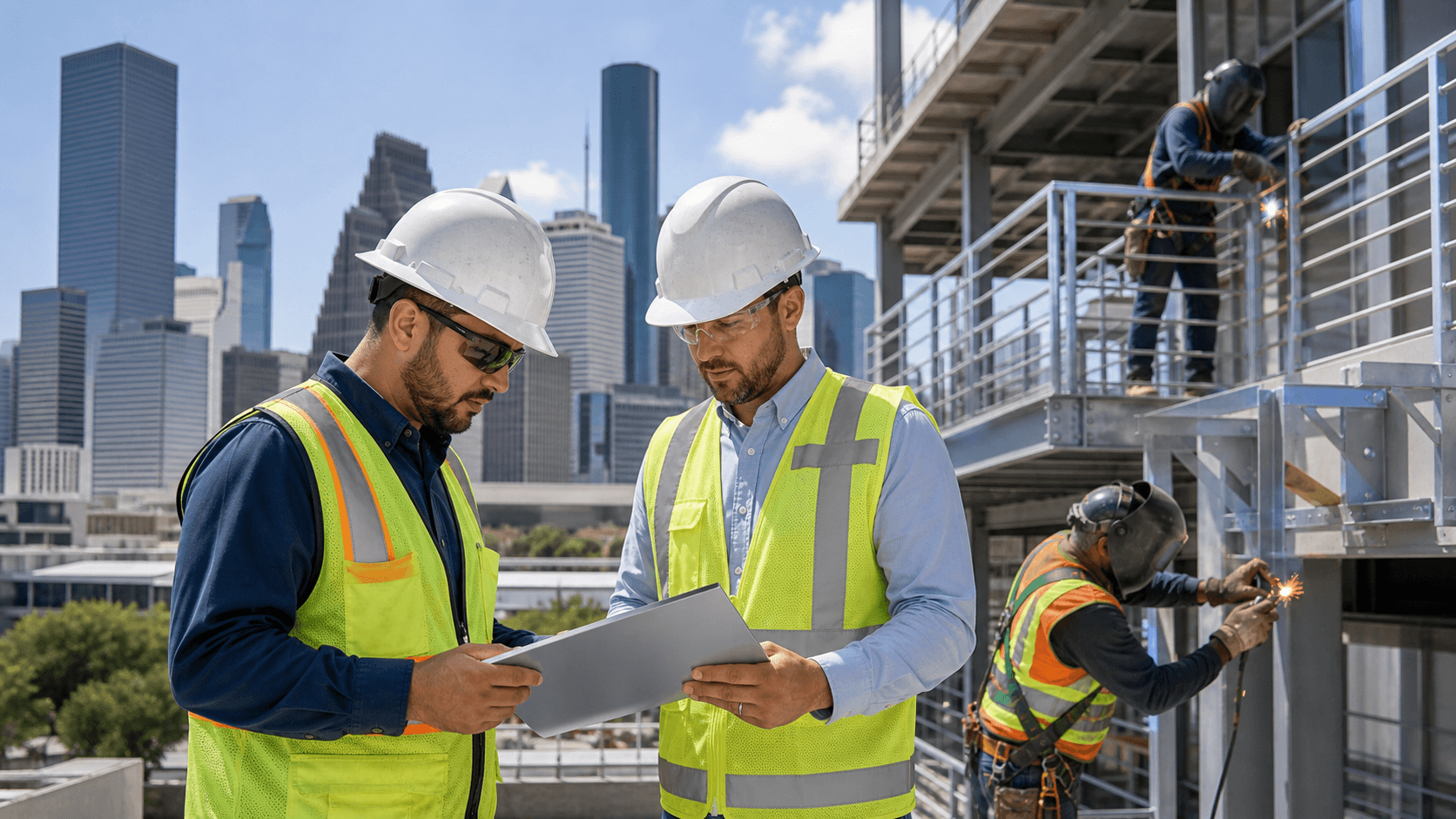
The best time to fix steel problems is before anyone cuts or welds a single piece. Experienced miscellaneous steel fabricators look at the drawings with a different eye. We look for the things that do not line up, the missing connections, and the support steel no one clearly called out.
That early review can catch items like:
- Stairs that do not line up with landings or openings
- Embeds that clash with rebar or sleeves
- Equipment that has no clear support steel shown
Field measuring is just as important. Before concrete gets poured or equipment is placed, layout checks make sure plates, anchors, and embeds end up exactly where they belong. When we measure stair openings, slab edges, and wall locations in real conditions, the fabricated steel fits the first time, not after a round of cutting and re-drilling.
Coordinated sequencing also saves time. When fabrication and installation are planned with MEP and finish trades in mind, you avoid:
- Rails installed before walls that then need to be removed
- Supports hidden behind ductwork or ceiling systems
- Platforms that conflict with conduit or piping routes
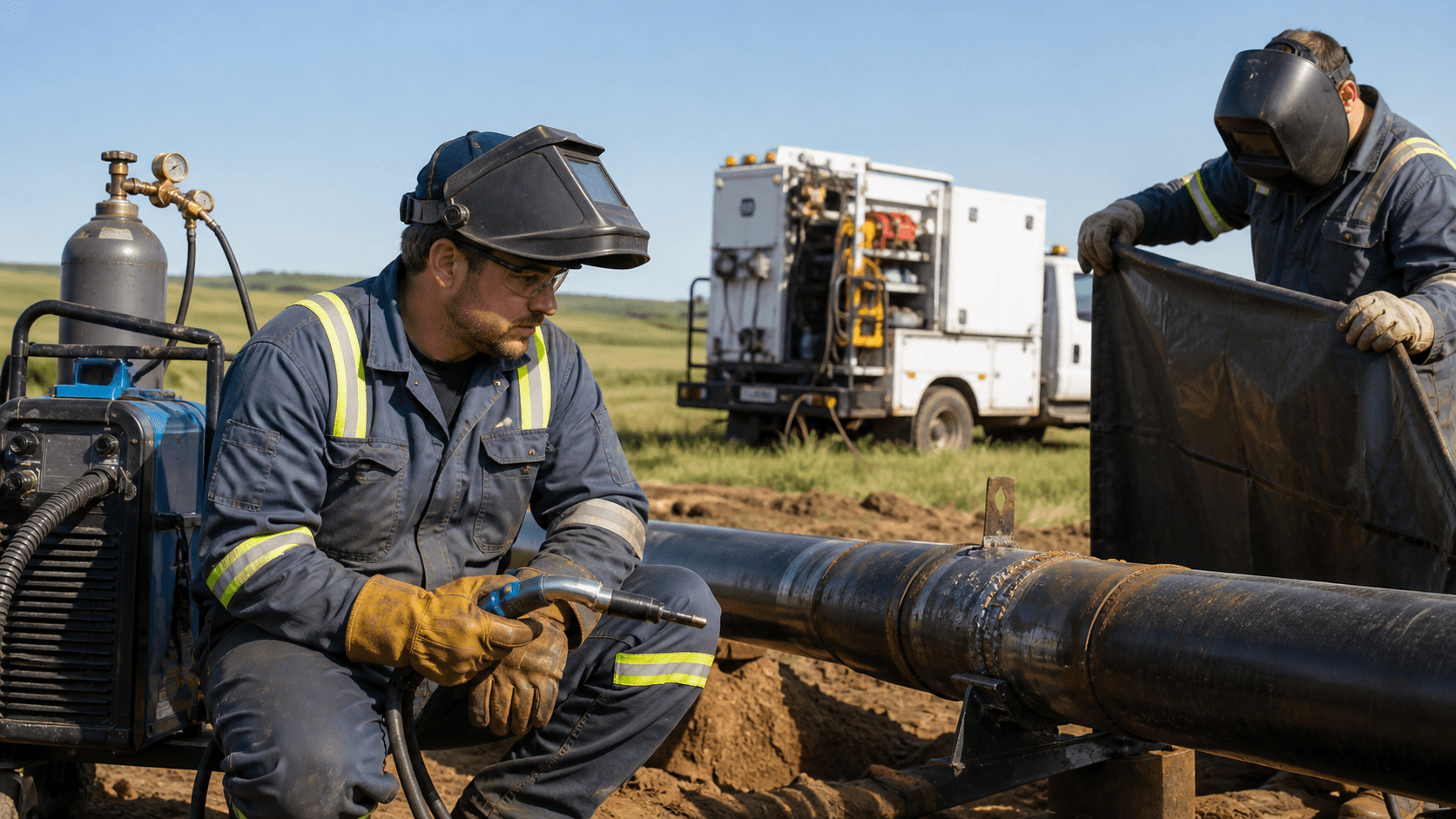
A partner that can both fabricate in the shop and respond in the field keeps those small surprises from turning into big schedule slips. If something does not match the plan, mobile welding support can adjust or add steel quickly so the rest of the work keeps moving.
On-Call Mobile Welding: When Design Meets Reality
Once you are out in the field, design meets real-world conditions. Concrete is not always perfectly plumb, embeds shift during a pour, and equipment can change halfway through a build. Sometimes an inspector reads the code a bit differently and asks for another rail or an extra support.
That is where on-site welding and fabrication come in. A mobile crew can:
- Modify or extend handrails and guardrails that no longer meet dimensions
- Adjust stair connections to match actual floor heights
- Add or relocate support steel for new or revised equipment
- Reinforce connections when heavier loads show up late
The fall rush, with year-end deadlines and packed schedules, puts even more pressure on these details. Across Texas, projects are pushing hard to reach substantial completion before the holidays. When a last-minute safety or structural item gets flagged, you do not always have time to send everything back to a shop and wait.
Field-ready rigs, certified welders, and the right tools on the truck act like a safety net. Instead of weeks of delay, many issues can be handled in hours or days, keeping punch lists short and allowing other trades to stay on task.
Safety and Compliance Built Into Small Steel Details
Those "little" pieces of steel are tied directly to OSHA and building code rules. Inspectors look closely at them, often at the very end of the project. If they are wrong, that final sign-off can stall.
Key items that must meet code include:
- Rail and guard heights, and how much load they can safely resist
- Tread depth, riser height, and uniformity on stairs
- Landing sizes and clearances at doors
- Ladder cages, grab bars, and step spacing for fixed ladders
If these do not pass inspection, you are looking at delays in occupancy, headaches with insurance, and added risk for owners and contractors. Fixing them after finishes are in place is harder and messier than getting them right early.
Knowledgeable miscellaneous steel services help by building code awareness into the design, fabrication, and installation steps. On high-use commercial and industrial sites, that means safer access points, cleaner egress paths, and steel that holds up under heavy daily use. With the right rails, stairs, and platforms, the building simply works better for the people who use it every day.
Protect Your Schedule with a Reliable Texas Steel Partner
Treating miscellaneous steel as an afterthought is what leads to last-minute panic. Treating it as a key part of planning keeps your schedule steady, especially during busy fall construction and plant maintenance seasons when everyone is booked and time is tight.
A smart move for project teams is to look ahead at upcoming work and ask simple questions like:
- Who owns the stairs, rails, embeds, and support steel on this job?
- Are there any access platforms, mezzanines, or ladders that are not clearly detailed?
- Do we need field measurements before concrete or equipment goes in?
When you involve a qualified steel partner early, you can line up constructability reviews, field checks, and phased fabrication that match the real flow of the job. For GCs, facility managers, and plant engineers across major Texas metros, that kind of planning support can be the difference between a clean finish and a long list of late fixes.
In the end, those "little" steel pieces are not small at all. When they are designed, built, and installed correctly from the start, they protect your schedule, your budget, and the long-term performance of your facility.
Get Started With Your Project Today
If your project needs precise fabrication, reliable installation, or custom detailing, Weldit is ready to help you move from plans to completion. Explore our specialized miscellaneous steel services to see how we can support your schedule and performance requirements. Have questions or need a quote tailored to your scope of work? contact us so we can review your project and recommend the best path forward.